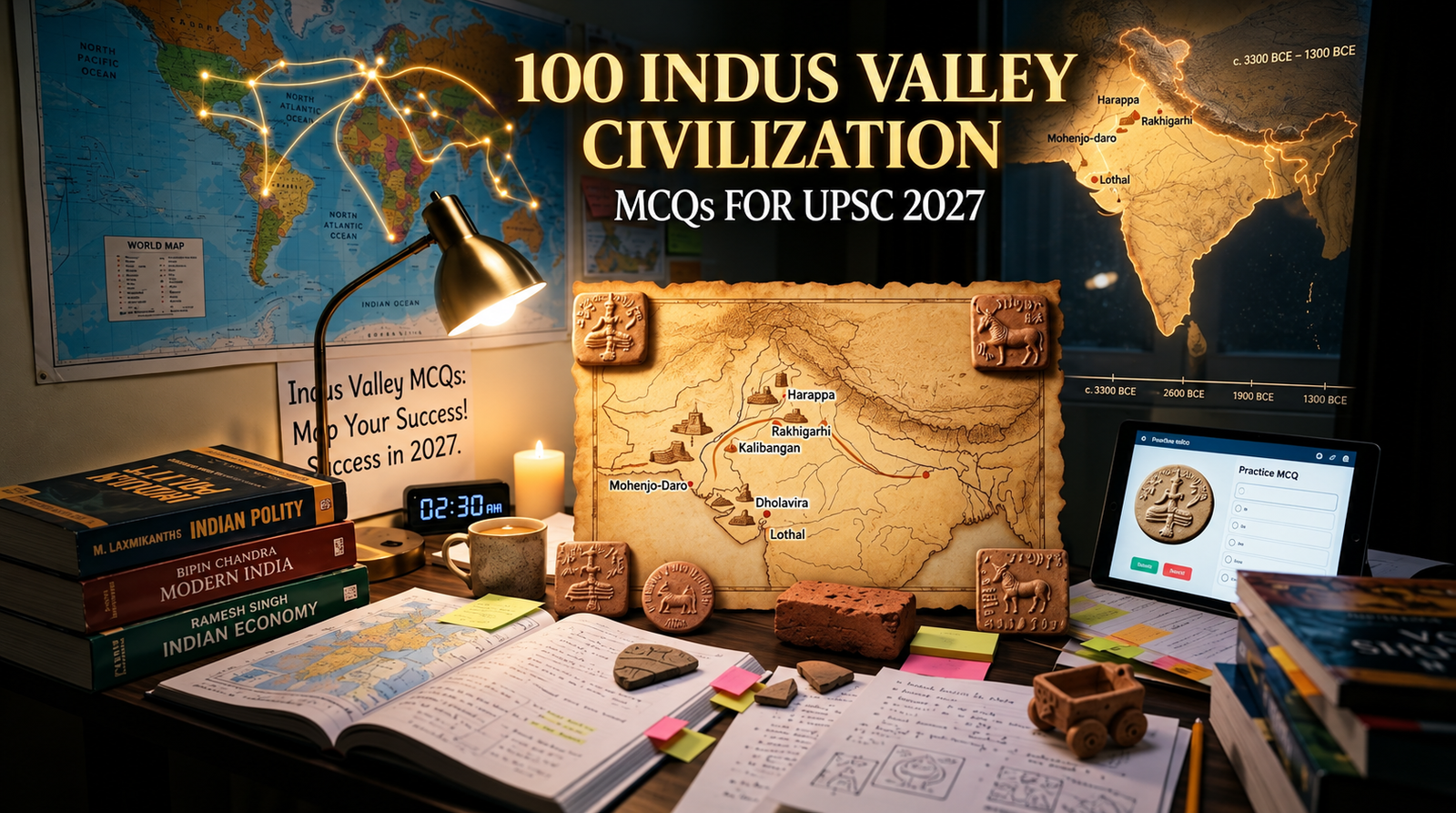
The Indus Valley Civilization, also known as the Harappan Civilization, is an important topic in Ancient Indian History for UPSC Prelims. Questions can cover its major sites, town planning, drainage system, economy, trade, art, religion and other archaeological features.
This practice set “Indus Valley Civilization MCQs ” contains 100 MCQs covering important aspects of the Indus Valley Civilization. The questions are arranged topic-wise to help aspirants revise key facts, test their understanding and identify areas that require further study.
Use these MCQs alongside standard Ancient History resources, the UPSC syllabus and previous-year questions rather than treating question practice as a substitute for conceptual study.
Before attempting these Indus Valley Civilization MCQs, make sure you have a basic understanding of the topic. These MCQs will test your conceptual clarity and help in quick revision.
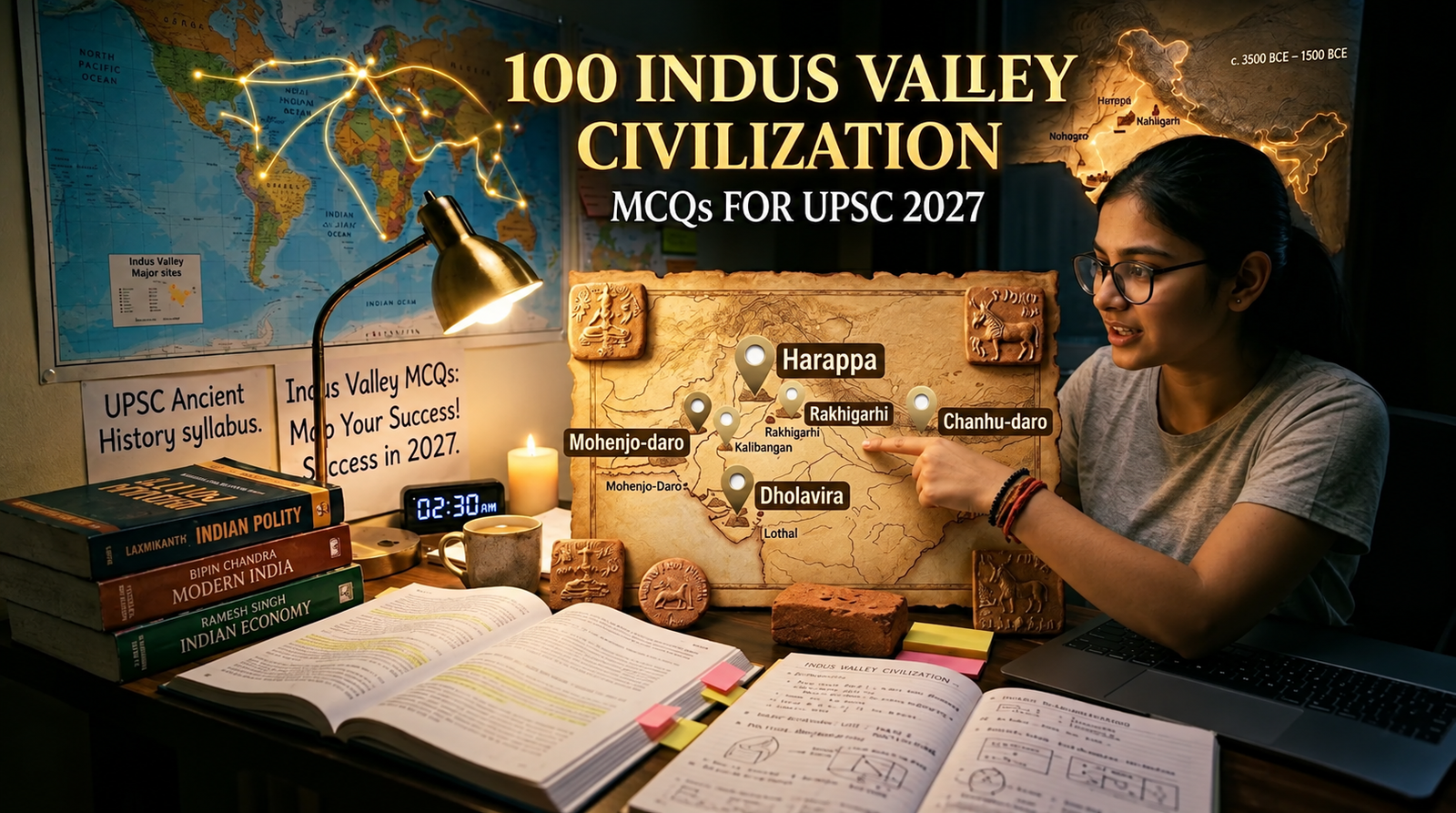
🔹Basics of Indus Valley Civilization
Indus Valley Civilization Basics MCQs (1–20)
- Indus Valley Civilization is also known as?
A. Vedic Civilization
B. Harappan Civilization
C. Mauryan Civilization
D. Gupta Civilization
👉 Answer: B - The civilization flourished around?
A. 1500–1000 BCE
B. 2500–1900 BCE
C. 1000–500 BCE
D. 3000–2000 BCE
👉 Answer: B - First discovered site was?
A. Mohenjo-daro
B. Harappa
C. Lothal
D. Kalibangan
👉 Answer: B - Discovered by?
A. Alexander Cunningham
B. Dayaram Sahni
C. R.D. Banerjee
D. John Marshall
👉 Answer: B - Civilization mainly located in?
A. South India
B. North-West India
C. East India
D. Central India
👉 Answer: B - Script of Indus Valley is?
A. Deciphered
B. Partially known
C. Undeciphered
D. Sanskrit-based
👉 Answer: C - Main river associated?
A. Ganga
B. Yamuna
C. Indus
D. Narmada
👉 Answer: C - Urban planning was?
A. Unplanned
B. Grid system
C. Circular
D. Random
👉 Answer: B - Houses were made of?
A. Wood
B. Mud
C. Baked bricks
D. Stone
👉 Answer: C - Drainage system was?
A. Absent
B. Poor
C. Advanced
D. Temporary
👉 Answer: C - Society was?
A. Nomadic
B. Urban
C. Tribal
D. Pastoral
👉 Answer: B - Main occupation?
A. Hunting
B. Agriculture
C. Fishing
D. Mining
👉 Answer: B - Evidence of trade with?
A. China
B. Mesopotamia
C. Rome
D. Greece
👉 Answer: B - Currency used?
A. Coins
B. Barter
C. Paper
D. Gold coins
👉 Answer: B - Standardized weights made of?
A. Gold
B. Stone
C. Wood
D. Clay
👉 Answer: B - Writing direction?
A. Left to right
B. Right to left
C. Top to bottom
D. Unknown
👉 Answer: B - Seals made of?
A. Copper
B. Steatite
C. Gold
D. Iron
👉 Answer: B - Main animal on seals?
A. Elephant
B. Bull
C. Unicorn
D. Tiger
👉 Answer: C - Civilization ended due to?
A. War
B. Flood
C. Climate change
D. Uncertain
👉 Answer: D - Nature of civilization?
A. Rural
B. Urban
C. Tribal
D. Nomadic
👉 Answer: B
While attempting these Indus Valley Civilization MCQs, make sure you have a basic understanding of the topic. These MCQs will test your conceptual clarity and help in quick revision.

🔹Important Sites:
Indus Valley Civilization Sites MCQs (21–40)
- Mohenjo-daro located in?
A. India
B. Pakistan
C. Afghanistan
D. Iran
👉 Answer: B - Great Bath found at?
A. Harappa
B. Mohenjo-daro
C. Lothal
D. Dholavira
👉 Answer: B - Granary found at?
A. Harappa
B. Kalibangan
C. Lothal
D. Banawali
👉 Answer: A - Lothal famous for?
A. Dockyard
B. Temple
C. Palace
D. Fort
👉 Answer: A - Kalibangan located in?
A. Gujarat
B. Rajasthan
C. Punjab
D. Haryana
👉 Answer: B - Dholavira located in?
A. Rajasthan
B. Gujarat
C. Punjab
D. UP
👉 Answer: B - Banawali is in?
A. Haryana
B. Gujarat
C. Punjab
D. MP
👉 Answer: A - Rakhigarhi located in?
A. Punjab
B. Haryana
C. Gujarat
D. UP
👉 Answer: B - Chanhudaro known for?
A. Seals
B. Beads
C. Dockyard
D. Pottery
👉 Answer: B - Surkotada known for?
A. Horse remains
B. Temple
C. Coins
D. Script
👉 Answer: A - Lothal is near?
A. Sabarmati
B. Indus
C. Ganga
D. Yamuna
👉 Answer: A - Harappa near?
A. Ravi River
B. Sutlej
C. Ganga
D. Narmada
👉 Answer: A - Mohenjo-daro means?
A. City of gold
B. Mound of dead
C. City of gods
D. Ancient town
👉 Answer: B - Largest site?
A. Harappa
B. Mohenjo-daro
C. Dholavira
D. Lothal
👉 Answer: C - Fire altars found at?
A. Lothal
B. Kalibangan
C. Harappa
D. Dholavira
👉 Answer: B - Dockyard suggests?
A. Agriculture
B. Trade
C. War
D. Religion
👉 Answer: B - Rakhigarhi is?
A. Small site
B. Largest site
C. Coastal
D. Religious
👉 Answer: B - Dholavira has?
A. Reservoir system
B. Temples
C. Fort
D. Mines
👉 Answer: A - Harappa discovered in?
A. 1921
B. 1911
C. 1930
D. 1900
👉 Answer: A - Mohenjo-daro discovered in?
A. 1922
B. 1910
C. 1935
D. 1905
👉 Answer: A
These Indus Valley Civilization MCQs are designed based on the latest UPSC pattern. By practicing these Indus Valley Civilization MCQs, aspirants can revise important facts and improve their performance in the Prelims examination.
For better preparation, you can also check our detailed notes on Indus Valley Civilization which explain all concepts in depth before solving these MCQs.
🔹Town Planning & Architecture
Indus Valley Civilization Town Planning MCQs (41–60)
- Indus cities followed which layout?
A. Circular
B. Grid pattern
C. Random
D. Linear
👉 Answer: B - Streets were?
A. Narrow
B. Curved
C. Straight and wide
D. Unplanned
👉 Answer: C - Houses were built along?
A. Rivers
B. Roads
C. Hills
D. Forests
👉 Answer: B - Bricks used were?
A. Irregular
B. Standardized
C. Wooden
D. Mud only
👉 Answer: B - Drainage system was?
A. Open
B. Covered
C. Absent
D. Temporary
👉 Answer: B - Each house had?
A. Garden
B. Well
C. Temple
D. Tower
👉 Answer: B - Citadel area used for?
A. Living
B. Storage
C. Public buildings
D. Farming
👉 Answer: C - Lower town was for?
A. Elite
B. Common people
C. Priests
D. Kings
👉 Answer: B - Great Bath used for?
A. Drinking
B. Bathing rituals
C. Storage
D. Farming
👉 Answer: B - Drainage connected to?
A. Rivers
B. Main drains
C. Wells
D. Tanks
👉 Answer: B - Houses had how many rooms?
A. One
B. Two
C. Multiple
D. None
👉 Answer: C - Entry of houses from?
A. Main street
B. Back street
C. Side lanes
D. River
👉 Answer: C - Windows opened to?
A. Street
B. Inside courtyard
C. Roof
D. River
👉 Answer: B - Staircases indicate?
A. Basements
B. Multi-storey houses
C. Temples
D. Towers
👉 Answer: B - Drain covers made of?
A. Wood
B. Stone slabs
C. Metal
D. Mud
👉 Answer: B - Public buildings include?
A. Temples
B. Granaries
C. Palaces
D. Forts
👉 Answer: B - Town planning shows?
A. Disorder
B. Central authority
C. Tribal system
D. Nomadic life
👉 Answer: B - Wells were?
A. Private
B. Public
C. Both
D. None
👉 Answer: C - Houses had bathrooms?
A. No
B. Yes
C. Rarely
D. Unknown
👉 Answer: B - Architecture shows?
A. Weak planning
B. Advanced urban system
C. Primitive life
D. Tribal system
👉 Answer: B
Regular practice of Indus Valley Civilization MCQs is essential for mastering Ancient History for UPSC. These questions cover all important aspects frequently asked in previous year papers.
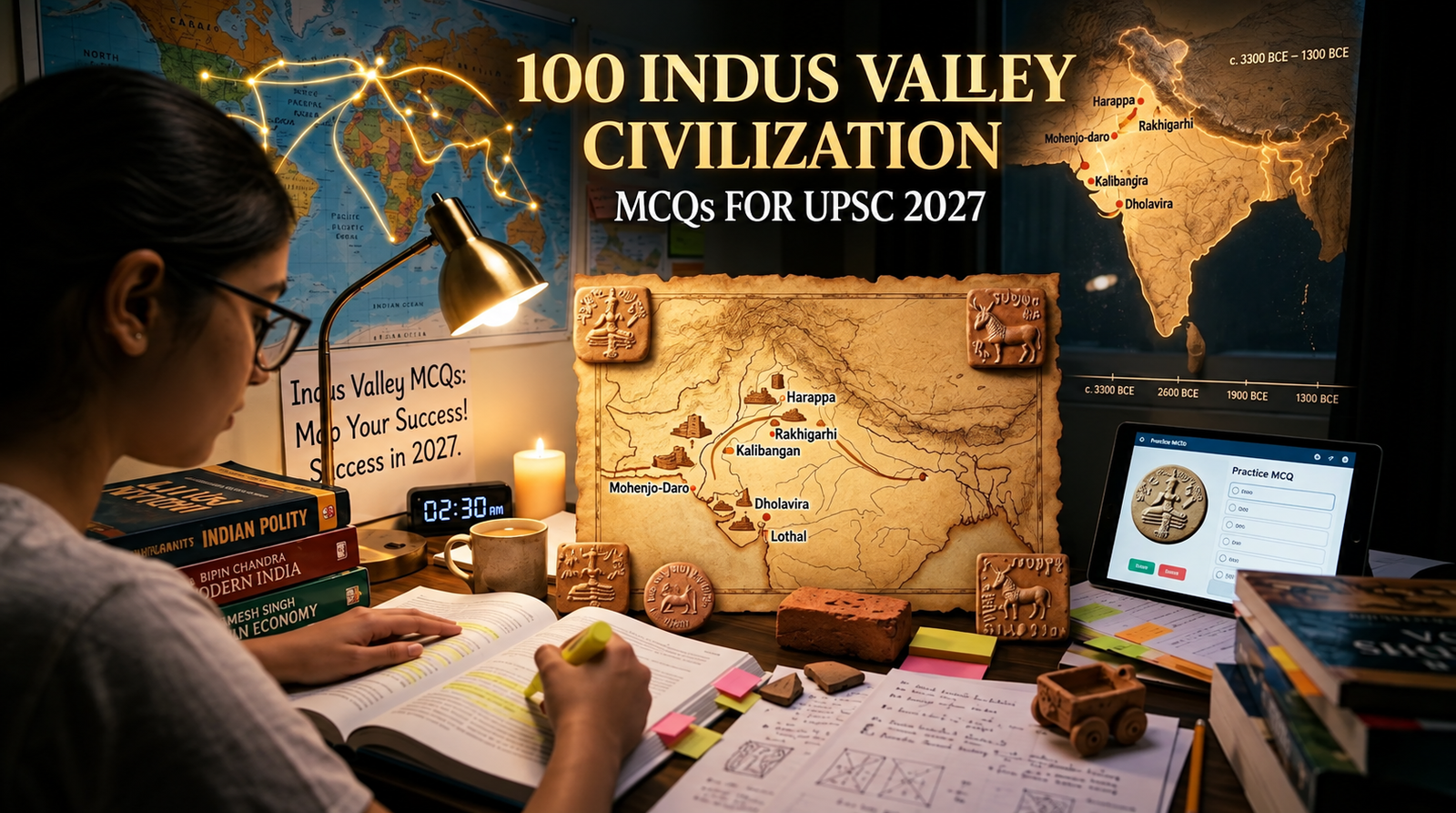
🔹Economy, Society & Culture
Indus Valley Civilization Economy & Culture MCQs (61–80)
- Main crop was?
A. Rice
B. Wheat
C. Tea
D. Coffee
👉 Answer: B - Evidence of cotton found at?
A. Harappa
B. Mohenjo-daro
C. Lothal
D. Dholavira
👉 Answer: B - Trade with Mesopotamia known as?
A. Meluha
B. Arya
C. Sindhu
D. Bharat
👉 Answer: A - Major industry?
A. Iron
B. Bead making
C. Textile
D. Mining
👉 Answer: B - Tools made of?
A. Iron
B. Copper
C. Gold
D. Steel
👉 Answer: B - Animals domesticated?
A. Horse
B. Dog
C. Elephant
D. Tiger
👉 Answer: B - Horse evidence is?
A. Clear
B. Absent
C. Rare
D. Common
👉 Answer: C - Religion based on?
A. Vedic gods
B. Nature worship
C. Idol worship
D. Buddhism
👉 Answer: B - Mother Goddess indicates?
A. War
B. Fertility worship
C. Trade
D. Education
👉 Answer: B - Pashupati seal represents?
A. Vishnu
B. Shiva
C. Brahma
D. Indra
👉 Answer: B - Burial practice was?
A. Cremation
B. Burial
C. Both
D. None
👉 Answer: B - Entertainment included?
A. Sports
B. Dance
C. Music
D. All
👉 Answer: D - Ornaments made of?
A. Gold
B. Silver
C. Stones
D. All
👉 Answer: D - Seals used for?
A. Decoration
B. Trade
C. Worship
D. War
👉 Answer: B - Standard weights show?
A. Religion
B. Trade control
C. War
D. Farming
👉 Answer: B - Social system was?
A. Caste-based
B. Class-based
C. Equal
D. Unknown
👉 Answer: D - Women status?
A. Low
B. High
C. Equal
D. Unknown
👉 Answer: D - Pottery was?
A. Plain
B. Painted
C. Broken
D. Rare
👉 Answer: B - Main trade item?
A. Gold
B. Cotton
C. Iron
D. Coal
👉 Answer: B - Economy was?
A. Industrial
B. Agricultural
C. Mixed
D. Nomadic
👉 Answer: C
🔹Important Facts & Practice MCQs (81–100)
- Indus Valley civilization was?
A. Rural
B. Urban
C. Tribal
D. Nomadic
👉 Answer: B - No evidence of?
A. Trade
B. Temples
C. Cities
D. Agriculture
👉 Answer: B - Script written on?
A. Paper
B. Seals
C. Cloth
D. Wood
👉 Answer: B - Civilization extended to?
A. Afghanistan
B. Sri Lanka
C. Nepal
D. China
👉 Answer: A - Largest site?
A. Harappa
B. Mohenjo-daro
C. Dholavira
D. Lothal
👉 Answer: C - Drainage system indicates?
A. Weak planning
B. Advanced system
C. Poor hygiene
D. Tribal life
👉 Answer: B - Dockyard shows?
A. War
B. Trade
C. Religion
D. Farming
👉 Answer: B - Fire altars indicate?
A. Trade
B. Religion
C. War
D. Farming
👉 Answer: B - Civilization decline due to?
A. War
B. Flood
C. Climate
D. Unknown
👉 Answer: D - Metal used?
A. Iron
B. Copper
C. Steel
D. Aluminium
👉 Answer: B - Writing style?
A. Alphabetic
B. Pictographic
C. Numeric
D. Mixed
👉 Answer: B - Unicorn symbol shows?
A. Religion
B. Trade
C. Identity
D. Decoration
👉 Answer: C - Trade route mainly via?
A. Land
B. Sea
C. Air
D. River
👉 Answer: B - No evidence of?
A. Iron
B. Copper
C. Bronze
D. Gold
👉 Answer: A - Civilization known for?
A. War
B. Planning
C. Religion
D. Kings
👉 Answer: B - Political system?
A. Monarchy
B. Democracy
C. Unknown
D. Republic
👉 Answer: C - Harappans used?
A. Coins
B. Barter
C. Paper
D. Notes
👉 Answer: B - Main river system?
A. Ganga
B. Indus
C. Yamuna
D. Brahmaputra
👉 Answer: B - Civilization discovered in?
A. 1900
B. 1920s
C. 1950s
D. 1800s
👉 Answer: B - Overall nature?
A. Primitive
B. Advanced
C. Tribal
D. Nomadic
👉 Answer: B
According to NCERT and archaeological sources, the Indus Valley Civilization was one of the earliest urban civilizations in the world, known for its advanced town planning and trade networks.
Most Important Resources for UPSC Prelims 2027
- Current Affairs For UPSC Prelims 2027
- Polity for UPSC Prelims 2027
- Economy for UPSC Prelims 2027
- History for UPSC Prelims 2027
- Science and Technology for UPSC Prelims 2027
- Geography for UPSC Prelims 2027
CONCLUSION
Indus Valley Civilization MCQs play a crucial role in UPSC Prelims preparation as questions are frequently asked from this topic. By practicing these Indus Valley Civilization MCQs, aspirants can strengthen their understanding of the Harappan Civilization and improve their exam performance. Keep revising these Indus Valley Civilization MCQs regularly for better results.
Recommended Posts
Indus Valley Civilization Notes for UPSC Prelims 2027
10 Powerful Key Features of Harappan Culture (UPSC Prelims 2027 Guide)
100 Ancient History MCQs for UPSC Prelims 2027
History Syllabus for UPSC Prelims 2027: Important Topics You Should Not Miss
14 thoughts on “100 Most Important Indus Valley Civilization MCQs for UPSC 2027 🔥”