Inflation and Monetary Policy MCQs 2026: Complete RBI Guide for UPSC
Monetary policy is an important area of Indian Economy for UPSC Prelims because questions can test concepts related to the Reserve Bank of India, inflation, policy rates, liquidity management and the Monetary Policy Committee. Understanding how these instruments influence credit conditions and inflation is more useful than memorising isolated definitions.
This practice set “Monetary Policy MCQs 2026 ” contains 100 MCQs covering inflation, CPI and WPI, RBI monetary policy tools, the Monetary Policy Committee and selected applications of monetary policy. The questions are arranged topic-wise to help aspirants revise important concepts and identify areas that require further study.
Use these questions alongside the UPSC syllabus, standard Economy resources and previous-year questions for a more comprehensive preparation.
🔥 Inflation and Monetary Policy MCQs 2026 (Basics)
1. Inflation refers to:
A. Fall in prices
B. Rise in general price level
C. Rise in GDP
D. Fall in demand
👉 Answer: B
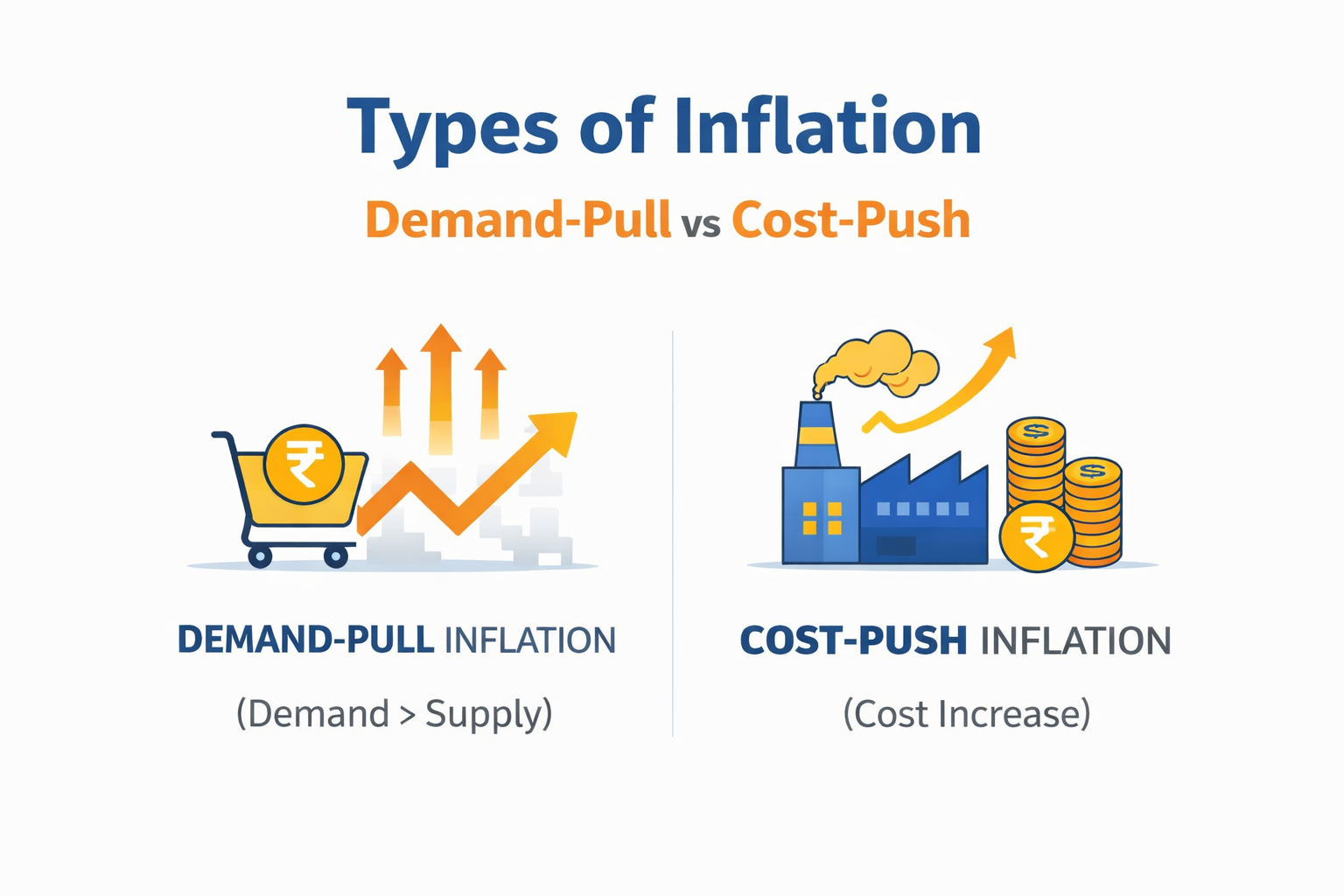
2. Demand-pull inflation occurs when:
A. Supply exceeds demand
B. Demand exceeds supply
C. Costs fall
D. Taxes decrease
👉 Answer: B
3. Cost-push inflation is caused by:
A. Increase in wages/raw materials
B. Increase in demand
C. Export rise
D. Tax cuts
👉 Answer: A
4. Deflation means:
A. Rising prices
B. Falling prices
C. Stable prices
D. High growth
👉 Answer: B
5. Hyperinflation is:
A. Mild inflation
B. Extremely high inflation
C. No inflation
D. Negative inflation
👉 Answer: B
6. Stagflation is:
A. Growth + inflation
B. Inflation + unemployment
C. Deflation
D. Growth only
👉 Answer: B
7. Inflation reduces:
A. Purchasing power
B. Production
C. Employment
D. Trade
👉 Answer: A
Q8. Moderate and stable inflation is generally associated with:
A. Predictable changes in the general price level
B. Permanent deflation
C. Hyperinflation
D. A complete absence of price changes
👉 Answer: A
9. Core inflation excludes:
A. Food & fuel
B. Services
C. Goods
D. Imports
👉 Answer: A
10. Headline inflation includes:
A. All items
B. Only food
C. Only fuel
D. Only services
👉 Answer: A
11. Inflation impacts:
A. Savings
B. Income distribution
C. Investment
D. All
👉 Answer: D
12. Demand-pull inflation is linked to:
A. Excess demand
B. Low demand
C. Stable demand
D. Supply shock
👉 Answer: A
13. Cost-push inflation arises due to:
A. Supply shocks
B. Demand rise
C. Income rise
D. Tax cuts
👉 Answer: A
14. Inflation benefits:
A. Fixed income earners
B. Borrowers
C. Savers
D. Workers
👉 Answer: B
15. Deflation may cause:
A. Growth
B. Recession
C. Stability
D. Employment rise
👉 Answer: B
16. Inflation targeting means:
A. Fixing GDP
B. Controlling inflation
C. Controlling exports
D. Fixing taxes
👉 Answer: B
17. Inflation is measured by:
A. Price index
B. GDP
C. Income
D. Exports
👉 Answer: A
18. CPI reflects:
A. Retail inflation
B. Wholesale inflation
C. Export inflation
D. Import inflation
👉 Answer: A
19. WPI reflects:
A. Retail
B. Wholesale
C. Services
D. Imports
👉 Answer: B
20. Inflation mainly affects:
A. Consumers
B. Producers
C. Government
D. All
👉 Answer: D
This section of Monetary Policy MCQs 2026 covers basic concepts of inflation, including demand-pull inflation, cost-push inflation, deflation, stagflation and inflation measurement.
 🔥 Section 2: CPI and WPI – MCQs 21–40
 🔥 Section 2: CPI and WPI – MCQs 21–40
21. CPI base year (India):
A. 2004
B. 2011–12
C. 2020
D. 1991
👉 Answer: B
22. WPI base year:
A. 2001
B. 2011–12
C. 2015–16
D. 2020
👉 Answer: B
23. CPI includes:
A. Services
B. Only goods
C. Only fuel
D. Only food
👉 Answer: A
24. WPI excludes:
A. Goods
B. Services
C. Fuel
D. Food
👉 Answer: B
25. CPI used by:
A. RBI
B. WTO
C. IMF
D. UN
👉 Answer: A
26. CPI measures:
A. Consumer price
B. Producer price
C. Export price
D. Import price
👉 Answer: A
27. WPI is published by:
A. RBI
B. Ministry of Commerce
C. IMF
D. UN
👉 Answer: B
28. CPI reflects inflation for:
A. Consumers
B. Producers
C. Exporters
D. Traders
👉 Answer: A
29. WPI reflects inflation for:
A. Retail
B. Wholesale
C. Services
D. Imports
👉 Answer: B
30. CPI includes:
A. Food
B. Fuel
C. Housing
D. All
👉 Answer: D
31. CPI better for:
A. Monetary policy
B. Trade
C. Tourism
D. Agriculture
👉 Answer: A
32. WPI focuses on:
A. Producers
B. Consumers
C. Government
D. Exporters
👉 Answer: A
33. CPI calculated by:
A. NSO
B. RBI
C. WTO
D. IMF
👉 Answer: A
34. WPI reflects:
A. Supply side
B. Demand side
C. Both
D. None
👉 Answer: A
35. CPI inflation is:
A. Retail inflation
B. Wholesale
C. Export
D. Import
👉 Answer: A
36. CPI includes services like:
A. Education
B. Health
C. Transport
D. All
👉 Answer: D
37. WPI includes:
A. Manufactured goods
B. Services
C. Imports
D. Exports
👉 Answer: A
38. CPI weight of food is:
A. High
B. Low
C. Zero
D. Fixed
👉 Answer: A
39. WPI weight of food is:
A. Low
B. High
C. Zero
D. Fixed
👉 Answer: A
40. CPI is more relevant for:
A. Public
B. Traders
C. Exporters
D. Importers
👉 Answer: A
This section focuses on the differences between CPI and WPI and their relevance for measuring price changes in the Indian economy.
To strengthen their understanding of government revenue, taxation, expenditure and fiscal management, candidates can also practice our comprehensive Fiscal Policy UPSC Prelims 2027 MCQs.
🔥 Section 3: RBI Monetary Policy Tools – MCQs 41–60
41. Repo rate is:
A. Borrowing rate of RBI
B. Lending rate of RBI
C. Tax rate
D. Export rate
👉 Answer: B
42. Reverse repo rate is:
A. RBI borrowing from banks
B. RBI lending to banks
C. Tax rate
D. Export rate
👉 Answer: A
43. CRR means:
A. Cash Reserve Ratio
B. Credit Ratio
C. Capital Ratio
D. Cash Rate
👉 Answer: A
44. SLR means:
A. Statutory Liquidity Ratio
B. Savings Loan Ratio
C. Supply Loan Rate
D. None
👉 Answer: A
45. Repo rate increase leads to:
A. Inflation rise
B. Inflation fall
C. No change
D. Growth rise
👉 Answer: B
46. CRR is maintained with:
A. RBI
B. Banks
C. Govt
D. IMF
👉 Answer: A
47. SLR is maintained in:
A. Liquid assets
B. Cash only
C. Gold only
D. Bonds only
👉 Answer: A
48. Monetary policy is controlled by:
A. RBI
B. Govt
C. IMF
D. WTO
👉 Answer: A
49. Repo rate reduces:
A. Inflation
B. GDP
C. Trade
D. Tourism
👉 Answer: A
50. Reverse repo increases:
A. Liquidity
B. Savings
C. Lending
D. Borrowing
👉 Answer: B
51. RBI controls:
A. Money supply
B. Trade
C. Agriculture
D. Tourism
👉 Answer: A
52. Liquidity means:
A. Cash availability
B. Income
C. GDP
D. Exports
👉 Answer: A
53. Monetary tightening means:
A. Increasing rates
B. Decreasing rates
C. Stable rates
D. No change
👉 Answer: A
54. Monetary easing means:
A. Lower rates
B. Higher rates
C. Stable
D. No change
👉 Answer: A
55. RBI regulates:
A. Banks
B. Trade
C. Tourism
D. Agriculture
👉 Answer: A
56. Repo rate affects:
A. Loan rates
B. Exports
C. Imports
D. GDP
👉 Answer: A
57. CRR increase leads to:
A. Less liquidity
B. More liquidity
C. No change
D. Inflation rise
👉 Answer: A
58. SLR increase leads to:
A. Less lending
B. More lending
C. No change
D. Inflation rise
👉 Answer: A
59. RBI is India’s:
A. Central bank
B. Commercial bank
C. Investment bank
D. Private bank
👉 Answer: A
60. Monetary policy aims at:
A. Price stability
B. Growth
C. Stability
D. All
👉 Answer: D
This section of Monetary Policy MCQs 2026 covers key monetary policy instruments used by the RBI, including the repo rate, CRR, SLR and liquidity management.
🔥Section 4: Monetary Policy Committee (MPC): MCQs 61–80
61. Monetary Policy Committee (MPC) was established under which Act?
A. RBI Act, 1934
B. Banking Regulation Act
C. Finance Act
D. Companies Act
👉 Answer: A
62. MPC was constituted in which year?
A. 2014
B. 2015
C. 2016
D. 2017
👉 Answer: C
63. Total members in MPC are:
A. 4
B. 5
C. 6
D. 7
👉 Answer: C
64. Who is the Chairperson of MPC?
A. Finance Minister
B. RBI Governor
C. Prime Minister
D. SEBI Chairman
👉 Answer: B
65. How many members are nominated by the Government in MPC?
A. 2
B. 3
C. 4
D. 5
👉 Answer: B
66. RBI members in MPC are:
A. 2
B. 3
C. 4
D. 5
👉 Answer: B
67. MPC mainly decides:
A. Fiscal policy
B. Monetary policy
C. Trade policy
D. Industrial policy
👉 Answer: B
68. MPC decides the level of:
A. Tax rate
B. Repo rate
C. GDP
D. Exports
👉 Answer: B
69. Inflation target set for RBI is:
A. 2% ±1%
B. 4% ±2%
C. 6% ±1%
D. 5% ±3%
👉 Answer: B
70. MPC meets at least:
A. Monthly
B. Quarterly
C. Bi-monthly
D. Yearly
👉 Answer: C
71. Each MPC member has:
A. No vote
B. One vote
C. Two votes
D. Three votes
👉 Answer: B
72. In case of a tie, the deciding vote is given by:
A. Finance Minister
B. RBI Governor
C. PM
D. SEBI Chief
👉 Answer: B
73. MPC decisions are based on:
A. Majority vote
B. Unanimous vote
C. Government order
D. RBI decision only
👉 Answer: A
74. MPC is responsible for achieving:
A. GDP growth
B. Inflation target
C. Trade surplus
D. Export growth
👉 Answer: B
75. Inflation targeting framework started in:
A. 2014
B. 2015
C. 2016
D. 2017
👉 Answer: C
76. MPC decisions are published in:
A. Budget
B. Monetary policy report
C. Economic survey
D. Census
👉 Answer: B
77. MPC is related to:
A. Fiscal policy
B. Monetary policy
C. Trade policy
D. Industrial policy
👉 Answer: B
78. MPC ensures:
A. Price stability
B. Export growth
C. Industrial growth
D. Trade balance
👉 Answer: A
79. MPC was recommended by:
A. Rangarajan Committee
B. Urjit Patel Committee
C. Narasimham Committee
D. Kelkar Committee
👉 Answer: B
80. MPC replaced:
A. RBI Governor system
B. Single decision system
C. Government control
D. IMF control
👉 Answer: B
This section examines the structure and functions of the Monetary Policy Committee and its role in India’s inflation-targeting framework.
🔥 Monetary Policy Applications – MCQs 81–100
81. RBI increases repo rate primarily to control:
A. Unemployment
B. Inflation
C. Exports
D. Imports
👉 Answer: B
82. When inflation rises sharply, RBI generally:
A. Decreases repo rate
B. Increases repo rate
C. Does nothing
D. Reduces CRR
👉 Answer: B
83. Repo rate hike leads to:
A. Cheaper loans
B. Costlier loans
C. No change
D. More exports
👉 Answer: B
84. Reverse repo rate increase leads to:
A. More liquidity
B. Less liquidity
C. No change
D. Higher exports
👉 Answer: B
85. High inflation reduces:
A. Savings value
B. Exports
C. Imports
D. Production
👉 Answer: A
86. Inflation targeting framework in India focuses on:
A. GDP growth
B. Price stability
C. Trade balance
D. Employment
👉 Answer: B
87. RBI uses monetary policy to maintain:
A. Exchange rate only
B. Price stability
C. Agricultural output
D. Population control
👉 Answer: B
88. Increase in CRR results in:
A. More bank lending
B. Less bank lending
C. No change
D. Higher exports
👉 Answer: B
89. Increase in SLR leads to:
A. More liquidity
B. Reduced liquidity
C. No effect
D. Increase in imports
👉 Answer: B
90. RBI monetary tightening aims to:
A. Boost inflation
B. Reduce inflation
C. Increase exports
D. Increase imports
👉 Answer: B
91. When inflation is low, RBI may:
A. Increase repo rate
B. Decrease repo rate
C. Increase CRR
D. Increase SLR
👉 Answer: B
92. High inflation impacts economy by:
A. Increasing purchasing power
B. Reducing purchasing power
C. Increasing savings
D. Increasing employment
👉 Answer: B
93. Repo rate cut leads to:
A. Expensive loans
B. Cheaper loans
C. Less liquidity
D. Lower investment
👉 Answer: B
94. RBI policy rates influence:
A. Loan interest rates
B. Export policy
C. Import duties
D. Trade agreements
👉 Answer: A
95. Inflation in India is mainly measured by:
A. WPI
B. CPI
C. GDP
D. GNP
👉 Answer: B
96. RBI adjusts policy rates based on:
A. Weather
B. Inflation trends
C. Population
D. Tourism
👉 Answer: B
97. High inflation may lead to:
A. Economic instability
B. Stable economy
C. Growth only
D. No effect
👉 Answer: A
98. Monetary policy affects:
A. Liquidity
B. Credit availability
C. Inflation
D. All of the above
👉 Answer: D
99. RBI’s inflation target band is:
A. 2–4%
B. 4% ±2%
C. 5–7%
D. 3–5%
👉 Answer: B
100. Effective monetary policy helps in:
A. Price stability
B. Economic growth
C. Financial stability
D. All of the above
👉 Answer: D
Most Important Resources for UPSC Prelims 2027
- Current Affairs For UPSC Prelims 2027
- Polity for UPSC Prelims 2027
- Economy for UPSC Prelims 2027
- History for UPSC Prelims 2027
- Science and Technology for UPSC Prelims 2027
- Geography for UPSC Prelims 2027
Recommended Posts
Indian Economy UPSC Prelims 2027: Inevitable Essential Notes, Concepts & Current Affairs
Banking and Financial System UPSC Prelims MCQs 2027: 100 Proven MCQs with Explanations
National Income and GDP UPSC Prelims 2027: 100 Essential MCQs for Success
External Resources
- Reserve Bank of India (RBI)
- Ministry of Statistics and Programme Implementation (MoSPI)
- Department for Promotion of Industry and Internal Trade (DPIIT)
- Department of Economic Affairs, Ministry of Finance, Government of India
Conclusion
These 100 Monetary Policy MCQs 2026 provide a structured revision of important monetary-policy and inflation concepts, including CPI and WPI, RBI policy instruments, liquidity management and the Monetary Policy Committee.
Use the questions to test your understanding and identify areas that require deeper study. For topics involving current policy decisions, inflation data or changes in RBI regulations, refer to official RBI and government sources for the latest information.
10 thoughts on “100 Monetary Policy MCQs 2026: Comprehensive Guide for UPSC Prelims”