Introduction
UPSC Mains 2026 GS1 Art and Culture Notes are essential for aspirants preparing for the Civil Services Examination. Art and Culture remains one of the most important and scoring areas of General Studies Paper 1, covering Indian architecture, classical dances, music, paintings, literature, religion, philosophy, and cultural heritage. These comprehensive UPSC Mains 2026 GS1 Art and Culture Notes have been designed to help candidates build conceptual clarity and improve answer-writing performance in both UPSC Prelims and Mains examinations.
Art and Culture questions are asked regularly in UPSC, making systematic preparation crucial for success. This guide covers all major topics in a concise and exam-oriented manner.
Art & Culture can be a game-changer in UPSC Mains. Learn how toppers approach the entire paper in our guide How to Score 120+ in GS Paper 1.
UPSC Mains 2026 GS1 Art and Culture Syllabus
The UPSC GS Paper 1 syllabus includes:
- Indian culture covering salient aspects of Art Forms, Literature, and Architecture from ancient to modern times.
- Classical and Folk Dances.
- Indian Music Traditions.
- Indian Paintings and Schools of Art.
- Temple Architecture.
- Buddhist and Jain Architecture.
- Indo-Islamic Architecture.
- Cultural Institutions.
- UNESCO World Heritage Sites.
- Religious and Philosophical Traditions.
Indian Architecture for UPSC Mains 2026 GS1 Art and Culture
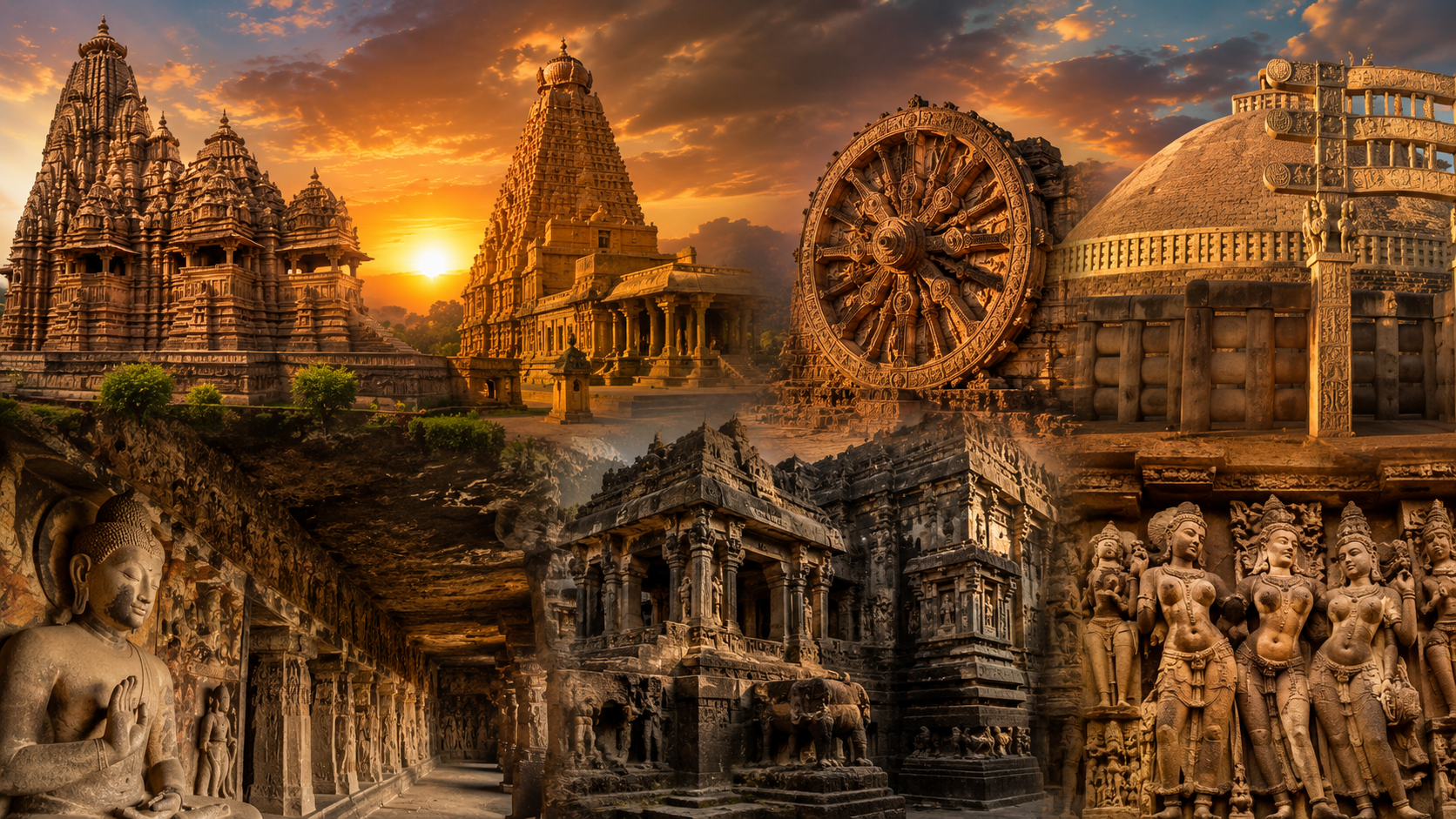
Temple Architecture
Nagara Style
Features:
- Found mainly in North India.
- Curvilinear Shikhara.
- Garbhagriha at the center.
- Amalaka on top.
Examples:
- Kandariya Mahadev Temple
- Sun Temple, Konark
- Lingaraja Temple
Dravida Style
Features:
- Found in South India.
- Pyramid-shaped Vimana.
- Large Gopurams.
- Temple complexes with multiple enclosures.
Examples:
- Brihadeeswara Temple
- Meenakshi Temple
- Shore Temple
Vesara Style
Features:
- Mixture of Nagara and Dravida styles.
- Developed under Chalukyas and Hoysalas.
Examples:
- Hoysaleswara Temple
- Chennakesava Temple
Buddhist Architecture Notes for UPSC Mains 2026 GS1 Art and Culture
Important Components:
Stupa
Purpose:
- Preservation of relics.
Examples:
- Sanchi Stupa
- Amaravati Stupa
Chaitya
Purpose:
- Prayer hall.
Example:
- Karle Chaitya
Vihara
Purpose:
- Residence of monks.
Examples:
- Ajanta Caves
- Nalanda University
For a better grasp of the related concept read our Master Guide: Indian Classical and Folk Music UPSC Mains 2026 (GS 1) for comprehensive music notes.
Indian Classical Dances Relevant for UPSC Mains 2026 GS1 Art and Culture
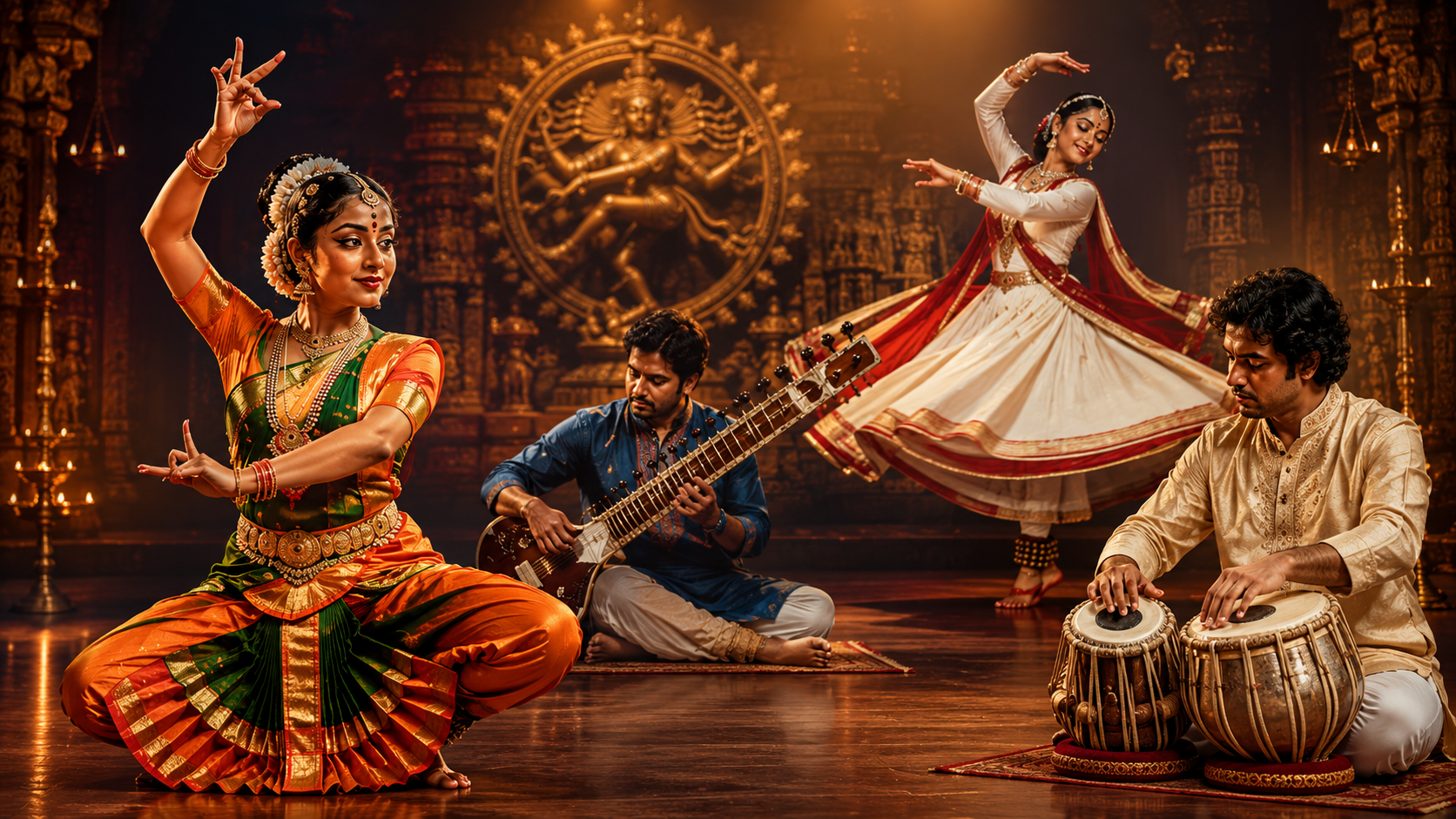
Bharatanatyam
State:
- Tamil Nadu
Features:
- Oldest classical dance form.
- Devotional themes.
- Mudras and expressions.
Kathak
State:
- Uttar Pradesh
Features:
- Spins and footwork.
- Mughal influence.
Kathakali
State:
- Kerala
Features:
- Elaborate makeup.
- Ramayana and Mahabharata themes.
Kuchipudi
State:
- Andhra Pradesh
Odissi
State:
- Odisha
Manipuri
State:
- Manipur
Mohiniyattam
State:
- Kerala
Sattriya
State:
- Assam
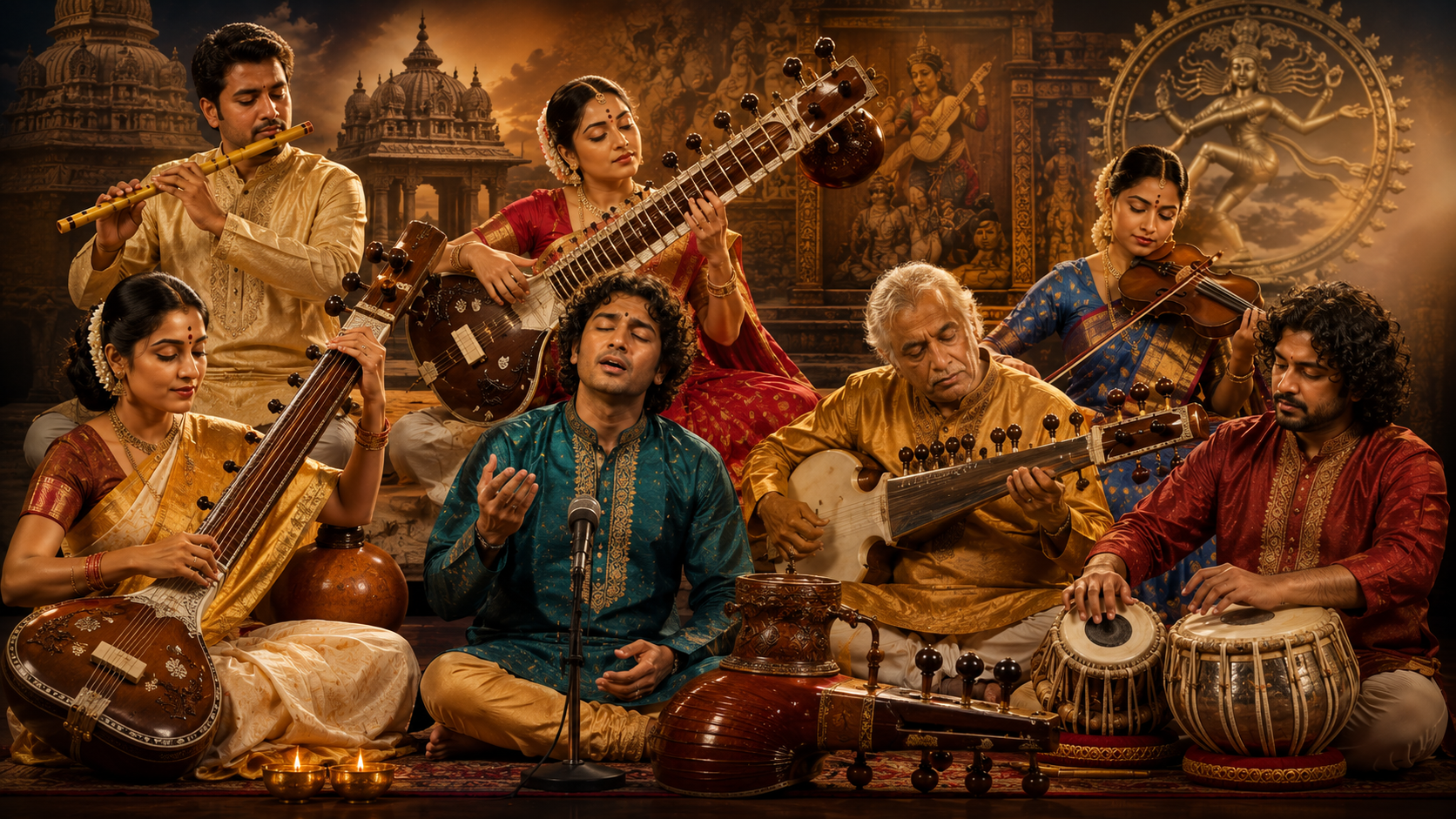
Indian Music Related to UPSC Mains 2026 GS1 Art and Culture
Hindustani Music
Region:
- North India
Major Gharanas:
- Gwalior
- Kirana
- Jaipur-Atrauli
- Agra
Important Instruments:
- Sitar
- Tabla
- Sarod
- Santoor
Carnatic Music
Region:
- South India
Trinity of Carnatic Music:
- Tyagaraja
- Muthuswami Dikshitar
- Syama Sastri
Important Instruments:
- Veena
- Mridangam
- Violin
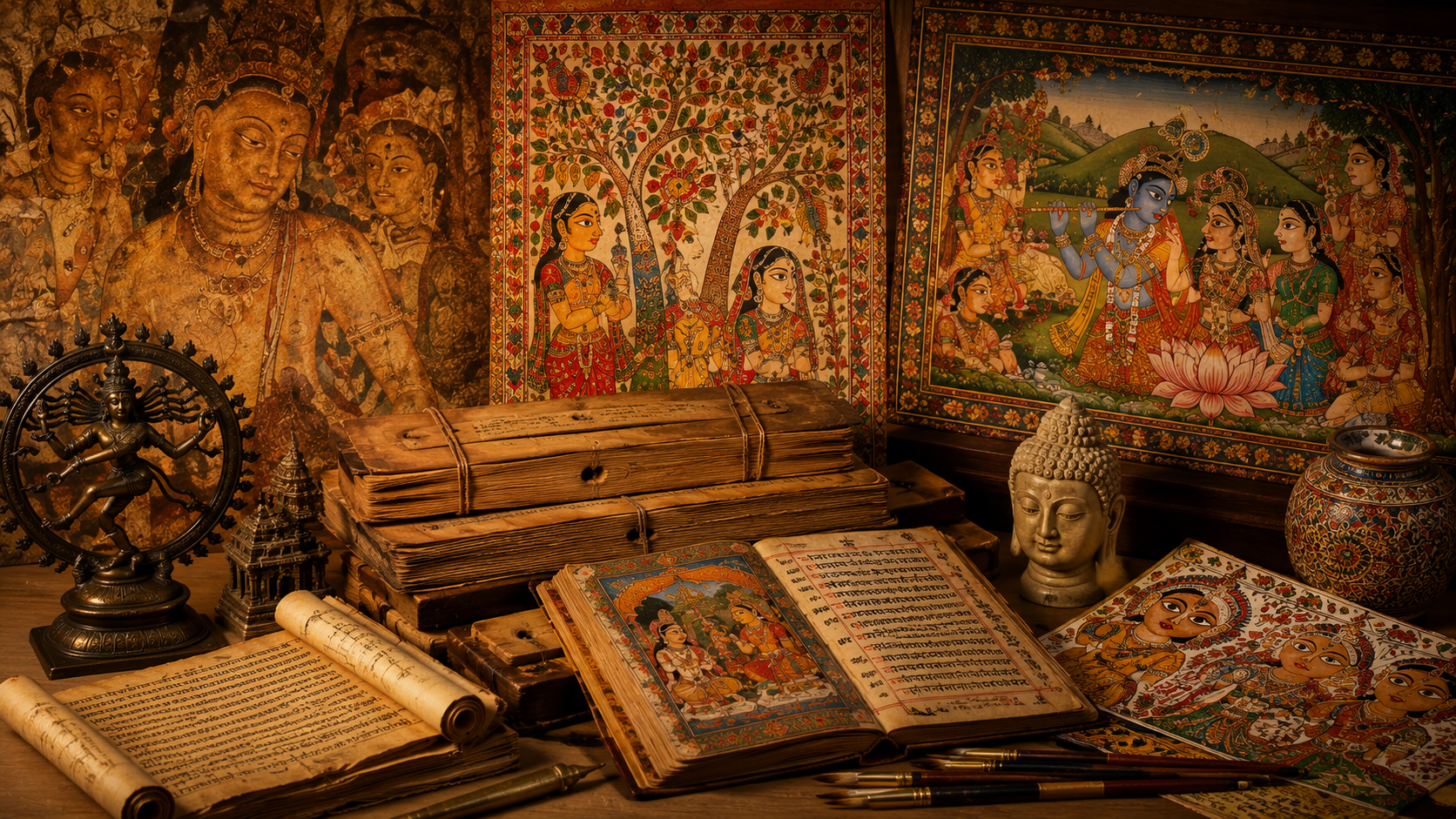
Indian Paintings
Ajanta Paintings
Features:
- Buddhist themes.
- Fresco technique.
Mughal Paintings
Features:
- Persian influence.
- Realistic portraits.
Important Artists:
- Basawan
- Daswant
Rajput Paintings
Schools:
- Mewar
- Marwar
- Bundi
- Kishangarh
Pahari Paintings
Themes:
- Krishna legends.
- Romantic compositions.
Indian Literature for UPSC Mains 2026 GS1 Art and Culture
Vedic Literature
- Rigveda
- Yajurveda
- Samaveda
- Atharvaveda
Buddhist Literature
- Tripitaka
Jain Literature
- Agamas
Sangam Literature
Language:
- Tamil
Importance:
- Early South Indian history.
UNESCO World Heritage Sites
Important Sites for UPSC:
- Taj Mahal
- Red Fort
- Qutub Minar
- Khajuraho Group of Monuments
- Konark Sun Temple
- Hampi
- Mahabalipuram
- Ajanta Caves
- Ellora Caves
- Sanchi Stupa
Official information on UNESCO World Heritage Sites can be accessed through the UNESCO World Heritage Centre:
Cultural Institutions Important for UPSC Mains 2026 GS1 Art and Culture
Archaeological Survey of India (ASI)
Functions:
- Protection of monuments.
- Archaeological research.
For archaeological discoveries, monument conservation, and protected sites, visit the Archaeological Survey of India (ASI):
Indira Gandhi National Centre for the Arts (IGNCA)
Functions:
- Promotion of cultural heritage.
Sangeet Natak Akademi
Functions:
- Promotion of music, dance, and drama.
Lalit Kala Akademi
Functions:
- Promotion of visual arts.
For visual arts, paintings, and exhibitions, explore the Lalit Kala Akademi:
Important Themes for UPSC Mains 2026 GS1 Art and Culture
Cultural Heritage Conservation
- Monument preservation.
- Heritage tourism.
- Community participation.
Globalization and Culture
- Cultural exchange.
- Preservation of indigenous traditions.
Technology and Heritage
- Digital archives.
- Virtual museums.
- AI-based conservation.
Answer Writing Tips for UPSC Mains 2026 GS1 Art and Culture
- Start with a definition or historical context.
- Use diagrams of temples and stupas where possible.
- Mention UNESCO status wherever relevant.
- Include examples and case studies.
- Conclude with cultural significance and preservation measures.
Recommended Posts
The Ultimate Guide to Bharatanatyam UPSC Notes: Master GS 1 Art & Culture
UPSC Mains 2026 GS Paper 1 Syllabus: Comprehensive Guide
Modern History Strategy for UPSC Mains GS Paper 1 Guide
Indian Art Forms (Dance, Music, Painting) UPSC Mains 2026 GS Paper 1 Ultimate Success Guide
Conclusion: UPSC Mains 2026 GS1 Art and Culture
Art and Culture remains one of the highest-scoring areas in UPSC Mains GS Paper 1. A systematic understanding of architecture, dance, music, paintings, literature, and cultural heritage can significantly improve answer quality. These UPSC Mains 2026 GS1 Art and Culture Notes provide a strong foundation for both Prelims and Mains preparation.
Consistent revision, answer-writing practice, and integration of current cultural developments will help aspirants maximize their scores in UPSC Mains 2026.
FAQs: UPSC Mains 2026 GS1 Art and Culture
Why are Art and Culture Notes important for UPSC Mains 2026?
Art and Culture is a core component of GS Paper 1 and contributes to both Prelims and Mains preparation.
Which classical dances are most important for UPSC?
Bharatanatyam, Kathak, Kathakali, Odissi, Kuchipudi, Manipuri, Mohiniyattam, and Sattriya.
What are the most important UNESCO sites for UPSC?
Ajanta, Ellora, Hampi, Konark, Khajuraho, Sanchi, Red Fort, and Taj Mahal.
How should I prepare Art and Culture for UPSC Mains?
Focus on conceptual clarity, revision notes, diagrams, previous-year questions, and answer-writing practice.
13 thoughts on “UPSC Mains 2026 GS1 Art and Culture Notes: Complete Study Guide for Success”