
Welcome to today’s edition of Daily Current Affairs 24th July 26, tailored specifically for UPSC Civil Services Examination (CSE) aspirants. Navigating the daily news cycle requires a structured approach. Rather than memorizing isolated headlines, the key is filtering daily developments directly through the lens of the UPSC Syllabus (GS Papers 1, 2, and 3).
Rather than memorizing isolated headlines, the key is filtering daily developments directly through the UPSC Mains 2026 GS Paper 1 Syllabus and broader GS Papers 2 & 3 frameworks.
Before starting today’s current affairs, strengthen your UPSC preparation by understanding the UPSC Prelims 2027 Subject Wise Weightage, which helps you prioritize high-scoring subjects while reading daily news.
In this comprehensive Daily Current Affairs 24th July 26 briefing, we break down major national and international developments, framed specifically for both Prelims factual accuracy and Mains analytical depth.

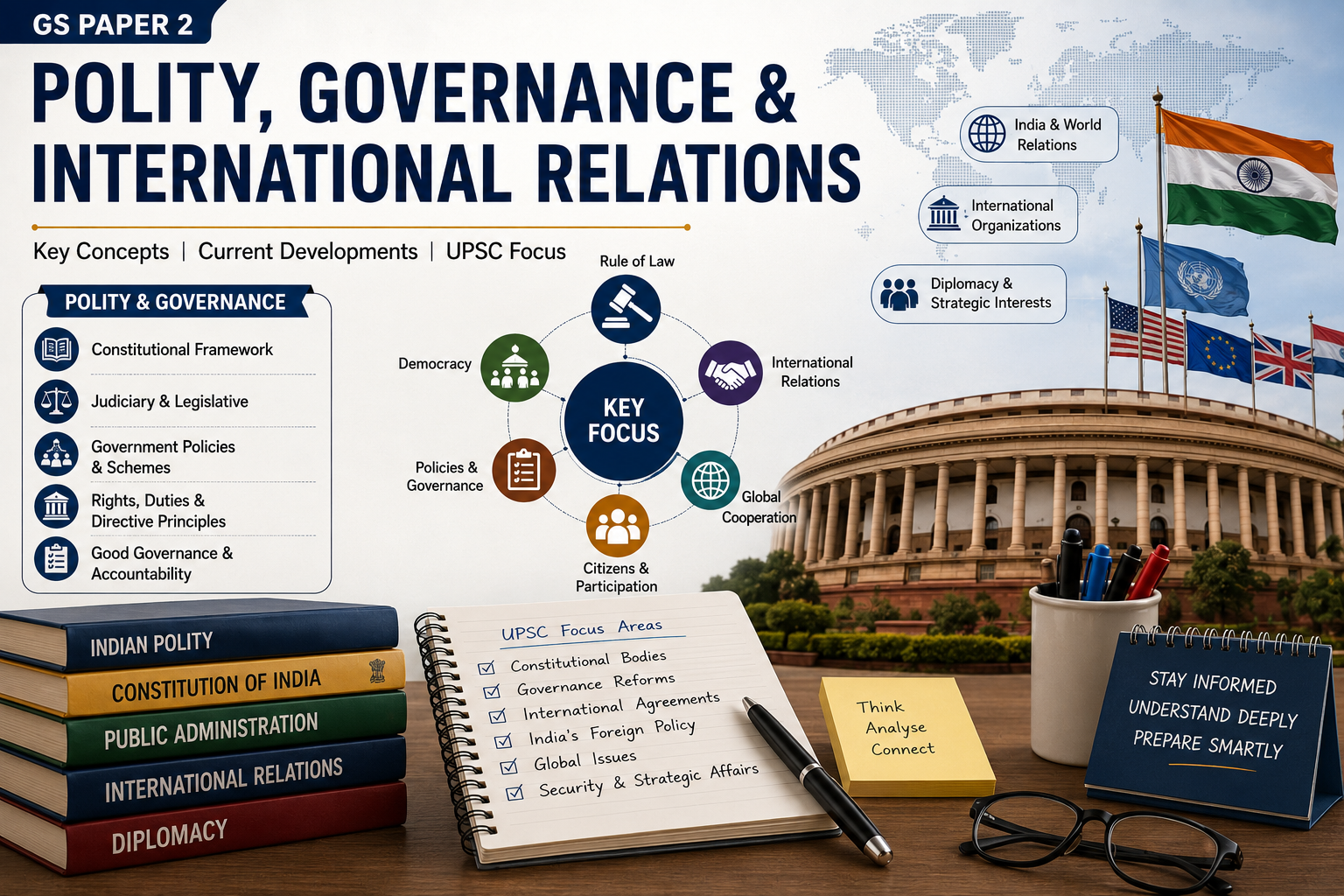
🏛️ GS Paper 2: Polity, Governance & International Relations
Security vs. Civil Liberties: Preventive Detention under the NSA
News Context
A key highlight in our Daily Current Affairs 24th July 26 polity coverage is the Delhi Government Home Department’s decision to authorize the Delhi Police Commissioner to exercise preventive detention powers under Section 3(2) of the National Security Act (NSA), 1980.
                         Preventive Detention Architecture

         ┌──────────────────────────────────────────────────────────────┐
         │              Article 22 of the Indian Constitution            │
         └──────────────────────────────┬───────────────────────────────┘
                                        │
           ┌────────────────────────────┴───────────────────────────┐
           ▼                                                        ▼
┌─────────────────────┐                                   ┌───────────────────┐
│ Article 22(1) & (2) │                                   │ Article 22(3)-(7) │
│ Punitive Safeguards │                                   │   Exceptions &    │
│  (Arrested Persons) │                                   │ Preventive Detn.  │
└─────────────────────┘                                   └─────────┬─────────┘
                                                                    │
                                                                    ▼
                                                          ┌───────────────────┐
                                                          │ National Security │
                                                          │  Act (NSA), 1980  │
                                                          └───────────────────┘
Analytical Breakdown for Mains
Preventive detention remains one of the most debated legal provisions in the Indian Constitution. While ordinary criminal law operates on the principle of punitive justice (punishing an act already committed), preventive detention allows the state to detain an individual on suspicion to prevent potential future threats to public order or national security.
Constitutional Architecture:
Under Article 22(3)(b), constitutional safeguards against arrest and detention (such as being informed of the grounds of arrest immediately and produced before a magistrate within 24 hours) do not apply to individuals detained under preventive detention laws.
However, Article 22(4) provides a balancing check by mandating an Advisory Board composed of persons qualified to be High Court judges if the detention exceeds three months.
Grounds for NSA Detentions:
Threat to the security of the State or national defense.
Maintenance of public order.
Maintenance of supplies and services essential to the community.
Key Takeaway for CSE: Expect questions exploring the friction between Article 21 (Right to Life and Personal Liberty) and extraordinary state powers under preventive detention. A strong answer must contrast state security requirements against the risk of procedural arbitrariness.
Today’s governance-related developments can be understood better when your Polity fundamentals are strong. Review Our Detailed Polity Resources for better conceptual clarity.
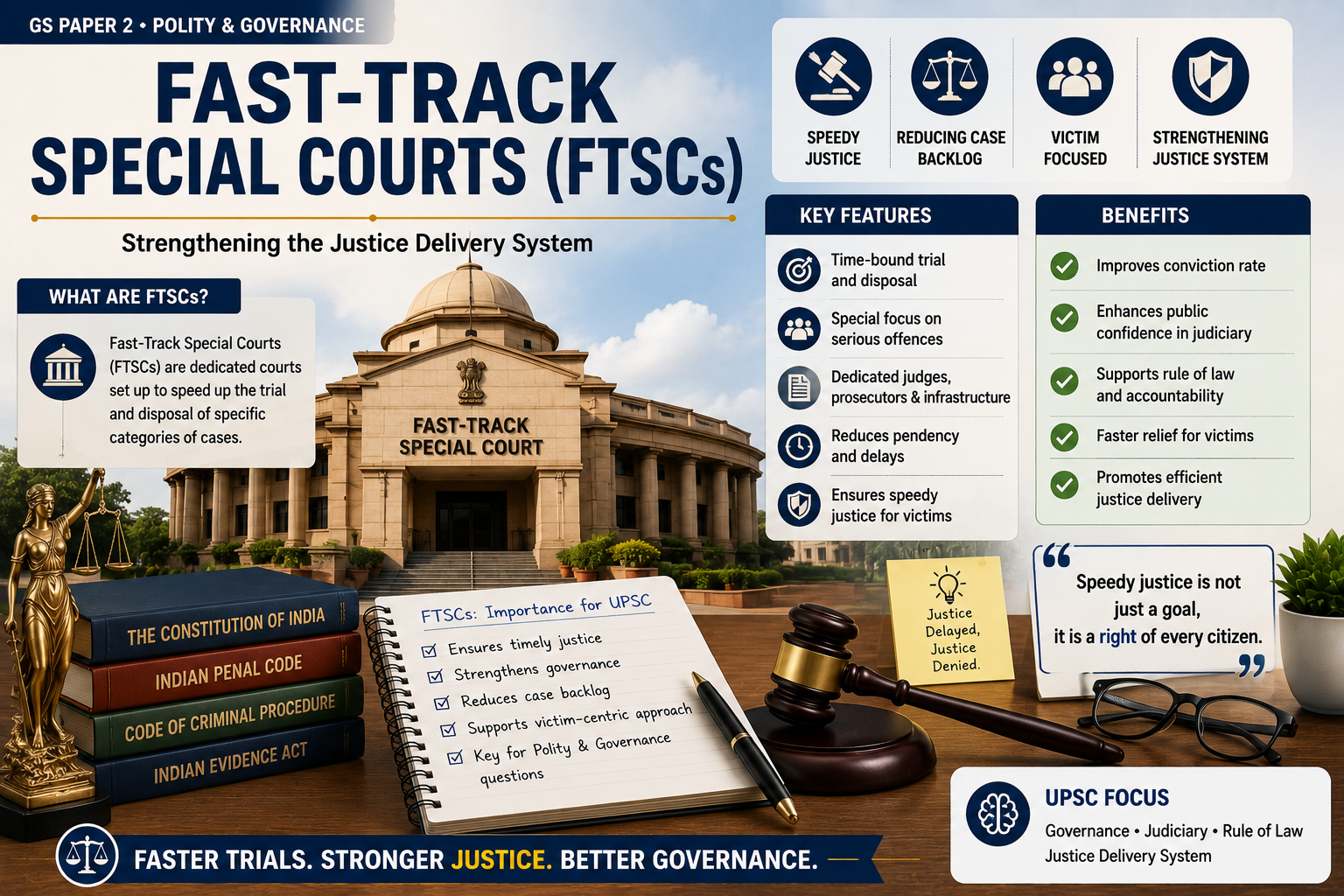
Fast-Track Special Courts (FTSCs): Judicial Infrastructure & Disparities
News Context
Recent performance reviews of Fast-Track Special Courts (FTSCs)—set up under the Centrally Sponsored Scheme for speedy disposal of cases under the POCSO Act and Criminal Law Amendment Act—reveal widening disparities across states in trial timelines and case disposals.
Structural Issues & Statutory Provisions
Article 247: Grants Parliament the power to establish additional courts for the better administration of Union laws.
Systemic Bottlenecks:
Ad-hoc Infrastructure: Many FTSCs operate on temporary or contractual extensions, leading to judicial turnover and administrative delays.
Forensic Backlogs: Delays in forensic examination reports directly stall proceedings despite the existence of specialized courtrooms.
Uneven Distribution: Pendency varies dramatically between high-volume urban districts and rural jurisdictions.
Questions related to constitutional bodies and the judiciary are frequently asked in UPSC. Practice more governance-based questions through our dedicated preparation resources–Powerful UPSC Prelims 2027 Strategy & Study Plan
and Perfect BPSC Exam Pattern 2026: Latest Prelims, Mains & Interview Framework
International Relations: India–Romania & India–Panama Bilateral Push
+-------------------------------------------------------------------------+
|                    India's Geopolitical Axis                            |
+------------------------------------+------------------------------------+
                                     |
           ┌─────────────────────────┴─────────────────────────┐
           ▼                                                   ▼
┌─────────────────────────┐                         ┌─────────────────────┐
|    Romania (Black Sea)  |                         | Panama (Isthmus)    |
| • Port of Constanța     |                         | • Maritime Chokepoint|
| • Gateway to Central EU |                         | • Supply Chain Hub  |
└─────────────────────────┘                         └─────────────────────┘
Strategic Value
Another crucial topic in our Daily Current Affairs 24th July 26 international relations section is India’s expanding diplomatic engagement with strategic mid-tier economies across Europe and Latin America.
India & Romania:
Strategic Significance: Romania offers direct maritime access via the Port of Constanța on the Black Sea.
Trade & Economic Linkages: Serves as an entry point into Central and Eastern European markets for Indian exports in technology, pharmaceuticals, and renewable energy equipment.
India & Panama:
Strategic Significance: Panama holds critical strategic value owing to the Panama Canal, a vital choke point in global maritime logistics.
Focus Areas: Strengthening maritime security, trade diversification, and expanding India’s diplomatic presence in Central America.
International relations form an important part of both Prelims and Mains. Explore more practice questions and analysis on global affairs. Study our post-100 Important World Current Affairs MCQs for UPSC Prelims 2027 with Answers
Global Nuclear Governance: The US–Saudi 123 Civil Nuclear Agreement
News Context
The United States and Saudi Arabia have finalized a 123 Agreement, establishing a formal framework for peaceful nuclear energy cooperation between the two nations.
Core Concepts for Prelims & Mains
What is a “123 Agreement”?
Named after Section 123 of the US Atomic Energy Act of 1954, this pact is a legal prerequisite for the United States to transfer significant nuclear materials, equipment, or technology to any foreign partner.
Non-Proliferation Safeguards:
Requires stringent adherence to International Atomic Energy Agency (IAEA) standards, restricting fuel enrichment and reprocessing capabilities unless explicitly approved.
🍃 GS Paper 3: Environment, Agriculture, Economy & Defence
Methane Emissions & Mitigation in Paddy Cultivation
Science & Environment Linkage
In today’s Daily Current Affairs 24th July 26 environment module, a study in Nature Food has pinpointed continuously flooded, irrigated paddy fields as significant regional sources of global methane emissions.
                  Paddy Field Methane Cycle

             [ Flooded Paddy Field ]
                        │
                        ▼ (Water blocks oxygen)
            [ Anaerobic Environment ]
                        │
                        ▼ (Methanogenic bacteria active)
             [ Organic Decomposition ]
                        │
                        ▼
            [ Methane (CH₄) Release ]
                        │
                        ▼
     [ Global Warming Potential: ~28x over CO₂ ]
Environment and Ecology has consistently been among the highest-weightage areas in UPSC Prelims. Check our complete preparation guide to focus on the most important topics-UPSC Prelims 2027 Subject Wise Weightage: Previous Year Trends & Strategy.
For Environment, read our post Environment MCQs 2027: 100 Most Important Questions for UPSC Prelims.
Agronomic Mitigation Strategies
| Mitigation Technique | How It Works | Additional Benefits |
| Alternate Wetting and Drying (AWD) | Fields are intermittently drained rather than continuously submerged. | Cuts water consumption by up to 30% without reducing yield. |
| Direct-Seeded Rice (DSR) | Seeds are sown directly into the field, bypassing transplanting in flooded nurseries. | Saves labor costs and minimizes early-stage anaerobic methane generation. |
| System of Rice Intensification (SRI) | Uses wider plant spacing and moist (unflooded) soil conditions. | Improves root strength and crop resilience against lodging. |
| Nitrification Inhibitors | Application of neem-coated urea or nitrapyrin. | Slows nitrogen conversion, lowering nitrous oxide emissions alongside methane. |

Trade Policy: FDI Frameworks in Indian E-Commerce
Regulatory Overview
Examining economic governance for our Daily Current Affairs 24th July 26 analysis, ongoing debates surrounding DPIIT guidelines on Foreign Direct Investment (FDI) highlight the contrast between digital trade models:
Marketplace Model (100% FDI permitted via Automatic Route):
The platform acts solely as an intermediary connecting third-party buyers and sellers.
The operator cannot exercise ownership over inventory or influence end-consumer prices directly.
Inventory-Based Model (FDI Prohibited):
The e-commerce entity owns and controls the stock directly, selling directly to end consumers.
Restrictions are maintained to shield domestic brick-and-mortar retailers and small MSMEs from predatory pricing practices.
Sustainable Development: ‘AAROH’ Report on Scientific Mine Closure
Context & Key Interventions
The Ministry of Coal released the ‘AAROH: Annual Report on Mine Closure’, emphasizing structured environmental restoration as coal mines reach end-of-life status.
             Phased Framework for Scientific Mine Closure

┌──────────────────┐    ┌──────────────────┐    ┌──────────────────┐
│  Phase 1: Dump   │    │ Phase 2: Eco-    │    │  Phase 3: Coal   │
│  Stabilization   │───>│ Restoration &    │───>│   NEER Water     │
│   (Geotextiles)  │    │ Plantation Cover │    │    Treatment     │
└──────────────────┘    └──────────────────┘    └──────────────────┘
Overburden Dump Stabilization: Using bio-engineering, geotextiles, and deep-rooted native vegetation to stabilize loose soil heaps created during open-cast mining.
Coal NEER (Water Initiatives): Treating mine discharge water to make it suitable for community irrigation and domestic non-potable supply.
Economic developments are easier to understand when you have a strong conceptual foundation. Explore our Economy preparation resources for UPSC. Read our article 100 Monetary Policy MCQs 2026: Comprehensive Guide for UPSC Prelims
Defence Technology: Global Supply Chains and Atmanirbhar Bharat
News Context
In the defence and security segment of this Daily Current Affairs 24th July 26 roundup, increased production commitments among Western defence contractors have led to delays in critical component deliveries globally—such as the GE F-404 engines utilized in India’s Tejas Light Combat Aircraft (LCA) Mk-1A program.
Defence and internal security topics are increasingly important in UPSC. Regular current affairs revision combined with previous year analysis improves accuracy.
Key Lessons for GS-3 Security
Supply Chain Vulnerabilities: Relying on foreign Original Equipment Manufacturers (OEMs) creates dependencies during global rearmament cycles.
Accelerating R&D: Highlights the necessity of expanding indigenous programs like the AEW&C Mk-II (Airborne Early Warning and Control) and domestic jet-engine development initiatives.
GS Paper 1: History & Indian National Movement
Bal Gangadhar Tilak: Ideology & Institutional Legacy
An essential historical perspective in our Daily Current Affairs 24th July 26 history module focuses on the enduring contributions of Lokmanya Bal Gangadhar Tilak, archived by the Press Information Bureau (PIB) Archives.
                      Legacy of Lokmanya Tilak
                                 │
      ┌──────────────────────────┼──────────────────────────┐
      ▼                          ▼                          ▼
┌───────────┐             ┌────────────┐             ┌────────────┐
│ Mass Ops  │             │ Journalism │             │ Ideology   │
│  • Ganpati│             │  • Kesari  │             │  • Swaraj  │
│  • Shivaji│             │  • Mahratta│             │  • Swadeshi│
└───────────┘             └────────────┘             └────────────┘
Media & Awakening: Utilized two foundational newspapers—Kesari (written in Marathi) and Mahratta (written in English)—to critique colonial economic policies and foster political consciousness.
Cultural Nationalism: Transformed localized celebrations like the Ganpati Festival and Shivaji Jayanti into public gatherings to organize mass political mobilization against colonial authorities.
Flag Evolution: His work with the Home Rule League laid the groundwork for early national symbols, directly influencing the 1921 Swaraj Flag designed by Pingali Venkayya.
Recommended Posts
Ultimate UPSC Prelims Mock Test Strategy (2027): Proven Plan to Maximize Your Score
Summary Checklist: Daily Current Affairs 24th July 26
Use this quick summary checklist to revise and test your retention from today’s Daily Current Affairs 24th July 26 briefing:
Polity (GS-2): Can you explain the constitutional checks under Article 22 against executive abuse of preventive detention?
Environment (GS-3): What are three practical agronomic techniques to reduce methane output in paddy farming?
Economy (GS-3): What distinguishes the Marketplace Model from the Inventory Model under India’s FDI policy?
History (GS-1): Which two newspapers were established by Lokmanya Tilak, and in which languages were they published?
17 thoughts on “Crucial Daily Current Affairs 24th July 26: Proven Analysis for UPSC”