Space Technology Current Affairs 2026 is an important area for UPSC Prelims, PCS, SSC and other competitive examinations. Recent developments involving ISRO, NISAR, SpaDeX, Gaganyaan, Chandrayaan-4, Aditya-L1, NavIC, private space startups, launch vehicles, space sustainability and India’s growing space economy have significant examination relevance.
This article contains 100 exam-oriented Space Technology Current Affairs MCQs, covering major developments from 2025 and 2026. The questions and factual details have been checked against official sources including ISRO, PIB and IN-SPACe, with the information updated to 15 August 2026.
Space Technology Current Affairs is an important part of Science and Technology preparation for UPSC Prelims 2027.
For a broader understanding of the subject, aspirants should first read our detailed guide on UPSC Science and Technology Syllabus 2027, which covers the major areas relevant to Prelims and Mains.
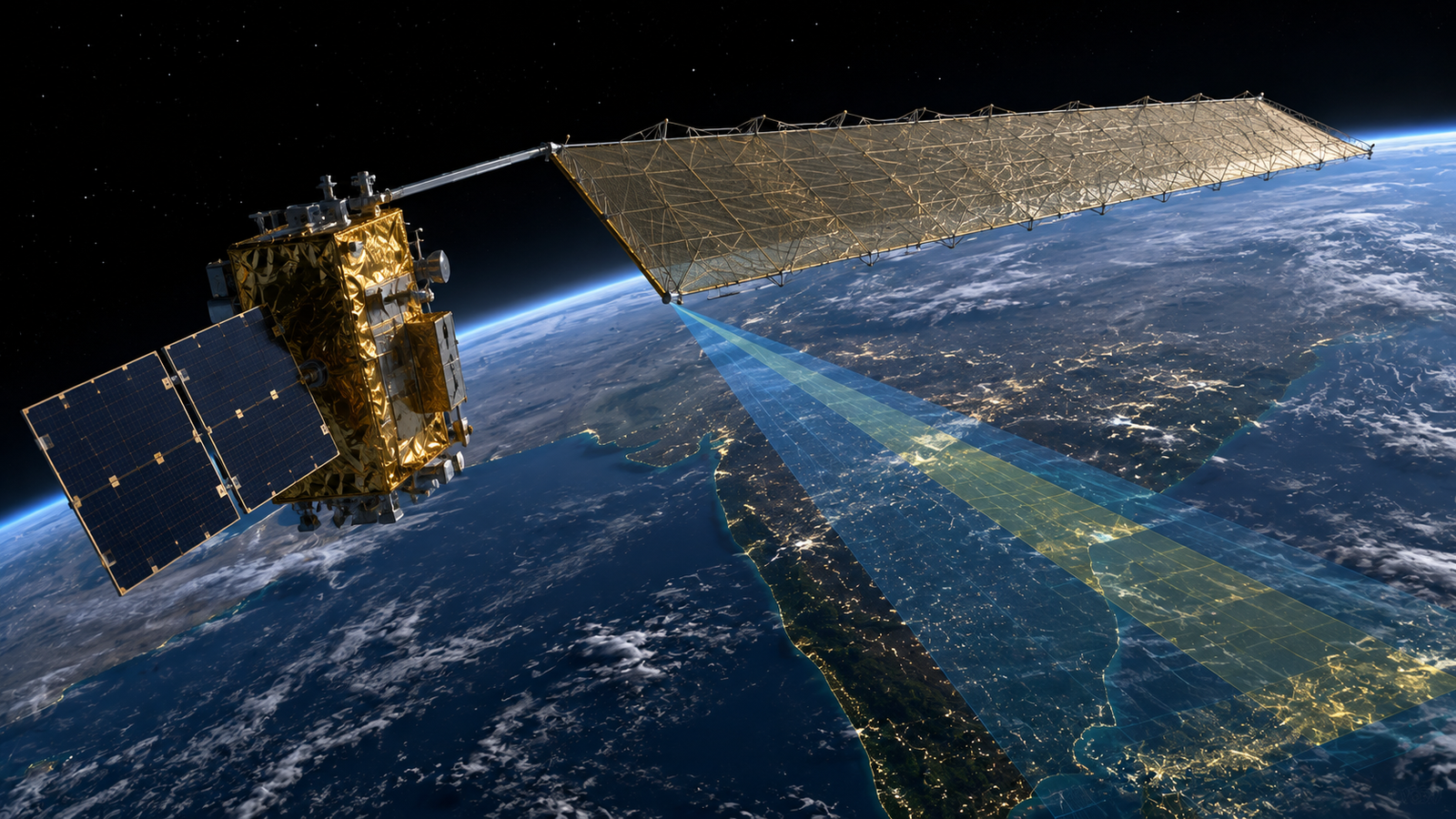
Section 1: NISAR Mission – Space Technology Current Affairs
NISAR is one of the most important developments covered under Space Technology Current Affairs 2026.
Q1. NISAR is a joint Earth-observation mission of which two space agencies?
A. ISRO and ESA
B. ISRO and NASA
C. NASA and JAXA
D. ISRO and Roscosmos
Answer: B. ISRO and NASA
Explanation: NISAR stands for NASA-ISRO Synthetic Aperture Radar and is the first joint satellite mission of NASA and ISRO.
Q2. NISAR was launched on which date?
A. 29 January 2025
B. 18 May 2025
C. 30 July 2025
D. 12 January 2026
Answer: C. 30 July 2025
Explanation: NISAR was successfully launched by ISRO on 30 July 2025.
Q3. Which launch vehicle carried NISAR into space?
A. PSLV-C61
B. GSLV-F16
C. LVM3-M5
D. SSLV-D3
Answer: B. GSLV-F16
Explanation: NISAR was launched aboard GSLV-F16 from Satish Dhawan Space Centre, Sriharikota.
Q4. NISAR uses which type of radar technology?
A. Single-frequency SAR
B. Dual-frequency SAR
C. Optical radar only
D. Infrared radar only
Answer: B. Dual-frequency SAR
Explanation: NISAR is the world’s first spaceborne radar mission using dual-frequency L-band and S-band SAR.
Q5. Which organisation provides the L-band SAR payload for NISAR?
A. ISRO
B. NASA
C. ESA
D. JAXA
Answer: B. NASA
Explanation: NISAR carries NASA’s L-band SAR and ISRO’s S-band SAR.
Q6. What is the diameter of NISAR’s large radar reflector?
A. 6 metres
B. 9 metres
C. 12 metres
D. 15 metres
Answer: C. 12 metres
Explanation: NISAR uses a 12-metre reflector antenna, developed with NASA’s contribution.
Q7. Approximately how frequently does NISAR provide global coverage?
A. 3 days
B. 6 days
C. 12 days
D. 30 days
Answer: C. 12 days
Explanation: NISAR has a 12-day repeat cycle, enabling systematic monitoring of Earth’s dynamic surface.
Q8. Which technology enables NISAR to achieve wide-swath and high-resolution imaging?
A. SweepSAR
B. NavIC
C. SAR-GPS Fusion
D. Optical Doppler Imaging
Answer: A. SweepSAR
Explanation: NISAR uses SweepSAR acquisition technology for wide-swath, high-resolution imaging.
Q9. Which of the following is NOT a major application of NISAR?
A. Monitoring ground deformation
B. Monitoring vegetation dynamics
C. Monitoring ice-sheet movement
D. Direct measurement of human blood pressure
Answer: D. Direct measurement of human blood pressure
Explanation: NISAR is designed for Earth observation, including ground deformation, vegetation, ice, soil moisture, water resources and disaster response.
Q10. In July 2026, ISRO released which additional NISAR data products?
A. S-band SAR data products
B. X-ray data products
C. Infrared telescope data
D. NavIC navigation data
Answer: A. S-band SAR data products
Explanation: ISRO announced the release of NISAR S-band SAR data products on 24 July 2026.
NISAR is an important topic within Science and Technology Current Affairs 2026, particularly because of its applications in Earth observation and disaster monitoring.
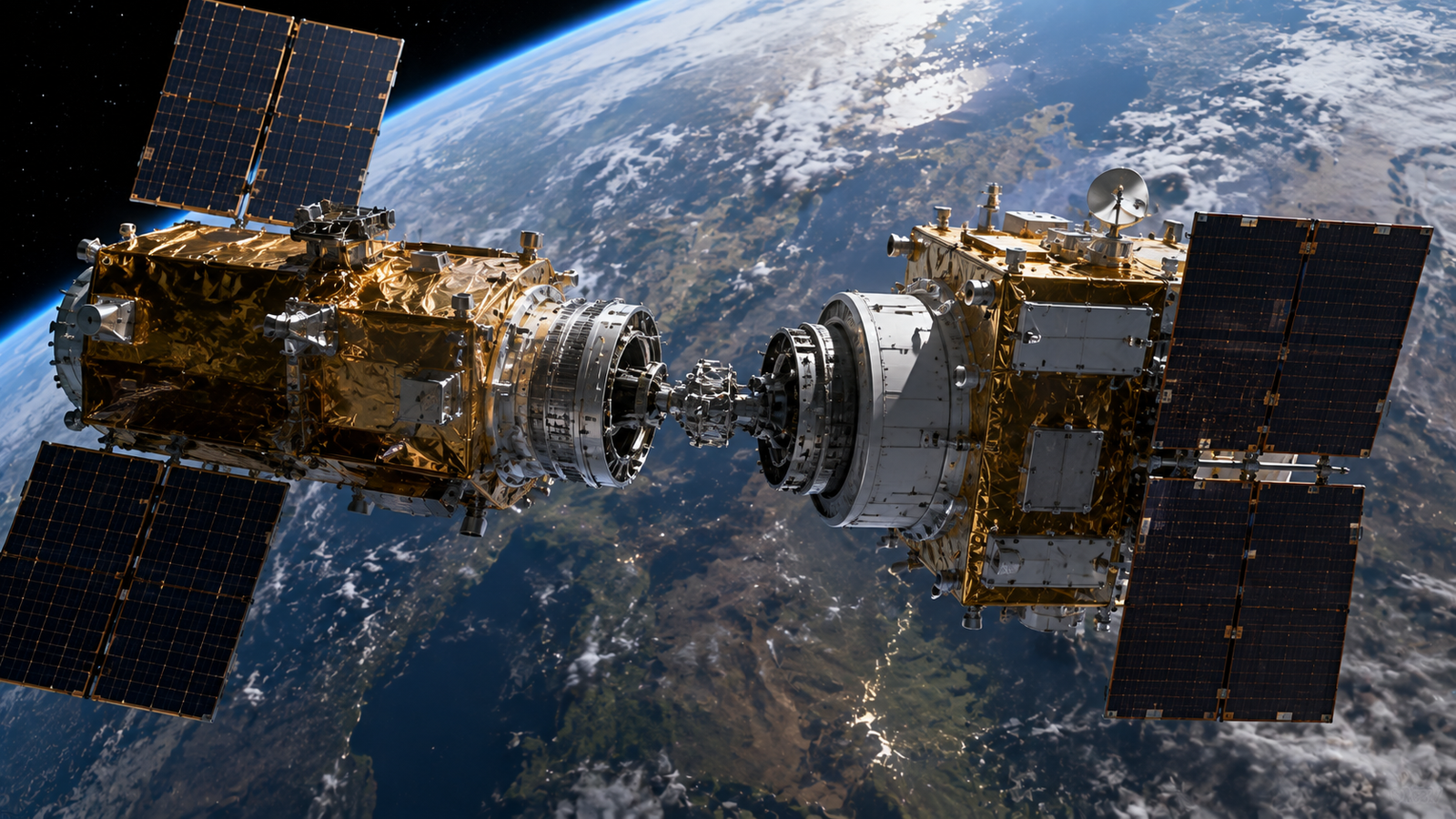
Section 2: SpaDeX Mission
The SpaDeX mission is another major topic in Space Technology Current Affairs because of India’s progress in space docking technology.
Q11. SpaDeX primarily demonstrated which technology?
A. Space docking
B. Solar sailing
C. Nuclear propulsion
D. Deep-sea navigation
Answer: A. Space docking
Explanation: SpaDeX was designed to demonstrate rendezvous, docking and related in-orbit technologies.
Q12. The two SpaDeX satellites were successfully docked for the first time on:
A. 30 December 2024
B. 16 January 2025
C. 13 March 2025
D. 20 April 2025
Answer: B. 16 January 2025
Explanation: ISRO successfully docked SDX-01 and SDX-02 on 16 January 2025.
Q13. The successful undocking of SpaDeX satellites took place on:
A. 16 January 2025
B. 13 March 2025
C. 20 April 2025
D. 25 June 2025
Answer: B. 13 March 2025
Explanation: SpaDeX satellites were successfully undocked on 13 March 2025 in a 460-km circular orbit.
Q14. What additional capability was demonstrated during the second SpaDeX docking?
A. Nuclear power generation
B. Inter-satellite power transfer
C. Lunar sample collection
D. Atmospheric re-entry
Answer: B. Inter-satellite power transfer
Explanation: During the second docking in April 2025, power was transferred between SDX-01 and SDX-02.
Q15. India became which numbered nation to demonstrate space docking technology?
A. Second
B. Third
C. Fourth
D. Fifth
Answer: C. Fourth
Explanation: ISRO’s 2025 achievements report states that SpaDeX made India the fourth nation to demonstrate docking in space.
Q16. The first SpaDeX undocking took place at approximately what altitude?
A. 200 km
B. 460 km
C. 743 km
D. 1,500 km
Answer: B. 460 km
Explanation: The undocking occurred in a 460-km circular orbit with 45° inclination.
Q17. What are the names of the two main SpaDeX satellites?
A. SDX-01 and SDX-02
B. NVS-01 and NVS-02
C. EOS-01 and EOS-02
D. INSAT-01 and INSAT-02
Answer: A. SDX-01 and SDX-02
Explanation: The docking demonstrations involved SDX-01 and SDX-02.
Q18. SpaDeX was launched aboard which mission?
A. PSLV-C58
B. PSLV-C59
C. PSLV-C60
D. PSLV-C61
Answer: C. PSLV-C60
Explanation: The SpaDeX satellites were launched aboard PSLV-C60 on 30 December 2024.
Q19. POEM-4 was associated with which mission?
A. Chandrayaan-3
B. SpaDeX
C. Aditya-L1
D. NISAR
Answer: B. SpaDeX
Explanation: POEM-4 was part of the PSLV-C60/SpaDeX mission and carried multiple experimental payloads.
Q20. Which experiment was demonstrated on POEM-4?
A. Seed germination in microgravity
B. Lunar drilling
C. Venus atmospheric sampling
D. Solar wind collection
Answer: A. Seed germination in microgravity
Explanation: POEM-4 demonstrated seed germination in microgravity and also included a robotic arm demonstration.
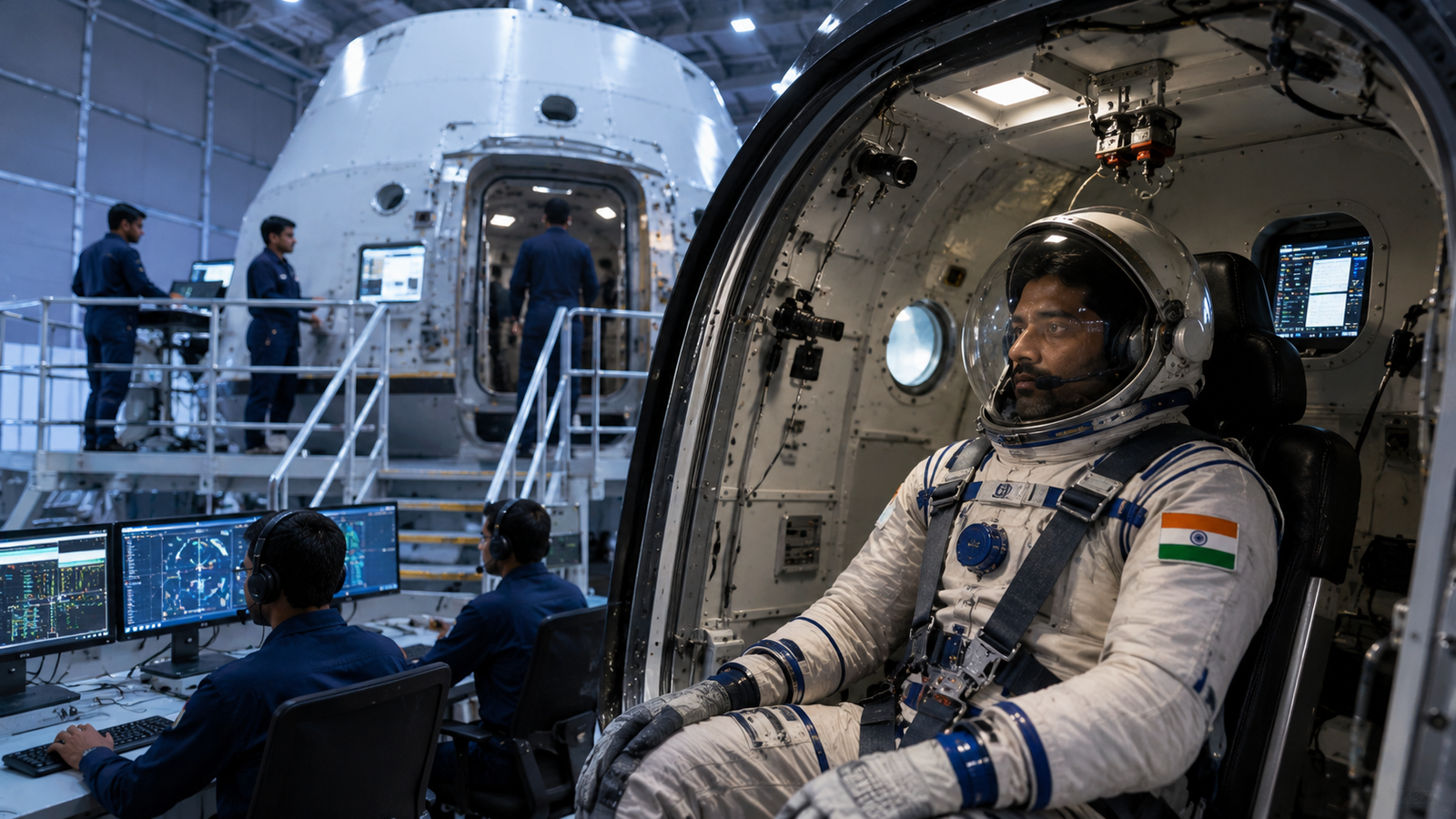
Section 3: Gaganyaan and Human Spaceflight
Gaganyaan remains a high-value topic for Space Technology Current Affairs and UPSC Prelims preparation.
Q21. Gaganyaan aims to demonstrate India’s capability to:
A. Land humans on Mars
B. Send humans to Low Earth Orbit and safely return them
C. Build a lunar colony
D. Send a probe to Venus
Answer: B. Send humans to Low Earth Orbit and safely return them
Explanation: Gaganyaan is designed to demonstrate human spaceflight to Low Earth Orbit (LEO) and safe return to Earth.
Q22. How many uncrewed missions are planned before the crewed Gaganyaan mission?
A. One
B. Two
C. Three
D. Four
Answer: C. Three
Explanation: The Gaganyaan programme includes three precursor uncrewed missions—G1, G2 and G3—before the crewed H1 mission.
Q23. The first uncrewed Gaganyaan mission is designated:
A. H1
B. G1
C. TV-D1
D. IADT-02
Answer: B. G1
Explanation: G1 is the first uncrewed Gaganyaan mission.
Q24. Which launch vehicle is being human-rated for Gaganyaan?
A. PSLV
B. SSLV
C. Human-Rated LVM3
D. GSLV Mk II
Answer: C. Human-Rated LVM3
Explanation: Gaganyaan uses a human-rated version of the LVM3, incorporating systems such as the Crew Escape System.
Q25. The Gaganyaan deceleration system consists of how many parachutes?
A. 4
B. 6
C. 8
D. 10
Answer: D. 10
Explanation: The Crew Module’s parachute system comprises 10 parachutes of four types.
Q26. In July 2026, ISRO successfully conducted which major Gaganyaan test?
A. Lunar landing test
B. Integrated Main Parachute Air Drop Test
C. Mars aerobraking test
D. Orbital docking test
Answer: B. Integrated Main Parachute Air Drop Test
Explanation: ISRO conducted the Integrated Main Parachute Air Drop Test (IMAT) on 7 July 2026.
Q27. The April 2026 IADT-02 test used approximately what mass of simulated Crew Module?
A. 2.5 tonnes
B. 4 tonnes
C. 5.7 tonnes
D. 10 tonnes
Answer: C. 5.7 tonnes
Explanation: The simulated Crew Module weighed approximately 5.7 tonnes, corresponding to the G1 Crew Module mass.
Q28. Which aircraft was used in the IADT-02 Gaganyaan test?
A. C-17
B. Chinook helicopter
C. Tejas
D. Dornier 228
Answer: B. Chinook helicopter
Explanation: The Indian Air Force Chinook helicopter lifted and released the simulated Crew Module from about 3 km altitude.
Q29. SOLVE is being developed primarily to support:
A. Chandrayaan-4
B. Gaganyaan parachute testing
C. NavIC
D. NISAR
Answer: B. Gaganyaan parachute testing
Explanation: SOLVE—Sub-Orbital Launch Vehicle for Experiments—is being developed as a platform for integrated parachute testing for Gaganyaan.
Q30. In July 2026, ISRO successfully tested which component of the SOLVE system?
A. Cryogenic engine
B. Solid motor
C. Solar panel
D. Crew capsule heat shield
Answer: B. Solid motor
Explanation: The first ground test of the SOLVE solid motor was successfully conducted on 3 July 2026.
Gaganyaan is also an important part of the broader UPSC CSE Prelims 2027 GS Syllabus and should be understood thoroughly.
Section 4: Axiom-4 and Shubhanshu Shukla
Solar missions such as Aditya-L1 are frequently relevant to Space Technology Current Affairs and Science and Technology questions.
Q31. Shubhanshu Shukla travelled to the International Space Station as part of:
A. Artemis-2
B. Axiom Mission 4
C. Crew-10
D. Chandrayaan-4
Answer: B. Axiom Mission 4
Explanation: Shubhanshu Shukla served as the pilot of Axiom Mission 4 (Ax-04) to the ISS.
Q32. Axiom-4 launched on:
A. 18 May 2025
B. 25 June 2025
C. 30 July 2025
D. 15 August 2025
Answer: B. 25 June 2025
Explanation: Ax-04 launched on 25 June 2025 aboard a SpaceX Falcon 9 from Kennedy Space Center.
Q33. Which spacecraft carried the Axiom-4 crew?
A. Orion
B. Crew Dragon
C. Starliner
D. Soyuz
Answer: B. Crew Dragon
Explanation: The Ax-04 crew travelled aboard SpaceX’s Dragon spacecraft.
Q34. Shubhanshu Shukla’s Axiom-4 mission lasted approximately:
A. 5 days
B. 10 days
C. 18 days
D. 30 days
Answer: C. 18 days
Explanation: ISRO described the mission as an 18-day scientific mission aboard the ISS.
Q35. How many Indian microgravity experiments did Shubhanshu Shukla complete?
A. Four
B. Five
C. Seven
D. Ten
Answer: C. Seven
Explanation: He successfully completed seven microgravity experiments developed by Indian research institutions.
Q36. Which organism was included in the Indian Axiom-4 experiments?
A. Tardigrades
B. Coral
C. Earthworms
D. Honeybees
Answer: A. Tardigrades
Explanation: One experiment investigated an Indian strain of tardigrades under microgravity conditions.
Q37. Sprouting experiments during Ax-04 involved:
A. Rice and wheat
B. Methi and moong
C. Maize and barley
D. Cotton and soybean
Answer: B. Methi and moong
Explanation: Experiments studied the sprouting of methi and moong seeds in microgravity.
Q38. The Axiom-4 mission was particularly relevant to which Indian programme?
A. NavIC
B. Gaganyaan
C. PSLV
D. Cartosat
Answer: B. Gaganyaan
Explanation: ISRO used the Ax-04 experience to support India’s human spaceflight programme and Gaganyaan preparedness.
Q39. Which international partners collaborated in the Axiom-4 mission?
A. NASA, Axiom Space and ESA, among others
B. JAXA only
C. Roscosmos only
D. CNSA only
Answer: A. NASA, Axiom Space and ESA, among others
Explanation: The mission involved collaboration among ISRO, NASA, Axiom Space, ESA and other partners.
Q40. Shubhanshu Shukla was the first Indian to:
A. Orbit the Moon
B. Visit the International Space Station
C. Command a Mars mission
D. Perform a spacewalk
Answer: B. Visit the International Space Station
Explanation: ISRO’s 2025 achievements report identifies Shubhanshu Shukla as the first Indian to visit the ISS.
For focused preparation, also practice our 100 Powerful Artificial Intelligence MCQs 2026 for UPSC, PCS & SSC Exams, covering AI, Generative AI, IndiaAI Mission, quantum technology, semiconductors, 6G and other emerging technologies.
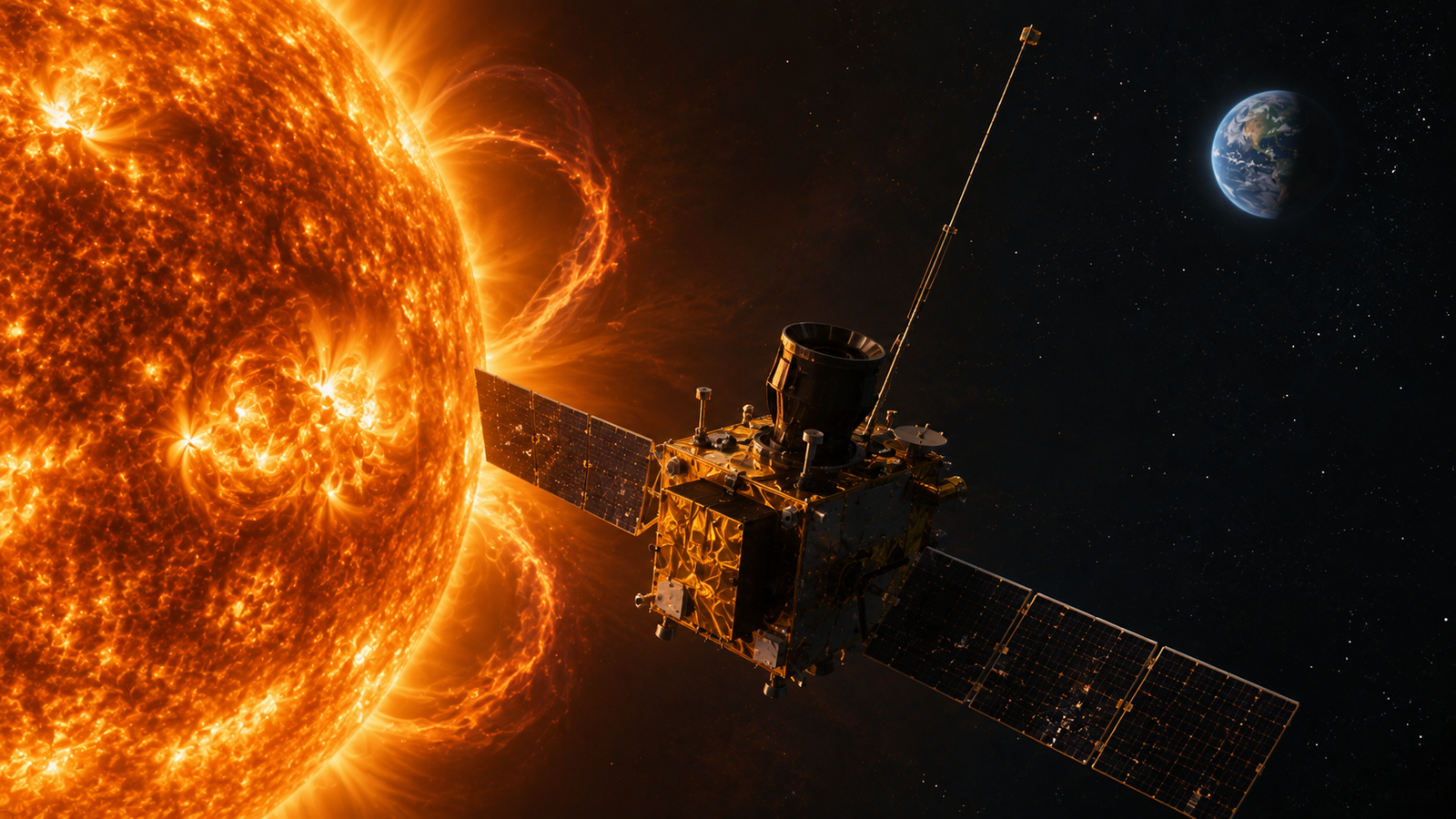
Section 5: Aditya-L1 and Solar Science
Q41. Aditya-L1 is India’s first space-based observatory dedicated to studying:
A. Mars
B. The Sun
C. Venus
D. Jupiter
Answer: B. The Sun
Explanation: Aditya-L1 is India’s first space-based solar observatory.
Q42. Aditya-L1 is positioned around which Lagrange point?
A. L2
B. L3
C. L4
D. L1
Answer: D. L1
Explanation: Aditya-L1 operates around the Sun-Earth L1 point.
Q43. Approximately how far is the Sun-Earth L1 point from Earth?
A. 150,000 km
B. 1.5 million km
C. 15 million km
D. 150 million km
Answer: B. 1.5 million km
Explanation: The L1 point is approximately 1.5 million km from Earth toward the Sun.
Q44. What is a major advantage of Aditya-L1’s L1 location?
A. It can continuously observe the Sun without normal Earth occultations
B. It can land on the Sun
C. It can orbit Mars
D. It can collect lunar soil
Answer: A. It can continuously observe the Sun without normal Earth occultations
Explanation: The halo orbit around L1 provides a continuous view of the Sun.
Q45. Aditya-L1 was launched by:
A. PSLV-C57
B. GSLV-F15
C. LVM3-M5
D. SSLV-D3
Answer: A. PSLV-C57
Explanation: Aditya-L1 was launched aboard PSLV-C57 on 2 September 2023.
Q46. How many scientific payloads does Aditya-L1 carry?
A. Four
B. Five
C. Seven
D. Ten
Answer: C. Seven
Explanation: Aditya-L1 carries seven scientific payloads developed by ISRO and national research institutions.
Q47. Aditya-L1 primarily studies which aspect of the Sun?
A. Solar atmosphere and solar activity
B. Lunar geology
C. Earth’s oceans
D. Asteroid mining
Answer: A. Solar atmosphere and solar activity
Explanation: The mission is designed to study the Sun and its outer atmosphere, with implications for understanding solar activity and space weather.
Q48. Scientific data from Aditya-L1 were released to the global scientific community in:
A. January 2025
B. May 2025
C. January 2026
D. August 2026
Answer: A. January 2025
Explanation: ISRO’s January 2025 monthly summary reported release of the first scientific data, with about 2.6 TB made available publicly.
Q49. The L1 point lies between:
A. Earth and Moon
B. Earth and Sun
C. Sun and Mars
D. Earth and Venus
Answer: B. Earth and Sun
Explanation: Aditya-L1 operates around the first Sun-Earth Lagrange point.
Q50. Aditya-L1 is NOT intended to:
A. Study solar activity
B. Observe the solar atmosphere
C. Study space weather
D. Land on the Sun
Answer: D. Land on the Sun
Explanation: Aditya-L1 is an observatory positioned near L1 and is not a solar landing mission.
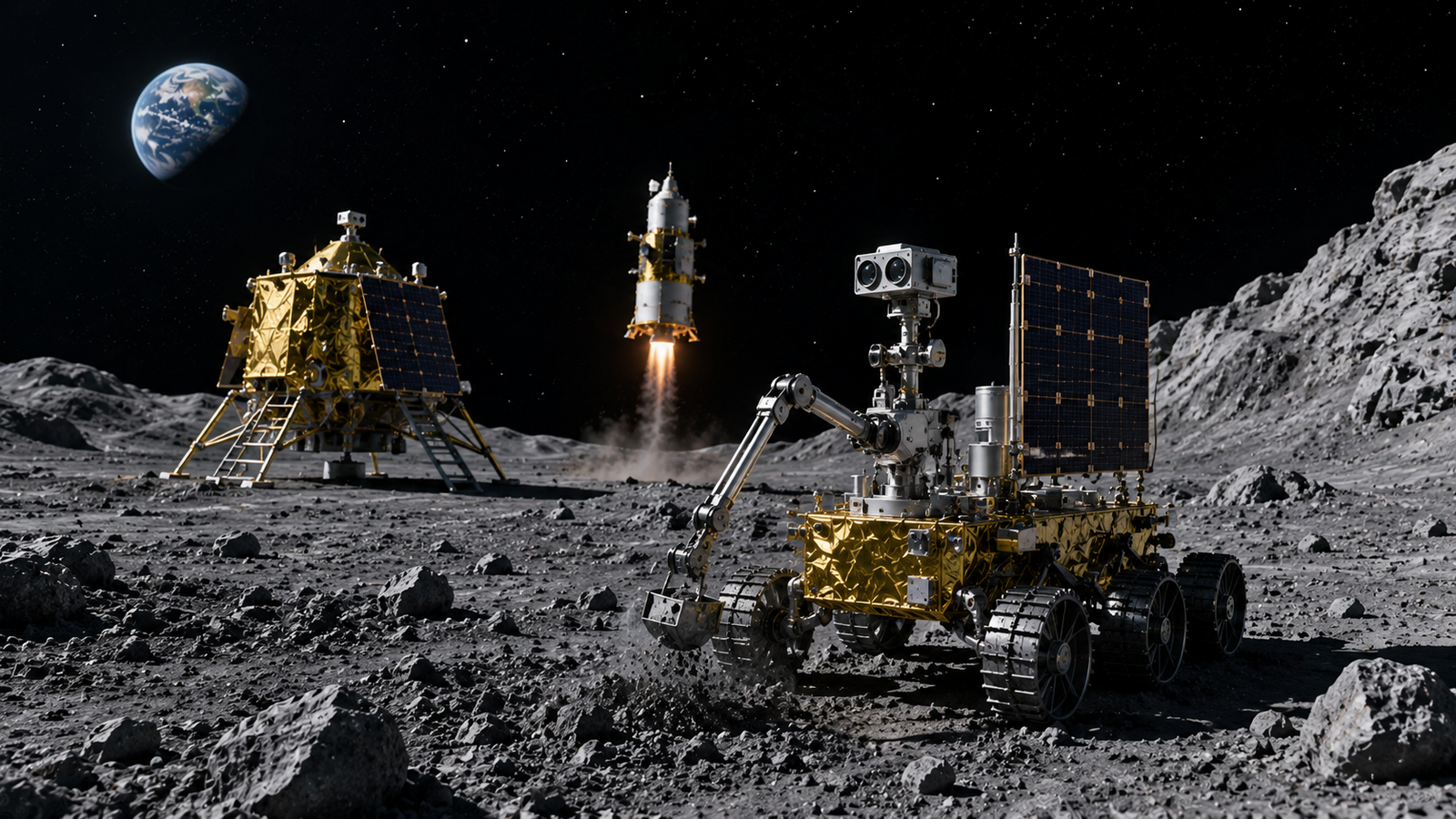
Section 6: Chandrayaan-4, Venus Orbiter Mission and Lunar Exploration
Chandrayaan-4 and India’s Venus mission are important areas to follow in Space Technology Current Affairs 2026.
Q51. Chandrayaan-4 is primarily designed as India’s:
A. First lunar orbiter
B. Lunar sample-return mission
C. First Mars mission
D. First solar mission
Answer: B. Lunar sample-return mission
Explanation: Chandrayaan-4 is designed to collect lunar samples and return them to Earth.
Q52. Chandrayaan-4 will build upon the successful lunar landing demonstrated by:
A. Chandrayaan-1
B. Chandrayaan-2
C. Chandrayaan-3
D. Mangalyaan
Answer: C. Chandrayaan-3
Explanation: Chandrayaan-3 demonstrated soft landing and rover operations in the lunar southern polar region.
Q53. A major objective of Chandrayaan-4 is to:
A. Collect and return lunar samples
B. Study Jupiter’s atmosphere
C. Build a lunar space station
D. Study solar flares
Answer: A. Collect and return lunar samples
Explanation: The mission is planned to collect surface samples and return them to Earth while protecting them from contamination.
Q54. India’s Venus Orbiter Mission is currently planned for launch in:
A. 2026
B. 2027
C. March 2028
D. 2030
Answer: C. March 2028
Explanation: ISRO currently lists March 2028 as the planned launch opportunity for the Venus Orbiter Mission.
Q55. Which launch vehicle has been identified as the candidate launcher for India’s Venus Orbiter Mission?
A. PSLV
B. SSLV
C. LVM3
D. GSLV Mk II
Answer: C. LVM3
Explanation: LVM3 has been identified as the candidate launch vehicle for the Venus Orbiter Mission.
Q56. The Venus Orbiter Mission will use aerobraking during:
A. Initial launch
B. Venus orbit insertion and orbit lowering
C. Earth re-entry
D. Lunar landing
Answer: B. Venus orbit insertion and orbit lowering
Explanation: ISRO plans to use aerobraking over several months to achieve the desired science orbit around Venus.
Q57. The planned low-altitude science orbit of the Venus Orbiter Mission is approximately:
A. 200 × 600 km
B. 1,000 × 5,000 km
C. 50 × 100 km
D. 10,000 × 20,000 km
Answer: A. 200 × 600 km
Explanation: The planned science orbit is approximately 200 × 600 km, with an inclination of around 90°.
Q58. The approved cost of India’s Venus Orbiter Mission is approximately:
A. ₹236 crore
B. ₹736 crore
C. ₹1,236 crore
D. ₹5,236 crore
Answer: C. ₹1,236 crore
Explanation: The approved cost is approximately ₹1,236 crore.
Q59. Chandrayaan-3 was the first successful Indian mission to demonstrate:
A. Solar observation
B. Soft landing and rover operations near the lunar south polar region
C. Space docking
D. Venus orbit insertion
Answer: B. Soft landing and rover operations near the lunar south polar region
Explanation: Chandrayaan-3 successfully demonstrated lunar soft landing and rover operations in the southern polar region.
Q60. India’s Venus Orbiter Mission will primarily study:
A. Venus
B. Mars
C. Jupiter
D. Mercury
Answer: A. Venus
Explanation: The mission is designed to study Venusian surface, subsurface, atmosphere and related scientific processes.
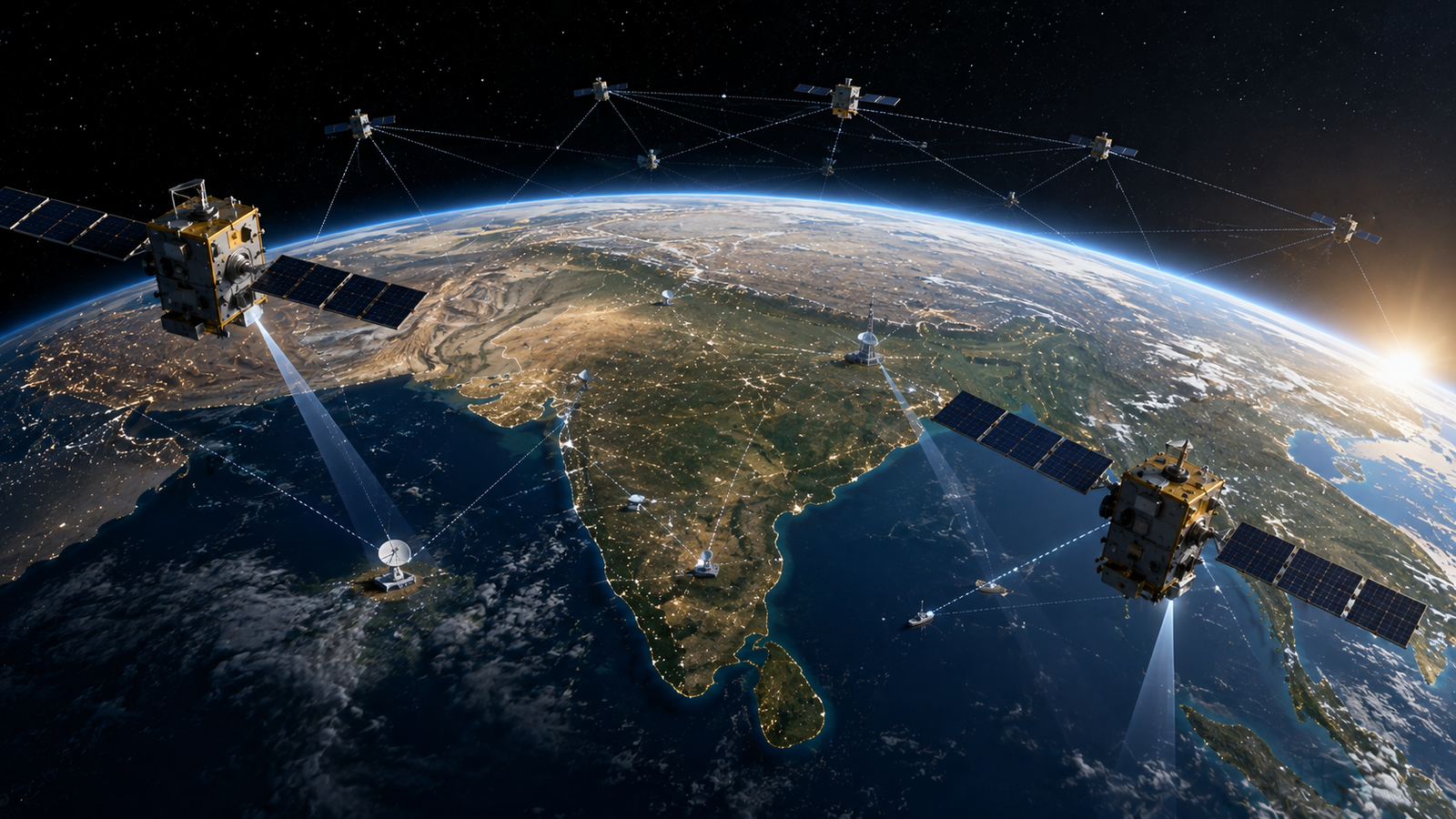
India’s navigation capabilities are another important component of Space Technology Current Affairs.
Q61. NavIC stands for:
A. Navigation with Indian Constellation
B. National Vehicle Identification Constellation
C. Navigation and Vehicle Integrated Communication
D. National Indian Communication System
Answer: A. Navigation with Indian Constellation
Explanation: NavIC is India’s independent regional navigation satellite system.
Q62. NavIC primarily provides:
A. Position, Velocity and Timing services
B. Only weather information
C. Only military communication
D. Only television broadcasting
Answer: A. Position, Velocity and Timing services
Explanation: NavIC provides Position, Velocity and Timing (PVT) services.
Q63. NavIC’s primary service area extends approximately:
A. 500 km beyond India
B. 1,500 km beyond the Indian landmass
C. 5,000 km beyond India
D. Worldwide
Answer: B. 1,500 km beyond the Indian landmass
Explanation: Its primary service area extends approximately 1,500 km beyond India’s landmass.
Q64. Which two types of services does NavIC provide?
A. SPS and RS
B. GPS and GLONASS
C. LEO and GEO
D. SAR and Optical
Answer: A. SPS and RS
Explanation: NavIC provides Standard Positioning Service (SPS) and Restricted Service (RS).
Q65. NVS-01 was the first satellite of which generation of NavIC satellites?
A. First generation
B. Second generation
C. Third generation
D. Experimental generation
Answer: B. Second generation
Explanation: NVS-01 was the first of the second-generation NavIC satellites.
Q66. Which indigenous component was flown for the first time on NVS-01?
A. Atomic clock
B. SAR antenna
C. Cryogenic engine
D. Solar sail
Answer: A. Atomic clock
Explanation: An indigenous atomic clock was flown for the first time on NVS-01.
Q67. NVS-02 was launched aboard:
A. PSLV-C60
B. GSLV-F15
C. GSLV-F16
D. LVM3-M5
Answer: B. GSLV-F15
Explanation: NVS-02 was launched by GSLV-F15 on 29 January 2025.
Q68. What prevented NVS-02 from reaching its designated final orbit?
A. Launch-pad failure
B. Failure of orbit-raising operation due to propulsion-system issue
C. Solar panel failure
D. Communication failure during launch
Answer: B. Failure of orbit-raising operation due to propulsion-system issue
Explanation: NVS-02 reached its transfer orbit, but orbit raising could not be completed because the oxidizer valves did not open.
Q69. According to the 2026 ISRO review, the issue with NVS-02 was associated with:
A. Radar antenna
B. Pyro valve drive signal/connector contacts
C. Solar cells
D. Navigation software only
Answer: B. Pyro valve drive signal/connector contacts
Explanation: The Apex Committee identified the most likely cause as loss of contact in the connector paths affecting the pyro valve drive signal.
Q70. The NVS series is intended to:
A. Augment the NavIC constellation
B. Replace Chandrayaan missions
C. Study the Sun
D. Monitor asteroids
Answer: A. Augment the NavIC constellation
Explanation: The NVS series is intended to augment the NavIC base-layer constellation and enhance service continuity.
Section 8: Launch Vehicles and Recent Launches
Recent launch-vehicle developments form an important part of Space Technology Current Affairs 2026.
Q71. Which launch vehicle is described as ISRO’s workhorse?
A. PSLV
B. SSLV
C. LVM3
D. GSLV Mk III only
Answer: A. PSLV
Explanation: ISRO describes PSLV as its workhorse launch vehicle.
Q72. Which mission marked the 100th launch from Sriharikota?
A. NISAR
B. NVS-02
C. SpaDeX
D. EOS-09
Answer: B. NVS-02
Explanation: GSLV-F15/NVS-02 marked the 100th launch from Sriharikota on 29 January 2025.
Q73. PSLV-C61 carried which satellite?
A. NVS-02
B. EOS-09
C. NISAR
D. CMS-03
Answer: B. EOS-09
Explanation: PSLV-C61 was intended to launch the EOS-09 Earth Observation Satellite.
Q74. What happened to the PSLV-C61/EOS-09 mission?
A. It successfully reached orbit
B. It encountered an issue in the third stage and the mission was not accomplished
C. It was cancelled before launch
D. It was transferred to another rocket
Answer: B. It encountered an issue in the third stage and the mission was not accomplished
Explanation: The mission encountered an anomaly during the third stage and could not be accomplished.
Q75. EOS-09 was designed primarily for:
A. Earth observation using SAR
B. Solar observation
C. Lunar sample collection
D. Space docking
Answer: A. Earth observation using SAR
Explanation: EOS-09 was an Earth Observation Satellite carrying a Synthetic Aperture Radar (SAR) payload.
Q76. Which mission carried the CMS-03 communication satellite?
A. LVM3-M5
B. PSLV-C61
C. GSLV-F15
D. PSLV-C62
Answer: A. LVM3-M5
Explanation: LVM3-M5 successfully launched CMS-03 in November 2025.
Q77. CMS-03 was notable because it was:
A. India’s first lunar satellite
B. The heaviest communication satellite launched to GTO from Indian soil at the time
C. India’s first solar observatory
D. The first NavIC satellite
Answer: B. The heaviest communication satellite launched to GTO from Indian soil at the time
Explanation: CMS-03, weighing about 4,400 kg, was the heaviest communication satellite launched to GTO from Indian soil at that time.
Q78. SSLV is designed primarily for:
A. Small satellite launches
B. Human lunar missions
C. Interplanetary crewed missions
D. Space station construction only
Answer: A. Small satellite launches
Explanation: SSLV is designed for small satellite launches, with quick turnaround and industrial production capability.
Q79. How many stages does SSLV have?
A. Two
B. Three
C. Four
D. Five
Answer: B. Three
Explanation: SSLV is a three-stage all-solid launch vehicle.
Q80. SSLV is designed to launch satellites weighing up to approximately:
A. 100 kg to LEO
B. 500 kg to LEO
C. 1,500 kg to LEO
D. 5,000 kg to LEO
Answer: B. 500 kg to LEO
Explanation: ISRO states that SSLV is designed to launch satellites weighing up to 500 kg into Low Earth Orbit.
Section 9: Private Space Sector and Space Economy
The growth of India’s private space industry has become an increasingly important theme in Space Technology Current Affairs.
Q81. Which organisation acts as a single-window interface for private space-sector activities in India?
A. ISRO
B. IN-SPACe
C. DRDO
D. NSIL
Answer: B. IN-SPACe
Explanation: IN-SPACe acts as a single-window interface between private industry and government space agencies.
Q82. India’s estimated space economy was approximately how much according to January 2026 government data?
A. $2.4 billion
B. $5.4 billion
C. $8.4 billion
D. $18.4 billion
Answer: C. $8.4 billion
Explanation: PIB reported India’s space economy at approximately $8.4 billion.
Q83. How many space technology startups were reported in January 2026?
A. 99
B. 199
C. 299
D. 399
Answer: D. 399
Explanation: PIB reported 399 space technology startups operating across areas including launch vehicles, satellites, propulsion and space-grade electronics.
Q84. India’s space economy is projected to reach approximately what size by 2033?
A. $14 billion
B. $24 billion
C. $44 billion
D. $84 billion
Answer: C. $44 billion
Explanation: The government’s Decadal Vision projects India’s space economy at approximately $44 billion by 2033.
Q85. India’s space economy is projected to reach approximately what size by 2040?
A. $50 billion
B. $75 billion
C. $100 billion
D. $150 billion
Answer: C. $100 billion
Explanation: The projection is approximately $100 billion by 2040.
Q86. Which organisation signed a technology-transfer agreement for SSLV with HAL?
A. NSIL, ISRO and IN-SPACe
B. NASA and ESA
C. DRDO and HAL only
D. JAXA and ISRO
Answer: A. NSIL, ISRO and IN-SPACe
Explanation: The SSLV technology-transfer agreement involved NSIL, ISRO, IN-SPACe and HAL.
Q87. The SSLV technology was transferred to which major Indian aerospace company?
A. BEL
B. HAL
C. BHEL
D. Tata Motors
Answer: B. HAL
Explanation: HAL signed the technology-transfer agreement for SSLV with ISRO, NSIL and IN-SPACe.
Q88. Which fund was established under IN-SPACe to support India’s space sector?
A. ₹100 crore fund
B. ₹500 crore Venture Capital Fund
C. ₹1,000 crore Venture Capital Fund
D. ₹10,000 crore fund
Answer: C. ₹1,000 crore Venture Capital Fund
Explanation: The Government approved a ₹1,000 crore Venture Capital Fund for the space sector under IN-SPACe.
Q89. Which of the following is an initiative to support commercialisation of space technology?
A. Technology Adoption Fund
B. National Food Security Fund
C. Green Hydrogen Fund
D. Digital India Fund
Answer: A. Technology Adoption Fund
Explanation: IN-SPACe has announced a ₹500 crore Technology Adoption Fund to support development and commercialisation of space technology.
Q90. According to February 2026 PIB data, how many successful satellites had Indian space startups launched?
A. 3
B. 7
C. 15
D. 20
Answer: B. 7
Explanation: PIB reported 7 successful satellites launched by Indian space startups at that point.
Section 10: Space Sustainability, Infrastructure and Emerging Technology
Space debris and sustainable space operations are emerging themes in Space Technology Current Affairs.
Q91. India’s Debris Free Space Mission aims for debris-free missions by:
A. 2025
B. 2030
C. 2035
D. 2040
Answer: B. 2030
Explanation: India’s Debris Free Space Mission (DFSM) aims for debris-free space missions by Indian space actors by 2030.
Q92. The Third Launch Pad at Sriharikota was approved primarily to:
A. Support heavier launch vehicles and increase launch capacity
B. Replace all satellites
C. Conduct ocean research
D. Support only foreign launches
Answer: A. Support heavier launch vehicles and increase launch capacity
Explanation: The Third Launch Pad is intended for next-generation heavier launch vehicles and to increase launch capacity.
Q93. The approved cost of the Third Launch Pad project is approximately:
A. ₹984.86 crore
B. ₹1,984.86 crore
C. ₹3,984.86 crore
D. ₹9,984.86 crore
Answer: C. ₹3,984.86 crore
Explanation: The approved project cost is ₹3,984.86 crore.
Q94. The Third Launch Pad is being established at:
A. Thumba
B. Sriharikota
C. Mahendragiri
D. Ahmedabad
Answer: B. Sriharikota
Explanation: The Third Launch Pad is being established at Satish Dhawan Space Centre, Sriharikota, Andhra Pradesh.
Q95. The Third Launch Pad is especially important for India’s long-term vision involving:
A. Bharatiya Antariksh Station and heavier launch vehicles
B. Only weather satellites
C. Only NavIC
D. Only communication satellites
Answer: A. Bharatiya Antariksh Station and heavier launch vehicles
Explanation: The infrastructure supports the broader vision of the Bharatiya Antariksh Station by 2035 and future heavier launch vehicles.
Q96. CROPS is associated with:
A. Growing plants in space
B. Lunar crater mapping
C. Satellite navigation
D. Solar observation
Answer: A. Growing plants in space
Explanation: CROPS stands for Compact Research Module for Orbital Plant Studies and is designed to study plant growth under microgravity.
Q97. The first CROPS mission is designed to demonstrate:
A. Seed germination and plant growth up to two-leaf stage
B. Lunar soil mining
C. Space docking
D. Human respiration in space
Answer: A. Seed germination and plant growth up to two-leaf stage
Explanation: CROPS-1 is designed to demonstrate germination and plant growth up to the two-leaf stage in space.
Q98. IMEx-2026 is related to:
A. Indian microgravity experiments
B. Indian lunar exploration only
C. NavIC satellites
D. Semiconductor manufacturing
Answer: A. Indian microgravity experiments
Explanation: Indian Microgravity Experiments – IMEx-2026 invites proposals from India’s research community for experiments in microgravity.
Q99. Which of the following best describes NISAR’s significance?
A. First joint ISRO-NASA satellite and first dual-frequency spaceborne SAR mission
B. India’s first human spaceflight
C. India’s first lunar sample-return mission
D. India’s first navigation satellite
Answer: A. First joint ISRO-NASA satellite and first dual-frequency spaceborne SAR mission
Explanation: NISAR is the first joint ISRO-NASA satellite and the first spaceborne radar mission using dual-frequency L- and S-band SAR.
Q100. Which statement about India’s current space programme is correct?
A. India is focusing only on government-operated missions
B. India is simultaneously expanding human spaceflight, space science, private-sector participation and space sustainability
C. India has abandoned satellite navigation
D. India has stopped developing launch vehicles
Answer: B. India is simultaneously expanding human spaceflight, space science, private-sector participation and space sustainability
Explanation: Recent developments across Gaganyaan, NISAR, SpaDeX, NavIC, private space startups, launch infrastructure and debris mitigation show the broadening scope of India’s space programme.
The growth of India’s private space sector is another important area that aspirants should track through Science and Technology Current Affairs 2026 MCQs
Quick Revision: 15 Must-Remember Space Technology Facts
Before the examination, aspirants should revise these Space Technology Current Affairs 2026 topics along with important ISRO missions.
For UPSC Prelims, remember these high-value facts:
- NISAR = NASA + ISRO.
- NISAR launched on 30 July 2025.
- NISAR uses L-band + S-band SAR.
- NISAR has a 12-metre reflector.
- NISAR has a 12-day repeat cycle.
- SpaDeX demonstrated autonomous space docking.
- India became the fourth nation to demonstrate docking.
- SpaDeX also demonstrated inter-satellite power transfer.
- Shubhanshu Shukla became the first Indian to visit the ISS.
- He completed seven Indian microgravity experiments during Ax-04.
- Aditya-L1 operates around the Sun-Earth L1 point.
- L1 is approximately 1.5 million km from Earth.
- Chandrayaan-4 is a lunar sample-return mission.
- India’s Venus Orbiter Mission is currently planned for March 2028.
- India’s space economy was estimated at $8.4 billion, with 399 startups reported in January 2026.
Why Space Technology Is Important for UPSC Prelims 2027
Space Technology is increasingly relevant to UPSC because questions can connect science and technology with geography, environment, disaster management, international cooperation, defence, communication, navigation and the economy.
Recent developments such as NISAR’s Earth-observation capabilities, SpaDeX’s docking technology, Gaganyaan’s human-spaceflight systems, NavIC’s regional navigation services and the expansion of India’s private space ecosystem provide multiple dimensions for Prelims preparation.
Recommended Posts
Ultimate UPSC Exam Eligibility 2027: Age Limit, Qualification, Attempts & Nationality
100 Important July 2026 Sports Current Affairs MCQs for UPSC, PCS , SSC etc.
Powerful Government Schemes 100 MCQs UPSC Prelims 2027 with Answers
The Executive and Legislature 100 MCQs: UPSC Prelims 2027 GS Comprehensive Guide
Ultimate Physical Geography of India UPSC MCQs 2027 | 100 Important Questions With Answers
100 Important World Current Affairs MCQs for UPSC Prelims 2027 with Answers
How to Score 120+ in GS Paper 1: Powerful UPSC Mains Strategy, Books & Study Plan 2026
FAQs: Space Technology Current Affairs MCQs 2026:
Space Technology Current Affairs includes recent developments related to satellites, launch vehicles, space missions, navigation, human spaceflight and space policy.
What is Space Technology Current Affairs?
Space Technology Current Affairs covers recent developments related to satellites, launch vehicles, space missions, navigation systems, human spaceflight, space science, private space companies, space policy and space sustainability.
Which space topics are important for UPSC Prelims 2027?
Important areas include NISAR, SpaDeX, Gaganyaan, NavIC, Aditya-L1, Chandrayaan-4, Venus Orbiter Mission, launch vehicles, private space startups and space debris management.
What is NISAR?
NISAR is a joint NASA-ISRO Earth-observation mission using dual-frequency Synthetic Aperture Radar.
What is SpaDeX?
SpaDeX is an ISRO technology-demonstration mission focused on rendezvous, docking, undocking and related in-orbit operations.
Who was the first Indian to visit the International Space Station?
Shubhanshu Shukla became the first Indian to visit the ISS as part of Axiom Mission 4 in 2025.
What is the objective of Chandrayaan-4?
Chandrayaan-4 is planned as a lunar sample-return mission, including collection of lunar material and its return to Earth.
What is India’s Venus Orbiter Mission?
It is India’s planned mission to study Venus, currently scheduled for launch in March 2028, with LVM3 identified as the candidate launch vehicle.
Conclusion: Space Technology Current Affairs MCQs 2026
These 100 Space Technology Current Affairs MCQs 2026 cover some of the most important developments that UPSC, PCS and SSC aspirants should know for competitive examinations. The strongest areas for revision include NISAR, SpaDeX, Gaganyaan, Axiom-4, Aditya-L1, Chandrayaan-4, Venus Orbiter Mission, NavIC, launch vehicles, private space startups and space sustainability.
Because space technology develops rapidly, candidates should revise this article alongside official updates from ISRO and PIB before the examination.
Official Sources: Space Technology Current Affairs MCQs 2026:
- ISRO – Indian Space Research Organisation
- ISRO Launch Missions
- ISRO – NISAR Mission
- ISRO – Space Technology & Missions
- PIB – Department of Space Updates
- IN-SPACe
Disclaimer
This article is prepared for educational and examination purposes. Space missions, schedules, technical assessments and policy developments can change as new official information becomes available. Candidates should cross-check the latest details with ISRO, PIB and other official government sources before the examination.
Bài viết rất hữu ích, cảm ơn đã chia sẻ! Letco là công ty tư vấn du học Hàn Quốc uy tín, hỗ trợ trọn gói từ hồ sơ, visa đến học bổng. Tham khảo thêm tại letco.vn nhé.