Introduction
Science and Technology current affairs often connect recent developments with broader concepts in space, artificial intelligence, biotechnology, digital infrastructure, energy, semiconductors and emerging technologies. For competitive-examination preparation, understanding the significance of these developments is often more useful than simply memorising isolated facts.
This practice set brings together 100 Science and Technology current-affairs questions based on developments reported or officially updated during 2026 up to 12 August. The questions cover major developments in India’s space programme, AI and quantum technology, biotechnology, semiconductors, nuclear energy, green technology and other emerging areas.
Use the questions as a revision exercise, and refer to the explanations and official sources whenever a topic requires deeper study.
For a broader understanding of the topics covered under UPSC Science and Technology, you can also refer to our UPSC Science and Technology Syllabus 2027 guide.
The questions have been arranged into five sections of 20 MCQs each, with answers and short explanations provided at the end of each section. Try to solve each section before checking the answers.
Section 1: Space Technology & India’s Space Programme
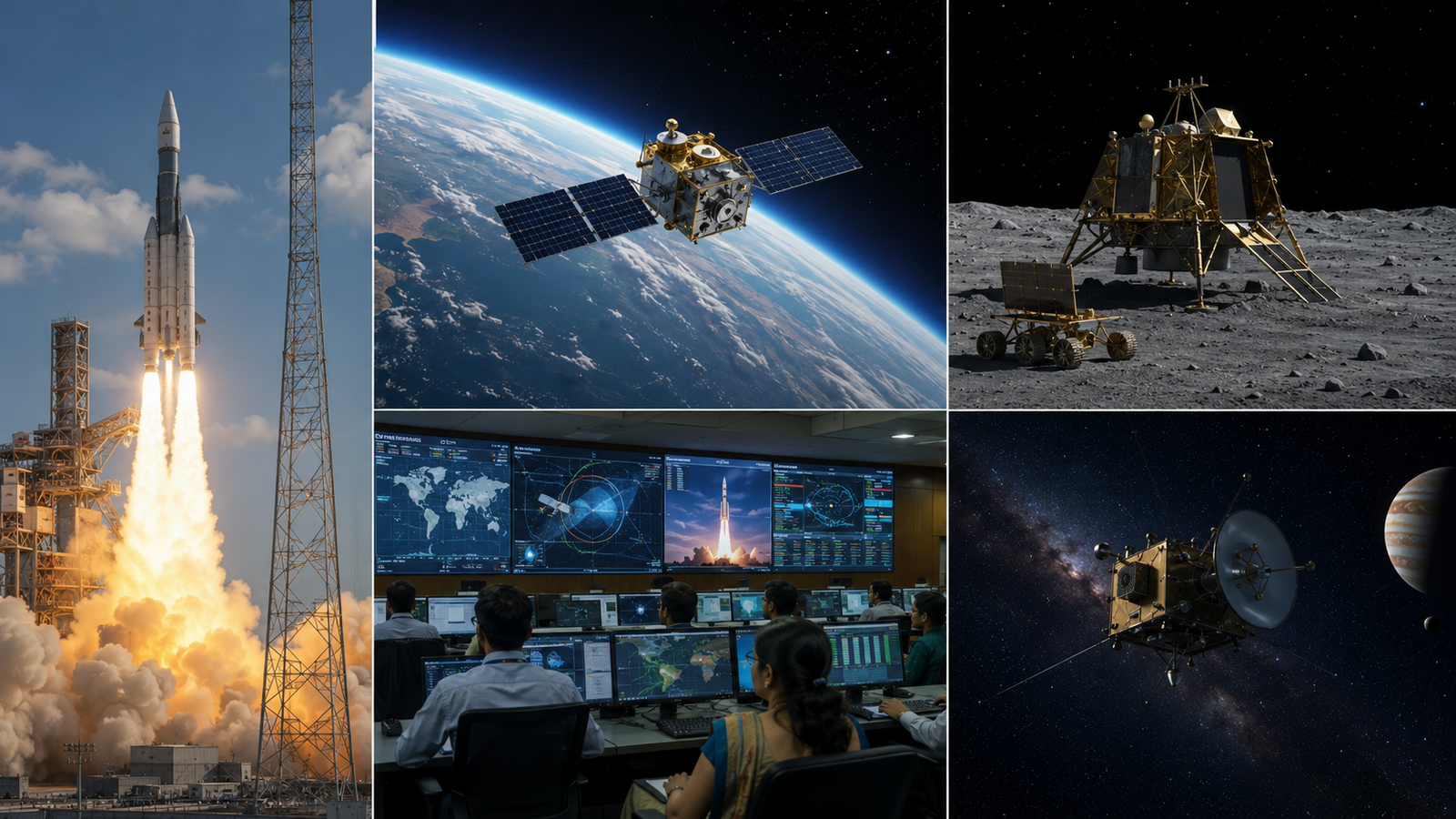
Recent developments in India’s space programme have made space technology an important area for current-affairs revision. This section covers major missions, private-sector participation, scientific programmes and developments related to India’s space ecosystem.
Science and Technology Current Affairs related questions on space technology are particularly important for UPSC Prelims because recent missions and technological developments can be tested alongside basic scientific concepts.
These Science and Technology Current Affairs questions focus on important developments in India’s space programme and related technologies.
- In July 2026, which Indian private space company successfully conducted the first orbital launch of a rocket from Indian soil?
A. Agnikul Cosmos
B. Skyroot Aerospace
C. Pixxel
D. Dhruva Space
- What was the name of Skyroot Aerospace’s rocket used for the historic July 2026 orbital launch?
A. Vikram-S
B. Vikram-I
C. Agnibaan
D. Prarambh-I
- The July 2026 orbital launch of Vikram-I was conducted from which location?
A. Thumba Equatorial Rocket Launching Station
B. Satish Dhawan Space Centre, Sriharikota
C. Kulasekarapattinam Spaceport
D. Chandipur
- What was the name of the mission associated with the July 2026 Vikram-I launch?
A. Mission Aagaman
B. Mission Gaganyaan
C. Mission Shakti
D. Mission Prarambh
- Which of the following satellites was placed into Low Earth Orbit by Vikram-I during the July 2026 mission?
A. SCOPE
B. NVS-02
C. EOS-09
D. GSAT-20
- Which organisation developed the Vikram-I launch vehicle?
A. ISRO
B. Skyroot Aerospace
C. HAL
D. Bellatrix Aerospace
- What major milestone did the Vikram-I launch represent for India’s private space sector?
A. First Indian lunar landing
B. First private Indian orbital launch from Indian soil
C. First Indian reusable rocket launch
D. First Indian human spaceflight
- The Bharatiya Antariksh Hackathon 2026 was organised primarily to encourage innovation in which field?
A. Nuclear medicine
B. Space technology
C. Agricultural biotechnology
D. Semiconductor manufacturing
- When was the grand finale of the Bharatiya Antariksh Hackathon 2026 held?
A. 1–2 June 2026
B. 6–7 August 2026
C. 15–16 August 2026
D. 20–21 July 2026
- Approximately how many teams registered for the Bharatiya Antariksh Hackathon 2026?
A. 150
B. 300
C. 590
D. 1,500
- How many teams advanced to the final round of the Bharatiya Antariksh Hackathon 2026?
A. 10
B. 20
C. 50
D. 100
- What was the theme of ISRO’s START-2026 programme?
A. Human Spaceflight
B. Observation from Space
C. Space Tourism
D. Planetary Defence
- START-2026 stands for which of the following?
A. Space Technology Research and Training
B. Space science and Technology AwaReness Training
C. Satellite Technology and Research Training
D. Space Transport and Rocket Technology
- In April 2026, ISRO signed an MoU with which institution for collaboration in space science, technology and exploration?
A. IISc Bengaluru
B. Tata Institute of Fundamental Research
C. IIT Delhi
D. National Physical Laboratory
- The International Conference on Spacecraft Mission Operations (SMOPS-2026) was held in which Indian city?
A. Hyderabad
B. Bengaluru
C. Ahmedabad
D. Sriharikota
- SMOPS-2026 was held during which period?
A. 8–10 April 2026
B. 18–20 May 2026
C. 1–3 June 2026
D. 10–12 July 2026
- In July 2026, ISRO invited proposals for the third Announcement of Opportunity cycle of which mission?
A. Chandrayaan-3
B. Aditya-L1
C. Mangalyaan
D. XPoSat
- Aditya-L1 is primarily dedicated to the study of which celestial object?
A. Moon
B. Mars
C. Sun
D. Venus
- In July 2026, ISRO reported major qualification tests for systems associated with which human spaceflight programme?
A. Gaganyaan
B. Chandrayaan-4
C. Bharatiya Antariksh Station
D. Shukrayaan
- Which of the following was among the Gaganyaan Crew Module qualification tests reported by ISRO in July 2026?
A. Crew Module Up-righting System float inflation test
B. Lunar landing test
C. Solar sail deployment test
D. Mars atmospheric entry test
Space technology has emerged as one of the most important areas of India’s recent scientific developments. For dedicated practice, aspirants can attempt our 100 Important Space Technology Current Affairs 2026 MCQs for UPSC, PCS & SSC Exams.
Answers: Section 1 of Science and Technology Current Affairs
1. B — Skyroot Aerospace.
Skyroot Aerospace became the first Indian private company to successfully conduct an orbital launch from Indian soil with Vikram-I in July 2026.
2. B — Vikram-I.
Vikram-I is Skyroot Aerospace’s small satellite launch vehicle used for the historic July 2026 mission.
3. B — Satish Dhawan Space Centre, Sriharikota.
The launch took place from ISRO’s Satish Dhawan Space Centre in Sriharikota.
4. A — Mission Aagaman.
The Vikram-I orbital launch was conducted under Mission Aagaman.
5. A — SCOPE.
Vikram-I placed SCOPE and Grahaa into Low Earth Orbit, along with other payloads for in-orbit experiments.
6. B — Skyroot Aerospace.
Vikram-I was developed by Indian space start-up Skyroot Aerospace.
7. B — First private Indian orbital launch from Indian soil.
The July 2026 mission marked the first successful orbital launch by an Indian private company from Indian territory.
8. B — Space technology.
The Bharatiya Antariksh Hackathon promotes creativity, innovation and problem-solving in space technology.
9. B — 6–7 August 2026.
The grand finale was held at the National Remote Sensing Centre, Hyderabad, on 6–7 August 2026.
10. C — 590.
Nearly 590 teams registered for the hackathon.
11. B — 20.
The top 20 teams advanced to the final round.
12. B — Observation from Space.
START-2026 was organised with the theme “Observation from Space.”
13. B — Space science and Technology AwaReness Training.
START is ISRO’s introductory-level Space science and Technology AwaReness Training programme.
14. B — Tata Institute of Fundamental Research.
ISRO and TIFR signed an MoU on 20 April 2026 for collaboration in space science, technology and exploration.
15. B — Bengaluru.
SMOPS-2026 was held in Bengaluru.
16. A — 8–10 April 2026.
The second edition of the conference was held from 8 to 10 April 2026.
17. B — Aditya-L1.
ISRO announced the third Announcement of Opportunity cycle for Aditya-L1 observations in July 2026.
18. C — Sun.
Aditya-L1 is India’s solar observation mission designed to study the Sun.
19. A — Gaganyaan.
ISRO reported major qualification tests for Gaganyaan Crew Module systems in July 2026.
20. A — Crew Module Up-righting System float inflation test.
The July 2026 qualification programme included the Crew Module Up-righting System float inflation test, CSCDS umbilical separation testing and a Crew Module structure qualification test.
Candidates can also revise our Science And Technology 100 MCQs for UPSC 2027 with Answers for a better understanding of Science And Technology.
Regular revision of Science and Technology Current Affairs 2026 can help aspirants identify important developments that may be relevant to UPSC Prelims.
Section 2: Artificial Intelligence, Quantum Technology & Digital India
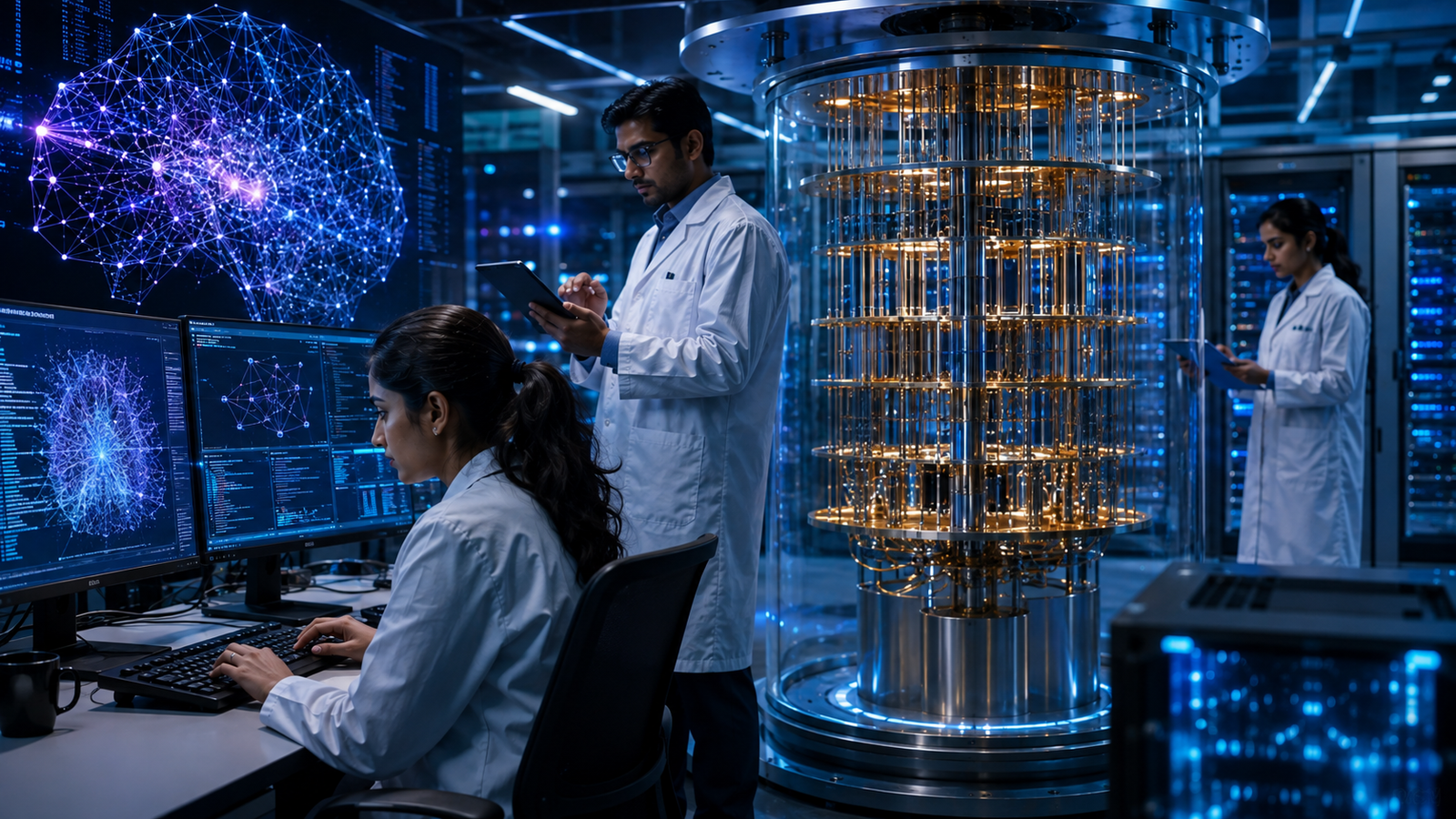
AI, quantum technology and digital infrastructure are increasingly shaping governance, industry and national capabilities. The following questions focus on major Indian initiatives and developments in these areas during 2026.
Artificial intelligence and quantum technology are increasingly important areas of Science and Technology Current Affairs 2026.
- The India-AI Impact Summit 2026 was held in which city?
A. Mumbai
B. Bengaluru
C. New Delhi
D. Hyderabad
- The India-AI Impact Summit 2026 was organised during which period?
A. 5–10 January 2026
B. 16–20 February 2026
C. 10–15 March 2026
D. 20–25 April 2026
- Why was the India-AI Impact Summit 2026 particularly significant geographically?
A. It was the first AI summit in Asia
B. It was the first global AI summit hosted in the Global South
C. It was the first AI summit organised by the UN
D. It was the first AI summit held outside Europe
- Which ministry is primarily associated with India’s AI policy and the IndiaAI Mission?
A. Ministry of Electronics and Information Technology
B. Ministry of Agriculture
C. Ministry of Heavy Industries
D. Ministry of Commerce
- Approximately how many GPUs had been onboarded under the IndiaAI common compute facility by March 2026?
A. 3,800
B. 18,000
C. More than 38,000
D. More than 3 lakh
- What is the main purpose of GPUs in modern AI systems?
A. Water purification
B. High-performance parallel computation
C. Nuclear fuel enrichment
D. Satellite propulsion
- Under the IndiaAI Mission, the government announced an additional number of GPUs to be added during the India-AI Impact Summit 2026?
A. 2,000
B. 5,000
C. 10,000
D. 20,000
- BharatGen is best described as:
A. A nuclear reactor
B. A sovereign Indian AI model ecosystem
C. A semiconductor fabrication plant
D. A satellite navigation system
- BharatGen supports AI solutions in how many Indian languages?
A. 8
B. 12
C. 22
D. 30
- BharatGen was developed under which broader mission framework?
A. National Mission on Interdisciplinary Cyber-Physical Systems
B. National Green Hydrogen Mission
C. National Quantum Mission alone
D. Digital India Land Records Modernisation Programme
After finishing this, read our for 100 Powerful Biotechnology & Genetic Engineering Current Affairs MCQs 2026 for UPSC & PCS for the latest updates based on Biotechnology
- Which agriculture-focused AI model was highlighted in 2026 as operating in 22 Indian languages?
A. Agri Param
B. KisanGPT
C. Bharat Krishi AI
D. AgriNet India
- As of February 2026, India had signed MoUs or agreements with how many countries for cooperation on India Stack and Digital Public Infrastructure?
A. 12
B. 18
C. 24
D. 40
- Which of the following is NOT a core component generally associated with India’s Digital Public Infrastructure ecosystem?
A. Digital identity
B. Digital payments
C. Data exchange
D. Nuclear reactor operation
- According to the 2026 government update, UPI was live in more than how many countries?
A. 3
B. 5
C. 8
D. 25
- Which of the following is a major focus area of the National Quantum Mission?
A. Quantum computing
B. Quantum communication
C. Quantum sensing and metrology
D. All of the above
- Which ministry is implementing the National Quantum Mission?
A. Department of Science & Technology
B. Ministry of Defence
C. Ministry of Finance
D. Ministry of Culture
- The Quantum-Safe Ecosystem in India initiative is primarily concerned with:
A. Protecting digital systems against future quantum-enabled threats
B. Building nuclear submarines
C. Developing green hydrogen
D. Mapping lunar craters
- Which technology is particularly relevant to quantum-safe communication?
A. Quantum key distribution
B. Coal gasification
C. Internal combustion
D. Conventional broadcasting only
- In March 2026, the government reported that how many Technology Innovation Hubs had been established under the National Mission on Interdisciplinary Cyber-Physical Systems?
A. 5
B. 10
C. 25
D. 50
- Which of the following is an area covered by the Technology Innovation Hubs?
A. Artificial Intelligence
B. Robotics
C. Cybersecurity
D. All of the above
Answers: Section 2 of Science and Technology Current Affairs 2026
21. C — New Delhi.
The India-AI Impact Summit 2026 was held at Bharat Mandapam in New Delhi.
22. B — 16–20 February 2026.
The summit was scheduled for 16–20 February 2026.
23. B — It was the first global AI summit hosted in the Global South.
The government described it as the first global AI summit hosted in the Global South.
24. A — Ministry of Electronics and Information Technology.
MeitY is central to the IndiaAI Mission and India’s national AI policy ecosystem.
25. C — More than 38,000.
More than 38,000 GPUs had been onboarded through the IndiaAI compute facility.
26. B — High-performance parallel computation.
GPUs are particularly suited to parallel workloads used in AI model training and inference.
27. D — 20,000.
An additional 20,000 GPUs were announced during the India-AI Impact Summit 2026.
28. B — A sovereign Indian AI model ecosystem.
BharatGen is an Indian government-funded, sovereign, multilingual and multimodal AI initiative.
29. C — 22.
BharatGen supports AI solutions in 22 Indian languages.
30. A — National Mission on Interdisciplinary Cyber-Physical Systems.
BharatGen was developed under the NM-ICPS framework.
31. A — Agri Param.
Agri Param is a domain-specific agricultural AI model operating in 22 Indian languages.
32. C — 24.
As of February 2026, India had agreements or MoUs with 24 countries for cooperation on India Stack and DPI.
33. D — Nuclear reactor operation.
Digital identity, payments, data exchange and digital service delivery are examples of DPI applications.
34. C — 8.
Government information in 2026 stated that UPI was live in more than eight countries.
35. D — All of the above.
The National Quantum Mission covers quantum computing, communication, sensing/metrology and quantum materials/devices.
36. A — Department of Science & Technology.
The National Quantum Mission is implemented through DST.
37. A — Protecting digital systems against future quantum-enabled threats.
Quantum-safe technologies aim to prepare digital infrastructure for the security risks posed by powerful quantum computers.
38. A — Quantum key distribution.
QKD is a major technology associated with secure quantum communication.
39. C — 25.
Twenty-five Technology Innovation Hubs have been established under NM-ICPS.
40. D — All of the above.
The Technology Innovation Hubs cover areas including AI, robotics, IoT, cybersecurity and quantum technologies.
Section 3: Biotechnology, Genomics & Health Technology
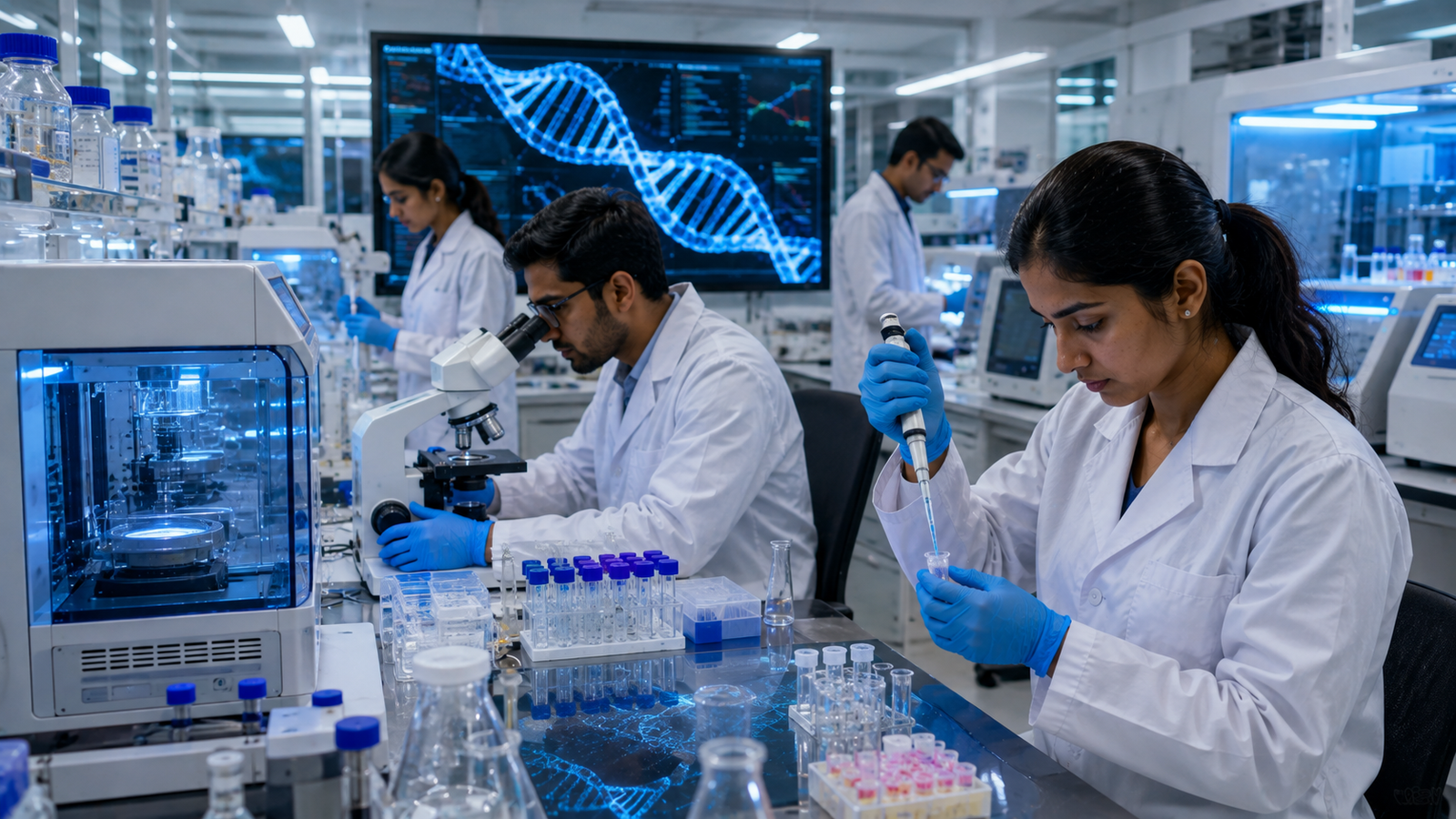
Biotechnology and health technologies are increasingly connected with areas such as genomics, precision medicine, biomanufacturing and public health. This section revises important developments and initiatives relevant to these themes.
Biotechnology remains a high-value area of Science and Technology Current Affairs for UPSC Prelims preparation.
- Which major Indian biotechnology policy continued to receive implementation updates during 2026?
A. BioE3 Policy
B. BioIndia 2047 Policy
C. Genome Security Policy
D. National DNA Policy
- What does BioE3 stand for?
A. Biotechnology for Economy, Environment and Employment
B. Biotechnology for Energy, Ecology and Education
C. Bio-Energy, Economy and Engineering
D. Biotechnology for Environment, Education and Entrepreneurship
- The BioE3 Policy primarily seeks to promote:
A. High-performance biomanufacturing
B. Nuclear energy
C. Satellite navigation
D. Semiconductor fabrication
- Which of the following is one of the thematic areas under the BioE3 Policy?
A. Precision biotherapeutics
B. Climate-resilient agriculture
C. Carbon capture and utilisation
D. All of the above
- Which organisation plays a major role in supporting biotechnology startups and innovation in India?
A. BIRAC
B. ISRO
C. NPCIL
D. SEBI
- What is the full form of BIRAC?
A. Biotechnology Industry Research Assistance Council
B. Biological Innovation and Research Advisory Commission
C. Biotechnology International Research and Commercialisation Council
D. Bio-Industrial Research and Advanced Computing
- In 2026, approximately how many Indian genomes had been sequenced under the Genome India initiative?
A. 1,000
B. 5,000
C. 10,000
D. 1 lakh
- What is one major potential application of population-scale genomic data?
A. Precision medicine
B. Coal mining
C. Rocket propulsion
D. Road construction
- The long-term goal mentioned in 2026 discussions around India’s genomic initiatives was to scale genomic sequencing towards:
A. 10,000 genomes
B. 50,000 genomes
C. 1 million genomes
D. 10 million genomes
- Which database infrastructure is associated with India’s genomic data ecosystem?
A. Indian Biological Data Centre
B. Indian Space Data Centre
C. National Semiconductor Data Centre
D. Bharat Nuclear Data Centre
- Which of the following is an example of cell and gene therapy?
A. CAR-T therapy
B. Conventional vaccination only
C. X-ray imaging
D. Ultrasound
- In the 2026 BioE3 implementation update, improved CAR-T therapies were associated primarily with:
A. Cancer treatment
B. Satellite communication
C. Battery manufacturing
D. Crop irrigation
- Which technology uses messenger RNA to instruct cells to produce a specific protein?
A. mRNA therapeutics
B. Quantum computing
C. LiDAR
D. Blockchain
- Which of the following was included in the BioE3 precision therapeutics area?
A. Cell and gene therapy
B. mRNA therapeutics
C. Monoclonal antibodies
D. All of the above
- In July 2026, how many BioE3 precision therapeutics-related projects were reported as being under implementation?
A. 7
B. 15
C. 27
D. 50
- Which of the following is an example of a monoclonal antibody application?
A. Targeted therapeutic intervention
B. Rocket stage separation
C. Semiconductor lithography
D. Satellite navigation
- Which technology is directly associated with modifying DNA at specific locations?
A. CRISPR-based gene editing
B. GPS
C. Li-ion battery
D. Fibre optics
- Which of the following was identified as a BioE3 thematic area?
A. Smart proteins and functional foods
B. Climate-resilient agriculture
C. Futuristic marine and space research
D. All of the above
- According to the 2026 BioE3 implementation update, how many projects were reported under the Carbon Capture Utilization sector?
A. 10
B. 20
C. 37
D. 100
- What is the significance of biomanufacturing in the BioE3 approach?
A. It can enable sustainable production of bio-based products
B. It is limited to vaccine production
C. It is exclusively related to space exploration
D. It replaces all forms of conventional manufacturing
Answers: Section 3 of Science and Technology Current Affairs MCQs
41. A — BioE3 Policy.
BioE3 remained a major biotechnology policy area in 2026, with implementation updates covering therapeutics, biomanufacturing and carbon utilisation.
42. A — Biotechnology for Economy, Environment and Employment.
BioE3 expands to Biotechnology for Economy, Environment and Employment.
43. A — High-performance biomanufacturing.
The policy was approved to foster high-performance biomanufacturing across India.
44. D — All of the above.
Precision biotherapeutics, climate-resilient agriculture and carbon capture/utilisation are among the BioE3 thematic areas.
45. A — BIRAC.
BIRAC supports biotechnology startups, MSMEs and academia-industry collaborations.
46. A — Biotechnology Industry Research Assistance Council.
BIRAC is the Biotechnology Industry Research Assistance Council.
47. C — 10,000.
Government updates in 2026 stated that sequencing of around 10,000 Indian genomes had been completed.
48. A — Precision medicine.
Large-scale genomic data can support disease-risk identification, targeted therapies and preventive healthcare.
49. C — 1 million genomes.
The long-term goal discussed by the government is to scale sequencing towards one million genomes.
50. A — Indian Biological Data Centre.
The IBDC is part of India’s genomic-data infrastructure.
51. A — CAR-T therapy.
CAR-T is a form of cell therapy in which immune cells are engineered to recognise and attack cancer cells.
52. A — Cancer treatment.
The 2026 BioE3 implementation update specifically referred to improved CAR-T therapies for cancers.
53. A — mRNA therapeutics.
mRNA-based approaches use messenger RNA to provide cells with instructions for producing proteins.
54. D — All of the above.
Cell and gene therapy, mRNA therapeutics and monoclonal antibodies are all included in the precision biotherapeutics area.
55. C — 27.
The July 2026 government update reported 27 projects under implementation in the precision therapeutics-related sector.
56. A — Targeted therapeutic intervention.
Monoclonal antibodies can be designed to bind specific molecular targets and are widely used in modern medicine.
57. A — CRISPR-based gene editing.
CRISPR systems can be used to make targeted changes in genetic material.
58. D — All of the above.
Smart proteins and functional foods, climate-resilient agriculture, and futuristic marine and space research are among the BioE3 themes.
59. C — 37.
The July 2026 update reported 37 projects under Carbon Capture Utilization.
60. A — It can enable sustainable production of bio-based products.
BioE3 aims to build a biomanufacturing ecosystem capable of producing bio-based chemicals, therapeutics, materials and other products.
Section 4: Semiconductors, Nuclear Technology & Advanced Manufacturing
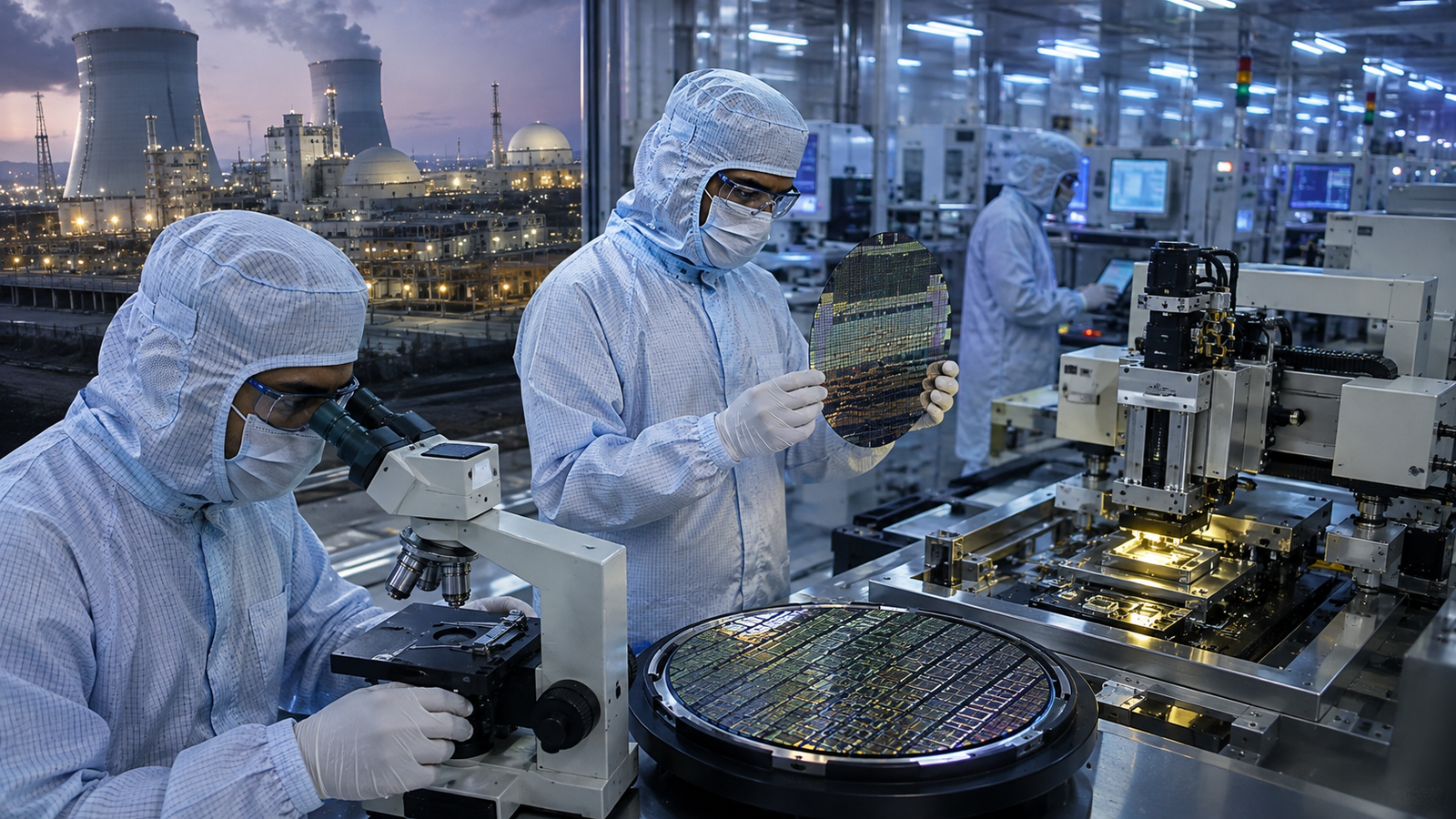
Semiconductors, nuclear technology and advanced computing are important to India’s technological and strategic capabilities. These questions cover recent policy decisions, institutional initiatives and developments in these sectors.
Semiconductor and nuclear developments are very important and necessary components of Science and Technology Current Affairs for UPSC.
- What is the name of India’s expanded semiconductor programme approved in July 2026?
A. Semicon 1.0
B. Semicon 2.0
C. Chip India 2047
D. Bharat Chip Mission
- When was Semicon 2.0 approved by the Union Cabinet?
A. 1 January 2026
B. 15 July 2026
C. 1 August 2026
D. 5 May 2026
- What is the approved outlay of Semicon 2.0?
A. ₹10,000 crore
B. ₹50,000 crore
C. ₹76,000 crore
D. ₹1,27,500 crore
- Which of the following is a major objective of Semicon 2.0?
A. Expanding semiconductor fabrication
B. Supporting advanced packaging
C. Strengthening the wider semiconductor ecosystem
D. All of the above
- Under the Semicon India Programme, how many fab/packaging projects had been approved by May 2026?
A. 5
B. 8
C. 12
D. 24
- How many semiconductor design projects had been approved under the programme?
A. 12
B. 24
C. 50
D. 100
- Which of the following is an example of an application targeted by Indian semiconductor design projects?
A. Satellite communications
B. Drone detection
C. IoT systems
D. All of the above
- What does ATMP stand for in the semiconductor industry?
A. Assembly, Testing, Marking and Packaging
B. Advanced Technology Manufacturing Process
C. Automated Transistor Manufacturing Platform
D. Advanced Testing and Microprocessor Production
- Which programme focuses specifically on supporting semiconductor chip design in India?
A. Design Linked Incentive Scheme
B. Green Hydrogen Mission
C. BioE3
D. National Quantum Mission
- As of early 2026, how many DLI-supported chip design projects were highlighted by the government?
A. 12
B. 24
C. 48
D. 100
- What is the primary purpose of Electronic Design Automation tools in semiconductor development?
A. Designing and verifying electronic circuits and chips
B. Producing green hydrogen
C. Sequencing genomes
D. Launching satellites
- Which institution is central to India’s semiconductor ecosystem policy?
A. India Semiconductor Mission
B. Indian Space Research Organisation
C. Indian Council of Medical Research
D. National Disaster Management Authority
- What is the main objective of India’s Nuclear Energy Mission?
A. Increase nuclear power capacity as part of long-term energy strategy
B. Eliminate all renewable energy
C. Promote only nuclear medicine
D. Replace all thermal power immediately
- What nuclear power capacity target has India set for 2047 under the Nuclear Energy Mission?
A. 10 GW
B. 25 GW
C. 50 GW
D. 100 GW
- What budgetary provision has been made for the design, development and deployment of Small Modular Reactors?
A. ₹2,000 crore
B. ₹10,000 crore
C. ₹20,000 crore
D. ₹1 lakh crore
- What is the target number of indigenous SMRs to be operationalised by 2033?
A. 2
B. 5
C. 10
D. 20
- Which organisation is undertaking SMR design and development work within the Department of Atomic Energy ecosystem?
A. Bhabha Atomic Research Centre
B. ISRO
C. DRDO only
D. CSIR-NAL
- What does SMR stand for?
A. Small Modular Reactor
B. Sustainable Modular Renewable
C. Smart Molecular Reactor
D. Small Military Reactor
- Which Act enacted in December 2025 was highlighted in 2026 nuclear-sector updates as enabling wider private-sector participation?
A. SHANTI Act
B. BHARAT Nuclear Act
C. Atomic Innovation Act
D. Nuclear Security Act
- The SHANTI Act is associated primarily with which sector?
A. Nuclear energy
B. Biotechnology
C. Space tourism
D. Semiconductor design
Answers: Section 4 of Science and Technology Current Affairs for UPSC
61. B — Semicon 2.0.
The Union Cabinet approved Semicon 2.0 in July 2026.
62. B — 15 July 2026.
Semicon 2.0 was approved by the Union Cabinet on 15 July 2026.
63. D — ₹1,27,500 crore.
The approved outlay of Semicon 2.0 is ₹1,27,500 crore.
64. D — All of the above.
Semicon 2.0 aims to support chip design, fabs, advanced packaging, materials, gases, equipment and the wider ecosystem.
65. C — 12.
By May 2026, 12 fab/packaging projects had been approved under the Semicon India Programme.
66. B — 24.
Twenty-four semiconductor design projects had been approved.
67. D — All of the above.
Approved design projects address areas including satellite communications, drone detection and IoT systems.
68. A — Assembly, Testing, Marking and Packaging.
ATMP refers to Assembly, Testing, Marking and Packaging activities in the semiconductor value chain.
69. A — Design Linked Incentive Scheme.
The DLI Scheme supports domestic semiconductor chip-design capabilities.
70. B — 24.
The government highlighted 24 DLI-supported chip design projects.
71. A — Designing and verifying electronic circuits and chips.
EDA tools are essential software tools used in modern chip design and verification.
72. A — India Semiconductor Mission.
ISM is the institutional framework supporting India’s semiconductor ecosystem.
73. A — Increase nuclear power capacity as part of long-term energy strategy.
The Nuclear Energy Mission is intended to strengthen nuclear power as a reliable, low-carbon energy source.
74. D — 100 GW.
India’s Nuclear Energy Mission targets 100 GW of nuclear power capacity by 2047.
75. C — ₹20,000 crore.
₹20,000 crore has been allocated for SMR design, development and deployment.
76. B — 5.
India aims to operationalise at least five indigenous SMRs by 2033.
77. A — Bhabha Atomic Research Centre.
BARC is undertaking design and development work on SMRs within the DAE ecosystem.
78. A — Small Modular Reactor.
SMR stands for Small Modular Reactor.
79. A — SHANTI Act.
The SHANTI Act was highlighted in 2026 as a framework enabling wider participation in nuclear power.
80. A — Nuclear energy.
The SHANTI Act relates to the nuclear power sector and wider participation by Indian private companies and joint ventures.
Section 5: Green Technology, Energy Storage, Research & Emerging Technology
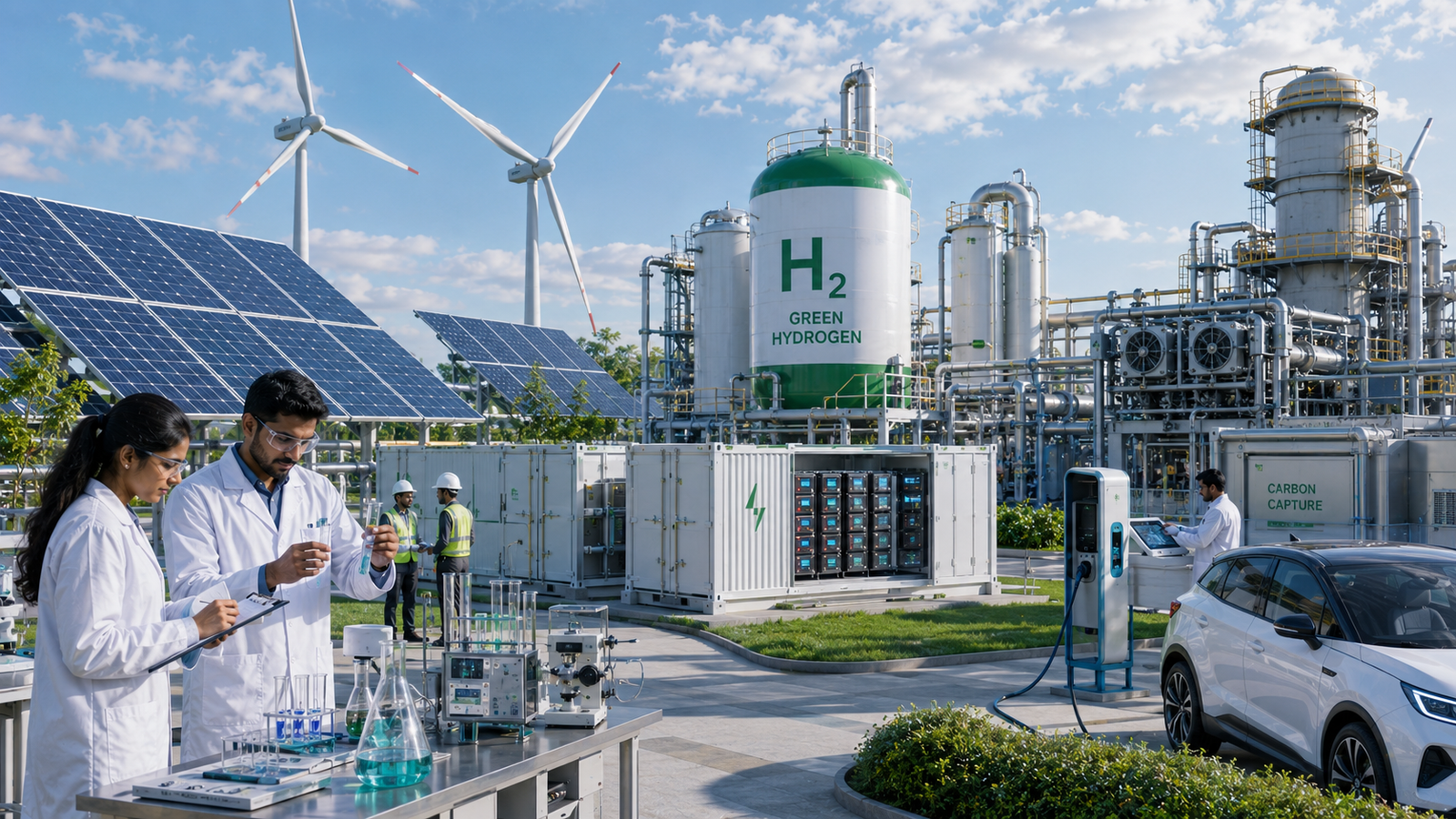
The following Science and Technology Current Affairs questions cover green technology, energy storage, research and other emerging technologies.
- What is the main objective of India’s National Green Hydrogen Mission?
A. Make India a global hub for production, use and export of green hydrogen
B. Promote coal production
C. Replace all solar power with hydrogen
D. Develop nuclear weapons
- What is the approved outlay of the National Green Hydrogen Mission?
A. ₹5,000 crore
B. ₹10,000 crore
C. ₹19,744 crore
D. ₹50,000 crore
- India aims to develop green hydrogen production capacity of approximately how much per year by 2030?
A. 0.5 million metric tonnes
B. 1 million metric tonnes
C. 5 million metric tonnes
D. 20 million metric tonnes
- In February 2026, India notified standards for which two green hydrogen derivatives?
A. Green ammonia and green methanol
B. Green petrol and green diesel
C. Green coal and green gas
D. Green uranium and green lithium
- Which ministry launched India’s Green Hydrogen Certification Portal in June 2026?
A. Ministry of New and Renewable Energy
B. Ministry of Heavy Industries
C. Ministry of Science and Technology
D. Ministry of Chemicals and Fertilizers
- As of June 2026, what was the installed capacity of Battery Energy Storage Systems with capacity greater than 1 MWh in India?
A. 927.85 MW / 2,660.20 MWh
B. 1,927.85 MW / 5,660.20 MWh
C. 2,927.85 MW / 8,660.20 MWh
D. 5,927.85 MW / 12,660.20 MWh
- Which technology is particularly important for storing electricity generated from intermittent renewable sources?
A. Battery Energy Storage Systems
B. Diesel generators only
C. Steam locomotives
D. Conventional transformers alone
- In May 2026, IIT Roorkee signed technology-transfer agreements related to which technology?
A. Lithium-ion battery electrodes
B. Satellite propulsion
C. Genome sequencing
D. Quantum cryptography
- India and the European Union launched a joint initiative in May 2026 focused on:
A. EV battery recycling
B. Lunar exploration
C. Nuclear weapons
D. Semiconductor lithography
- What was the approximate value of the India-EU joint EV battery recycling initiative?
A. €1.5 million
B. €15.2 million
C. €152 million
D. €1.52 billion
- The Research, Development and Innovation Scheme (RDI) has a corpus of:
A. ₹10,000 crore
B. ₹25,000 crore
C. ₹50,000 crore
D. ₹1 lakh crore
- The RDI Scheme primarily seeks to increase:
A. Private-sector participation in research and development
B. Coal imports
C. Agricultural land holdings
D. Tourism infrastructure
- The RDI Scheme is particularly relevant to which category of innovation?
A. High-risk and high-impact innovation
B. Only traditional handicrafts
C. Only tourism
D. Only basic school education
- Which of the following has been approved as a Second-Level Fund Manager under the RDI Fund?
A. Biotechnology Industry Research Assistance Council
B. Technology Development Board
C. Both A and B
D. Neither A nor B
- What is the main purpose of Carbon Capture and Utilisation?
A. Capture carbon dioxide and convert or use it as a resource
B. Increase atmospheric carbon dioxide
C. Produce uranium
D. Replace DNA sequencing
- Under the BioE3-related Carbon Capture Utilisation sector, how many projects were reported as implemented in July 2026?
A. 17
B. 27
C. 37
D. 47
- What was the central focus of Bengaluru INDIA NANO 2026?
A. Nanotechnology and its convergence with AI and advanced technologies
B. Nuclear weapons development
C. Traditional agriculture only
D. Space tourism
- The Scheme for Promotion of Culture of Science (SPoCS) is implemented by which organisation?
A. National Council of Science Museums
B. ISRO
C. DRDO
D. BIRAC
- Which of the following is supported under the Scheme for Promotion of Culture of Science?
A. Science Cities
B. Science Centres
C. Innovation Hubs and Digital Planetariums
D. All of the above
- As of 31 March 2026, approximately how many visitors had visited Science Centres established under the SPoCS scheme?
A. 16.85 lakh
B. 1.68 crore
C. 16.85 crore
D. 1.68 lakh
For the latest official information on India’s renewable-energy and green-hydrogen programmes, visit the Ministry of New and Renewable Energy.
Answers: Section 5 of Science and Technology Current Affairs Questions
81. A — Make India a global hub for production, use and export of green hydrogen.
The National Green Hydrogen Mission aims to establish India as a global hub for green hydrogen and its derivatives.
82. C — ₹19,744 crore.
The National Green Hydrogen Mission has a total outlay of ₹19,744 crore.
83. C — 5 million metric tonnes.
Government projections indicate that India’s green hydrogen production capacity could reach 5 million metric tonnes per annum by 2030.
84. A — Green ammonia and green methanol.
India notified standards for green ammonia and green methanol in February 2026.
85. A — Ministry of New and Renewable Energy.
MNRE launched the Green Hydrogen Certification Portal in June 2026.
86. C — 2,927.85 MW / 8,660.20 MWh.
The government reported this installed BESS capacity as of 30 June 2026 for systems above 1 MWh.
87. A — Battery Energy Storage Systems.
BESS can store electricity and help balance variable renewable-energy generation.
88. A — Lithium-ion battery electrodes.
IIT Roorkee signed technology-transfer agreements for advanced lithium-ion battery electrode technologies.
89. A — EV battery recycling.
India and the EU launched a joint initiative focused on EV battery recycling under the Trade and Technology Council.
90. B — €15.2 million.
The joint India-EU initiative was valued at approximately €15.2 million.
91. D — ₹1 lakh crore.
The RDI Scheme has a corpus/outlay of ₹1 lakh crore over six years.
92. A — Private-sector participation in research and development.
The RDI Scheme aims to catalyse private investment and participation in R&D.
93. A — High-risk and high-impact innovation.
The scheme is designed to support high-risk, high-impact innovation, including deep-tech development.
94. C — Both A and B.
BIRAC and the Technology Development Board were approved as early Second-Level Fund Managers under the RDI Fund.
95. A — Capture carbon dioxide and convert or use it as a resource.
Carbon Capture and Utilisation focuses on capturing CO₂ and using it as a feedstock or converting it into useful products.
96. C — 37.
The July 2026 BioE3 implementation update reported 37 projects under Carbon Capture Utilisation.
97. A — Nanotechnology and its convergence with AI and advanced technologies.
Bengaluru INDIA NANO 2026 focused on the convergence of nanotechnology with AI, semiconductors and other advanced applications.
98. A — National Council of Science Museums.
NCSM is the nodal agency for implementing the Scheme for Promotion of Culture of Science.
99. D — All of the above.
SPoCS supports Science Cities, Science Centres, Innovation Hubs and Digital Planetariums.
100. B — 1.68 crore.
As of 31 March 2026, the Science Centres established under SPoCS had received approximately 1.685 crore visitors, including students.
These Science and Technology Current Affairs topics should be revised along with their underlying scientific concepts.
Quick Revision: Most Important Science & Technology Topics for UPSC 2026
The following Science and Technology Current Affairs topics are especially useful for quick revision before UPSC Prelims.
Revising these Science and Technology Current Affairs 2026 topics along with UPSC Prelims PYQs can help aspirants strengthen their preparation for UPSC Prelims.
Use this list for a final revision of the major themes covered in the article. Instead of memorising the names alone, revise the basic concept, the related institution or programme, and its significance.
- Vikram-I and India’s first private orbital launch
- Skyroot Aerospace
- Mission Aagaman
- Bharatiya Antariksh Hackathon 2026
- Aditya-L1
- Gaganyaan
- START-2026
- ISRO–TIFR collaboration
- India-AI Impact Summit 2026
- IndiaAI Mission
- GPU and AI compute infrastructure
- BharatGen
- Agri Param
- Digital Public Infrastructure
- UPI internationalisation
- National Quantum Mission
- Quantum-safe technology
- BioE3 Policy
- Genome India
- Indian Biological Data Centre
- CAR-T therapy
- mRNA therapeutics
- CRISPR and gene editing
- Semicon 2.0
- Semiconductor design
- ATMP
- Design Linked Incentive Scheme
- Nuclear Energy Mission
- Small Modular Reactors
- SHANTI Act
- National Green Hydrogen Mission
- Green ammonia and green methanol
- Battery Energy Storage Systems
- EV battery recycling
- RDI Scheme
- Carbon Capture and Utilisation
- Nanotechnology
- Science Centres and SPoCS
For official information on India’s nuclear-energy programmes, see the Department of Atomic Energy.
How to Use These MCQs for UPSC Prelims
Do not simply memorise the correct options.
For every question, try to remember the concept behind the current affair.
For example:
Vikram-I → private space sector → orbital launch → LEO → commercial space ecosystem
Similarly:
Semicon 2.0 → chip design → fabs → advanced packaging → supply-chain resilience
And:
BioE3 → biomanufacturing → cell & gene therapy → mRNA → climate-resilient agriculture → CCU
This approach makes Science & Technology preparation much more useful for both UPSC Prelims and UPSC Mains GS Paper III.
Most Important Resources for UPSC Prelims 2027
- Current Affairs For UPSC Prelims 2027
- Polity for UPSC Prelims 2027
- Economy for UPSC Prelims 2027
- History for UPSC Prelims 2027
- Science and Technology for UPSC Prelims 2027
- Geography for UPSC Prelims 2027
Conclusion
These 100 Essential Science & Technology Current Affairs MCQs 2026 for UPSC, PCS & SSC Exams cover some of the most important developments in India’s rapidly changing scientific and technological landscape.
For UPSC Prelims, special attention should be given to space technology, AI, quantum technology, biotechnology, semiconductors, nuclear energy, green hydrogen and emerging digital technologies. For Mains, candidates should go beyond factual knowledge and understand the applications, benefits, challenges and strategic significance of these technologies.
Regular revision of Science and Technology Current Affairs along with basic scientific concepts can significantly improve performance in UPSC Prelims.
Keeping track of Science and Technology Current Affairs for UPSC is essential because many questions can connect recent developments with fundamental science.
For the latest government announcements and official updates related to Science and Technology, readers can refer to the Press Information Bureau (PIB).
For official updates on India’s Artificial Intelligence initiatives, see the Ministry of Electronics and Information Technology (MeitY).
For the latest information on India’s space missions and programmes, visit ISRO’s official website.
Disclaimer
This article covers Science & Technology developments and government updates available up to 12 August 2026. Facts, figures, project status, government announcements and scientific developments may be updated or revised later. Aspirants should cross-check important developments with official sources such as ISRO, PIB, Department of Science & Technology, Department of Biotechnology, MeitY, Department of Atomic Energy and MNRE before the examination.
For exam preparation, the latest official government notification or source should always be treated as final.
21 thoughts on “100 Amazing Science and Technology Current Affairs 2026 MCQs for UPSC, PCS , SSC etc.”