Introduction
August 2026 Current Affairs for UPSC Mains covers the most important national, economic, social, environmental, technological, security and international developments that can be integrated into the UPSC Mains syllabus.
For Mains preparation, current affairs should not be treated as a collection of daily news items. The real value comes from connecting a contemporary development with a static concept, constitutional provision, government policy, economic principle, environmental issue or international-relations theme.
This August 2026 Current Affairs for UPSC Mains compilation focuses on important developments that can be directly connected with the UPSC syllabus and answer writing.
Important Note: This compilation focuses on developments reported or officially highlighted during August 2026 and is designed for Mains-oriented preparation. Some official data released in August relates to earlier periods, such as July or FY 2025–26; the relevant reference period is mentioned wherever necessary.
Candidates should also understand the broader UPSC Mains syllabus before integrating current affairs with their preparation.
Why August 2026 Current Affairs Matter for UPSC Mains
The key to using August 2026 Current Affairs for UPSC Mains effectively is to connect every important development with a static subject and a relevant Mains theme.
The month of August 2026 saw important developments across almost every part of the General Studies syllabus.
Major themes included:
- Parliamentary functioning and legislative reforms
- Governance and digital public infrastructure
- Employment and labour formalisation
- Agriculture and value-added agricultural products
- Cooperative models and inclusive development
- Semiconductor and AI development
- Space technology and strategic autonomy
- Energy security and renewable energy
- Internal security and Left-Wing Extremism
- Environmental sustainability and ship recycling
- Education and social inclusion
- India’s role in BRICS
- Maritime and manufacturing capabilities
The official PIB August 2026 backgrounders alone covered subjects ranging from LWE and employment to solar energy, offshore exploration, GI tags, digital judiciary, CPGRAMS, ship recycling, school education, agriculture and higher education.
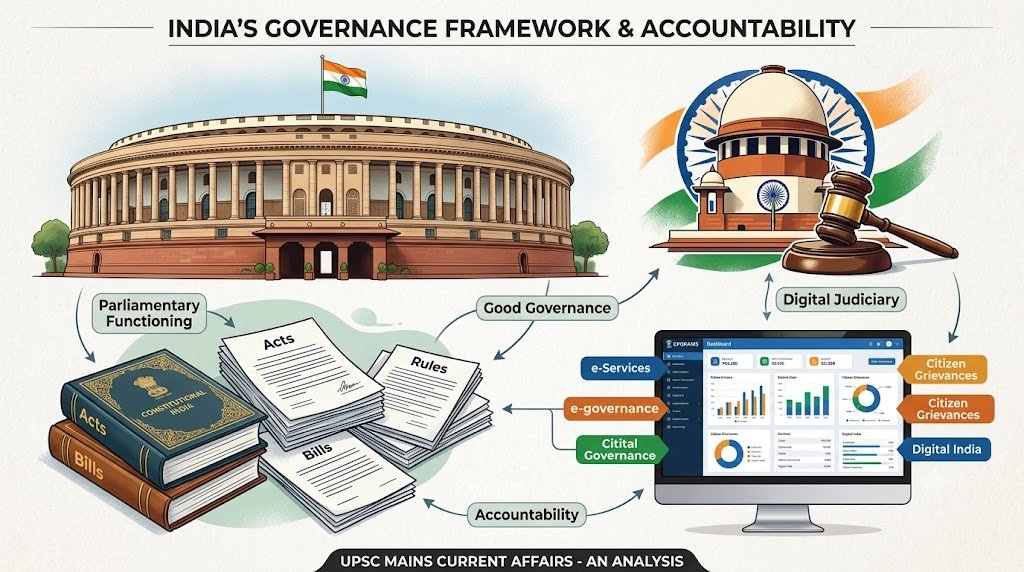
Parliament’s Monsoon Session 2026 and Legislative Functioning
GS Paper 2 – Polity & Governance
The Monsoon Session of Parliament in 2026 ended on 13 August 2026 after 19 sittings over 25 days. During the session, 11 Bills were introduced in the Lok Sabha and two in the Rajya Sabha, while 12 Bills were passed by both Houses. Two Bills replacing ordinances relating to Supreme Court judges and income tax amendments were also considered and passed.
Why it matters for UPSC
This development can be connected to:
- Parliamentary accountability
- Legislative scrutiny
- Ordinance-making power
- Bicameralism
- Role of parliamentary committees
- Quality of law-making
- Executive-legislative relations
Mains Angle
A strong answer can discuss the balance between efficient law-making and legislative scrutiny.
Possible UPSC Question
“Parliamentary productivity alone cannot be the sole measure of legislative effectiveness.” Discuss.
CPGRAMS and Citizen-Centric Governance
GS Paper 2 – Governance
The Centralised Public Grievance Redress and Monitoring System (CPGRAMS) received significant attention in August. Government reforms include multilingual registration, integration with Common Service Centres, monthly reporting, performance benchmarking through the Grievance Redressal Assessment and Index (GRAI), and AI-enabled assistance through the Samadhan Didi chatbot. The prescribed grievance-disposal timeline has also been reduced from 30 days to 21 days.
A July 2026 report released on 31 August recorded 1,01,047 grievances received by States/UTs and 83,324 grievances redressed during July.
Why it matters
CPGRAMS is an excellent example for questions on:
- Good governance
- Citizen participation
- Transparency
- Accountability
- E-governance
- Digital inclusion
- Responsive administration
Challenges
Digital grievance systems can face problems such as:
- Digital exclusion
- Language barriers
- Poor-quality grievance disposal
- Lack of institutional accountability
- Automated responses without meaningful resolution
Mains Insight
Digital governance becomes meaningful only when technology is combined with accountability and effective institutional response.
This makes CPGRAMS an important example for August 2026 Current Affairs for UPSC Mains, particularly for questions related to governance and citizen-centric administration.
Digital Transformation of the Indian Judiciary
GS Paper 2 – Judiciary & Governance
The e-Courts Mission Mode Project continued to transform India’s judicial system. According to a PIB backgrounder released in August, more than 753 crore pages of court records had been digitised, while e-Sewa Kendras were being used to improve access to judicial services.
Why it matters
This topic can be connected with:
- Judicial reforms
- Access to justice
- E-governance
- Judicial efficiency
- Digital divide
- Transparency
Benefits
Digital judicial infrastructure can:
- Reduce dependence on physical records
- Improve access to documents
- Facilitate remote services
- Improve case tracking
- Reduce transaction costs for citizens
Concerns
Technology cannot independently solve judicial delays. Issues relating to:
- judicial vacancies,
- case management,
- infrastructure,
- procedural complexity,
- cybersecurity,
- data protection
must also be addressed.
Possible Question
“Digitisation can improve access to justice but cannot by itself eliminate judicial delays.” Examine.
PM-Viksit Bharat Rojgar Yojana and Employment Formalisation
GS Paper 2 / GS Paper 3
The Pradhan Mantri Viksit Bharat Rojgar Yojana (PM-VBRY) focuses on encouraging first-time employment and incentivising employers to create new formal jobs. The scheme uses an EPFO-linked technology framework and seeks to strengthen workforce formalisation and social-security coverage.
Why it matters for Mains
Employment is directly connected with:
- Demographic dividend
- Labour formalisation
- Social security
- Inclusive growth
- Human capital
- Quality of employment
Key issue
India’s challenge is not only creating jobs but creating productive, stable and adequately protected employment.
Answer Framework
An answer can examine:
Problem → Informal employment → Skill mismatch → Low social-security coverage → Policy response → Way forward
Possible Question
How can labour formalisation help India convert its demographic dividend into sustained economic growth?
Bharat Taxi and the Cooperative Digital Economy
GS Paper 2 / GS Paper 3
Bharat Taxi emerged as an important example of a cooperative-led digital mobility platform. It is operated by Sahakar Taxi Cooperative Limited under the Multi-State Cooperative Societies Act, 2002. Its model seeks to make drivers members and stakeholders rather than simply platform workers.
As of 4 August 2026, the platform had registered 8.48 lakh drivers and 44.27 lakh customers, according to the Ministry of Cooperation.
UPSC relevance
This development can be used in answers on:
- Cooperative federalism and cooperative institutions
- Platform economy
- Gig workers
- Social security
- Digital economy
- Employment
- Inclusive growth
Mains Perspective
The cooperative model raises an important policy question:
Can digital platforms be designed so that technology users also become economic stakeholders?
This provides a useful analytical dimension for questions on the gig economy and worker welfare.
India–BRICS ICT Cooperation
GS Paper 2 – International Relations
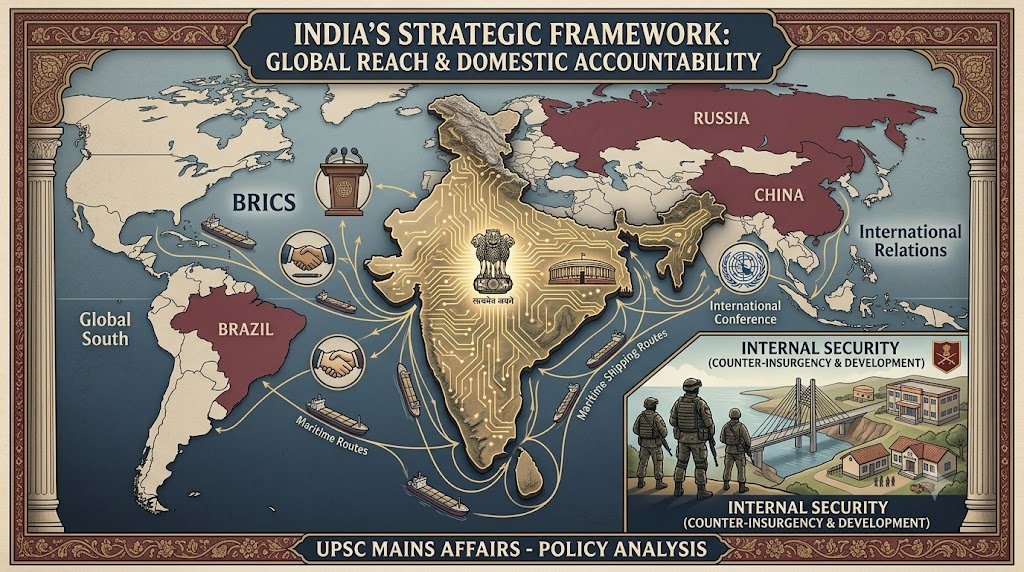
India hosted the BRICS ICT Track in Pune from 17–21 August 2026 under the theme:
“Innovate, Cooperate and Transform (ICT) for a Resilient Future.”
The programme included the BRICS Working Group on ICT cooperation, Digital BRICS Forum & Expo and the 12th Communications Ministers Meeting.
The discussions focused on:
- Digital Public Infrastructure
- Cybersecurity
- Digital skills
- Innovation
- Start-ups
- Resilient ICT ecosystems
The BRICS Digital Public Infrastructure discussions emphasised affordability, interoperability, digital sovereignty, cybersecurity, privacy and trust.
Why it matters
This is useful for questions on:
- India’s BRICS engagement
- Digital diplomacy
- Global South cooperation
- Technology governance
- Cybersecurity
- Digital sovereignty
Possible Question
Digital Public Infrastructure can become an important pillar of Global South cooperation. Discuss in the context of India’s engagement with BRICS.
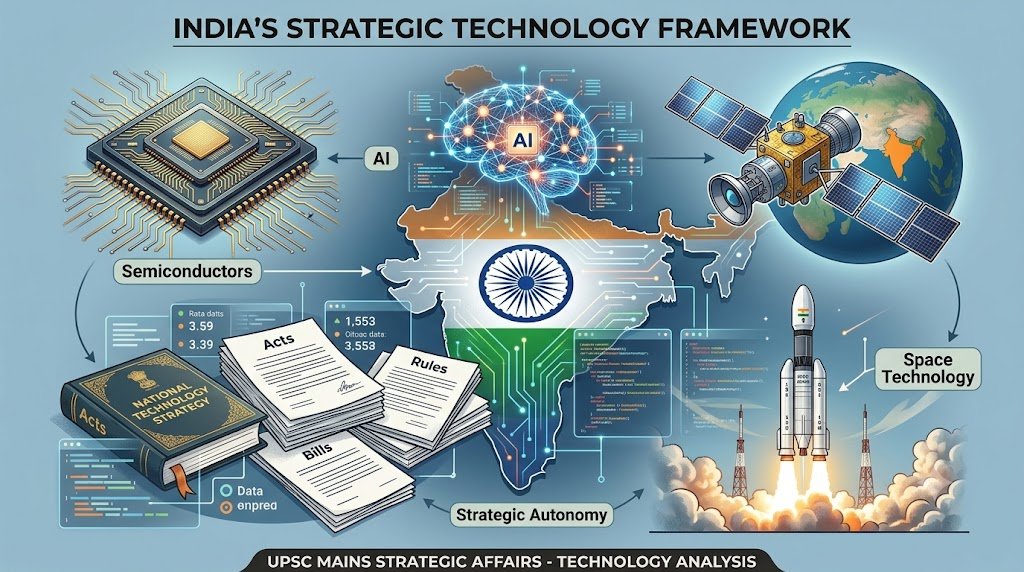
India’s Semiconductor and AI Push
GS Paper 3 – Science & Technology
August 2026 saw strong emphasis on the convergence of semiconductors and artificial intelligence.
The government highlighted the growing relationship between advanced chips, AI systems, high-performance computing and India’s technological self-reliance.
The issue can be linked to:
- Semiconductor manufacturing
- Strategic technology
- AI ecosystem
- Supply-chain resilience
- Digital sovereignty
- High-tech employment
- National security
India’s technological challenge is moving beyond simply consuming advanced technology toward building capacity in:
Design → Manufacturing → Packaging → Computing → AI applications
Mains Angle
A balanced answer should mention that semiconductor self-reliance requires:
- Capital
- Skilled manpower
- Research ecosystem
- Reliable power and water
- Supply-chain integration
- Global partnerships
- Intellectual property capabilities
Possible Question
“Semiconductor self-reliance is increasingly a strategic necessity rather than merely an industrial policy objective.” Discuss.
Semiconductor development is one of the most important technology themes to retain from August 2026 Current Affairs for UPSC Mains.
EOS-05 and India’s Space Capabilities
GS Paper 3 – Science & Technology
ISRO’s GSLV-F17 mission placed EOS-05 into its intended orbit. ISRO describes EOS-05 as an Earth-observation spacecraft and India’s first imaging satellite from geosynchronous orbit. (ISRO)
UPSC relevance
Earth-observation satellites have applications in:
- Agriculture
- Disaster management
- Weather monitoring
- Water-resource management
- Urban planning
- Infrastructure planning
- National security
Broader significance
Space technology increasingly supports India’s governance and economic objectives.
The issue can therefore be used to connect:
Space Technology + Governance + Disaster Management + Agriculture + Strategic Autonomy
India’s Solar Expansion and Energy Transition
GS Paper 3 – Energy & Environment
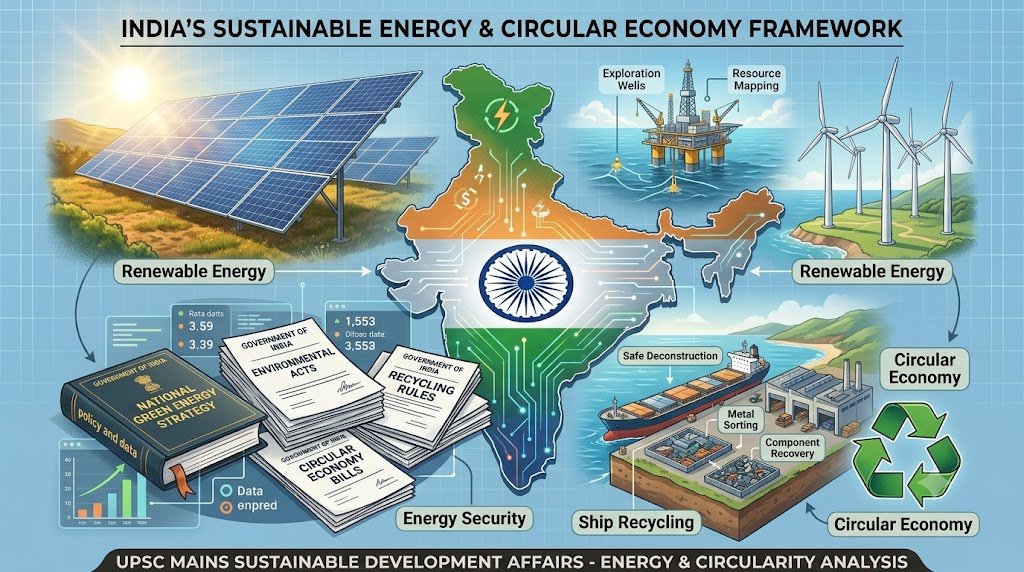
A PIB backgrounder highlighted India’s rapid expansion in solar power, with installed solar capacity reported at 162.15 GW as of 30 June 2026, compared with around 3 GW in 2014. The same August backgrounder discussed the Pradhan Mantri Surya Sarovar Yojana, aimed at developing 5,000 MW of floating solar capacity supported by energy storage.
Why it matters
Solar energy can be discussed in terms of:
- Energy security
- Climate commitments
- Energy transition
- Import dependence
- Decentralised energy
- Storage technologies
- Green jobs
Challenges
India’s renewable-energy transition faces issues involving:
- Grid integration
- Storage
- Land requirements
- Transmission
- Financing
- Domestic manufacturing
- Recycling of solar modules
Mains Question
What are the major opportunities and challenges associated with India’s transition towards renewable energy?
Samudra Manthan: Offshore Energy Exploration
GS Paper 3 – Energy & Economy
The Samudra Manthan – National Offshore Exploration Scheme received significant attention at the beginning of August. The Central Sector Scheme has an approved outlay of ₹84,084 crore up to FY 2030–31 and aims to expand India’s offshore hydrocarbon exploration capabilities.
The scheme seeks to:
- Increase exploration
- Use advanced technology
- Build shared infrastructure
- Strengthen domestic manufacturing
- Improve energy security
- Reduce import dependence
Mains Analysis
This topic illustrates a key policy dilemma:
Energy Security vs Climate Transition
India needs reliable energy for economic growth while simultaneously increasing renewable-energy adoption.
A high-quality answer should therefore avoid presenting hydrocarbon exploration and renewable energy as mutually exclusive overnight transitions. Instead, discuss the need for a managed and secure energy transition.
India’s Ship-Recycling Industry
GS Paper 3 – Environment / Economy
India’s ship-recycling sector received attention in August 2026. PIB reported that India became the world’s leading ship-recycling nation in 2025, with its global market share rising from 30.1% in 2024 to 35.4% in 2025. Recycling volume rose from 1.86 million gross tons to 2.99 million gross tons.
The sector is increasingly aligned with the Hong Kong International Convention for the Safe and Environmentally Sound Recycling of Ships.
Why it matters
This topic connects:
- Circular economy
- Maritime economy
- Environmental regulation
- Worker safety
- Hazardous materials
- Resource efficiency
- Blue economy
Important Concept: Inventory of Hazardous Materials
An Inventory of Hazardous Materials helps identify hazardous substances on ships before they enter authorised recycling facilities.
Possible Question
Explain the role of ship recycling in India’s circular economy and discuss the environmental challenges associated with the sector.
India’s Makhana Sector and Agricultural Value Addition
GS Paper 3 – Agriculture
Makhana emerged as an important agricultural and rural-economy issue in August 2026.
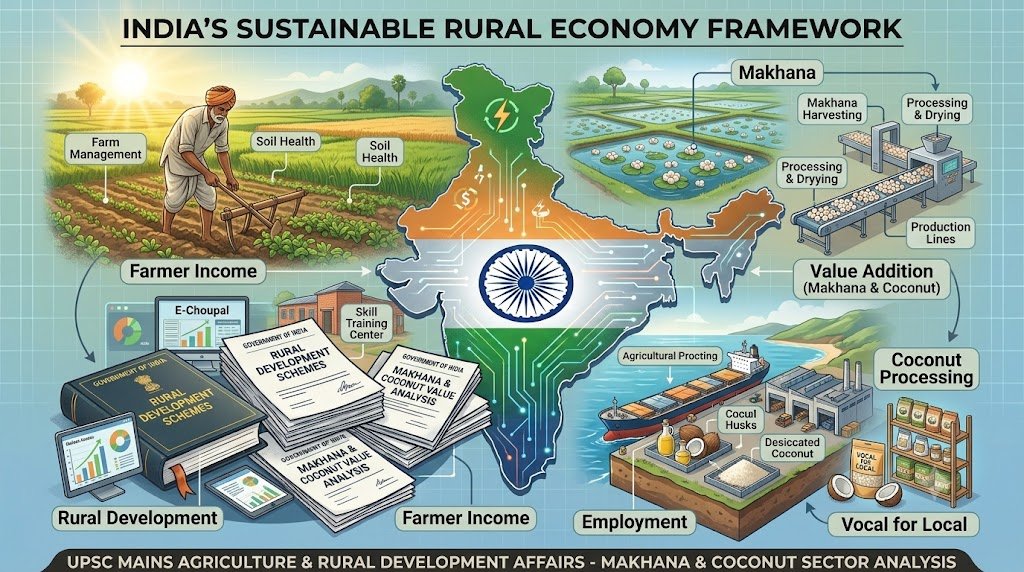
India is the world’s largest producer of makhana, while Bihar contributes a major share of production and global supply. PIB reported that India exported 7,264.89 MT of makhana products in 2025–26, with an export value of ₹19,296.08 lakh.
The government has also highlighted the role of the National Makhana Board and a Central Sector Scheme with an outlay of ₹476.03 crore for research, processing, branding, exports and farmer support.
UPSC significance
Makhana provides an excellent case study for:
- Agricultural diversification
- Value addition
- Food processing
- FPOs
- Rural employment
- GI and branding
- Agricultural exports
- Farmer incomes
Mains Insight
The bigger issue is not simply increasing production.
The real opportunity lies in:
Production → Processing → Branding → Value Addition → Export → Higher Farmer Income
Coconut Sector and Agricultural Diversification
GS Paper 3 – Agriculture
The coconut sector was highlighted in August 2026 because of its contribution to rural livelihoods, exports and value-added agricultural products.
India is the world’s largest coconut producer, according to the August PIB backgrounder. The sector supports nearly 30 million people, including around 10 million farmers.
India’s export basket is moving beyond traditional coconut products towards items such as:
- Virgin coconut oil
- Coconut milk
- Activated carbon
- Other processed products
Mains relevance
The coconut sector illustrates how agricultural policy can move from simply increasing production towards:
Value addition + Processing + Export diversification + Farmer income
It can also be used as an example of crop diversification and agro-based industrialisation.
Agricultural value addition is another useful theme from August 2026 Current Affairs for UPSC Mains, especially for GS Paper 3 answers.
India’s Mining Regulation and Critical Mineral Security
GS Paper 3 – Economy / Resources
The Mines and Minerals (Development and Regulation) Amendment Act, 2026 received attention in August.
The PIB factsheet states that the amendment seeks to create a more uniform fiscal framework for mining and places conditions around the levy of fresh taxes on mineral rights and mineral-bearing lands by State Governments.
Why it matters
Mining policy is increasingly connected to:
- Critical minerals
- Energy transition
- Industrial development
- Semiconductor manufacturing
- Defence production
- Resource security
- Centre-State relations
Mains Perspective
India’s transition to electric vehicles, renewable energy, batteries and advanced technologies will increase demand for minerals.
Therefore, mineral security is becoming increasingly connected with economic security and strategic autonomy.
Left-Wing Extremism and India’s Internal Security Strategy
GS Paper 3 – Internal Security
A PIB backgrounder published on 1 August 2026 highlighted the government’s claim that India had reached a historic milestone in the fight against Left-Wing Extremism (LWE), with no district remaining officially LWE-affected.
The government’s approach combined:
- Security operations
- Infrastructure development
- Tribal welfare
- Rehabilitation
- Governance
- Connectivity
- Development interventions
Why this is important
For UPSC Mains, the important point is not just the decline of extremist violence.
The larger question is:
How can security operations be combined with development and effective governance to address the underlying causes of extremism?
A balanced answer can discuss:
Security + Development + Governance + Tribal Rights + Connectivity + Rehabilitation
Possible Question
Examine the role of development and governance alongside security measures in addressing Left-Wing Extremism in India.
UDISE+ 2025–26 and School Education
GS Paper 2 – Social Justice
The UDISE+ 2025–26 report was highlighted in August 2026. It covered 14.67 lakh schools, 1.03 crore teachers and 24.72 crore students and reported developments relating to enrolment, teacher availability, pupil-teacher ratios, retention, transition, dropout and educational infrastructure.
Why it matters
This topic can be linked to:
- NEP 2020
- Human capital
- Education equity
- Gender equality
- Social inclusion
- Digital education
- School infrastructure
Mains Angle
Data-driven governance in education is important because policymakers need reliable district-level data to identify:
- Dropout hotspots
- Teacher shortages
- Infrastructure gaps
- Gender disparities
- Learning inequalities
India’s Higher Education Sector
GS Paper 2 – Education
A PIB backgrounder on India’s higher-education sector was released on 30 August 2026, highlighting higher education as a key component of India’s knowledge economy and the National Education Policy 2020.
The broader Mains issues include:
- Access
- Equity
- Quality
- Employability
- Research
- Internationalisation
- Multidisciplinary education
- Industry-academia collaboration
Mains Insight
India’s demographic advantage can become an economic advantage only when educational expansion is accompanied by quality, skills and employability.
Healthcare Access and Ayushman Bharat
GS Paper 2 – Social Justice
August 2026 also brought renewed attention to healthcare coverage and the expansion of public health infrastructure.
According to a PIB backgrounder, as of 12 August 2026:
- More than 45.5 crore Ayushman Cards had been issued.
- More than 38,466 public and private hospitals were empanelled.
- More than 1.86 lakh Ayushman Arogya Mandirs were functional.
- The scheme had covered 12.69 crore hospitalisations as of 30 June 2026.
UPSC relevance
Healthcare can be connected with:
- Universal Health Coverage
- Public health
- Preventive healthcare
- Health infrastructure
- Social justice
- Out-of-pocket expenditure
A good Mains answer should distinguish between health insurance coverage and actual healthcare access.
Women-Led Development
GS Paper 2 – Social Justice
The August 2026 discussion around “Sashakt Nari, Sashakt Bharat” highlighted women’s participation in education, health, nutrition, entrepreneurship, financial inclusion, governance and employment.
UPSC relevance
The issue can be used to discuss:
- Women’s workforce participation
- Financial inclusion
- Self-Help Groups
- Political participation
- Health and nutrition
- Entrepreneurship
- Gender budgeting
- Social empowerment
Mains Perspective
Women’s empowerment should increasingly be viewed not merely as a welfare objective but as a driver of economic growth, human capital formation and inclusive development.
India and the Maritime Economy
GS Paper 3 – Economy
August brought attention to India’s maritime manufacturing and logistics ecosystem through initiatives relating to container manufacturing and ship recycling.
The proposed Container Manufacturing Assistance Scheme carries an outlay of ₹10,000 crore and seeks to expand domestic container manufacturing, investment and technological capability.
Why it matters
India’s trade competitiveness depends on:
- Ports
- Shipping
- Containers
- Logistics
- Warehousing
- Multimodal connectivity
- Domestic manufacturing
The topic is useful for answers on Atmanirbhar Bharat, supply-chain resilience and India’s maritime ambitions.
GI Tags and Rural Economic Development
GS Paper 1 / GS Paper 3
Geographical Indication tags received attention in August as a tool for linking products with their place of origin.
GI protection can help:
- Preserve traditional knowledge
- Protect local products
- Support artisans and farmers
- Improve market recognition
- Promote exports
- Strengthen rural tourism
Mains Perspective
A GI tag alone does not guarantee higher incomes.
To turn GI recognition into sustainable rural development, India needs:
Quality control + Branding + Marketing + Value addition + E-commerce + Export access
India’s Energy Security Challenge
GS Paper 3 – Energy
August 2026 presented two seemingly different energy themes:
Renewable expansion through solar energy
and
Hydrocarbon exploration through Samudra Manthan.
These should not be studied separately.
Together they represent India’s broader challenge of maintaining:
Affordable Energy + Energy Security + Economic Growth + Climate Responsibility
This is an excellent analytical theme for UPSC Mains because India’s energy transition will take place over a period of changing technology, rising energy demand and evolving global climate commitments.
Energy security and the clean-energy transition should remain major revision areas while preparing August 2026 Current Affairs for UPSC Mains.
Most Important August 2026 Themes by GS Paper
For quick revision, August 2026 Current Affairs for UPSC Mains can be organized around a limited number of high-value themes rather than hundreds of individual news events.
| GS Paper | Important August 2026 Themes |
|---|---|
| GS Paper 1 | GI Tags, society, women, regional development |
| GS Paper 2 | Parliament, CPGRAMS, judiciary, education, healthcare, women, BRICS diplomacy |
| GS Paper 3 | Employment, semiconductors, AI, space, energy, mining, agriculture, maritime economy, LWE |
| GS Paper 4 | Citizen-centric governance, accountability, ethics in public administration, technology and public service delivery |
How to Use August 2026 Current Affairs for UPSC Mains
Candidates should approach August 2026 Current Affairs for UPSC Mains with a syllabus-oriented and issue-based strategy rather than simply memorizing monthly events.
Do not memorize every statistic in this article.
Instead, convert each major issue into a compact answer framework.
For example:
Topic: CPGRAMS
Remember:
Digital Governance → Citizen Participation → Accountability → Grievance Redressal → Challenges → Reforms
Topic: Semiconductors
Remember:
Strategic Technology → Supply Chains → Manufacturing → Talent → R&D → National Security
Topic: Makhana
Remember:
Agriculture → Value Addition → Processing → Branding → Exports → Farmer Income
Topic: LWE
Remember:
Security → Development → Governance → Tribal Inclusion → Rehabilitation
This is how August 2026 Current Affairs for UPSC Mains becomes useful in actual answer writing.
How to Frame Mains Answers from Current Affairs
A current-affairs-based answer should generally follow this structure:
Introduction
Define the issue or provide a brief current context.
Core Issue
Explain what has happened and why it matters.
Multiple Dimensions
Analyse the issue through two or more relevant dimensions.
For example:
- Economic
- Social
- Political
- Environmental
- Security
- Technological
Challenges
Mention implementation gaps, institutional constraints or unintended consequences.
Way Forward
Provide practical and balanced solutions.
Conclusion
Link the issue with broader national objectives such as:
- Inclusive development
- Sustainable development
- Constitutional values
- Good governance
- Human capital
- Viksit Bharat
10 Must-Remember Issues from August 2026
For quick revision, prioritize these ten:
1. Parliamentary functioning and legislative scrutiny
2. CPGRAMS and digital governance
3. PM-Viksit Bharat Rojgar Yojana
4. BRICS ICT cooperation and Digital Public Infrastructure
5. Semiconductor and AI ecosystem
6. EOS-05 and India’s space capabilities
7. Renewable energy and solar expansion
8. Samudra Manthan and energy security
9. Makhana, agricultural value addition and exports
10. LWE and integrated internal-security strategy
These themes have strong potential for linking current affairs with static syllabus areas.
August 2026 Current Affairs: Quick Revision Table
| Issue | GS Paper | Core Concept | Mains Keywords |
|---|---|---|---|
| Parliament Session | GS-II | Legislature | Accountability, scrutiny |
| CPGRAMS | GS-II | Governance | Citizen-centric governance |
| Digital Judiciary | GS-II | Judiciary | Access to justice |
| PM-VBRY | GS-II/III | Employment | Formalisation, social security |
| Bharat Taxi | GS-II/III | Cooperatives | Gig economy, inclusion |
| BRICS ICT | GS-II | IR | Digital diplomacy |
| Semiconductor & AI | GS-III | S&T | Strategic autonomy |
| EOS-05 | GS-III | Space | Earth observation |
| Solar Growth | GS-III | Energy | Energy transition |
| Samudra Manthan | GS-III | Energy | Energy security |
| Ship Recycling | GS-III | Environment | Circular economy |
| Makhana | GS-III | Agriculture | Value addition |
| Mining Amendment | GS-III | Resources | Critical minerals |
| LWE | GS-III | Security | Security-development nexus |
| UDISE+ | GS-II | Education | Human capital |
| Healthcare | GS-II | Social Justice | UHC |
| Women-led development | GS-II | Social Justice | Inclusion |
Practice Questions for UPSC Mains 2027
1. Digital governance platforms such as CPGRAMS can improve administrative accountability, but technology alone cannot guarantee responsive governance. Discuss.
2. Examine the importance of semiconductor self-reliance for India’s economic and strategic security.
3. India’s energy policy must balance energy security with the objectives of climate-resilient development. Discuss.
4. Agricultural value addition can play a greater role than production expansion alone in raising farmers’ incomes. Examine with suitable examples.
5. Discuss how cooperative-led digital platforms can provide an alternative model for addressing the challenges of the gig economy.
6. Explain how space-based earth observation can improve public policy and disaster management in India.
7. “The fight against Left-Wing Extremism requires an integration of security, governance and development.” Discuss.
8. Evaluate the significance of India’s growing role in digital cooperation through BRICS.
9. Examine the role of GI tags in preserving cultural heritage while promoting rural economic development.
10. How can education and healthcare policies help India convert its demographic potential into a productive demographic dividend?
The following questions show how August 2026 Current Affairs for UPSC Mains can be converted into analytical UPSC-style questions.
Recommended Posts
UPSC Mains GS 3 Indian Economy Notes 2027: Essential Topics, Data & Success Strategy
Economic Growth vs Development: Key Differences for UPSC Mains 2027
Agriculture UPSC Mains GS 3: Complete Notes, Key Issues, Challenges & Way Forward
UPSC Mains GS Paper 3 2027: Complete Syllabus, Important Topics, Notes & Current Affairs
Most Important Resources for UPSC Mains
- Current Affairs For UPSC Mains
- GS Paper 1 for UPSC Mains
- GS Paper 2 for UPSC Mains
- GS Paper 3 for UPSC Mains
Final Takeaway
August 2026 Current Affairs for UPSC Mains shows a clear pattern: India’s major policy challenges increasingly cut across traditional subject boundaries.
A single development can have several dimensions.
For example:
Semiconductors → Economy + Technology + National Security
Solar Energy → Environment + Economy + Energy Security
Makhana → Agriculture + Rural Development + Exports
CPGRAMS → Governance + Technology + Accountability
BRICS ICT → International Relations + Technology + Digital Governance
LWE → Internal Security + Tribal Development + Governance
This is exactly how current affairs should be used in UPSC Mains.
Do not ask only:
“What happened in August 2026?”
Ask instead:
“Which syllabus topic does it connect with, what are its implications, what are the challenges, and how can I use it in a Mains answer?”
That shift from news collection to syllabus-based analysis is the foundation of effective August 2026 Current Affairs for UPSC Mains preparation.
Regular revision of August 2026 Current Affairs for UPSC Mains will be much more effective when each issue is converted into a concise, syllabus-linked answer framework.
Official Resources