Introduction
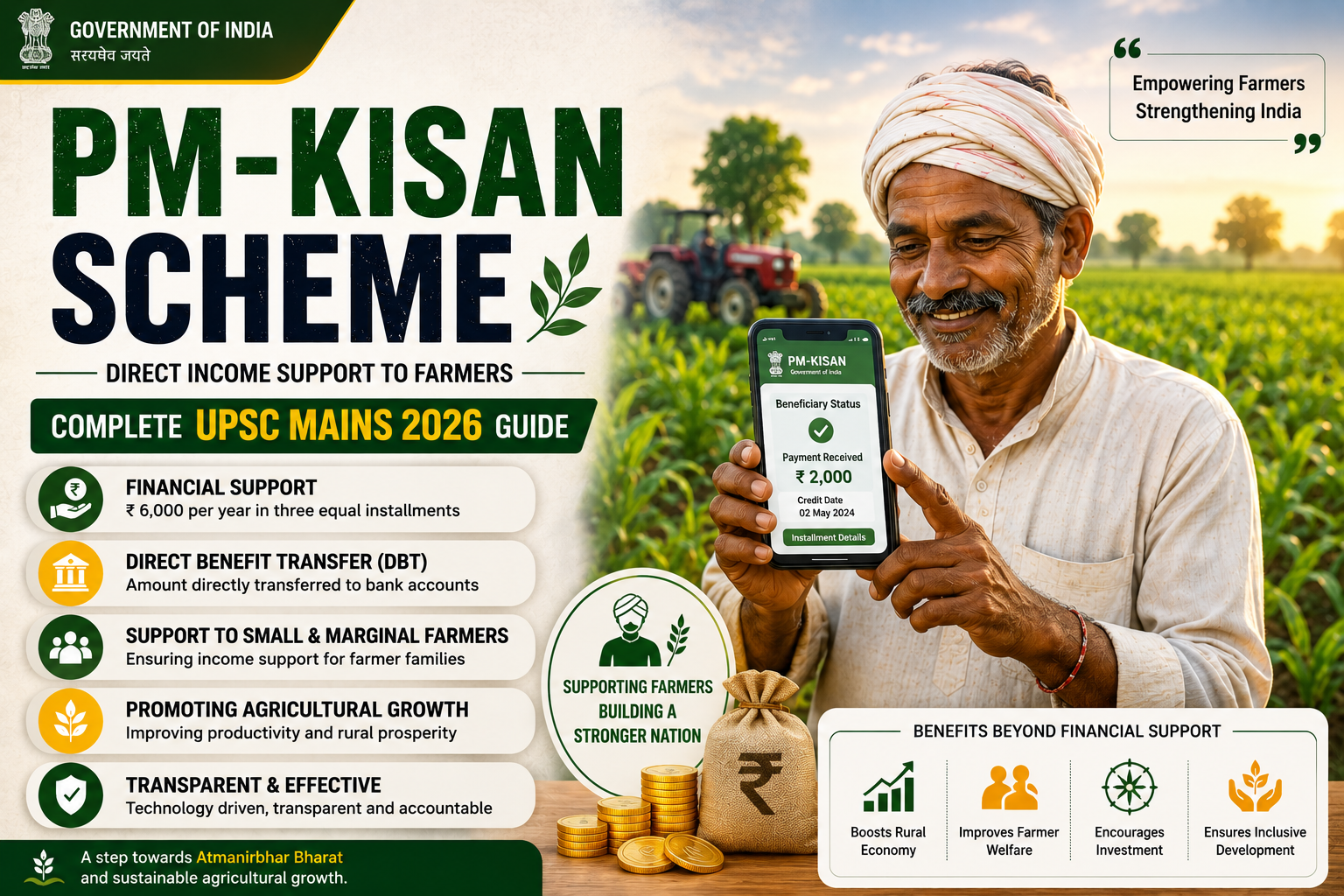
PM KISAN Scheme UPSC Mains 2026 is one of the most important government schemes for UPSC preparation because it directly connects agriculture, farmer welfare, rural development, Direct Benefit Transfer (DBT), and inclusive growth. Launched to provide financial assistance to farmers, the scheme has become highly relevant for GS Paper 2, GS Paper 3, Essay, and UPSC Interview preparation.
PM-KISAN has emerged as one of the largest Direct Benefit Transfer (DBT) schemes in the world and is highly important for UPSC Mains GS Paper 2, Essay, and Interview preparation.
PM KISAN Scheme UPSC Mains 2026 is highly important for understanding agricultural welfare policies and farmer income support initiatives in India.

PM-KISAN Scheme Overview
| Particulars | Details |
|---|---|
| Scheme Name | Pradhan Mantri Kisan Samman Nidhi (PM-KISAN) |
| Launch Date | 24 February 2019 |
| Type | Central Sector Scheme |
| Ministry | Ministry of Agriculture & Farmers Welfare |
| Beneficiaries | Small and marginal farmers (now all eligible farmer families) |
| Financial Assistance | ₹6,000 annually |
| Transfer Mode | Direct Benefit Transfer (DBT) |
| Official Objective | Income support to farmers |
Launch Year: PM Kisan Yojana
The PM-KISAN Scheme was officially launched on 24 February 2019 by the Government of India.
Initially, the scheme targeted small and marginal farmers owning up to 2 hectares of cultivable land. Later, the government expanded the scheme to include all eligible farmer families across the country.
The scheme became an important step toward improving rural income security and strengthening agricultural sustainability.
Ministry: PM-KISAN Mains Notes
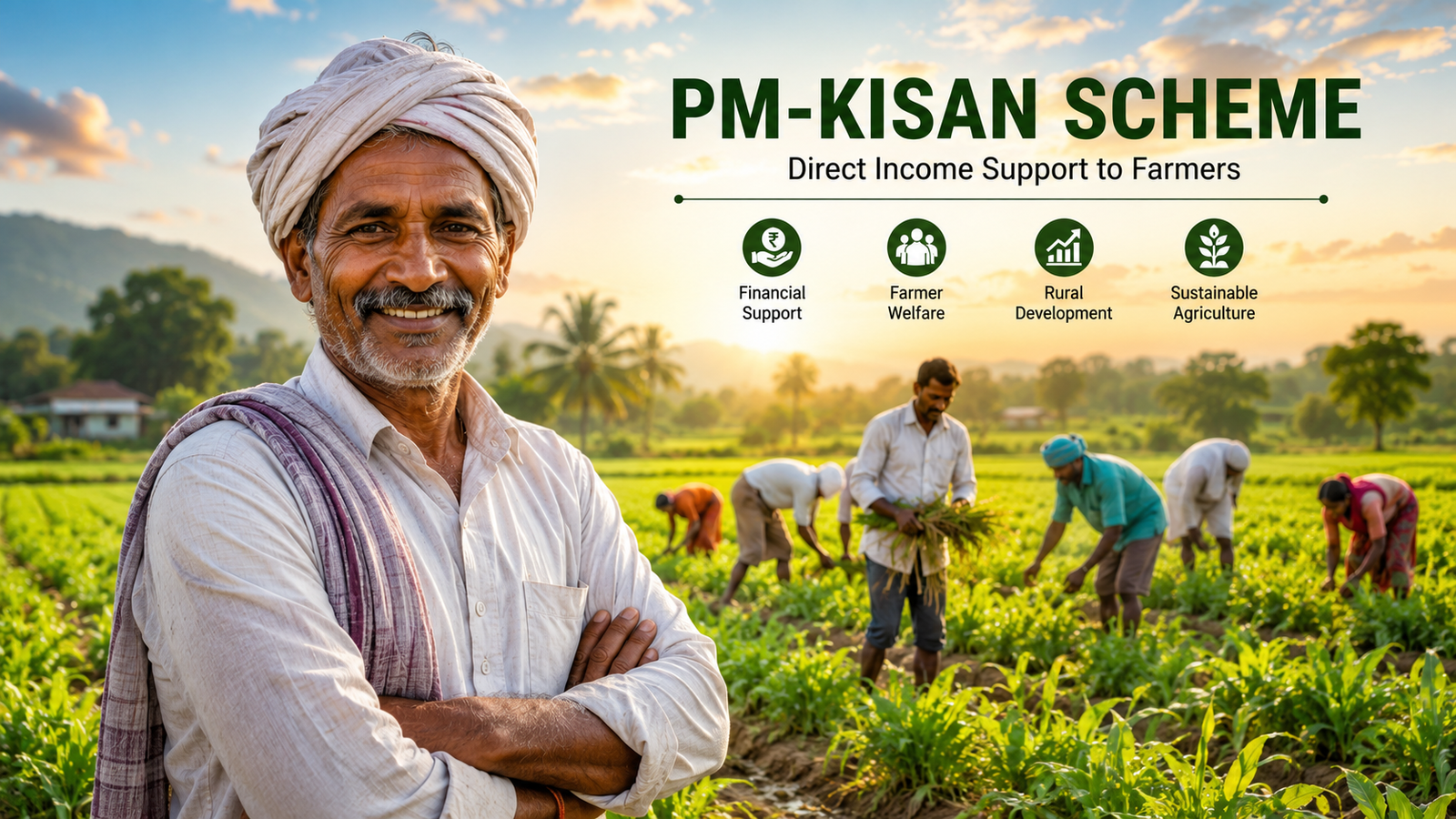
The PM-KISAN Scheme is implemented by:
Ministry of Agriculture and Farmers Welfare
The ministry coordinates with:
- State Governments
- Union Territories
- Banks
- Digital payment platforms
The scheme is administered using:
- Aadhaar verification
- Land records
- DBT infrastructure
- PM-KISAN digital portal
Objectives of PM-KISAN Scheme
The major objectives of the PM-KISAN Scheme are:
1. Income Support to Farmers
Provide assured financial assistance to farmers for agricultural and household needs.
2. Reduce Financial Distress
Help farmers manage rising input costs such as:
- Seeds
- Fertilizers
- Irrigation
- Pesticides
3. Promote Agricultural Productivity
Enable timely purchase of agricultural inputs.
4. Reduce Dependence on Informal Credit
Minimize dependence on moneylenders and high-interest loans.
5. Improve Rural Economy
Increase rural consumption and economic activity.
The PM KISAN Scheme UPSC Mains 2026 topic is frequently connected with questions related to inclusive growth and rural development.

Features of PM-KISAN Scheme: Welfare Schemes UPSC
1. Direct Income Support
Eligible farmers receive:
₹6,000 annually in three equal installments.
2. Direct Benefit Transfer (DBT)
Funds are directly transferred into beneficiaries’ bank accounts.
3. Nationwide Coverage
The scheme covers eligible farmers across all states and union territories.
4. Technology-Driven Monitoring
The scheme uses:
- Aadhaar authentication
- Digital databases
- Online registration systems
5. Transparency
Digital payment systems reduce leakages and corruption.
6. No Middlemen
Farmers receive benefits directly without intermediaries.
Aspirants preparing PM KISAN Scheme UPSC Mains 2026 should focus on Direct Benefit Transfer and digital governance aspects of the scheme.
Beneficiaries: PM KISAN Scheme UPSC Mains 2026
The scheme benefits:
Eligible Beneficiaries
- Small and marginal farmers
- Farmer families owning cultivable land
- Eligible rural agricultural households
Excluded Categories
The following categories are generally excluded:
- Institutional landholders
- Income tax payers
- Constitutional post holders
- Serving or retired government employees
- Professionals such as doctors, engineers, lawyers, etc.
PM KISAN Scheme UPSC Mains 2026 also highlights the importance of identifying eligible beneficiaries through accurate land records.
Funding Pattern: Government Schemes UPSC 2026,
PM-KISAN is a:
100% Centrally Funded Scheme
The entire financial burden is borne by the Central Government.
Funds are transferred directly through the:
- Public Financial Management System (PFMS)
- Direct Benefit Transfer mechanism
This ensures:
- Faster delivery
- Greater transparency
- Reduced corruption

Achievements of PM-KISAN Scheme
1. Massive Farmer Coverage
The scheme has benefited crores of farmers across India.
2. Strengthening DBT Ecosystem
PM-KISAN significantly strengthened India’s digital welfare delivery infrastructure.
3. Rural Income Support
It provided timely financial assistance during:
- COVID-19 pandemic
- Crop failures
- Economic disruptions
4. Financial Inclusion
The scheme encouraged:
- Bank account opening
- Aadhaar linkage
- Digital financial access
5. Reduction in Leakages
Direct transfer minimized corruption and middlemen interference.
6. Support to Agricultural Activities
Farmers could purchase:
- Seeds
- Fertilizers
- Farm equipment
The success of PM KISAN Scheme UPSC Mains 2026 demonstrates how technology-driven welfare schemes can improve transparency and efficiency.
Challenges of PM KISAN Scheme UPSC Mains 2026
Despite its success, the scheme faces several challenges.
1. Exclusion Errors
Many deserving farmers remain excluded due to:
- Incorrect land records
- Aadhaar mismatches
- Documentation issues
2. Tenant Farmers Excluded
Tenant farmers and sharecroppers often do not receive benefits because they lack land ownership records.
3. Small Financial Assistance
₹6,000 annually may not be sufficient considering rising agricultural costs.
4. Data Inconsistencies
Variation in land records among states creates implementation difficulties.
5. Digital Divide
Some rural farmers face difficulties in:
- Registration
- Aadhaar authentication
- Banking access
Challenges associated with PM KISAN Scheme UPSC Mains 2026 include exclusion errors, tenant farmer issues, and digital access problems.
Farmers can check eligibility, beneficiary status, and installment details through the official PM-KISAN portal.
Criticism of PM-KISAN Scheme
1. Limited Income Impact
Critics argue that the financial support is too low to substantially improve farmers’ income.
2. Land Ownership Bias
The scheme mainly benefits land-owning farmers rather than agricultural laborers or tenants.
3. Political Populism Concerns
Some analysts view the scheme as an electoral welfare measure.
4. Fiscal Burden
Large-scale welfare spending increases pressure on government finances.
5. Lack of Structural Reforms
Income support alone cannot solve deeper agricultural issues such as:
- Low productivity
- Irrigation shortages
- Market inefficiencies
Many experts believe PM KISAN Scheme UPSC Mains 2026 requires stronger agricultural reforms for long-term rural prosperity.
UPSC Mains Relevance
PM-KISAN is extremely important for UPSC Mains.
GS Paper 2
Relevant Topics:
- Welfare schemes
- Government policies
- Direct Benefit Transfer
- Rural development
GS Paper 3
Relevant Topics:
- Agriculture
- Farmer income
- Inclusive growth
- Technology in governance
Essay Topics
Useful for essays on:
- Agricultural reforms
- Rural economy
- Welfare state
- Inclusive development
Interview
Questions may be asked regarding:
- Scheme effectiveness
- DBT model
- Farmer distress
- Agricultural sustainability
Previous Year UPSC Questions Related to Agriculture & Welfare Schemes
UPSC Mains 2020
“How and to what extent would micro-irrigation help in solving India’s water crisis?”
UPSC Mains 2021
“What are the major challenges of public distribution system reforms in India?”
UPSC Mains 2022
“Discuss the role of technology in improving governance and welfare delivery.”
These questions show the importance of welfare schemes and rural governance for UPSC preparation.
Way Forward
1. Inclusion of Tenant Farmers
Tenant cultivators and sharecroppers should be integrated into the scheme.
2. Improve Land Records
Digitization and modernization of land records are essential.
3. Increase Financial Assistance
Periodic revision of financial support should be considered.
4. Better Convergence
PM-KISAN should be linked with:
- Crop insurance
- Irrigation schemes
- Soil health initiatives
5. Strengthen Digital Infrastructure
Improve rural internet and banking access.
6. Promote Sustainable Agriculture
Combine income support with:
- Organic farming
- Climate-resilient agriculture
- Water conservation
For UPSC aspirants, PM KISAN Scheme UPSC Mains 2026 is an important topic connecting governance, agriculture, welfare delivery, and economic development.
The official Ministry of Agriculture & Farmers Welfare provides detailed information regarding farmer welfare initiatives and PM-KISAN implementation through its official portal.
NITI Aayog regularly publishes reports and policy recommendations related to agriculture reforms, farmer welfare, and rural development.
Recommended Posts
100 Important World Current Affairs MCQs for UPSC Prelims 2027 with Answers
Modern History Strategy for UPSC Mains GS Paper 1: Complete Guide & Study Plan
Indian Art Forms (Dance, Music, Painting) UPSC Mains 2026 GS Paper 1
Master Guide: Indian Classical And Folk Music UPSC Mains 2026 (GS 1)
National Supercomputing Mission (NSM): Powerful AI Revolution in India | UPSC 2026
Conclusion
The PM-KISAN Scheme represents a landmark initiative in India’s agricultural welfare framework. By providing direct income support to millions of farmers, the scheme has strengthened financial inclusion, rural stability, and digital governance.
However, challenges such as exclusion errors, limited financial assistance, and tenant farmer exclusion must be addressed to improve its long-term effectiveness. With proper reforms and better implementation, PM-KISAN can play a major role in achieving inclusive agricultural growth and rural prosperity in India.
For UPSC aspirants, PM-KISAN is an important topic connecting governance, agriculture, welfare schemes, technology, and inclusive development.
UPSC aspirants should regularly visit the official UPSC website for syllabus updates, examination notifications, and previous year papers.
2 thoughts on “PM KISAN Scheme UPSC Mains 2026: Complete Guide, Benefits, Challenges & Analysis”