The Vedic Age is one of the most important periods in Ancient Indian History. It witnessed the development of early Indo-Aryan society, religious traditions, political institutions, economic activities and philosophical ideas that influenced the later development of Indian civilisation.
For aspirants preparing for Vedic Age UPSC Prelims 2027, understanding the differences between the Early Vedic Period and the Later Vedic Period is particularly important. Questions may focus on the Rigveda, the four Vedas, the position of women, the Varna system, Sabha and Samiti, agriculture, iron technology and the development of religious practices.
The Vedic Age is generally divided into two major phases:
- Early Vedic Period (approximately 1500–1000 BCE)
- Later Vedic Period (approximately 1000–600 BCE)
These dates are approximate and represent conventional historical classifications. This guide explains the major developments of both periods, with special attention to the topics relevant to the UPSC Civil Services Preliminary Examination.
For effective preparation of Vedic Age UPSC Prelims 2027, aspirants should understand the historical transition between the Early and Later Vedic periods.
Explore our comprehensive guide on Ancient Indian History for UPSC Prelims 2027 to understand the Prehistoric Period, Indus Valley Civilization, Vedic Age, Buddhism, Jainism and major ancient Indian empires.
1. Sources of Vedic History
The most important sources for understanding the Vedic Age are the Vedic texts. These texts provide information about religious practices, social organisation, political institutions, economic activities and philosophical developments.
Important Vedic Literature
1. The Four Vedas
- Rigveda: The oldest Veda, containing hymns dedicated to various deities.
- Samaveda: Primarily associated with melodies and chants used in rituals.
- Yajurveda: Contains sacrificial formulas and instructions related to rituals.
- Atharvaveda: Includes hymns, prayers, charms and references to everyday life.
2. Other Vedic Texts
- Brahmanas: Explain the meaning and procedures of Vedic rituals and sacrifices.
- Aranyakas: Known as forest texts, they explore ritual symbolism and philosophical ideas.
- Upanishads: Focus on philosophical questions concerning the self, ultimate reality and the nature of existence.
The Rigveda is particularly important for studying the Early Vedic Period, while the later Vedic literature provides valuable information about the social, political and religious developments of the subsequent phase.
While studying the Vedic Period, revise the Indus Valley Civilization Notes for UPSC 2027 to understand the earlier urban civilisation of the Indian subcontinent.
2. Early Vedic Period (1500–1000 BCE)
The Early Vedic Period forms a fundamental part of Vedic Age UPSC Prelims 2027, particularly for understanding the Rigvedic society and its traditions.
The Early Vedic Period is also known as the Rigvedic Period because the Rigveda is the principal literary source for understanding this phase.
The Rigvedic people were primarily associated with the north-western region of the Indian subcontinent. The geographical references in the Rigveda include rivers such as the Indus and its tributaries, along with the Saraswati.
These developments are particularly important when studying Vedic Age UPSC Prelims 2027 because they explain the foundations of early Vedic society and political organisation.
Early Vedic Society
Early Vedic society was primarily organised around family, kinship and tribal relationships.
Important features included:
- The family was the basic unit of society.
- The father generally headed the household.
- Society was largely patriarchal.
- Women participated in religious and social activities.
- Some women were known for their learning and composition of hymns.
- The Varna system existed in an early and relatively less rigid form.
Women such as Ghosha, Lopamudra and Apala are associated with the Rigvedic tradition.
The position of women in the Early Vedic Period is generally considered more favourable than in the Later Vedic Period, although social conditions were not necessarily identical for all women.
Early Vedic Economy
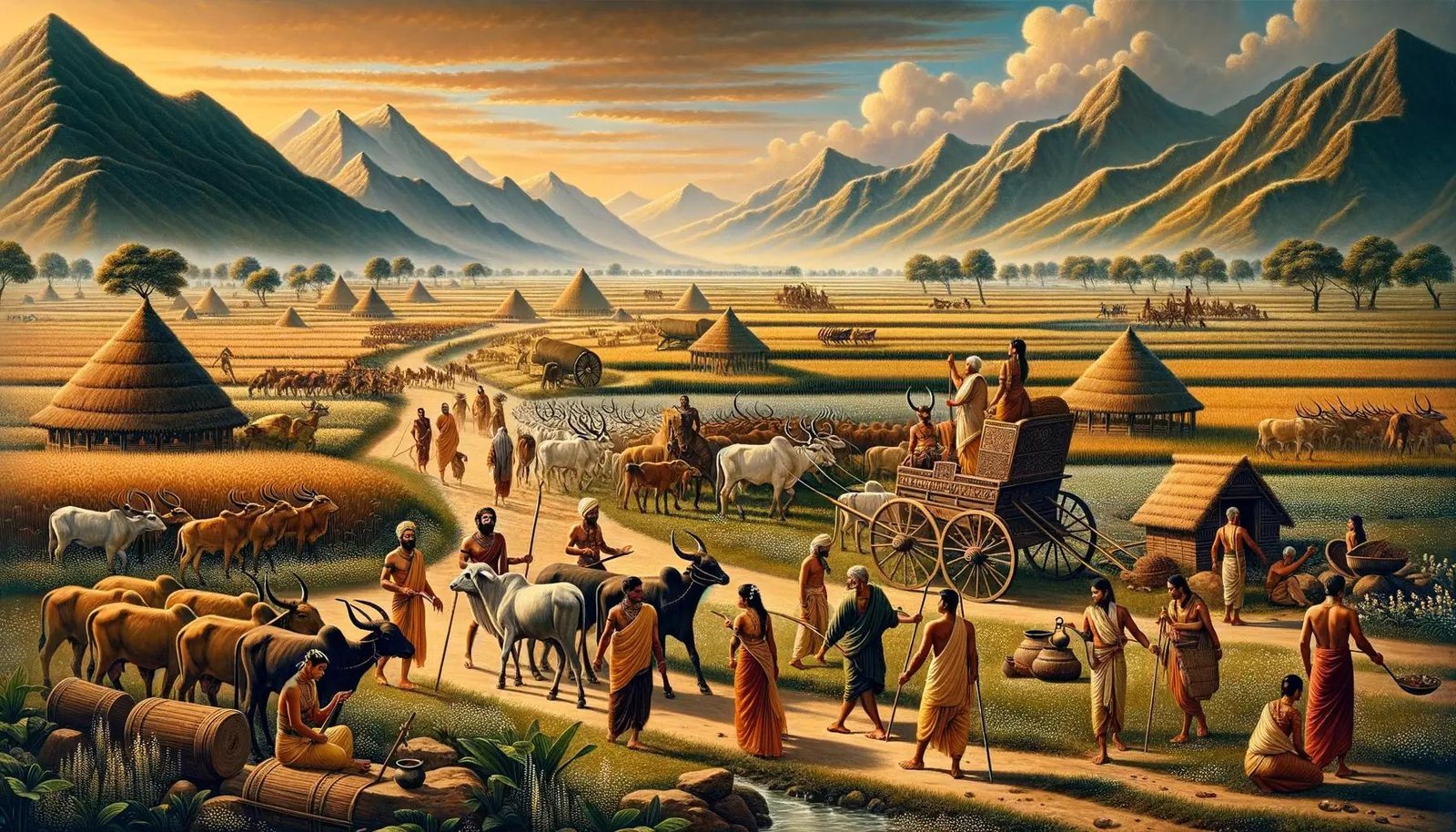
The economy of the Early Vedic Period was primarily pastoral.
Cattle were an important measure of wealth and played a significant role in economic and social life.
Major economic activities included:
- Cattle rearing and animal husbandry.
- Agriculture on a relatively limited scale.
- Hunting and gathering.
- Craft production.
- Exchange and trade.
The Rigveda frequently mentions cattle, horses and chariots. The importance of cattle is also reflected in references to conflicts over cattle and other resources.
Agriculture was known, but pastoral activities occupied a prominent position in the early Rigvedic economy.
Early Vedic Political Organisation
The political organisation of the Early Vedic Period was mainly tribal.
The term Jana was used for a tribal group, while the chief was known as the Rajan.
Important political terms included:
- Jana: Tribal community.
- Vish: A subdivision or wider social group within the tribe.
- Grama: A group or settlement; its exact meaning varied by context.
- Rajan: Tribal chief or ruler.
- Purohita: Priest and adviser to the ruler.
- Senani: Military commander.
The Rajan was not an absolute monarch. His authority was influenced by tribal customs, assemblies and the support of the people.
Sabha, Samiti and Vidatha
Three important institutions mentioned in the Rigveda were Sabha, Samiti and Vidatha.
Sabha: An assembly associated with discussion and deliberation.
Samiti: A broader tribal assembly that played a role in important collective decisions.
Vidatha: An early institution associated with various social, religious and economic activities.
These institutions are important topics for understanding the political organisation of the Early Vedic Period.
Early Vedic Religion
Religion during the Early Vedic Period was primarily based on nature worship and sacrificial rituals.
Important deities included:
- Indra: Associated with thunder, rain and warfare.
- Agni: God of fire and an important intermediary in sacrifices.
- Varuna: Associated with cosmic order and moral authority.
- Soma: Associated with a sacred ritual drink and deity.
- Surya: Solar deity.
- Ushas: Goddess of dawn.
Indra and Agni received considerable attention in the Rigveda.
Religious practices mainly involved hymns, prayers and sacrifices. Temples and idol worship did not occupy the central position in the religious practices described in the Rigveda.
3. Later Vedic Period (1000–600 BCE)
The Later Vedic Period witnessed major changes in the political, social, economic and religious life of northern India.
During this period, Vedic communities expanded towards the western and central Gangetic plains. Agriculture became increasingly important, settlements expanded and political organisations gradually developed into more territorial forms.
The Later Vedic Period is studied through texts such as the later Samhitas, Brahmanas, Aranyakas and early Upanishads.
The changing social and economic structure is an important area of Vedic Age UPSC Prelims 2027 preparation.
Later Vedic Society
Society became more stratified during the Later Vedic Period.
The four-fold Varna system became more clearly defined:
- Brahmanas: Associated with religious rituals and learning.
- Kshatriyas: Associated with political authority and warfare.
- Vaishyas: Associated with agriculture, cattle rearing and trade.
- Shudras: Generally assigned a subordinate position in the social hierarchy.
The Varna system became increasingly hereditary and hierarchical, although the actual social conditions could vary across regions and communities.
The position of women generally declined in comparison with the earlier Rigvedic phase. Their participation in certain public and religious activities became more restricted.
However, women such as Gargi and Maitreyi are important examples of intellectual and philosophical participation in the Later Vedic tradition.
Later Vedic Economy
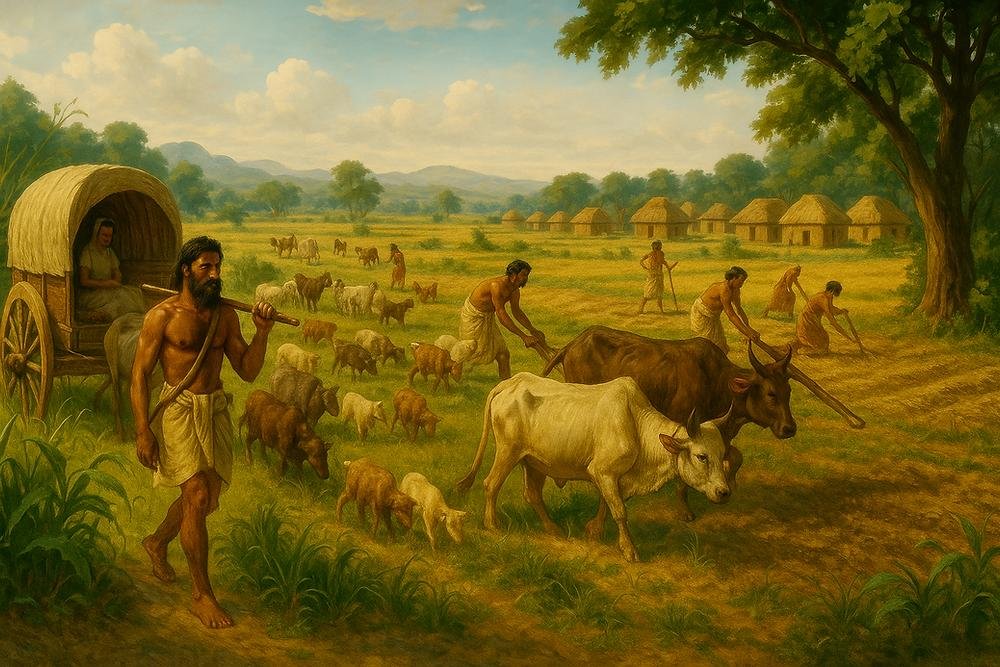
Agriculture became the principal economic activity during the Later Vedic Period.
Important developments included:
- Expansion of agricultural settlements.
- Increased importance of cultivated land.
- Greater use of iron tools.
- Development of craft production.
- Expansion of exchange and trade.
- Increasing importance of agricultural surplus.
The use of iron, referred to in some Vedic texts as Shyama Ayas or Krishna Ayas, contributed to changes in technology and agricultural expansion.
The growing importance of agriculture supported larger settlements and stronger political organisations.
Later Vedic Political Organisation
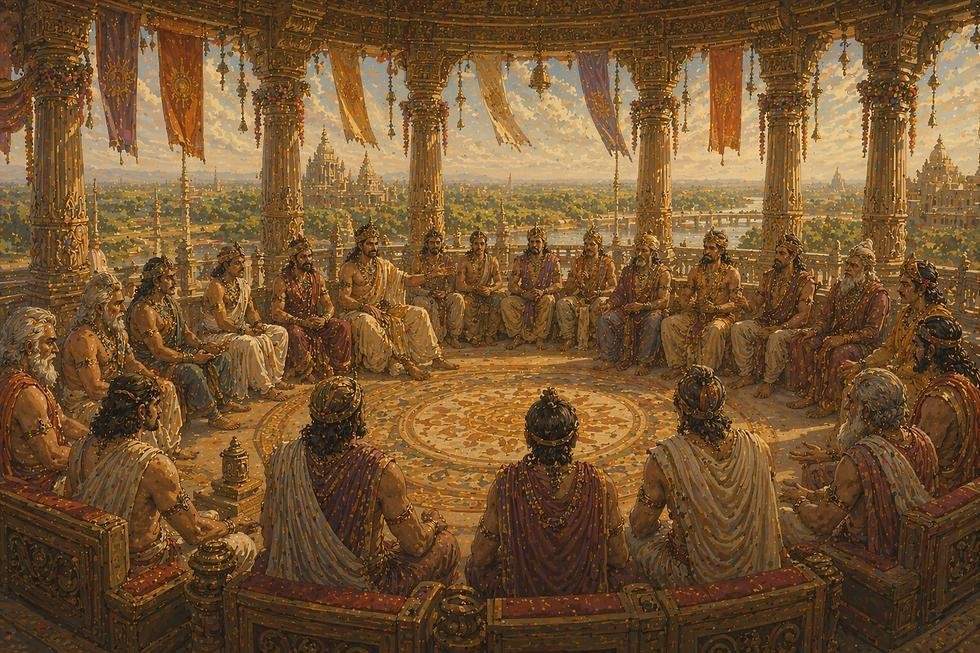
Political organisation gradually changed from tribal structures towards territorial kingdoms.
The authority of the Rajan increased, and kingship became more established.
Important developments included:
- Expansion of territorial control.
- Greater authority of kings.
- Increasing importance of royal rituals.
- Development of administrative functions.
- Increasing use of contributions and taxes.
The terms Bali, Bhaga and Shulka are associated with contributions, shares and payments in the broader context of early Indian political economy.
Important royal sacrifices included:
Rajasuya: A royal consecration ceremony associated with the authority of the king.
Ashvamedha: Horse sacrifice associated with royal power and territorial claims.
Vajapeya: A ritual associated with royal status and prestige.
These rituals helped strengthen the political and religious authority of rulers.
Later Vedic Religion and Philosophy
Religious practices became increasingly ritualistic during the Later Vedic Period.
The importance of elaborate sacrifices increased, and the role of priests became more significant.
Important developments included:
- Greater importance of Brahmanical rituals.
- Expansion of sacrificial practices.
- Increased religious authority of the priestly class.
- Development of philosophical discussions.
- Growing interest in concepts such as Atman and Brahman.
The Upanishads represent an important development in Indian philosophical thought. They explored questions concerning the nature of reality, the self, knowledge and liberation.
Understanding these transformations is essential for answering conceptual questions in Vedic Age UPSC Prelims 2027.
4. Difference Between Early and Later Vedic Period
The differences between the Early and Later Vedic periods are among the most important topics for Ancient Indian History UPSC preparation.
| Basis | Early Vedic Period | Later Vedic Period |
|---|---|---|
| Approximate dates | 1500–1000 BCE | 1000–600 BCE |
| Main source | Rigveda | Later Vedic literature |
| Geographical focus | North-western Indian subcontinent | Western and central Gangetic plains |
| Economy | Primarily pastoral | Increasingly agricultural |
| Main source of wealth | Cattle | Agriculture and land |
| Political system | Tribal organisation | Territorial kingdoms |
| Position of Rajan | Relatively limited authority | Increasingly powerful ruler |
| Varna system | Less rigid | More hierarchical and hereditary |
| Position of women | Comparatively favourable | Generally declined |
| Religious practices | Nature worship and simple sacrifices | Elaborate sacrifices and rituals |
| Important institutions | Sabha, Samiti and Vidatha | Reduced importance of tribal assemblies |
| Iron | Not a major feature of the early Rigvedic economy | Increasingly important |
| Important rituals | Simple sacrificial practices | Rajasuya, Ashvamedha and Vajapeya |
UPSC Exam Tip: Remember the broad transition from pastoral economy to agriculture, tribal organisation to territorial kingdoms, and relatively flexible social structures to a more hierarchical Varna system.
This comparison is especially useful for Vedic Age UPSC Prelims 2027 revision, as questions may test the differences between the two periods through statement-based options.
5. Vedic Society and the Position of Women
The study of Vedic society and culture is important for understanding the transformation of early Indian civilisation.
During the Early Vedic Period, women participated in religious activities and some women were associated with the composition of hymns.
In the Later Vedic Period, social stratification increased and women’s participation in certain public and religious activities became more restricted.
However, it would be incorrect to assume that all women experienced identical conditions. The available textual evidence reflects particular social and intellectual traditions rather than every aspect of everyday life.
Important Women Associated with Vedic Literature
- Lopamudra: Associated with a hymn in the Rigveda.
- Ghosha: Known for hymns in the Rigvedic tradition.
- Apala: Associated with a Rigvedic hymn.
- Gargi: Known for philosophical discussions in the Upanishadic tradition.
- Maitreyi: Associated with philosophical discussions concerning the self and ultimate reality.
These names are important for questions related to Vedic literature, women and ancient Indian philosophy.
6. Vedic Political Organisation: Sabha and Samiti
The political organisation of the Vedic Period gradually evolved from tribal institutions towards territorial kingdoms.
The Early Vedic political system was not based on a fully developed centralised monarchy.
The Rajan was supported by important officials and institutions, including the Purohita, Senani, Sabha and Samiti.
Difference Between Sabha and Samiti
| Sabha | Samiti |
|---|---|
| An assembly associated with deliberation | A broader tribal assembly |
| Associated with discussion and consultation | Associated with collective decisions |
| Played a role in tribal political life | Played an important role in wider tribal affairs |
Both institutions are mentioned in the Rigveda and are useful for understanding the political traditions of the Early Vedic Period.
The Later Vedic Period witnessed the increasing authority of kings and the development of territorial political structures.
7. Vedic Economy and Agriculture
The economic structure of Vedic society underwent considerable transformation.
Early Vedic Economy
- Cattle rearing was an important economic activity.
- Cattle were an important measure of wealth.
- Agriculture was known but pastoralism was prominent.
- Craft production and exchange were also practised.
Later Vedic Economy
- Agriculture became increasingly important.
- Settled communities expanded.
- Iron technology became more significant.
- Agricultural surplus supported larger political organisations.
- Craft production and exchange developed further.
The growing importance of agriculture was one of the major factors associated with the transition from tribal communities towards larger territorial political units.
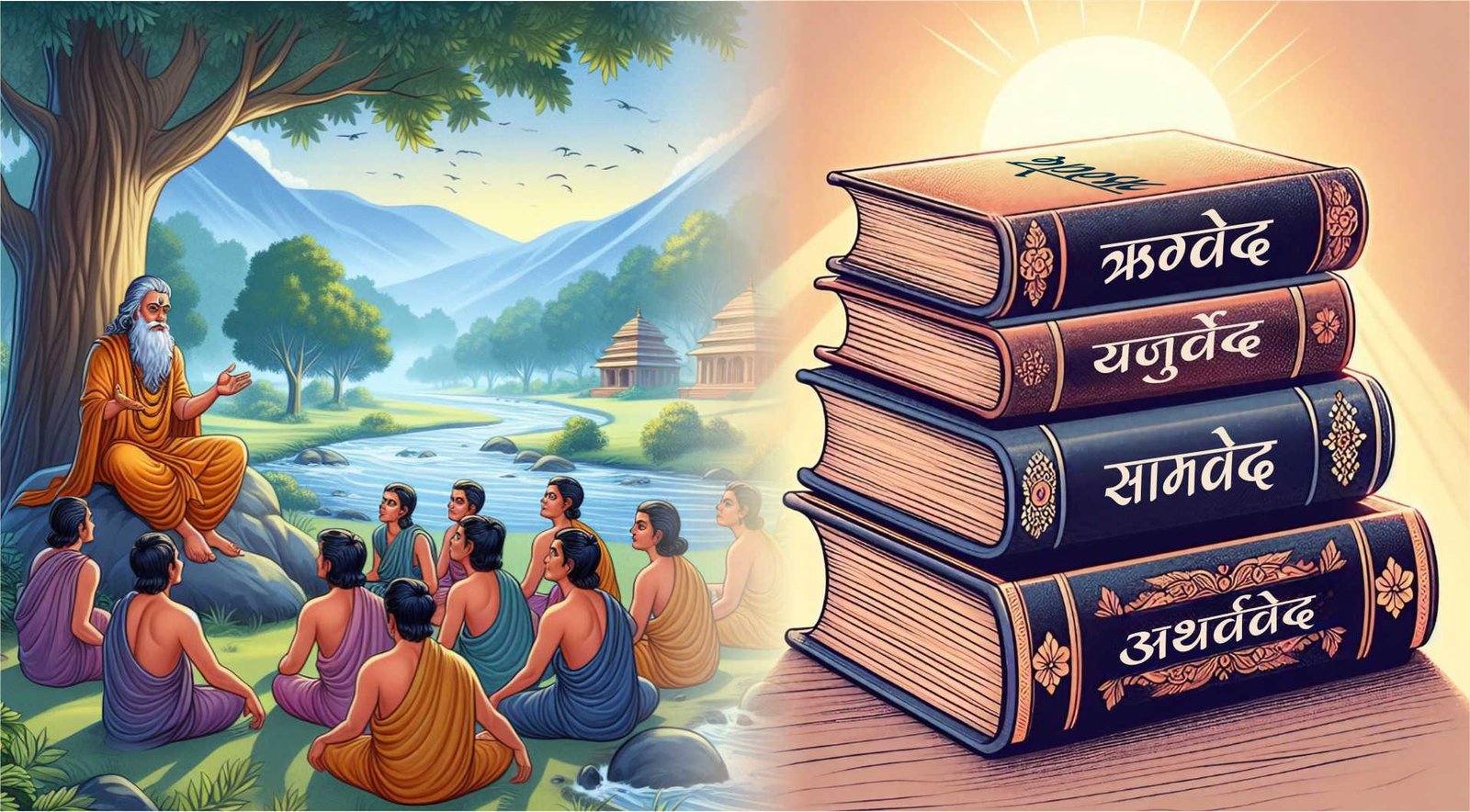
8. Four Vedas and Their Importance
The four Vedas form the foundation of Vedic literature and are frequently relevant to Ancient Indian History questions.
Knowledge of Vedic literature is an important component of Vedic Age UPSC Prelims 2027, especially for questions related to the four Vedas and other sacred texts.
| Veda | Main subject | Important feature |
|---|---|---|
| Rigveda | Hymns and prayers | Oldest Veda |
| Samaveda | Melodies and chants | Associated with singing during rituals |
| Yajurveda | Sacrificial formulas | Associated with ritual procedures |
| Atharvaveda | Prayers, charms and everyday concerns | Contains diverse material relating to daily life |
Other Important Vedic Texts
| Text | Main contribution |
|---|---|
| Brahmanas | Explanation of rituals and sacrifices |
| Aranyakas | Ritual symbolism and philosophical reflection |
| Upanishads | Philosophical discussions on Atman, Brahman and knowledge |
Important for UPSC: The Rigveda is the oldest Veda. The Upanishads are also known as Vedanta because they represent the concluding portion and philosophical culmination of Vedic literature.
9. Vedic Religion and Philosophy
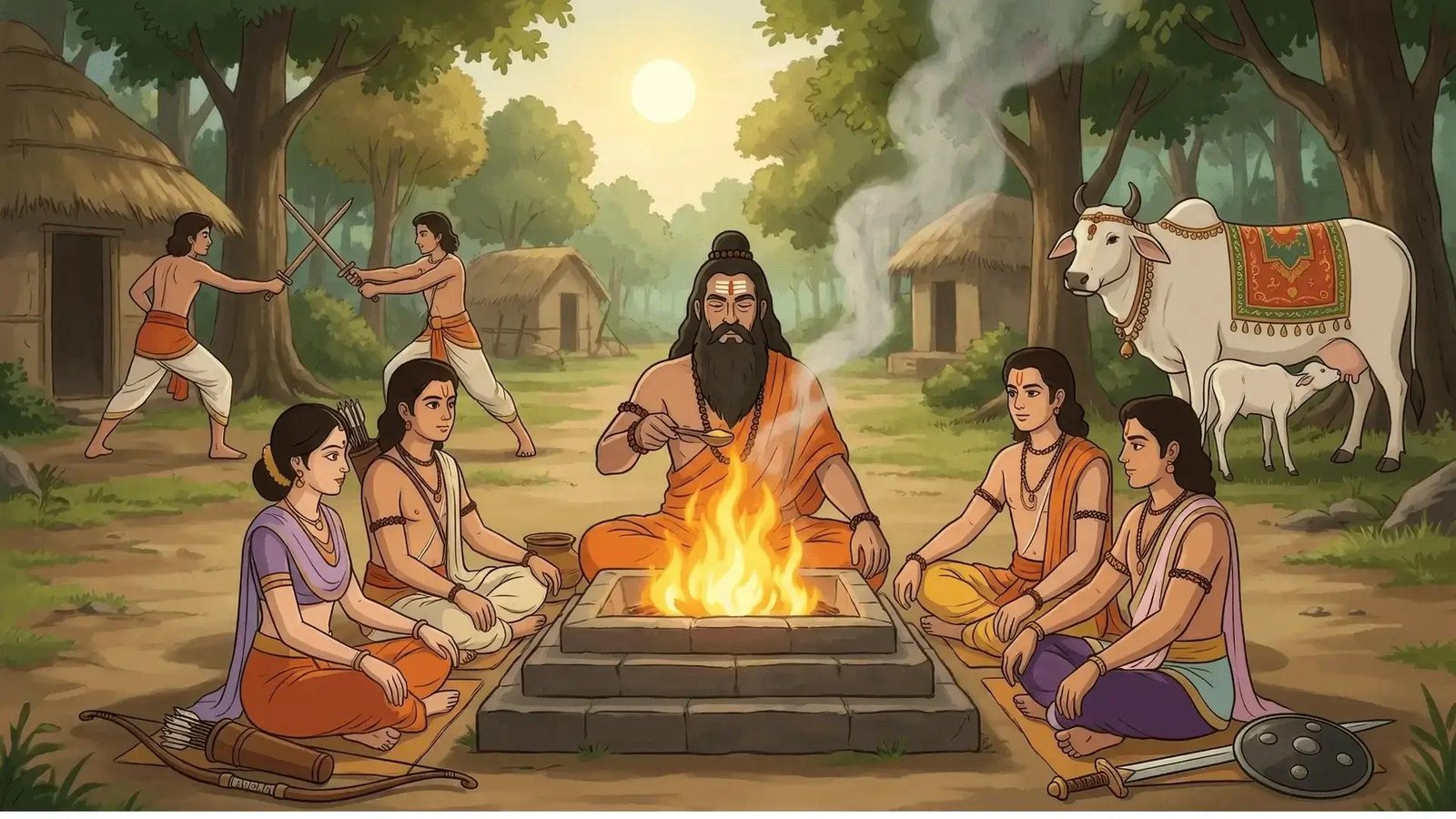
Vedic religion developed significantly between the Early and Later Vedic periods.
During the Early Vedic Period, nature-related deities and sacrificial hymns were prominent.
In the Later Vedic Period, elaborate rituals and the role of priests became increasingly important.
The Upanishads introduced deeper philosophical discussions.
Important concepts included:
- Atman: The self or inner essence.
- Brahman: Ultimate reality in Upanishadic philosophy.
- Karma: The principle of action and its consequences.
- Moksha: Liberation from the cycle of birth and death.
These ideas became influential in later Indian philosophical and religious traditions.
10. Important Vedic Terms for UPSC Prelims 2027
The following terms are useful for quick revision:
| Term | Meaning |
|---|---|
| Jana | Tribal community |
| Rajan | Tribal chief or ruler |
| Vish | A social or tribal group |
| Grama | Group or settlement |
| Purohita | Priest and adviser |
| Senani | Military commander |
| Sabha | Assembly |
| Samiti | Broader tribal assembly |
| Vidatha | Early social and ritual institution |
| Bali | Contribution or offering |
| Shyama Ayas | Dark or black metal, commonly associated with iron |
| Rajasuya | Royal consecration ceremony |
| Ashvamedha | Horse sacrifice |
| Vajapeya | Vedic ritual associated with royal prestige |
11. Important Facts About the Vedic Age for UPSC Prelims 2027
Candidates preparing for Vedic Age UPSC Prelims 2027 should revise these important facts carefully to improve their understanding of Vedic literature, society and culture.
Revise these facts before attempting questions on the Vedic Age:
- The Rigveda is the oldest of the four Vedas.
- The Early Vedic Period is also known as the Rigvedic Period.
- The Rigveda contains 10 Mandalas.
- The Gayatri Mantra is found in the Rigveda, Mandala 3.
- The Gayatri Mantra is associated with Savitr.
- The Samaveda is primarily associated with melodies and chants.
- The Yajurveda contains sacrificial formulas.
- The Atharvaveda contains hymns, prayers and charms.
- Indra and Agni were prominent deities in the Rigvedic tradition.
- Cattle were an important measure of wealth in the Early Vedic Period.
- Sabha and Samiti were important institutions of Early Vedic political organisation.
- Agriculture became increasingly important during the Later Vedic Period.
- The use of iron became more significant during the Later Vedic Period.
- The Varna system became more hierarchical during the Later Vedic Period.
- Gargi and Maitreyi are associated with the Upanishadic tradition.
- Rajasuya, Ashvamedha and Vajapeya were important Vedic rituals.
- The Brahmanas explain Vedic rituals and sacrifices.
- The Aranyakas are associated with forest texts and ritual symbolism.
- The Upanishads focus on philosophical ideas.
- The Later Vedic Period witnessed the expansion of territorial kingdoms.
12. How to Prepare Vedic Age for UPSC Prelims 2027
The Vedic Age is an important component of Ancient Indian History. Aspirants should prepare this topic through conceptual understanding, comparison tables and factual revision.
Follow these preparation strategies:
1. Understand the chronology
Remember the approximate dates of the Early and Later Vedic periods. Also understand that these are broad historical classifications.
2. Focus on the four Vedas
Learn the names, contents and distinguishing features of Rigveda, Samaveda, Yajurveda and Atharvaveda.
3. Compare Early and Later Vedic society
Give special attention to changes in the Varna system, women’s position, economy, agriculture and political organisation.
4. Revise political institutions
Understand the differences between Sabha, Samiti and Vidatha, along with the roles of Rajan, Purohita and Senani.
5. Study important rituals and religious concepts
Revise Rajasuya, Ashvamedha and Vajapeya, as well as the major philosophical ideas associated with the Upanishads.
6. Practise objective questions
After completing the topic, solve Ancient Indian History MCQs and UPSC previous year questions. Focus on conceptual and statement-based questions rather than memorising isolated facts.
For a broader understanding of the historical background, also study the prehistoric period, Indus Valley Civilization, Mahajanapadas and the rise of Magadha.
A systematic study of these topics will help candidates build a strong foundation for Vedic Age UPSC Prelims 2027.
Test your preparation with 100 Ancient Indian History MCQs for UPSC Prelims 2027: Important Questions with Answers, covering important dynasties, religious movements, historical developments and ancient Indian culture.
13. Frequently Asked Questions (FAQs)
1. What is the difference between Early Vedic and Later Vedic periods?
The Early Vedic Period was primarily pastoral and organised around tribal communities. The Later Vedic Period witnessed the expansion of agriculture, territorial kingdoms, a more hierarchical Varna system and increasingly elaborate religious rituals.
2. What was the time period of the Early and Later Vedic Age?
The Early Vedic Period is conventionally dated to approximately 1500–1000 BCE, while the Later Vedic Period is generally dated to approximately 1000–600 BCE.
3. What were the main features of Early Vedic society?
Early Vedic society was primarily organised around family and tribal relationships. Cattle rearing was important, and the Varna system was comparatively less rigid than in the Later Vedic Period.
4. How did the economy change during the Later Vedic Period?
Agriculture became increasingly important, settled communities expanded and the use of iron became more significant. Agricultural production and surplus supported larger political organisations.
5. What were the four Vedas and what did they contain?
The four Vedas are Rigveda, Samaveda, Yajurveda and Atharvaveda. They contain hymns, melodies, sacrificial formulas, prayers and other material relating to Vedic religious and social life.
6. What was the political system during the Vedic Period?
The Early Vedic political system was mainly tribal, with the Rajan as the chief. In the Later Vedic Period, political authority became more centralised and territorial kingdoms developed.
7. What was the position of women in the Early and Later Vedic periods?
Women generally enjoyed a comparatively favourable position in the Early Vedic Period, including participation in certain religious and intellectual activities. Their social position and participation in public and religious activities generally became more restricted during the Later Vedic Period.
8. What was the importance of Sabha and Samiti in Vedic polity?
Sabha and Samiti were important assemblies of the Early Vedic Period. They were associated with deliberation, consultation and collective tribal affairs.
9. Which gods were worshipped during the Early and Later Vedic periods?
Indra, Agni, Varuna and Soma were prominent deities in the Early Vedic tradition. During the Later Vedic Period, the religious emphasis and importance of different deities and ritual practices evolved.
10. Why is the Vedic Age important for UPSC Prelims?
The Vedic Age is important because questions can cover Vedic literature, society, economy, political institutions, religious practices, women, the Varna system and the transition from tribal communities to territorial kingdoms.
For a broader understanding of Indian history, explore our History of India UPSC 2027: Complete Study Guide, covering Ancient, Medieval and Modern Indian History.
Conclusion
The Vedic Age represents a significant phase in the development of ancient Indian society, economy, political organisation and religious thought.
The transition from the Early Vedic Period to the Later Vedic Period brought major changes in pastoral and agricultural activities, tribal institutions, kingship, social hierarchy and religious practices.
For aspirants preparing for Vedic Age UPSC Prelims 2027, the most effective approach is to understand these changes through comparison tables, important Vedic terms, literary sources and factual revision.
A clear understanding of Vedic society, economy, polity and literature will strengthen your preparation for Vedic Age UPSC Prelims 2027.
A strong understanding of the Vedic Age will also help candidates connect this topic with the rise of the Mahajanapadas, the development of new religious movements and the broader history of ancient India.
5. External resources
You can add a small “Recommended Resources” section after the conclusion or in a separate resource box.
Get Daily Current Affairs MCQs, GK Quizzes and study resources for UPSC, State PCS and SSC examinations.
✈️ Join our Telegram channel "Knowledge Chronicles Plus" for free