The Vedic Age is an important topic in Ancient Indian History and frequently features in the preparation of UPSC Civil Services Preliminary Examination. Understanding the Early Vedic and Later Vedic periods is essential for answering questions related to Vedic literature, society, economy, political organisation, religion and cultural developments.
These 100 Vedic Age MCQs UPSC Prelims 2027 are designed to help aspirants revise important historical facts and strengthen their conceptual understanding of the Vedic Period.
These Vedic Age MCQs UPSC Prelims 2027 cover important concepts and factual information from both the Early and Later Vedic periods.
The practice set contains 100 questions divided into five sections:
- Vedic Literature and Sources
- Early Vedic Period: Society, Economy and Polity
- Later Vedic Period: Society, Economy and Political Developments
- Vedic Religion, Philosophy and Important Personalities
- Mixed Revision: Important Facts and Conceptual Questions
Each section contains 20 questions, followed by an answer key with short explanations.
Along with solving MCQs on the Vedic Period, revise Vedic Age UPSC Prelims 2027: Powerful Guide to Early and Later Vedic Period
After studying the Vedic Period, revise the earlier phase of Indian civilization through our Indus Valley Civilization Notes UPSC 2027
Section 1: Vedic Literature and Sources (Questions 1–20)
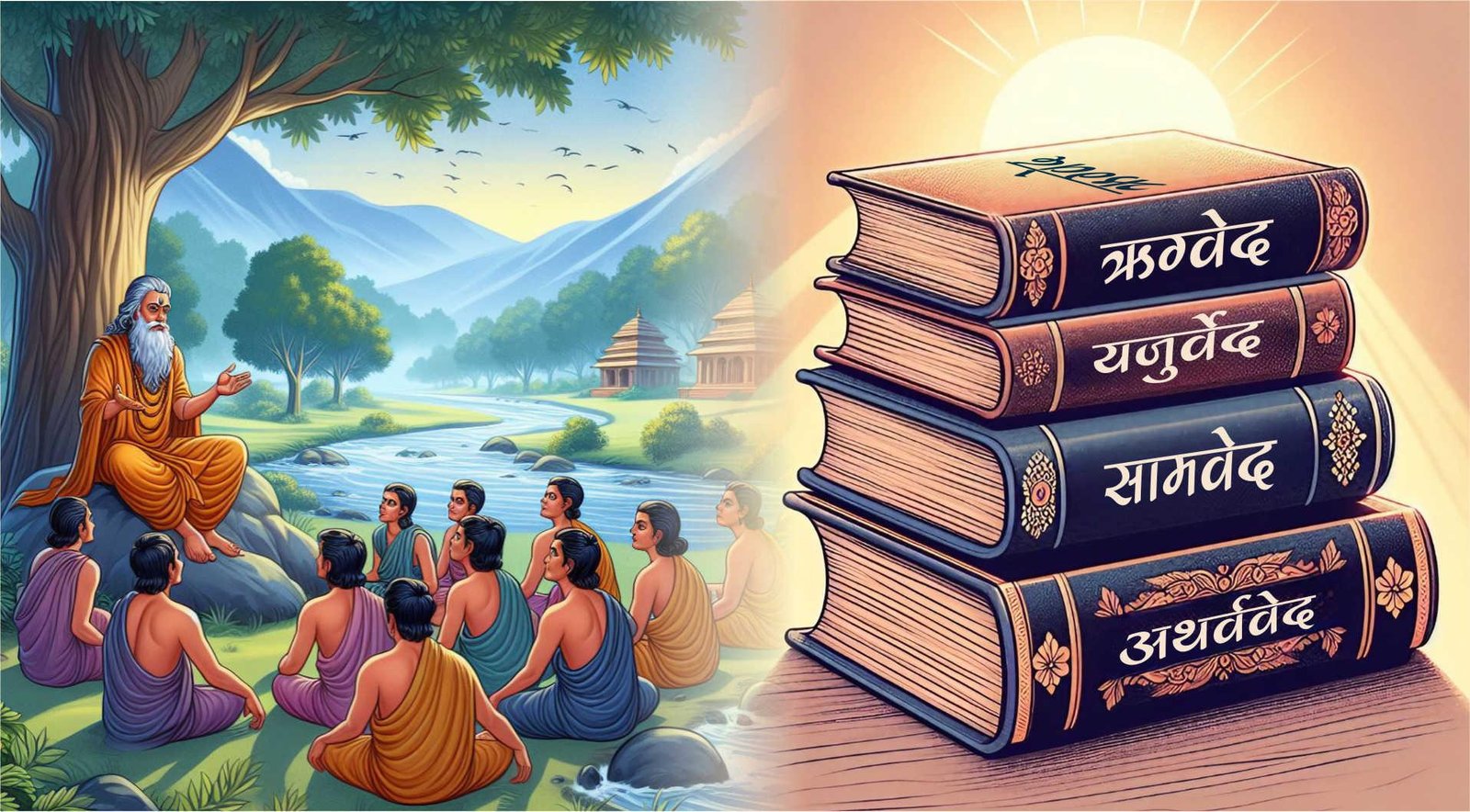
Practising Vedic Age MCQs UPSC Prelims 2027 will help candidates revise the four Vedas, Brahmanas, Aranyakas and Upanishads.
Q.1 Which is considered the oldest of the four Vedas?
A. Samaveda
B. Yajurveda
C. Rigveda
D. Atharvaveda
Q.2 How many Mandalas are there in the Rigveda?
A. 8
B. 10
C. 12
D. 15
Q.3 Which Veda is primarily associated with melodies and chants?
A. Rigveda
B. Samaveda
C. Yajurveda
D. Atharvaveda
Q.4 The Yajurveda is primarily concerned with which of the following?
A. Sacrificial formulas and rituals
B. Medical treatments
C. Political administration
D. Astronomy only
Q.5 Which Veda contains hymns, charms and prayers associated with everyday life?
A. Rigveda
B. Samaveda
C. Yajurveda
D. Atharvaveda
Q.6 The Gayatri Mantra is found in which Veda?
A. Rigveda
B. Samaveda
C. Yajurveda
D. Atharvaveda
Q.7 The Gayatri Mantra is dedicated to which deity?
A. Indra
B. Agni
C. Savitr
D. Varuna
Q.8 Which Mandala of the Rigveda contains the Gayatri Mantra?
A. First Mandala
B. Third Mandala
C. Seventh Mandala
D. Tenth Mandala
Q.9 The famous Purusha Sukta is found in which Mandala of the Rigveda?
A. Second Mandala
B. Fifth Mandala
C. Ninth Mandala
D. Tenth Mandala
Q.10 Which Vedic texts primarily explain the meaning and procedures of sacrificial rituals?
A. Upanishads
B. Brahmanas
C. Aranyakas
D. Puranas
Q.11 The Aranyakas are commonly known as:
A. Forest texts
B. Royal chronicles
C. Medical texts
D. Legal codes
Q.12 The Upanishads primarily deal with which subject?
A. Military organisation
B. Trade and commerce
C. Philosophy and spiritual knowledge
D. Agricultural production
Q.13 The term Vedanta is generally associated with which of the following?
A. Rigvedic hymns only
B. Upanishadic philosophy
C. Buddhist literature
D. Jain philosophy
Q.14 Which of the following is the correct sequence of Vedic literature from the Samhita tradition to philosophical texts?
A. Samhitas – Brahmanas – Aranyakas – Upanishads
B. Brahmanas – Samhitas – Puranas – Upanishads
C. Upanishads – Samhitas – Aranyakas – Brahmanas
D. Aranyakas – Puranas – Samhitas – Brahmanas
Q.15 The Rigveda is primarily a collection of:
A. Hymns
B. Laws
C. Royal biographies
D. Medical prescriptions
Q.16 Which of the following Vedas is closely associated with the chanting of hymns during sacrifices?
A. Atharvaveda
B. Samaveda
C. Rigveda
D. None of the above
Q.17 The Shatapatha Brahmana is associated with which Veda?
A. Rigveda
B. Samaveda
C. Shukla Yajurveda
D. Atharvaveda
Q.18 Which of the following is an important source for understanding the philosophical developments of the Later Vedic Period?
A. Upanishads
B. Jatakas
C. Sangam literature
D. Arthashastra
Q.19 The Rigveda is traditionally divided into how many Mandalas?
A. 7
B. 8
C. 10
D. 12
Q.20 Which of the following statements about Vedic literature is correct?
A. The Samaveda is primarily a collection of legal codes.
B. The Atharvaveda contains hymns and charms.
C. The Brahmanas are Buddhist texts.
D. The Upanishads mainly describe military campaigns.
To understand the important features of the civilization that preceded the Vedic Period, read 10 Powerful Key Features of Harappan Culture.
Answers and Explanations – Section 1
- C – Rigveda: The Rigveda is the oldest among the four Vedas and contains hymns dedicated to various deities.
- B – 10: The Rigveda is organised into ten Mandalas.
- B – Samaveda: It is primarily associated with melodies and chants used in religious rituals.
- A – Sacrificial formulas and rituals: The Yajurveda provides formulas and instructions associated with Vedic sacrifices.
- D – Atharvaveda: It contains hymns, charms, prayers and material relating to everyday life.
- A – Rigveda: The Gayatri Mantra is found in Rigveda 3.62.10.
- C – Savitr: The Gayatri Mantra is dedicated to Savitr, a solar deity.
- B – Third Mandala: The Gayatri Mantra appears in the third Mandala.
- D – Tenth Mandala: The Purusha Sukta is found in Rigveda 10.90.
- B – Brahmanas: These texts explain sacrificial rituals and their significance.
- A – Forest texts: Aranyakas are traditionally associated with forest study and ritual symbolism.
- C – Philosophy and spiritual knowledge: The Upanishads explore questions concerning the self, ultimate reality and knowledge.
- B – Upanishadic philosophy: Vedanta is associated with the concluding philosophical portions of Vedic literature.
- A: This is the conventional sequence of the four broad categories of Vedic literature.
- A – Hymns: The Rigveda is a collection of hymns addressed to different deities.
- B – Samaveda: Its verses were arranged for singing during sacrificial ceremonies.
- C – Shukla Yajurveda: The Shatapatha Brahmana is associated with the Shukla Yajurveda.
- A – Upanishads: They provide important information about philosophical developments in the Later Vedic tradition.
- C – 10: The Rigveda has ten Mandalas.
- B: The Atharvaveda contains hymns, prayers, charms and other material relating to everyday concerns.
For a broader understanding of Ancient Indian History, also refer to our Ancient Indian History for UPSC Prelims 2027: Complete Notes
Section 2: Early Vedic Period – Society, Economy and Polity (Questions 21–40)
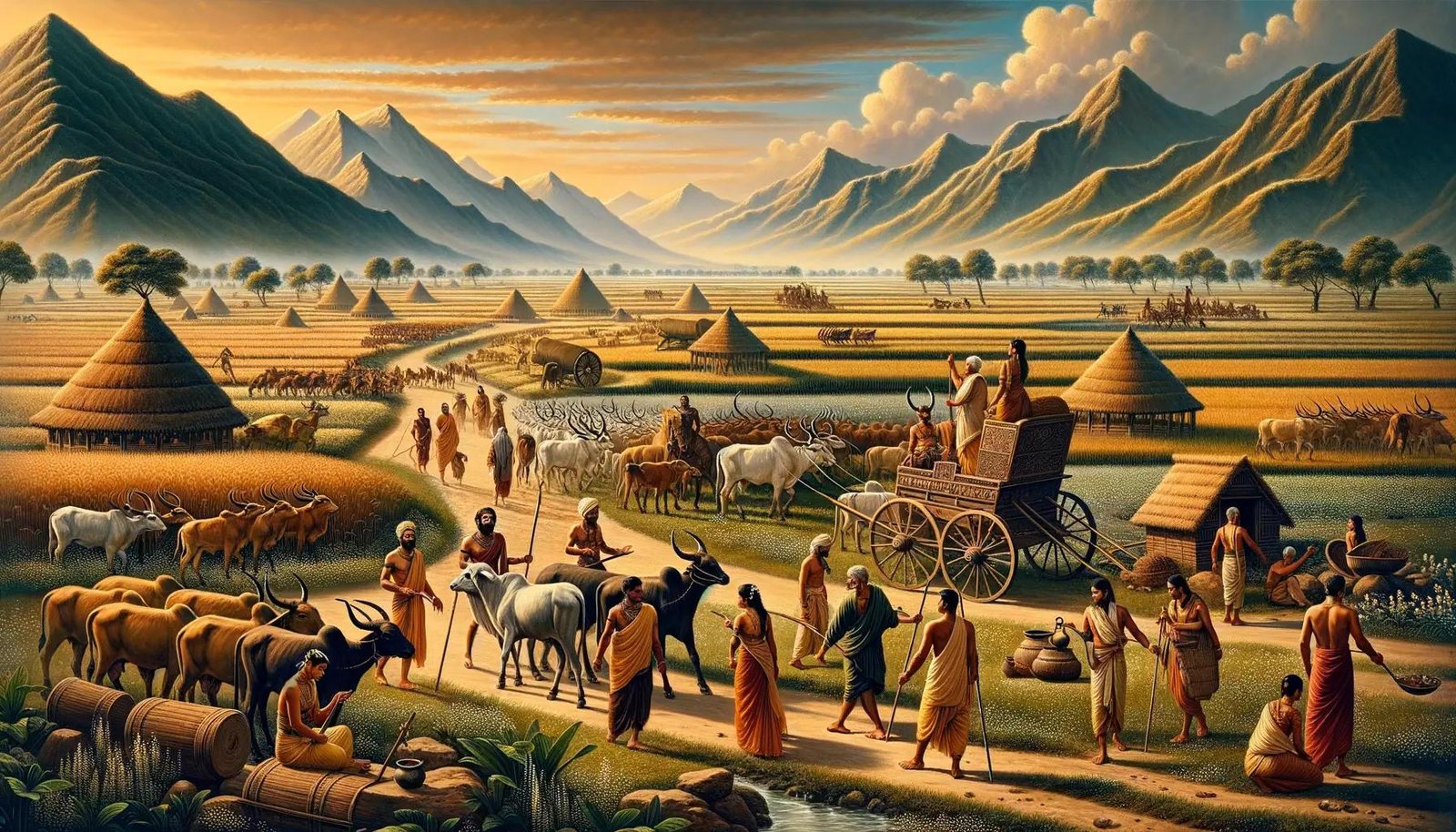
This set of Vedic Age MCQs UPSC Prelims 2027 focuses on Rigvedic society, pastoral economy, tribal institutions and important Vedic deities.
Q.21 The Early Vedic Period is also commonly known as:
A. Later Vedic Period
B. Rigvedic Period
C. Mauryan Period
D. Post-Vedic Period
Q.22 The Early Vedic people were primarily associated with which geographical region?
A. Deccan Plateau
B. North-western Indian subcontinent
C. Tamil region
D. Eastern coastal India
Q.23 Which river is frequently mentioned in the Rigveda and is identified with the Indus?
A. Ganga
B. Yamuna
C. Sindhu
D. Narmada
Q.24 Which economic activity was particularly important during the Early Vedic Period?
A. Overseas trade
B. Cattle rearing
C. Large-scale mining
D. Industrial production
Q.25 In the Early Vedic Period, cattle were primarily regarded as:
A. A measure of wealth
B. A form of currency issued by kings
C. Religious buildings
D. Military officers
Q.26 The head of a tribal community during the Early Vedic Period was generally known as:
A. Gramani
B. Rajan
C. Samrat
D. Amatya
Q.27 Which term was used for a tribal community in the Rigvedic context?
A. Jana
B. Janapada
C. Mahajanapada
D. Rashtra
Q.28 The term Purohita referred to:
A. Military commander
B. Priest and adviser
C. Village trader
D. Agricultural worker
Q.29 Who was generally responsible for military leadership in the Early Vedic political system?
A. Senani
B. Purohita
C. Gramani
D. Duta
Q.30 Which of the following assemblies is mentioned in the Rigveda?
A. Sabha
B. Samiti
C. Vidatha
D. All of the above
Q.31 Which institution was associated with broader tribal deliberations and collective affairs?
A. Samiti
B. Gana-Sangha
C. Mantriparishad
D. Sabha only
Q.32 The Vidatha in the Early Vedic context was associated with:
A. Only royal taxation
B. Social, religious and economic activities
C. Buddhist monastic administration
D. Overseas trade
Q.33 Which of the following statements about the Early Vedic political system is correct?
A. The king possessed unlimited power.
B. Tribal assemblies played an important role.
C. A highly centralised bureaucracy existed.
D. The empire was governed by provincial governors.
Q.34 Which deity was particularly prominent in the Rigveda and associated with thunder and warfare?
A. Indra
B. Vishnu
C. Brahma
D. Ganesha
Q.35 Agni was primarily regarded as the deity of:
A. Water
B. Fire
C. Wind
D. Wealth
Q.36 Varuna was associated with which concept?
A. Cosmic and moral order
B. Agricultural taxation
C. Warfare alone
D. Music and dance
Q.37 Which goddess was associated with dawn in the Rigvedic tradition?
A. Ushas
B. Saraswati
C. Lakshmi
D. Durga
Q.38 Which of the following best describes the Varna system during the Early Vedic Period?
A. It was fully rigid and hereditary everywhere.
B. It was comparatively less rigid than in the Later Vedic Period.
C. It did not exist in any form.
D. It was based exclusively on military service.
Q.39 Which of the following women is associated with a hymn in the Rigvedic tradition?
A. Lopamudra
B. Razia Sultan
C. Nur Jahan
D. Ahilyabai Holkar
Q.40 Which of the following statements about the Early Vedic economy is most appropriate?
A. It was primarily industrial.
B. Pastoral activities were particularly important.
C. Overseas maritime trade dominated the economy.
D. Banking was the principal occupation.
After revising the Vedic Age, test your overall preparation with 100 Ancient Indian History MCQs for UPSC Prelims 2027
Answers and Explanations – Section 2
- B – Rigvedic Period: The Early Vedic Period is known as the Rigvedic Period because the Rigveda is its principal literary source.
- B – North-western Indian subcontinent: Rigvedic geographical references are concentrated in the north-western region.
- C – Sindhu: Sindhu is the Vedic name associated with the Indus River.
- B – Cattle rearing: Pastoralism and animal husbandry were important economic activities.
- A – A measure of wealth: Cattle played an important role in the economic and social life of Rigvedic communities.
- B – Rajan: The Rajan was the chief of a tribal community.
- A – Jana: Jana referred to a tribal community or people.
- B – Priest and adviser: The Purohita performed religious functions and advised the ruler.
- A – Senani: The Senani was associated with military leadership.
- D – All of the above: Sabha, Samiti and Vidatha are mentioned in Rigvedic literature.
- A – Samiti: It is generally associated with broader tribal deliberations and collective affairs.
- B – Social, religious and economic activities: Vidatha had multiple functions in early Vedic society.
- B – Tribal assemblies played an important role: Early Vedic kingship was influenced by tribal customs and assemblies.
- A – Indra: Indra was a prominent Rigvedic deity associated with thunder, rain and warfare.
- B – Fire: Agni was the fire deity and an important intermediary in sacrificial rituals.
- A – Cosmic and moral order: Varuna was associated with the concept of Rta, or cosmic order.
- A – Ushas: Ushas represented the dawn.
- B: The Varna system was comparatively less rigid in the Early Vedic period.
- A – Lopamudra: Lopamudra is associated with a hymn in the Rigvedic tradition.
- B – Pastoral activities were particularly important: Cattle rearing was a major feature of the Early Vedic economy.
Continue your History preparation with 100 MCQs Medieval History of India: UPSC Prelims 2027 GS Success Pack
Section 3: Later Vedic Period – Society, Economy and Political Developments (Questions 41–60)
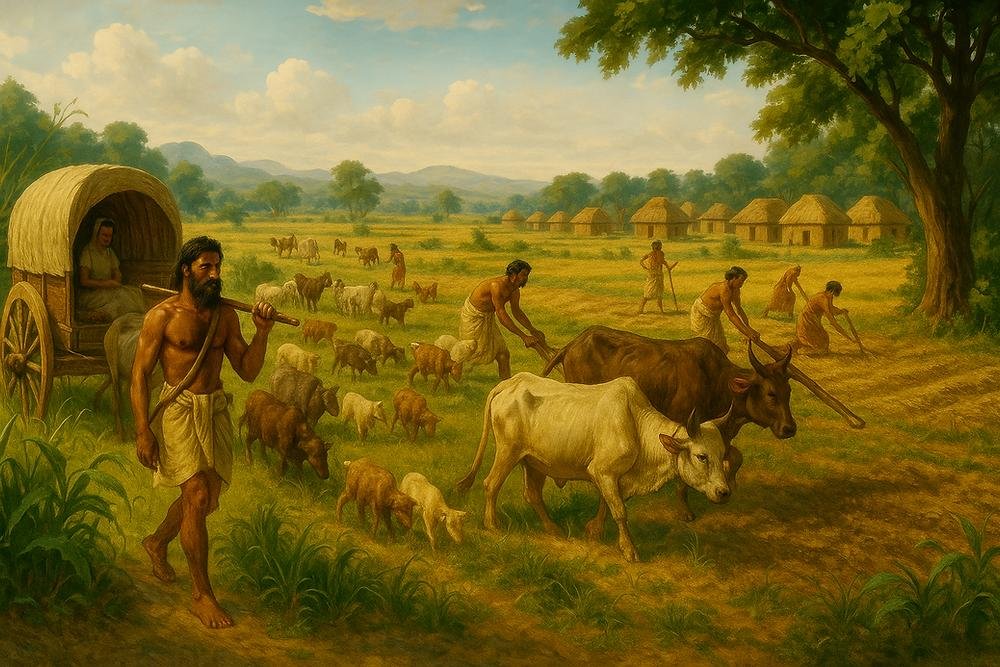
The Vedic Age MCQs UPSC Prelims 2027 in this section examine changes in agriculture, iron technology, the Varna system and territorial kingdoms.
Q.41 The Later Vedic Period is conventionally dated to approximately:
A. 2500–1500 BCE
B. 1500–1000 BCE
C. 1000–600 BCE
D. 600–300 BCE
Q.42 Which development was particularly significant during the Later Vedic Period?
A. Decline of agriculture
B. Expansion of agriculture
C. Beginning of urban industrialisation
D. Introduction of modern banking
Q.43 The Later Vedic communities increasingly expanded towards which region?
A. Western and central Gangetic plains
B. Far southern India
C. Western coastal islands
D. Himalayan high-altitude regions only
Q.44 Which metal became increasingly important during the Later Vedic Period?
A. Aluminium
B. Iron
C. Platinum
D. Zinc
Q.45 Iron is referred to in certain Vedic texts by which term?
A. Hiranya
B. Shyama Ayas
C. Nishka
D. Purodasha
Q.46 Which of the following best describes the economic transition during the Later Vedic Period?
A. From agriculture to pastoralism
B. From pastoralism towards an increasingly agricultural economy
C. From trade to hunting alone
D. From agriculture to industrial production
Q.47 Which Varna was primarily associated with religious rituals and learning?
A. Kshatriya
B. Vaishya
C. Brahmana
D. Shudra
Q.48 The Kshatriyas were primarily associated with:
A. Political authority and warfare
B. Religious sacrifices alone
C. Agricultural labour alone
D. Trade and commerce alone
Q.49 Which Varna was traditionally associated with agriculture, cattle rearing and trade?
A. Brahmana
B. Kshatriya
C. Vaishya
D. Shudra
Q.50 Which Varna occupied a subordinate position in the traditional four-fold social hierarchy?
A. Brahmana
B. Kshatriya
C. Vaishya
D. Shudra
Q.51 Which of the following best describes the position of women during the Later Vedic Period?
A. Their position generally became more restricted.
B. They gained universal political equality.
C. They became the sole rulers of kingdoms.
D. Their position remained identical in every respect to the Early Vedic Period.
Q.52 Which of the following women is associated with philosophical discussions in the Upanishadic tradition?
A. Gargi
B. Razia Sultan
C. Rani Durgavati
D. Rudramadevi
Q.53 Maitreyi is associated with philosophical discussions concerning:
A. Military strategy
B. The self and spiritual knowledge
C. Agricultural taxation
D. Maritime trade
Q.54 Which of the following rituals was associated with royal consecration?
A. Rajasuya
B. Ashvamedha
C. Vajapeya
D. Agnihotra only
Q.55 The Ashvamedha sacrifice was associated with:
A. Royal power and territorial claims
B. Agricultural harvesting
C. Monastic initiation
D. Marriage ceremonies
Q.56 Which Vedic ritual was associated with royal prestige and status?
A. Vajapeya
B. Upanayana only
C. Antyeshti
D. Pindadana
Q.57 Which statement about Later Vedic political organisation is correct?
A. Tribal organisation disappeared completely.
B. Territorial kingdoms became increasingly important.
C. Kingship became weaker everywhere.
D. Political institutions remained unchanged.
Q.58 Which of the following terms is associated with a share or contribution in the context of early Indian political economy?
A. Bhaga
B. Mandala
C. Stupa
D. Chaitya
Q.59 The growing importance of agriculture during the Later Vedic Period contributed to:
A. Expansion of settled communities
B. Disappearance of all villages
C. Decline of food production
D. Complete end of craft production
Q.60 Which of the following is a major characteristic of the Later Vedic Period?
A. Increasing ritual complexity and priestly influence
B. Complete absence of sacrifices
C. Decline of all religious traditions
D. Disappearance of social differentiation
Practise more History questions with 100 Modern History MCQs UPSC Prelims 2027.
Answers and Explanations – Section 3
- C – 1000–600 BCE: These are the conventional approximate dates for the Later Vedic Period.
- B – Expansion of agriculture: Agriculture became increasingly important during this phase.
- A – Western and central Gangetic plains: Vedic communities expanded towards these regions.
- B – Iron: Iron technology became increasingly significant during the Later Vedic Period.
- B – Shyama Ayas: Certain later Vedic texts use terms such as Shyama Ayas or Krishna Ayas for iron.
- B: The economy increasingly shifted towards settled agriculture, although pastoralism continued.
- C – Brahmana: Brahmanas were associated with religious learning and rituals.
- A – Political authority and warfare: Kshatriyas were traditionally associated with kingship and military responsibilities.
- C – Vaishya: Vaishyas were associated with productive and economic activities.
- D – Shudra: Shudras occupied a subordinate position in the traditional Varna hierarchy.
- A: The position of women generally became more restricted in comparison with the Early Vedic phase.
- A – Gargi: Gargi is known for philosophical discussions in the Brihadaranyaka Upanishad.
- B – The self and spiritual knowledge: Maitreyi is associated with philosophical discussions on immortality and spiritual knowledge.
- A – Rajasuya: Rajasuya was a royal consecration ceremony.
- A – Royal power and territorial claims: Ashvamedha symbolised royal authority and sovereignty.
- A – Vajapeya: It was an important Vedic ritual associated with royal prestige.
- B: Territorial kingdoms and stronger kingship became increasingly important.
- A – Bhaga: Bhaga referred to a share or portion, particularly in relation to agricultural produce.
- A – Expansion of settled communities: Agricultural development supported settlement expansion.
- A: The Later Vedic Period witnessed greater ritual complexity and increasing priestly influence.
For a complete overview of the topics covered in the examination, refer to the History Syllabus for UPSC Prelims 2027
Section 4: Vedic Religion, Philosophy and Important Personalities (Questions 61–80)
These Vedic Age MCQs UPSC Prelims 2027 also cover important philosophical concepts such as Atman, Brahman, Karma and Moksha.
Q.61 Which concept in Vedic philosophy refers to cosmic order?
A. Dharma
B. Rta
C. Moksha
D. Samsara
Q.62 Which deity was considered an important intermediary between humans and gods in Vedic sacrifices?
A. Agni
B. Varuna
C. Ushas
D. Soma
Q.63 Which deity was associated with the sacred ritual drink in the Rigvedic tradition?
A. Soma
B. Indra
C. Rudra
D. Pushan
Q.64 Which of the following was a prominent deity in the Rigvedic tradition?
A. Indra
B. Ganesha
C. Kartikeya
D. Hanuman
Q.65 The concept of Atman is primarily associated with:
A. The self
B. Military power
C. Agricultural production
D. Political taxation
Q.66 In Upanishadic philosophy, Brahman generally refers to:
A. A military commander
B. Ultimate reality
C. A village assembly
D. A royal tax
Q.67 The concept of Moksha refers to:
A. Royal consecration
B. Liberation from the cycle of birth and death
C. Agricultural prosperity
D. Military victory
Q.68 The philosophical concept of Karma is primarily associated with:
A. Action and its consequences
B. Royal succession only
C. Trade taxation
D. Military organisation
Q.69 Which Upanishad contains the famous dialogue between Yajnavalkya and Maitreyi?
A. Katha Upanishad
B. Brihadaranyaka Upanishad
C. Mundaka Upanishad
D. Mandukya Upanishad
Q.70 Gargi is particularly associated with which Upanishad?
A. Brihadaranyaka Upanishad
B. Kena Upanishad
C. Prashna Upanishad
D. Mandukya Upanishad
Q.71 Which sage is prominently associated with philosophical discussions in the Brihadaranyaka Upanishad?
A. Yajnavalkya
B. Panini
C. Patanjali
D. Charaka
Q.72 Which of the following pairs is correctly matched?
A. Indra – Fire
B. Agni – Fire
C. Varuna – Dawn
D. Ushas – Thunder
Q.73 Which Vedic deity was associated with the dawn?
A. Ushas
B. Indra
C. Agni
D. Soma
Q.74 Which deity was associated with cosmic order and moral authority?
A. Varuna
B. Agni
C. Maruts
D. Ashvins
Q.75 The Ashvins in the Rigvedic tradition were primarily known as:
A. Divine twins
B. Kings of Magadha
C. Priestly officials
D. Tribal assemblies
Q.76 Which of the following was an important feature of Early Vedic religious practices?
A. Nature worship and sacrificial hymns
B. Temple-based worship as the central institution
C. Worship of only one deity
D. Buddhist monastic rituals
Q.77 Which of the following statements about Later Vedic religion is correct?
A. Sacrificial rituals became increasingly elaborate.
B. All Vedic rituals disappeared.
C. Philosophical discussions ceased completely.
D. Nature deities were entirely forgotten.
Q.78 Which concept is associated with the philosophical understanding of the relationship between the individual self and ultimate reality?
A. Atman and Brahman
B. Sabha and Samiti
C. Jana and Vish
D. Bali and Bhaga
Q.79 Which of the following is associated with the philosophical tradition of the Upanishads?
A. Knowledge and self-realisation
B. Naval warfare
C. Land revenue administration only
D. Coin minting
Q.80 Which of the following statements best describes the development of Vedic religious thought?
A. It moved from early sacrificial hymns towards increasingly elaborate rituals and philosophical inquiry.
B. It remained completely unchanged throughout the Vedic Age.
C. It was exclusively based on temple worship.
D. It rejected all forms of philosophical discussion.
For a complete revision of Indian History, explore our History of India UPSC 2027: Complete Study Guide.
Answers and Explanations – Section 4
- B – Rta: Rta represents the principle of cosmic order in Vedic thought.
- A – Agni: Agni was regarded as an intermediary between humans and gods during sacrifices.
- A – Soma: Soma was associated with a sacred ritual drink and its divine personification.
- A – Indra: Indra was one of the most prominent deities in the Rigveda.
- A – The self: Atman refers to the self or inner essence.
- B – Ultimate reality: Brahman represents ultimate reality in Upanishadic philosophy.
- B: Moksha refers to liberation from the cycle of birth and death.
- A: Karma refers to action and its consequences.
- B – Brihadaranyaka Upanishad: It contains the dialogue between Yajnavalkya and Maitreyi.
- A – Brihadaranyaka Upanishad: Gargi is known for her philosophical debate with Yajnavalkya.
- A – Yajnavalkya: He is an important sage associated with Upanishadic philosophy.
- B – Agni – Fire: Agni was the Vedic deity of fire.
- A – Ushas: Ushas personified dawn.
- A – Varuna: Varuna was associated with Rta and cosmic order.
- A – Divine twins: The Ashvins were twin deities associated with healing and assistance.
- A: Early Vedic religious practices emphasised nature deities, hymns and sacrifices.
- A: Rituals became increasingly elaborate during the Later Vedic Period.
- A – Atman and Brahman: These concepts are central to several Upanishadic philosophical discussions.
- A: The Upanishads emphasise knowledge, self-realisation and philosophical inquiry.
- A: Vedic religious thought developed through changing ritual practices and philosophical discussions.
Section 5: Mixed Revision – Important Facts and Conceptual Questions (Questions 81–100)
Attempt these Vedic Age MCQs UPSC Prelims 2027 to test your understanding of important facts and conceptual developments.
Q.81 Consider the following statements about the Rigveda:
- It is the oldest of the four Vedas.
- It contains ten Mandalas.
- The Gayatri Mantra is found in its third Mandala.
Which of the statements given above are correct?
A. 1 only
B. 1 and 2 only
C. 2 and 3 only
D. 1, 2 and 3
Q.82 Consider the following pairs:
- Rigveda – Hymns
- Samaveda – Melodies
- Yajurveda – Sacrificial formulas
- Atharvaveda – Charms and prayers
How many pairs are correctly matched?
A. Only one
B. Only two
C. Only three
D. All four
Q.83 Which of the following represents the correct chronological order?
A. Later Vedic Period – Early Vedic Period – Mauryan Period
B. Early Vedic Period – Later Vedic Period – Mahajanapada Period
C. Mauryan Period – Early Vedic Period – Later Vedic Period
D. Mahajanapada Period – Later Vedic Period – Early Vedic Period
Q.84 Consider the following statements about Early Vedic society:
- Cattle were an important measure of wealth.
- Pastoral activities were important.
- The Varna system was comparatively less rigid.
Which of the statements are correct?
A. 1 only
B. 1 and 2 only
C. 2 and 3 only
D. 1, 2 and 3
Q.85 Which of the following pairs is incorrectly matched?
A. Indra – Thunder and warfare
B. Agni – Fire
C. Ushas – Dawn
D. Varuna – Music and dance
Q.86 Consider the following statements about Vedic political institutions:
- Sabha is mentioned in the Rigveda.
- Samiti was associated with tribal affairs.
- Vidatha had social and religious functions.
Which of the statements are correct?
A. 1 only
B. 1 and 2 only
C. 2 and 3 only
D. 1, 2 and 3
Q.87 Which of the following developments is most closely associated with the Later Vedic Period?
A. Declining importance of agriculture
B. Increasing importance of iron and settled agriculture
C. Complete disappearance of political authority
D. Beginning of the Gupta Empire
Q.88 Consider the following pairs:
- Rajasuya – Royal consecration
- Ashvamedha – Horse sacrifice
- Vajapeya – Royal prestige
Which of the pairs are correctly matched?
A. 1 only
B. 1 and 2 only
C. 2 and 3 only
D. 1, 2 and 3
Q.89 Which of the following statements about the Later Vedic Period is incorrect?
A. Agriculture became increasingly important.
B. Territorial kingdoms gained importance.
C. The Varna system became more hierarchical.
D. Tribal political organisation remained completely unchanged.
Q.90 Which of the following texts is associated with the philosophical discussion of Atman and Brahman?
A. Upanishads
B. Brahmanas only
C. Rigvedic hymns only
D. Arthashastra
Q.91 Consider the following pairs:
- Lopamudra – Rigvedic tradition
- Gargi – Upanishadic philosophy
- Maitreyi – Brihadaranyaka Upanishad
Which of the pairs are correctly matched?
A. 1 only
B. 1 and 2 only
C. 2 and 3 only
D. 1, 2 and 3
Q.92 Which of the following statements about the Early and Later Vedic economies is correct?
A. Both periods were exclusively industrial.
B. Early Vedic society was more pastoral, while agriculture became increasingly important later.
C. Agriculture was unknown during both periods.
D. Maritime trade dominated the Early Vedic economy.
Q.93 Which of the following terms is associated with a tribal community?
A. Jana
B. Stupa
C. Chaitya
D. Vihara
Q.94 The term Shyama Ayas in certain later Vedic contexts is associated with:
A. Gold
B. Silver
C. Iron
D. Copper
Q.95 Which of the following statements about Vedic literature is incorrect?
A. Rigveda is a collection of hymns.
B. Samaveda is associated with melodies.
C. Brahmanas explain sacrificial rituals.
D. Upanishads are primarily manuals of military warfare.
Q.96 Which of the following was a significant feature of the transition from Early to Later Vedic society?
A. From tribal organisation towards territorial kingdoms
B. From settled agriculture towards hunting alone
C. From social hierarchy towards complete social equality
D. From Vedic literature towards modern written newspapers
Q.97 Consider the following statements about the position of women in the Vedic Age:
- Lopamudra is associated with the Rigvedic tradition.
- Gargi is associated with philosophical discussions.
- The position of women generally became more restricted during the Later Vedic Period.
Which of the statements are correct?
A. 1 only
B. 1 and 2 only
C. 2 and 3 only
D. 1, 2 and 3
Q.98 Which of the following concepts is correctly matched?
A. Rta – Cosmic order
B. Moksha – Royal taxation
C. Atman – Military organisation
D. Karma – Tribal assembly
Q.99 Which of the following best explains the significance of the Later Vedic Period in ancient Indian history?
A. It witnessed the development of agriculture, stronger kingship and complex social organisation.
B. It marked the beginning of British rule.
C. It witnessed the establishment of the Delhi Sultanate.
D. It was the period of the Harappan urban civilisation.
Q.100 Consider the following statements about the Vedic Age:
- The Rigveda is the oldest Veda.
- The Later Vedic Period witnessed the increasing importance of agriculture.
- The Upanishads are important sources for understanding Vedic philosophical thought.
- Sabha and Samiti are mentioned in Rigvedic literature.
Which of the statements given above are correct?
A. 1 and 2 only
B. 1, 2 and 3 only
C. 2, 3 and 4 only
D. 1, 2, 3 and 4
Answers and Explanations – Section 5
- D – 1, 2 and 3: All three statements are correct. The Gayatri Mantra occurs in Rigveda 3.62.10.
- D – All four: All four pairs correctly describe the broad contents of the respective Vedas.
- B: The Early Vedic Period preceded the Later Vedic Period, followed by the age of the Mahajanapadas.
- D – 1, 2 and 3: All three are important characteristics of Early Vedic society.
- D – Varuna – Music and dance: Varuna was associated with cosmic order, not music and dance.
- D – 1, 2 and 3: All three institutions and their broad functions are associated with the Vedic tradition.
- B: Iron technology and settled agriculture became increasingly important during the Later Vedic Period.
- D – 1, 2 and 3: All three pairs are correctly matched.
- D: Political organisation changed considerably, with territorial kingdoms becoming increasingly important.
- A – Upanishads: They contain philosophical discussions on Atman, Brahman and ultimate reality.
- D – 1, 2 and 3: All three women are associated with the respective Vedic and Upanishadic traditions.
- B: The Early Vedic economy was primarily pastoral, while agriculture expanded in importance during the Later Vedic Period.
- A – Jana: Jana referred to a tribal community or people.
- C – Iron: Shyama Ayas or Krishna Ayas is associated with iron in certain later Vedic contexts.
- D: The Upanishads are philosophical texts, not military manuals.
- A: One major transformation was the gradual movement from tribal organisation towards territorial kingdoms.
- D – 1, 2 and 3: All three statements are correct.
- A – Rta – Cosmic order: Rta represents the principle of cosmic order.
- A: The Later Vedic Period witnessed important developments in agriculture, political authority and social organisation.
- D – 1, 2, 3 and 4: All four statements correctly describe important aspects of the Vedic Age.
How to Use These 100 Vedic Age MCQs UPSC Prelims 2027
Aspirants should attempt these questions after completing the basic theory of the Early and Later Vedic periods.
Regular practice of Vedic Age MCQs UPSC Prelims 2027 can help aspirants identify weak areas and improve factual accuracy.
Follow these steps:
- Attempt each section without looking at the answers.
- Check the answer key after completing all 20 questions.
- Make short notes of incorrect answers.
- Revise the four Vedas, important Vedic texts, political institutions and major rituals.
- Practise statement-based questions to improve conceptual understanding.
Pay particular attention to the differences between the Early and Later Vedic periods. These include changes in the economy, Varna system, women’s position, political organisation and religious practices.
Frequently Asked Questions (FAQs)
1. How many Vedic Age MCQs are included in this practice set?
This practice set contains 100 questions divided into five sections of 20 questions each, with answers and short explanations.
2. Which topics are covered in these Vedic Age MCQs UPSC Prelims 2027?
The questions cover Vedic literature, the four Vedas, Early and Later Vedic society, economy, political institutions, religion, philosophy, important personalities and conceptual developments.
3. Which Veda is the most important for understanding the Early Vedic Period?
The Rigveda is the most important literary source for understanding the Early Vedic Period.
4. What are the major differences between the Early and Later Vedic periods?
The major differences relate to the economy, political organisation, social hierarchy, position of women, religious rituals and geographical expansion.
5. Are these questions useful for UPSC Prelims preparation?
Yes. They are designed for revision and conceptual practice of Ancient Indian History topics relevant to the UPSC Civil Services Preliminary Examination. They are practice questions, not a claim that these exact questions appeared in previous UPSC examinations.
6. How should aspirants revise the Vedic Age for UPSC?
Aspirants should revise the four Vedas, Vedic literature, Sabha and Samiti, major deities, important rituals, the Varna system and the differences between Early and Later Vedic society.
Conclusion
The Vedic Age is an important phase in Ancient Indian History because it witnessed major transformations in society, economy, political organisation, religious practices and philosophical thought.
These 100 Vedic Age MCQs UPSC Prelims 2027 provide a structured revision resource for aspirants preparing for the Civil Services Preliminary Examination.
Practise all five sections, carefully review the explanations and revise the questions you answer incorrectly. Combine this practice set with NCERT History textbooks, previous year questions and comprehensive Ancient Indian History notes for better preparation.
Revise these Vedic Age MCQs UPSC Prelims 2027 regularly to strengthen your preparation for Ancient Indian History.
Recommended Posts
Valuable October 2026 Sports Current Affairs MCQs for UPSC, PCS & SSC with Answers
100 Valuable September 2026 World Current Affairs MCQs for UPSC Prelims 2027
Powerful UPSC Prelims 2027 Strategy & Study Plan
Ultimate UPSC Prelims Mock Test Strategy (2027): Proven Plan to Maximize Your Score
Proven UPSC Prelims Previous Year Trends 2015-26: Complete Analysis
Most Important Resources for UPSC Prelims 2027
Recommended External Resources
For reliable study material and further preparation of the Vedic Age for UPSC Prelims 2027, aspirants can refer to the following resources:
UPSC – Previous Year Question Papers
NCERT Textbooks – PDF (Classes I–XII)
Note: These resources are provided for supplementary study. Candidates should also refer to the latest UPSC syllabus and official examination notifications while preparing for the examination.
Get Daily Current Affairs MCQs, GK Quizzes and study resources for UPSC, State PCS and SSC examinations.
✈️ Join our Telegram channel "Knowledge Chronicles Plus" for free