Biotechnology & Genetic Engineering Current Affairs MCQs 2026 are important for aspirants preparing for UPSC CSE Prelims and PCS examinations. This practice set contains 100 conceptual and current-affairs-based questions covering CRISPR, gene editing, gene therapy, GenomeIndia, BioE3, synthetic biology, biotechnology in agriculture and emerging applications.
Biotechnology and genetic engineering have emerged as important areas of Science & Technology for UPSC Civil Services Preliminary Examination. Recent developments in India include the BioE3 Policy, GenomeIndia, CRISPR-based gene editing, indigenous gene therapies, precision medicine, synthetic biology, biomanufacturing and AI-enabled genomics. The UPSC syllabus itself specifically includes the role of genetic engineering and biotechnology in crop improvement.
Biotechnology & Genetic Engineering Current Affairs MCQs 2026 are important for aspirants preparing for UPSC CSE and PCS examinations.
The following 100 questions are designed in a UPSC CSE Prelims-oriented format, with emphasis on conceptual understanding, statement-based questions, current developments and the application of biotechnology rather than simple one-line factual recall.
Biotechnology is now closely connected with other emerging Science & Technology fields, including artificial intelligence, data science and advanced computing. Candidates preparing across these areas can also revise our Artificial Intelligence MCQs 2026 for UPSC.
The Press Information Bureau (PIB) has published official updates on GenomeIndia, population genomics and India’s biotechnology initiatives.
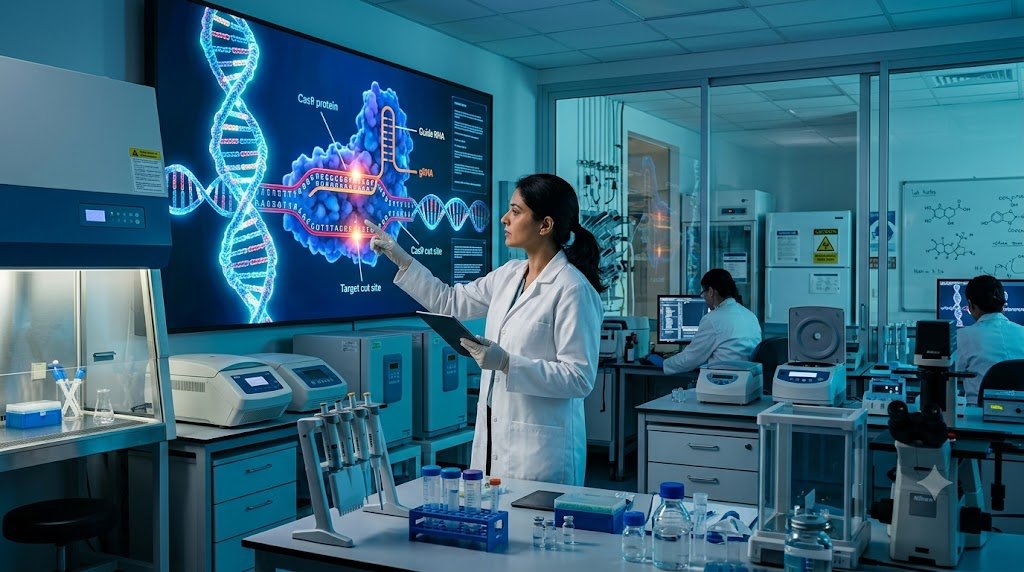
Section 1: Biotechnology & Genetic Engineering Fundamentals 2026
These Biotechnology MCQs 2026 cover important developments in genetic engineering, genomics, gene therapy, synthetic biology and other emerging areas relevant to competitive examinations.
Q.1. With reference to recombinant DNA technology, consider the following statements:
- It involves combining DNA molecules originating from different sources.
- Restriction enzymes can be used to cut DNA at specific nucleotide sequences.
- DNA ligase is used to join compatible DNA fragments.
- Recombinant DNA technology necessarily involves modification of the organism’s entire genome.
Which of the statements given above are correct?
(a) 1, 2 and 3 only
(b) 1 and 4 only
(c) 2, 3 and 4 only
(d) 1, 2, 3 and 4
Q.2. Consider the following statements regarding genes and genomes:
- A gene is a functional unit of heredity.
- The genome includes both coding and non-coding regions of an organism’s genetic material.
- All genes present in a genome necessarily code for proteins.
- Mutations can occur in both coding and non-coding regions.
Which of the statements given above are correct?
(a) 1, 2 and 4 only
(b) 1 and 3 only
(c) 2 and 4 only
(d) 1, 2, 3 and 4
Q.3. With reference to DNA replication, consider the following statements:
- DNA replication is generally described as semi-conservative.
- DNA polymerase synthesizes a new DNA strand using an existing strand as a template.
- DNA replication does not require any primer.
- The two strands of DNA can serve as templates for synthesis of complementary strands.
Which of the statements given above are correct?
(a) 1, 2 and 4 only
(b) 1 and 3 only
(c) 2 and 3 only
(d) 1, 2, 3 and 4
Q.4. Consider the following statements regarding mutations:
- A mutation can result from a change in the DNA sequence.
- Every mutation necessarily produces a visible physical trait.
- Mutations can be beneficial, harmful or neutral depending upon their context.
- Mutations are one source of genetic variation in populations.
Which of the statements given above are correct?
(a) 1, 3 and 4 only
(b) 1 and 2 only
(c) 2, 3 and 4 only
(d) 1, 2, 3 and 4
Q.5. With reference to polymerase chain reaction (PCR), consider the following statements:
- PCR can amplify a selected DNA sequence.
- Primers are required for amplification.
- PCR necessarily requires a living cell in which DNA replication occurs.
- Thermostable DNA polymerases are useful in PCR.
Which of the statements given above are correct?
(a) 1, 2 and 4 only
(b) 1 and 3 only
(c) 2 and 3 only
(d) 1, 2, 3 and 4
Q.6. Consider the following statements regarding whole genome sequencing:
- It aims to determine the nucleotide sequence across an organism’s genome.
- It can reveal genetic variations between individuals.
- It is restricted to protein-coding regions of DNA.
- Genome sequencing can contribute to precision medicine.
Which of the statements given above are correct?
(a) 1, 2 and 4 only
(b) 1 and 3 only
(c) 2 and 3 only
(d) 1, 2, 3 and 4
Q.7. With reference to next-generation sequencing (NGS), consider the following statements:
- NGS permits high-throughput sequencing of genetic material.
- It can be used in genomic and transcriptomic studies.
- It necessarily requires sequencing only one DNA molecule at a time.
- NGS can support research into genetic diseases.
Which of the statements given above are correct?
(a) 1, 2 and 4 only
(b) 1 and 3 only
(c) 2 and 3 only
(d) 1, 2, 3 and 4
Q.8. Consider the following statements about genetic engineering:
- It can involve deliberate modification of genetic material.
- It can be used to introduce a desired gene into an organism.
- Genetic engineering is synonymous with natural selection.
- It has applications in agriculture, medicine and industrial biotechnology.
Which of the statements given above are correct?
(a) 1, 2 and 4 only
(b) 1 and 3 only
(c) 2 and 4 only
(d) 1, 2, 3 and 4
Q.9. Which one of the following best describes the role of a plasmid in molecular biotechnology?
(a) It is always a protein that catalyses DNA replication.
(b) It is a small DNA molecule that can replicate independently in suitable host cells and can serve as a vector.
(c) It is a specialised form of RNA found only in viruses.
(d) It is the complete genetic material of every bacterium.
Q.10. With reference to gene expression, consider the following statements:
- Transcription involves the synthesis of RNA using DNA as a template.
- Translation involves the synthesis of proteins using information carried by messenger RNA.
- All RNA molecules are directly translated into proteins.
- Regulation of gene expression can occur at multiple stages.
Which of the statements given above are correct?
(a) 1, 2 and 4 only
(b) 1 and 3 only
(c) 2 and 3 only
(d) 1, 2, 3 and 4
Q.11. Consider the following statements regarding RNA:
- Messenger RNA can carry genetic information from DNA for protein synthesis.
- Transfer RNA participates in bringing amino acids during translation.
- Some RNA molecules can have catalytic functions.
- RNA and DNA necessarily contain the same sugar.
Which of the statements given above are correct?
(a) 1, 2 and 3 only
(b) 1 and 4 only
(c) 2 and 4 only
(d) 1, 2, 3 and 4
Q.12. With reference to epigenetics, consider the following statements:
- Epigenetic mechanisms can influence gene expression without changing the underlying DNA sequence.
- DNA methylation can participate in regulation of gene expression.
- Epigenetic changes can be influenced by environmental factors.
- Every epigenetic change permanently alters the nucleotide sequence.
Which of the statements given above are correct?
(a) 1, 2 and 3 only
(b) 1 and 4 only
(c) 2, 3 and 4 only
(d) 1, 2, 3 and 4
Q.13. Which one of the following is most directly associated with the study of genetic variations among individuals in a population?
(a) Population genomics
(b) Industrial fermentation
(c) Tissue culture
(d) Protein crystallization
Q.14. Consider the following statements regarding genomic medicine:
- Genetic information can sometimes help identify disease susceptibility.
- Genomic information can support selection of therapies in precision medicine.
- Genetic information alone can always predict whether an individual will develop a disease.
- Interpretation of genomic information may require population-specific data.
Which of the statements given above are correct?
(a) 1, 2 and 4 only
(b) 1 and 3 only
(c) 2 and 3 only
(d) 1, 2, 3 and 4
Q.15. With reference to CRISPR technology, consider the following statements:
- CRISPR systems originated as defence mechanisms in bacteria and other microorganisms.
- CRISPR-associated proteins can be guided to particular DNA sequences.
- CRISPR-based genome editing can be used to make targeted changes in DNA.
- CRISPR technology is limited exclusively to agricultural applications.
Which of the statements given above are correct?
(a) 1, 2 and 3 only
(b) 1 and 4 only
(c) 2, 3 and 4 only
(d) 1, 2, 3 and 4
Q.16. The term “gene silencing” is best understood as:
(a) Complete destruction of all genes in a cell
(b) Reduction or suppression of expression of a particular gene
(c) Conversion of DNA into protein
(d) Permanent removal of an entire chromosome
Q.17. Consider the following statements about gene therapy:
- Gene therapy can involve adding, replacing or modifying genetic material to address disease.
- It can be designed to correct the underlying genetic cause of certain disorders.
- Gene therapy necessarily changes the germline of the treated individual.
- Viral and non-viral systems can be used as delivery approaches.
Which of the statements given above are correct?
(a) 1, 2 and 4 only
(b) 1 and 3 only
(c) 2 and 3 only
(d) 1, 2, 3 and 4
Q.18. Which of the following technologies is most directly associated with determining the sequence of nucleotides in DNA?
(a) Genome sequencing
(b) Chromatography
(c) Centrifugation
(d) Electrophoresis alone
Q.19. Consider the following statements regarding bioinformatics:
- It involves the use of computational methods to analyse biological data.
- Genomic sequence analysis is an important application of bioinformatics.
- Bioinformatics has no role in drug discovery.
- AI and machine learning can be integrated with biological data analysis.
Which of the statements given above are correct?
(a) 1, 2 and 4 only
(b) 1 and 3 only
(c) 2 and 3 only
(d) 1, 2, 3 and 4
Q.20. Which one of the following correctly distinguishes genome editing from conventional breeding?
(a) Genome editing can make targeted changes in genetic material, whereas conventional breeding generally relies on selection and recombination across generations.
(b) Genome editing does not involve DNA.
(c) Conventional breeding can never alter genetic composition.
(d) Genome editing is possible only in microorganisms.
Answers & Explanations: Section 1 of Biotechnology & Genetic Engineering Current Affairs MCQs 2026
1. (a) — Recombinant DNA technology combines DNA from different sources. Restriction enzymes cut DNA at specific sequences, while DNA ligase joins DNA fragments. It does not necessarily alter the entire genome.
2. (a) — A genome contains coding as well as non-coding DNA. Not every gene produces a protein; many genes produce functional RNA molecules.
3. (a) — DNA replication is semi-conservative. DNA polymerase requires a primer and synthesizes a complementary strand using a template.
4. (a) — Mutations are DNA sequence changes and an important source of genetic variation. Their effects can range from harmful to neutral or beneficial.
5. (a) — PCR amplifies selected DNA sequences using primers and a DNA polymerase. It is an in-vitro technique and does not require a living cell.
6. (a) — Whole genome sequencing examines the genome broadly rather than only protein-coding regions. It can identify genetic variants relevant to disease and medicine.
7. (a) — NGS enables high-throughput sequencing and has applications in genomics, transcriptomics and disease research. It is not restricted to sequencing one molecule at a time.
8. (a) — Genetic engineering involves deliberate genetic modification and has applications in agriculture, medicine and industry. It is fundamentally different from natural selection.
9. (b) — Plasmids are usually small, circular DNA molecules capable of independent replication in suitable hosts and are widely used as vectors.
10. (a) — Transcription produces RNA, while translation uses messenger RNA to guide protein synthesis. Gene expression can be regulated at several levels.
11. (a) — mRNA, tRNA and catalytic RNA have distinct functions. DNA contains deoxyribose, whereas RNA contains ribose.
12. (a) — Epigenetic regulation can alter gene activity without changing the nucleotide sequence. DNA methylation is one such mechanism.
13. (a) — Population genomics studies genetic variation across populations and can help identify population-specific genetic patterns.
14. (a) — Genomic data can support risk assessment and treatment selection, but genetic information alone does not determine every disease outcome.
15. (a) — CRISPR systems evolved as microbial defence mechanisms and have been adapted for targeted genome editing. Their applications extend to medicine, agriculture and research.
16. (b) — Gene silencing refers to reducing or suppressing the expression of a gene rather than eliminating all genes or chromosomes.
17. (a) — Gene therapy can add, replace or modify genetic material and may use viral or non-viral delivery. Somatic gene therapy does not necessarily alter the germline.
18. (a) — Genome sequencing is specifically concerned with determining nucleotide sequences in genetic material.
19. (a) — Bioinformatics combines biology, computing and data analysis. It is increasingly important in genomics, drug discovery and AI-enabled biological research.
20. (a) — Genome editing permits targeted genetic changes, while conventional breeding generally works through selection and recombination over generations.
These Biotechnology questions for UPSC are designed to test conceptual understanding rather than simple factual recall, with several questions requiring careful analysis of multiple statements.
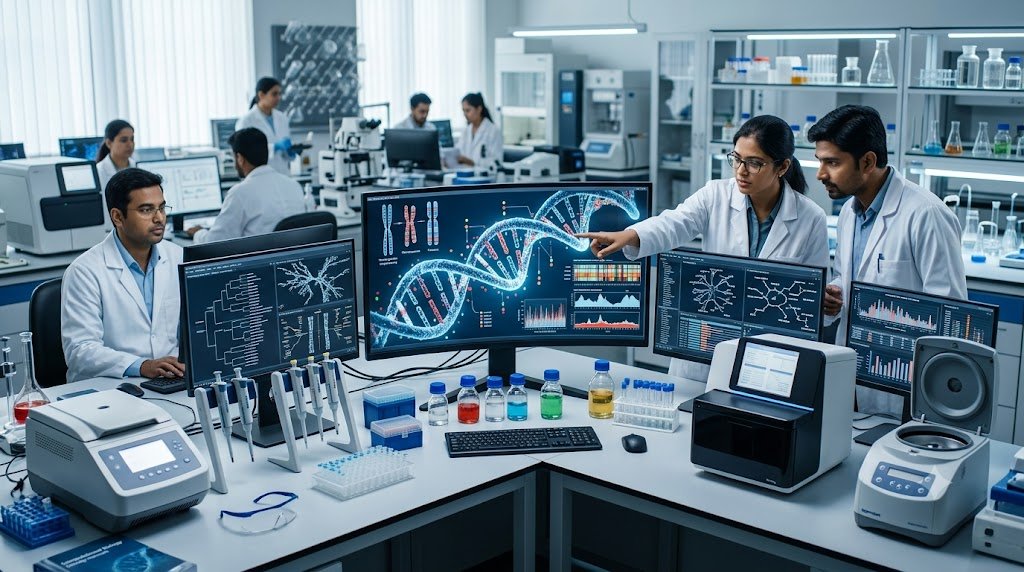
Section 2: CRISPR, Gene Editing, Gene Therapy & Precision Medicine
The following Genetic Engineering MCQs focus on concepts such as recombinant DNA technology, CRISPR-based gene editing, gene therapy and modern applications of genetic technologies.
Q.21. Consider the following statements regarding CRISPR-Cas9:
- Cas9 is an enzyme capable of cutting DNA.
- Guide RNA helps direct Cas9 towards a target DNA sequence.
- CRISPR-Cas9 can be used to introduce targeted genetic changes.
- Cas9 itself determines the target DNA sequence without any guiding component.
Which of the statements given above are correct?
(a) 1, 2 and 3 only
(b) 1 and 4 only
(c) 2 and 3 only
(d) 1, 2, 3 and 4
Q.22. The term “molecular scissors”, often associated with CRISPR-Cas9, refers primarily to:
(a) The ability of Cas9 to cut DNA at a targeted location
(b) The ability of RNA to produce proteins
(c) The ability of ribosomes to remove genes
(d) The ability of vaccines to destroy pathogens
Q.23. Consider the following statements regarding gene editing and gene therapy:
- Gene editing may modify a specific DNA sequence.
- Gene therapy can involve delivery of genetic material into target cells.
- All gene therapies necessarily use CRISPR.
- Gene editing can be one approach used within the broader field of gene therapy.
Which of the statements given above are correct?
(a) 1, 2 and 4 only
(b) 1 and 3 only
(c) 2 and 3 only
(d) 1, 2, 3 and 4
Q.24. With reference to somatic and germline gene editing, consider the following statements:
- Somatic gene editing targets cells other than germ cells.
- Changes introduced into germline cells can potentially be inherited by future generations.
- Somatic gene therapy necessarily passes its genetic changes to offspring.
- Germline editing raises significant ethical and regulatory concerns.
Which of the statements given above are correct?
(a) 1, 2 and 4 only
(b) 1 and 3 only
(c) 2 and 3 only
(d) 1, 2, 3 and 4
Q.25. Consider the following statements about base editing:
- It can enable certain nucleotide changes without necessarily creating the same type of double-strand DNA break associated with conventional CRISPR-Cas9 editing.
- It can be used for targeted correction of certain point mutations.
- It is completely independent of enzymes.
- It has potential applications in treating genetic diseases.
Which of the statements given above are correct?
(a) 1, 2 and 4 only
(b) 1 and 3 only
(c) 2 and 3 only
(d) 1, 2, 3 and 4
Q.26. Consider the following statements regarding prime editing:
- Prime editing is a form of genome editing.
- It can potentially introduce certain substitutions, insertions or deletions with greater flexibility than simple base conversion.
- It is identical in mechanism to conventional random mutagenesis.
- It is being investigated for possible therapeutic applications.
Which of the statements given above are correct?
(a) 1, 2 and 4 only
(b) 1 and 3 only
(c) 2 and 3 only
(d) 1, 2, 3 and 4
Q.27. Which of the following best describes precision medicine?
(a) Providing exactly the same treatment to every patient with a particular disease
(b) Using information about genetic, environmental and lifestyle differences to improve prevention, diagnosis or treatment
(c) Treating diseases exclusively through surgery
(d) Replacing all conventional medicines with gene therapy
Q.28. Consider the following statements regarding pharmacogenomics:
- It studies how genetic differences can affect an individual’s response to medicines.
- It can help in selecting appropriate drugs or dosages in some situations.
- It implies that environmental factors have no role in drug response.
- Population-specific genetic information can be relevant to pharmacogenomic interpretation.
Which of the statements given above are correct?
(a) 1, 2 and 4 only
(b) 1 and 3 only
(c) 2 and 3 only
(d) 1, 2, 3 and 4
Q.29. With reference to viral vectors used in gene therapy, consider the following statements:
- Viruses can be modified to deliver genetic material into cells.
- Viral vectors can be engineered to reduce their ability to cause disease.
- Every viral vector necessarily integrates its genetic material into the host genome.
- Safety and immune responses are important considerations in vector-based gene therapy.
Which of the statements given above are correct?
(a) 1, 2 and 4 only
(b) 1 and 3 only
(c) 2 and 3 only
(d) 1, 2, 3 and 4
Q.30. Consider the following statements regarding mRNA therapeutics:
- mRNA can provide instructions for cells to produce a particular protein.
- mRNA-based approaches can be used in vaccine development.
- mRNA must necessarily integrate into the host cell’s DNA to function.
- mRNA therapeutics are included among the precision biotherapeutics areas identified under India’s BioE3 framework.
Which of the statements given above are correct?
(a) 1, 2 and 4 only
(b) 1 and 3 only
(c) 2, 3 and 4 only
(d) 1, 2, 3 and 4
Q.31. Consider the following statements regarding monoclonal antibodies:
- They are antibodies derived from a single clone of immune cells or a corresponding engineered system.
- They can be designed to recognize specific molecular targets.
- They have applications in diagnosis and therapy.
- They are identical to antibiotics in their mechanism of action.
Which of the statements given above are correct?
(a) 1, 2 and 3 only
(b) 1 and 4 only
(c) 2, 3 and 4 only
(d) 1, 2, 3 and 4
Q.32. Which one of the following is the most appropriate description of “cell therapy”?
(a) Treatment involving living cells to repair, replace or modulate biological functions
(b) Treatment involving only synthetic chemical molecules
(c) Complete removal of all cells from an organ
(d) Replacement of DNA by inorganic molecules
Q.33. Consider the following statements about gene augmentation:
- It may involve introducing a functional copy of a gene into cells.
- It can be useful where a defective or absent gene contributes to disease.
- It necessarily corrects the original defective DNA sequence.
- It is distinct from approaches that directly edit a particular DNA sequence.
Which of the statements given above are correct?
(a) 1, 2 and 4 only
(b) 1 and 3 only
(c) 2 and 3 only
(d) 1, 2, 3 and 4
Q.34. With reference to genetic disorders, consider the following statements:
- Some genetic disorders result from mutations in a single gene.
- Some genetic disorders can potentially be addressed through gene therapy.
- Every genetic disorder can currently be cured through genome editing.
- Genetic diagnosis can assist in understanding the molecular basis of inherited diseases.
Which of the statements given above are correct?
(a) 1, 2 and 4 only
(b) 1 and 3 only
(c) 2 and 3 only
(d) 1, 2, 3 and 4
Q.35. Consider the following statements regarding sickle cell disease:
- It is associated with a genetic alteration affecting haemoglobin.
- Gene-editing approaches are being investigated for its treatment.
- BIRSA-101 is an indigenous CRISPR-based gene-editing therapy being developed for sickle cell disease in India.
- Sickle cell disease is caused by a bacterial infection.
Which of the statements given above are correct?
(a) 1, 2 and 3 only
(b) 1 and 4 only
(c) 2, 3 and 4 only
(d) 1, 2, 3 and 4
Q.36. Consider the following statements regarding BIRSA-101:
- It is associated with indigenous CRISPR-based gene-editing research in India.
- It is being developed for sickle cell disease.
- It represents an application of genome editing in human healthcare.
- It is a conventional antibiotic developed for bacterial infections.
Which of the statements given above are correct?
(a) 1, 2 and 3 only
(b) 1 and 4 only
(c) 2 and 4 only
(d) 1, 2, 3 and 4
Q.37. Which of the following can be considered potential advantages of genome editing in medicine?
- Targeted modification of disease-associated genetic sequences
- Development of models for studying genetic diseases
- Possibility of correcting certain disease-causing mutations
- Guaranteed cure for every inherited disease
Select the correct answer using the code given below.
(a) 1, 2 and 3 only
(b) 1 and 4 only
(c) 2 and 3 only
(d) 1, 2, 3 and 4
Q.38. Consider the following statements regarding off-target effects in genome editing:
- They refer to unintended genetic changes at locations other than the intended target.
- They are an important safety consideration in genome-editing applications.
- They demonstrate that genome editing cannot be targeted at all.
- Improved editing systems seek to enhance specificity and reduce unintended changes.
Which of the statements given above are correct?
(a) 1, 2 and 4 only
(b) 1 and 3 only
(c) 2 and 3 only
(d) 1, 2, 3 and 4
Q.39. With reference to the regulatory environment for gene therapy products in India, consider the following statements:
- Multiple institutions and regulatory bodies are involved in oversight of gene therapy development.
- CDSCO, ICMR and DBT have roles in the regulatory and scientific framework.
- Gene therapy development is completely outside India’s biomedical regulatory framework.
- Safety and ethical considerations are integral to clinical development.
Which of the statements given above are correct?
(a) 1, 2 and 4 only
(b) 1 and 3 only
(c) 2 and 3 only
(d) 1, 2, 3 and 4
Q.40. Consider the following statements regarding India’s recent gene therapy efforts:
- India has supported indigenous research in cell and gene therapies.
- A first-in-human Phase-I gene therapy trial for Hemophilia A has been supported through India’s biotechnology ecosystem.
- Gene therapy research is limited only to infectious diseases.
- Technology transfer and industry-academia collaboration can help move gene therapies towards commercialisation.
Which of the statements given above are correct?
(a) 1, 2 and 4 only
(b) 1 and 3 only
(c) 2 and 3 only
(d) 1, 2, 3 and 4
Answers & Explanations: Section 2 of Biotechnology & Genetic Engineering Current Affairs MCQs 2026
21. (a) — Cas9 is the DNA-cutting component of the CRISPR-Cas9 system, while guide RNA helps direct it to the target sequence.
22. (a) — Cas9 acts like molecular scissors because it can cut DNA at a targeted location.
23. (a) — Gene editing is one approach within the broader field of gene therapy. Not all gene therapies use CRISPR.
24. (a) — Somatic editing generally affects the treated individual, while germline changes may be inherited. This creates major ethical and regulatory issues.
25. (a) — Base editors can make certain targeted nucleotide conversions without relying on the same type of double-strand break used by conventional Cas9 editing.
26. (a) — Prime editing is a flexible genome-editing approach being investigated for a range of genetic changes and therapeutic applications.
27. (b) — Precision medicine seeks to use individual-level biological and other information to improve prevention, diagnosis and treatment.
28. (a) — Pharmacogenomics examines genetic influences on drug response. It does not mean that environmental or other factors become irrelevant.
29. (a) — Viral vectors can deliver genetic material and can be modified for therapeutic use. Integration depends on the vector and approach; it is not universal.
30. (a) — mRNA can provide temporary instructions for protein production and does not need to integrate into DNA. mRNA therapeutics are among BioE3’s precision-biotherapeutics areas.
31. (a) — Monoclonal antibodies can recognize specific molecular targets and are widely used in diagnosis and treatment.
32. (a) — Cell therapy uses living cells as therapeutic agents to replace, repair or modulate biological functions.
33. (a) — Gene augmentation can provide a functional gene without necessarily correcting the original defective sequence.
34. (a) — Genetic disorders can arise from single-gene or more complex causes, and only some currently have potential gene-therapy approaches.
35. (a) — Sickle cell disease is a genetic disorder involving haemoglobin. India is developing indigenous CRISPR-based approaches including BIRSA-101.
36. (a) — BIRSA-101 is associated with India’s indigenous CRISPR-based gene-editing work for sickle cell disease.
37. (a) — Genome editing offers potential targeted therapeutic applications, but it cannot guarantee a cure for every inherited disease.
38. (a) — Off-target effects are unintended edits and an important safety concern. Modern approaches seek greater specificity.
39. (a) — India’s gene-therapy framework involves bodies including CDSCO, ICMR and DBT, along with requirements concerning safety and ethics. 40. (a) — India has supported indigenous gene-therapy development, including work in Hemophilia A and technology-transfer efforts.
For biomedical research and healthcare-related developments, aspirants can also refer to the Indian Council of Medical Research (ICMR).
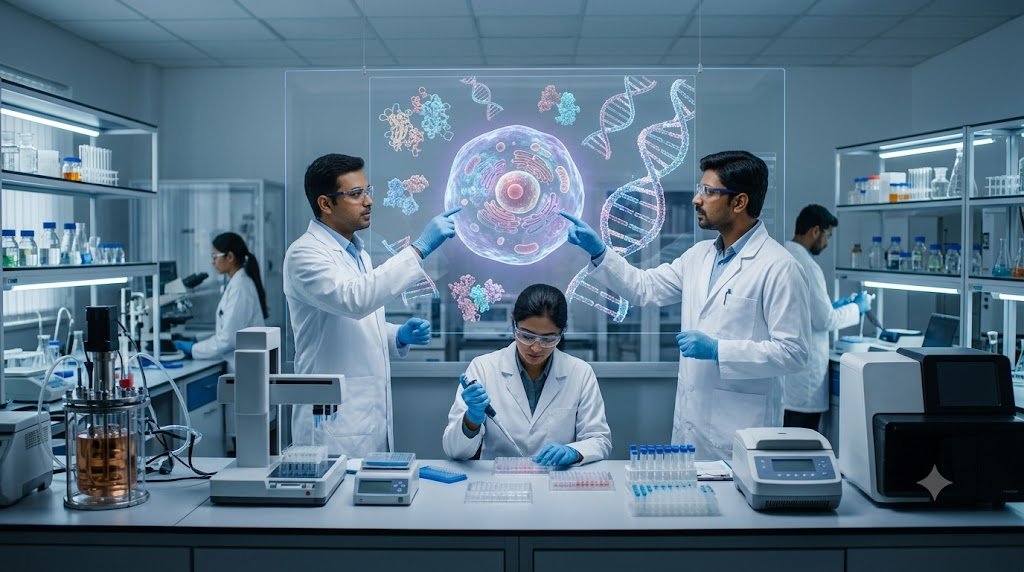
Section 3: GenomeIndia, Genomics, AI & Biotechnology in Healthcare
This section of Biotechnology & Genetic Engineering Current Affairs MCQs 2026 focuses on GenomeIndia, genomics, AI-enabled biotechnology and precision medicine.
Q.41. Consider the following statements regarding the GenomeIndia initiative:
- It seeks to build a reference genomic database representing India’s population diversity.
- Whole genome sequencing has been undertaken as part of the initiative.
- GenomeIndia has potential applications in precision medicine.
- Its objective is limited exclusively to agricultural crop genomes.
Which of the statements given above are correct?
(a) 1, 2 and 3 only
(b) 1 and 4 only
(c) 2 and 4 only
(d) 1, 2, 3 and 4
Q.42. With reference to GenomeIndia, consider the following statements:
- The programme has generated whole genome sequencing data from more than 10,000 individuals.
- The data represents multiple population groups in India.
- Such population-scale genomic data can help identify genetic variations relevant to health.
- The programme is unrelated to precision medicine.
Which of the statements given above are correct?
(a) 1, 2 and 3 only
(b) 1 and 4 only
(c) 2, 3 and 4 only
(d) 1, 2, 3 and 4
Q.43. Why is population-specific genomic data particularly important for India?
(a) Human populations have no genetic variation.
(b) Genetic variation can influence disease risk and drug response, and population-specific data can improve interpretation of genomic information.
(c) Population genomics completely eliminates the need for clinical examination.
(d) Genetic information is unrelated to disease susceptibility.
Q.44. Consider the following statements regarding AI and genomics:
- AI can assist in analysing large genomic datasets.
- AI-based methods can potentially identify patterns in genetic information.
- AI eliminates the need for validation of genomic findings.
- AI-enabled genomics can contribute to personalised and predictive medicine.
Which of the statements given above are correct?
(a) 1, 2 and 4 only
(b) 1 and 3 only
(c) 2 and 3 only
(d) 1, 2, 3 and 4
Q.45. With reference to multi-omics, consider the following statements:
- It can involve integration of information from genomics, transcriptomics and proteomics.
- It seeks to understand biological systems at multiple molecular levels.
- It necessarily means sequencing only DNA.
- It can support research into disease mechanisms.
Which of the statements given above are correct?
(a) 1, 2 and 4 only
(b) 1 and 3 only
(c) 2 and 3 only
(d) 1, 2, 3 and 4
Q.46. Consider the following statements about transcriptomics:
- It deals with RNA transcripts produced in cells or tissues.
- It can provide information about gene expression.
- It is identical to whole genome sequencing.
- Changes in transcript levels can provide clues about cellular responses.
Which of the statements given above are correct?
(a) 1, 2 and 4 only
(b) 1 and 3 only
(c) 2 and 3 only
(d) 1, 2, 3 and 4
Q.47. With reference to proteomics, consider the following statements:
- It involves large-scale study of proteins.
- It can provide information about proteins present or altered in biological systems.
- It is completely independent of gene expression.
- It can contribute to biomarker discovery.
Which of the statements given above are correct?
(a) 1, 2 and 4 only
(b) 1 and 3 only
(c) 2 and 3 only
(d) 1, 2, 3 and 4
Q.48. Consider the following statements regarding rare genetic diseases:
- Genome sequencing can help identify disease-causing variants in some cases.
- Genetic diagnosis can assist in understanding inherited disorders.
- Every rare disease has a known genetic cause.
- Population-specific genomic databases can support rare-disease research.
Which of the statements given above are correct?
(a) 1, 2 and 4 only
(b) 1 and 3 only
(c) 2 and 3 only
(d) 1, 2, 3 and 4
Q.49. Which one of the following best explains the importance of clinical genomics?
(a) It uses genomic information to support diagnosis, risk assessment and treatment decisions in healthcare.
(b) It replaces all conventional medical examinations.
(c) It is concerned only with sequencing microorganisms.
(d) It has no application in rare diseases.
Q.50. Consider the following statements regarding genetic biomarkers:
- A biomarker can be a measurable biological characteristic associated with a disease or biological process.
- Genetic variants can sometimes serve as biomarkers.
- A biomarker is necessarily a complete explanation of disease causation.
- Biomarkers can have applications in diagnosis or treatment selection.
Which of the statements given above are correct?
(a) 1, 2 and 4 only
(b) 1 and 3 only
(c) 2 and 3 only
(d) 1, 2, 3 and 4
Q.51. Consider the following statements regarding biobanks:
- They can store biological samples and associated information for research.
- They can support genomic and biomedical research.
- Proper ethical and governance frameworks are important for their operation.
- Biobanks necessarily contain only plant samples.
Which of the statements given above are correct?
(a) 1, 2 and 3 only
(b) 1 and 4 only
(c) 2 and 4 only
(d) 1, 2, 3 and 4
Q.52. With reference to genetic counselling, consider the following statements:
- It can help individuals understand genetic conditions and inheritance patterns.
- It can assist families in interpreting genetic test results.
- It guarantees that a genetic disorder can be cured.
- It may be relevant before or after genetic testing.
Which of the statements given above are correct?
(a) 1, 2 and 4 only
(b) 1 and 3 only
(c) 2 and 3 only
(d) 1, 2, 3 and 4
Q.53. Consider the following statements regarding pharmacogenetic data:
- It can help understand differences in drug metabolism.
- It may contribute to personalised prescribing.
- It makes adverse drug reactions impossible.
- Population-level genetic variation can influence interpretation.
Which of the statements given above are correct?
(a) 1, 2 and 4 only
(b) 1 and 3 only
(c) 2 and 3 only
(d) 1, 2, 3 and 4
Q.54. Which of the following are potential applications of genome sequencing?
- Identification of disease-associated variants
- Population genetic studies
- Epidemiological genomic surveillance
- Personalised medicine research
Select the correct answer using the code given below.
(a) 1, 2 and 3 only
(b) 1, 2 and 4 only
(c) 1, 2, 3 and 4
(d) 2 and 3 only
Q.55. Consider the following statements regarding genomic surveillance of infectious diseases:
- Sequencing can help identify genetic changes in pathogens.
- It can contribute to tracking the emergence of variants.
- It necessarily predicts the severity of every infection.
- It can support public-health decision-making.
Which of the statements given above are correct?
(a) 1, 2 and 4 only
(b) 1 and 3 only
(c) 2 and 3 only
(d) 1, 2, 3 and 4
Q.56. With reference to India’s GUaRDIAN initiative, consider the following statements:
- It is associated with genomics and understanding rare diseases.
- It is linked with CSIR-IGIB’s genomic research ecosystem.
- It is primarily a programme for improving conventional crop irrigation.
- It can contribute to identifying genetic causes of rare disorders.
Which of the statements given above are correct?
(a) 1, 2 and 4 only
(b) 1 and 3 only
(c) 2 and 3 only
(d) 1, 2, 3 and 4
Q.57. Consider the following statements regarding GOMED:
- It is associated with genomics and medical decision-making.
- It can contribute to genetic diagnostics.
- It is unrelated to rare diseases.
- It is part of India’s broader genomics research ecosystem.
Which of the statements given above are correct?
(a) 1, 2 and 4 only
(b) 1 and 3 only
(c) 2 and 3 only
(d) 1, 2, 3 and 4
Q.58. Consider the following statements regarding IndiGen:
- It is associated with population genomics in India.
- It seeks to generate information on genetic variation in Indian populations.
- Such information can support precision medicine.
- It is exclusively a programme for genetically modifying crops.
Which of the statements given above are correct?
(a) 1, 2 and 3 only
(b) 1 and 4 only
(c) 2 and 4 only
(d) 1, 2, 3 and 4
Q.59. Which of the following best explains “predictive medicine” in the context of genomics?
(a) Using biological and genomic information to assess disease risk before clinical manifestations in appropriate cases
(b) Predicting the exact date of death of every patient
(c) Replacing preventive healthcare with genetic testing
(d) Treating every disease using the same medicine
Q.60. Consider the following statements regarding ethical issues in genomics:
- Privacy of genetic information is an important concern.
- Genetic discrimination can be an ethical concern.
- Informed consent is relevant to genomic research.
- Genomic data has no implications for relatives of the individual from whom it was obtained.
Which of the statements given above are correct?
(a) 1, 2 and 3 only
(b) 1 and 4 only
(c) 2, 3 and 4 only
(d) 1, 2, 3 and 4
Answers & Explanations: Section 3 of Biotechnology & Genetic Engineering Current Affairs MCQs 2026
41. (a) — GenomeIndia focuses on India’s human genomic diversity and has applications in genomics and precision medicine.
42. (a) — Government information states that GenomeIndia has completed WGS data for more than 10,000 individuals representing major population groups.
43. (b) — Population-specific genetic variation can affect disease risk and drug response, making representative genomic datasets important for interpretation.
44. (a) — AI can analyse large genomic datasets and identify patterns, but findings still require scientific and clinical validation.
45. (a) — Multi-omics integrates several molecular layers such as genomics, transcriptomics and proteomics.
46. (a) — Transcriptomics studies RNA transcripts and provides information about gene-expression patterns.
47. (a) — Proteomics studies proteins at large scale and can assist in biomarker and disease research.
48. (a) — Genomics can help identify variants associated with rare diseases, but not every rare disease has a known genetic cause.
49. (a) — Clinical genomics applies genomic information to diagnosis, risk assessment and treatment decisions.
50. (a) — Biomarkers can be measurable biological indicators, including certain genetic variants, but they do not necessarily establish complete causation.
51. (a) — Biobanks store biological materials and related data and require appropriate ethical and governance safeguards.
52. (a) — Genetic counselling helps people understand inheritance, test results and possible implications. It is not itself a cure.
53. (a) — Pharmacogenetic information can support personalised prescribing but cannot eliminate all adverse reactions.
54. (c) — Genome sequencing has applications across disease genetics, population studies, pathogen surveillance and precision medicine.
55. (a) — Pathogen sequencing can identify genetic changes and variants but does not by itself predict the severity of every infection.
56. (a) — GUaRDIAN is associated with genomics for understanding rare diseases and is part of CSIR-IGIB’s research ecosystem.
57. (a) — GOMED is associated with genomics and medical decision-making, including genetic diagnostics.
58. (a) — IndiGen focuses on population genomics and Indian genetic variation, with potential relevance to precision medicine.
59. (a) — Predictive medicine can use genomic and other information to estimate disease risk and enable earlier intervention.
60. (a) — Genetic information raises privacy, consent and discrimination concerns. Its implications may also extend to biological relatives.
Biotechnology is an important component of the broader Science and Technology syllabus for UPSC Prelims. Aspirants can also strengthen their preparation by revising our Science & Technology Current Affairs MCQs covering other important developments.
Section 4: BioE3 Policy, Synthetic Biology, Biomanufacturing & Industrial Biotechnology
Q.61. Consider the following statements regarding the BioE3 Policy:
- BioE3 stands for Biotechnology for Economy, Environment and Employment.
- It seeks to promote high-performance biomanufacturing.
- It includes the development of bio-based products.
- It is restricted exclusively to medical biotechnology.
Which of the statements given above are correct?
(a) 1, 2 and 3 only
(b) 1 and 4 only
(c) 2, 3 and 4 only
(d) 1, 2, 3 and 4
Q.62. Consider the following areas identified under the BioE3 framework:
- Bio-based chemicals, bioplastics, APIs and enzymes
- Functional foods and smart proteins
- Precision biotherapeutics
- Climate-resilient agriculture
- Biofuels and carbon capture
- Marine and space research
Which of the above are included in the thematic areas of the policy?
(a) 1, 2 and 3 only
(b) 1, 2, 3 and 4 only
(c) 1, 3, 4, 5 and 6 only
(d) 1, 2, 3, 4, 5 and 6
Q.63. With reference to Biofoundries, consider the following statements:
- They can provide infrastructure for engineering and testing biological systems.
- They can help accelerate synthetic biology and biomanufacturing research.
- They are conventional mineral-processing plants.
- They can support scale-up and translational research.
Which of the statements given above are correct?
(a) 1, 2 and 4 only
(b) 1 and 3 only
(c) 2 and 3 only
(d) 1, 2, 3 and 4
Q.64. Consider the following statements regarding biomanufacturing:
- It uses biological systems to produce useful products.
- Microorganisms can be used as production platforms.
- Biomanufacturing has applications in chemicals, pharmaceuticals and food-related products.
- It necessarily requires genetically modified organisms in every case.
Which of the statements given above are correct?
(a) 1, 2 and 3 only
(b) 1 and 4 only
(c) 2 and 4 only
(d) 1, 2, 3 and 4
Q.65. Consider the following statements regarding synthetic biology:
- It involves designing or redesigning biological systems.
- It can combine principles from biology, engineering and computation.
- It is limited to sequencing naturally occurring organisms.
- It has potential applications in medicine, agriculture and industrial biotechnology.
Which of the statements given above are correct?
(a) 1, 2 and 4 only
(b) 1 and 3 only
(c) 2 and 3 only
(d) 1, 2, 3 and 4
Q.66. Which one of the following best describes metabolic engineering?
(a) Modification of cellular metabolic pathways to enhance production of a desired compound or product
(b) Study of weather patterns affecting agriculture
(c) Measurement of atmospheric pressure in industrial plants
(d) Classification of rocks according to their mineral content
Q.67. Consider the following statements regarding industrial enzymes:
- Enzymes can act as biological catalysts.
- Industrial enzymes are used in sectors such as food processing, detergents and pharmaceuticals.
- Enzymes necessarily function only inside living cells.
- Biotechnology can be used to improve production of industrial enzymes.
Which of the statements given above are correct?
(a) 1, 2 and 4 only
(b) 1 and 3 only
(c) 2 and 3 only
(d) 1, 2, 3 and 4
Q.68. Consider the following statements about biofuels:
- Biofuels can be produced from biological feedstocks.
- Some microorganisms can be engineered or selected for biofuel production.
- Biofuels are necessarily carbon-neutral under all production conditions.
- Biotechnology can contribute to improving biofuel production processes.
Which of the statements given above are correct?
(a) 1, 2 and 4 only
(b) 1 and 3 only
(c) 2 and 3 only
(d) 1, 2, 3 and 4
Q.69. With reference to carbon capture and biotechnology, consider the following statements:
- Biological systems can potentially contribute to carbon capture and utilization.
- Algae and microorganisms have been investigated for carbon-related applications.
- Carbon capture has no connection with biomanufacturing.
- Bio-based processes can potentially convert captured carbon into useful products.
Which of the statements given above are correct?
(a) 1, 2 and 4 only
(b) 1 and 3 only
(c) 2 and 3 only
(d) 1, 2, 3 and 4
Q.70. Consider the following statements regarding smart proteins:
- They can include innovative protein sources developed using biotechnology.
- Precision fermentation can be used to produce certain protein ingredients.
- Smart proteins necessarily mean proteins obtained only from conventional livestock.
- Alternative proteins may have implications for resource use and sustainable food systems.
Which of the statements given above are correct?
(a) 1, 2 and 4 only
(b) 1 and 3 only
(c) 2 and 3 only
(d) 1, 2, 3 and 4
Q.71. Consider the following statements regarding precision fermentation:
- It uses microorganisms as biological production systems.
- Microorganisms can be engineered to produce specific molecules.
- It is necessarily the same as conventional livestock farming.
- It has potential applications in food and pharmaceutical production.
Which of the statements given above are correct?
(a) 1, 2 and 4 only
(b) 1 and 3 only
(c) 2 and 3 only
(d) 1, 2, 3 and 4
Q.72. Which one of the following is most closely associated with “biorefinery”?
(a) Conversion of biomass into multiple useful products through integrated processing
(b) Refining only crude petroleum
(c) Extraction of metals from ores
(d) Processing only radioactive materials
Q.73. Consider the following statements regarding genetically modified microorganisms:
- They can be engineered to produce useful compounds.
- They can be used in industrial biotechnology.
- Genetic modification necessarily makes a microorganism pathogenic.
- Appropriate containment and biosafety measures are important in their use.
Which of the statements given above are correct?
(a) 1, 2 and 4 only
(b) 1 and 3 only
(c) 2 and 3 only
(d) 1, 2, 3 and 4
Q.74. Consider the following statements regarding biosafety:
- It concerns measures to prevent unintended harm from biological research and applications.
- Containment can be important when working with genetically modified organisms.
- Biosafety is relevant only to military biological research.
- Risk assessment is an important component of biosafety.
Which of the statements given above are correct?
(a) 1, 2 and 4 only
(b) 1 and 3 only
(c) 2 and 3 only
(d) 1, 2, 3 and 4
Q.75. With reference to India’s BioE3 Policy, consider the following statements:
- Bio-AI hubs are part of the policy’s bio-enabler ecosystem.
- Biofoundries are intended to strengthen research and development infrastructure.
- Biomanufacturing hubs can support scale-up of bio-based products.
- The policy excludes AI from biotechnology.
Which of the statements given above are correct?
(a) 1, 2 and 3 only
(b) 1 and 4 only
(c) 2, 3 and 4 only
(d) 1, 2, 3 and 4
Q.76. Consider the following statements regarding Bio-AI:
- It involves integration of artificial intelligence with biotechnology.
- It can be used in genomics and computational biology.
- It can assist biological data analysis and biomolecular design.
- It means replacing biological experiments completely with AI.
Which of the statements given above are correct?
(a) 1, 2 and 3 only
(b) 1 and 4 only
(c) 2 and 4 only
(d) 1, 2, 3 and 4
Q.77. Which of the following have been identified as priority sectors for Bio-AI hubs under India’s biotechnology policy framework?
- Agriculture innovations
- Genome diagnostics
- Synthetic biology
- Biomolecular design
- Ayurveda
Select the correct answer using the code given below.
(a) 1, 2 and 3 only
(b) 1, 3 and 4 only
(c) 1, 2, 3 and 4 only
(d) 1, 2, 3, 4 and 5
Q.78. Consider the following statements regarding climate-resilient agriculture and biotechnology:
- Gene editing can potentially be used to develop crops with desirable traits.
- Biotechnology can contribute to improving tolerance to environmental stresses.
- Climate-resilient agriculture necessarily requires replacing all conventional crop varieties.
- Agricultural biotechnology can target traits such as disease resistance and stress tolerance.
Which of the statements given above are correct?
(a) 1, 2 and 4 only
(b) 1 and 3 only
(c) 2 and 3 only
(d) 1, 2, 3 and 4
Q.79. Consider the following statements regarding bioplastics:
- Some bioplastics can be produced from renewable biological feedstocks.
- Biotechnology can be used in the production of certain bioplastics.
- Every bioplastic is automatically biodegradable.
- Bio-based origin and biodegradability are not necessarily the same property.
Which of the statements given above are correct?
(a) 1, 2 and 4 only
(b) 1 and 3 only
(c) 2 and 3 only
(d) 1, 2, 3 and 4
Q.80. Which one of the following best explains why biomanufacturing is strategically important for India?
(a) It can support domestic production of high-value bio-based products while integrating research, innovation and industrial scale-up.
(b) It eliminates the need for scientific research.
(c) It is restricted to traditional agricultural practices.
(d) It can produce only low-value food products.
Answers & Explanations: Section 4 of Biotechnology & Genetic Engineering Current Affairs MCQs 2026
61. (a) — BioE3 means Biotechnology for Economy, Environment and Employment. It aims to promote high-performance biomanufacturing across several sectors, not merely healthcare.
62. (d) — All six listed areas form the BioE3 thematic framework.
63. (a) — Biofoundries provide advanced infrastructure for engineering biological systems and supporting translational and scale-up activities.
64. (a) — Biomanufacturing uses biological systems for production, but genetically modified organisms are not mandatory in every biomanufacturing process.
65. (a) — Synthetic biology involves design and engineering of biological systems and has applications across healthcare, agriculture and industry.
66. (a) — Metabolic engineering modifies metabolic pathways to increase or redirect production of desired molecules.
67. (a) — Enzymes are biological catalysts and have broad industrial applications. Biotechnology can improve their production and properties.
68. (a) — Biofuels are biological in origin and biotechnology can improve production. Carbon neutrality depends on the complete lifecycle and is not automatic.
69. (a) — Biological systems such as microorganisms and algae can contribute to carbon capture or utilization, including conversion into useful products.
70. (a) — Smart proteins include biotechnology-enabled alternatives and may contribute to more resource-efficient food systems. BioE3 specifically includes functional foods and smart proteins.
71. (a) — Precision fermentation uses microorganisms to produce specific molecules and has applications in food and pharmaceutical sectors.
72. (a) — A biorefinery integrates biomass processing to generate multiple useful products.
73. (a) — Genetically modified microorganisms can be useful industrial platforms, but their use requires appropriate biosafety and containment measures.
74. (a) — Biosafety applies broadly to biological research and applications and includes containment and risk assessment.
75. (a) — Bio-AI hubs, Biofoundries and Biomanufacturing Hubs are identified as bio-enablers under the BioE3 framework.
76. (a) — Bio-AI integrates AI with biotechnology. It can assist genomics, computational biology and biomolecular design but does not eliminate the need for experiments.
77. (d) — All five—Ayurveda, agriculture innovations, genome diagnostics, synthetic biology and biomolecular design—are listed as priority sectors for Bio-AI hubs.
78. (a) — Biotechnology and gene editing can target traits such as stress tolerance and disease resistance; they do not require abandoning conventional varieties.
79. (a) — Bio-based and biodegradable are different concepts. A bioplastic can be bio-based without necessarily being biodegradable.
80. (a) — Biomanufacturing can strengthen domestic capabilities in high-value bio-based products and connect research with industrial scale-up. The BioE3 framework specifically aims at this ecosystem.
Section 5: Biotechnology in Agriculture, GM Crops, Current Affairs & Emerging Applications
The following Biotechnology & Genetic Engineering Current Affairs MCQs 2026 focus on agricultural biotechnology, GM crops and emerging applications.
Q.81. Consider the following statements regarding genetically modified (GM) crops:
- Genetic modification can introduce a desired trait into a crop.
- A GM crop necessarily contains genes from another species.
- Genetic modification can be used to confer traits such as pest resistance.
- Assessment of biosafety is important before environmental release of GM organisms.
Which of the statements given above are correct?
(a) 1, 3 and 4 only
(b) 1 and 2 only
(c) 2, 3 and 4 only
(d) 1, 2, 3 and 4
Q.82. Consider the following statements regarding Bt crops:
- Bt crops contain genetic material associated with the bacterium Bacillus thuringiensis.
- Certain Bt crops produce proteins toxic to specific insect pests.
- Bt technology is based on introducing a bacterial insecticidal trait into the crop.
- Bt crops are designed primarily to increase the crop’s resistance to drought by default.
Which of the statements given above are correct?
(a) 1, 2 and 3 only
(b) 1 and 4 only
(c) 2, 3 and 4 only
(d) 1, 2, 3 and 4
Q.83. Consider the following statements regarding gene-edited crops:
- Genome editing can target particular genes associated with desired traits.
- CRISPR-based approaches can be used in crop improvement research.
- Gene editing and conventional transgenic modification are identical in every respect.
- Gene editing has potential applications in improving disease resistance and stress tolerance.
Which of the statements given above are correct?
(a) 1, 2 and 4 only
(b) 1 and 3 only
(c) 2 and 3 only
(d) 1, 2, 3 and 4
Q.84. With reference to agricultural biotechnology, consider the following statements:
- Marker-assisted selection uses genetic markers associated with desired traits.
- It can accelerate selection in plant breeding.
- It necessarily involves insertion of foreign DNA into every selected plant.
- It can be used without creating a genetically modified organism.
Which of the statements given above are correct?
(a) 1, 2 and 4 only
(b) 1 and 3 only
(c) 2 and 3 only
(d) 1, 2, 3 and 4
Q.85. Consider the following statements regarding genome editing for crop improvement in India:
- CRISPR/Cas-based research is being undertaken for traits such as insect resistance.
- Genome editing is being investigated for improving nutritional and agronomic traits.
- Genome editing research is restricted exclusively to human health in India.
- Agricultural genome editing can target multiple crop species.
Which of the statements given above are correct?
(a) 1, 2 and 4 only
(b) 1 and 3 only
(c) 2 and 3 only
(d) 1, 2, 3 and 4
Q.86. Which of the following can be potential objectives of crop genome editing?
- Improving disease resistance
- Improving tolerance to environmental stresses
- Modifying nutritional quality
- Altering specific agronomic traits
Select the correct answer using the code given below.
(a) 1 and 2 only
(b) 2 and 3 only
(c) 1, 2 and 4 only
(d) 1, 2, 3 and 4
Q.87. Consider the following statements regarding genetically modified organisms (GMOs):
- Genetic modification can involve introduction, deletion or alteration of genetic material.
- GMOs can be developed for agricultural, industrial or medical applications.
- Every genetically modified organism poses the same level of environmental risk.
- Risk assessment is context-specific.
Which of the statements given above are correct?
(a) 1, 2 and 4 only
(b) 1 and 3 only
(c) 2 and 3 only
(d) 1, 2, 3 and 4
Q.88. Consider the following statements regarding recombinant vaccines:
- Biotechnology can be used to produce specific antigenic proteins.
- Recombinant vaccine technologies can avoid using the complete disease-causing organism in some vaccine designs.
- All recombinant vaccines necessarily contain live pathogens.
- Genetic engineering can be used to produce vaccine antigens.
Which of the statements given above are correct?
(a) 1, 2 and 4 only
(b) 1 and 3 only
(c) 2 and 3 only
(d) 1, 2, 3 and 4
Q.89. With reference to DNA vaccines, consider the following statements:
- They use DNA containing genetic instructions for an antigen.
- Host cells can use these instructions to produce the antigen.
- They necessarily contain the complete live pathogen.
- They represent an application of genetic technology in vaccine development.
Which of the statements given above are correct?
(a) 1, 2 and 4 only
(b) 1 and 3 only
(c) 2 and 3 only
(d) 1, 2, 3 and 4
Q.90. Consider the following statements regarding recombinant insulin:
- Genetic engineering has enabled production of human insulin using microorganisms.
- Recombinant production can reduce dependence on extraction from animal pancreatic tissue.
- Recombinant insulin is produced exclusively from human pancreatic cells.
- Biotechnology can be used for large-scale production of therapeutic proteins.
Which of the statements given above are correct?
(a) 1, 2 and 4 only
(b) 1 and 3 only
(c) 2 and 3 only
(d) 1, 2, 3 and 4
Q.91. Consider the following statements regarding India’s biotechnology ecosystem in 2026:
- GenomeIndia has generated whole genome sequencing data from more than 10,000 individuals.
- India is developing indigenous CRISPR-based approaches for sickle cell disease.
- BioE3 promotes high-performance biomanufacturing.
- India’s biotechnology policy framework excludes synthetic biology.
Which of the statements given above are correct?
(a) 1, 2 and 3 only
(b) 1 and 4 only
(c) 2, 3 and 4 only
(d) 1, 2, 3 and 4
Q.92. Consider the following statements regarding BIRSA-101, recently associated with Indian biotechnology research:
- It uses an indigenous CRISPR-based gene-editing approach.
- It is associated with treatment development for sickle cell disease.
- It emerged from research involving CSIR-IGIB.
- It is a genetically modified crop variety developed for drought resistance.
Which of the statements given above are correct?
(a) 1, 2 and 3 only
(b) 1 and 4 only
(c) 2 and 4 only
(d) 1, 2, 3 and 4
Q.93. Consider the following statements regarding India’s biotechnology policy priorities in 2026:
- Precision biotherapeutics include cell and gene therapy.
- Climate-resilient agriculture is among the identified thematic areas.
- Biofuels and carbon capture are included.
- Marine and space research are included in the BioE3 thematic framework.
Which of the statements given above are correct?
(a) 1 and 2 only
(b) 1, 2 and 3 only
(c) 2, 3 and 4 only
(d) 1, 2, 3 and 4
Q.94. Consider the following statements regarding GenomeIndia data:
- It can help identify genetic variants specific to Indian populations.
- It can contribute to development of population-specific reference data.
- It has potential applications in precision medicine.
- It is intended exclusively for ancestry identification and has no medical relevance.
Which of the statements given above are correct?
(a) 1, 2 and 3 only
(b) 1 and 4 only
(c) 2, 3 and 4 only
(d) 1, 2, 3 and 4
Q.95. With reference to biotechnology and artificial intelligence in India, consider the following statements:
- AI is being integrated with genomics and computational biology.
- AI can support analysis of large biological datasets.
- Bio-AI hubs are part of India’s biotechnology policy initiatives.
- AI-based biotechnology research is limited to medical imaging.
Which of the statements given above are correct?
(a) 1, 2 and 3 only
(b) 1 and 4 only
(c) 2 and 4 only
(d) 1, 2, 3 and 4
Q.96. Consider the following statements regarding the BioE3 implementation framework:
- It seeks to establish Biofoundries and Biomanufacturing Hubs.
- Bio-AI Hubs are also part of the bio-enabler ecosystem.
- The policy seeks to bridge the gap between discovery and scale-up.
- The policy is limited to funding basic laboratory research without commercialisation objectives.
Which of the statements given above are correct?
(a) 1, 2 and 3 only
(b) 1 and 4 only
(c) 2, 3 and 4 only
(d) 1, 2, 3 and 4
Q.97. Consider the following statements regarding CRISPR-based diagnostics:
- CRISPR-associated systems can be adapted for detecting nucleic acids.
- Such technologies can potentially provide rapid molecular diagnostics.
- CRISPR technology is useful only for editing genes and has no diagnostic applications.
- India has developed indigenous CRISPR-based diagnostic technologies.
Which of the statements given above are correct?
(a) 1, 2 and 4 only
(b) 1 and 3 only
(c) 2 and 3 only
(d) 1, 2, 3 and 4
Q.98. Which one of the following best captures the significance of biotechnology for India’s health sector?
(a) It can combine genomics, gene therapy, diagnostics, vaccines and biomanufacturing to support more precise and potentially affordable healthcare solutions.
(b) It can eliminate the need for conventional public-health systems.
(c) It is restricted to pharmaceutical packaging.
(d) It has no role in rare-disease diagnosis.
Q.99. Consider the following statements regarding India’s emerging biotechnology ecosystem:
- Genome sequencing can support population genomics and precision medicine.
- Gene editing can contribute to therapeutic research.
- Synthetic biology can support industrial biomanufacturing.
- AI can assist analysis and interpretation of biological data.
- These technologies operate independently and cannot be integrated.
Which of the statements given above are correct?
(a) 1, 2 and 3 only
(b) 1, 2 and 4 only
(c) 1, 2, 3 and 4 only
(d) 1, 2, 3, 4 and 5
Q.100. Consider the following statements:
- India’s biotechnology strategy is increasingly linking genomics, artificial intelligence and precision medicine.
- The BioE3 framework seeks to strengthen biomanufacturing and bio-based innovation.
- CRISPR-based technologies have potential applications in healthcare, agriculture and diagnostics.
- GenomeIndia can contribute population-specific genomic knowledge relevant to future medical research.
- Biotechnology has become relevant only to the pharmaceutical industry and has no significance for agriculture or environmental applications.
Which of the statements given above are correct?
(a) 1, 2, 3 and 4 only
(b) 1, 2 and 5 only
(c) 2, 3 and 5 only
(d) 1, 2, 3, 4 and 5
Along with fundamental concepts, these questions also connect Biotechnology Current Affairs with recent developments in India, including GenomeIndia, BioE3 and indigenous biotechnology initiatives.
Biotechnology is only one part of the rapidly expanding Science & Technology landscape. For related preparation, candidates may also refer to our Space Technology MCQs 2026 for UPSC.
Answers & Explanations: Section 5 of Biotechnology & Genetic Engineering Current Affairs MCQs 2026
81. (a) — Genetic modification can introduce or alter traits, but a GM organism does not necessarily have to contain a gene from another species. Biosafety assessment remains important.
82. (a) — Bt technology uses genetic material associated with Bacillus thuringiensis to provide insecticidal protection against particular pests.
83. (a) — Genome editing can target specific genes and has applications in crop improvement. It is not identical in every respect to conventional transgenic approaches.
84. (a) — Marker-assisted selection uses genetic markers linked to traits and does not necessarily involve genetic modification.
85. (a) — Indian research includes CRISPR-based agricultural projects involving insect resistance, nutritional traits and stress-related characteristics across crops.
86. (d) — Genome editing can potentially target disease resistance, stress tolerance, nutritional quality and agronomic characteristics.
87. (a) — GMOs have diverse applications and risks must be assessed according to the particular organism, trait and environment.
88. (a) — Recombinant vaccine technologies can produce selected antigens without requiring the complete disease-causing organism.
89. (a) — DNA vaccines use genetic instructions for an antigen and do not require a live pathogen.
90. (a) — Recombinant DNA technology enabled large-scale production of human insulin using microorganisms.
91. (a) — GenomeIndia, indigenous CRISPR-based therapeutic research and BioE3 are major components of India’s biotechnology landscape. Synthetic biology is explicitly included in Bio-AI priorities and BioE3-related initiatives.
92. (a) — BIRSA-101 is an indigenous CRISPR-based gene-editing therapy associated with sickle cell disease and CSIR-IGIB research.
93. (d) — All four statements describe thematic areas under BioE3: precision biotherapeutics, climate-resilient agriculture, biofuels/carbon capture, and marine/space research.
94. (a) — GenomeIndia is intended to improve understanding of India’s genetic diversity and can support precision medicine and population-specific genomic interpretation.
95. (a) — AI is being integrated with genomics, computational biology and other biotechnology areas, including through Bio-AI initiatives.
96. (a) — BioE3 includes Biofoundries, Biomanufacturing Hubs and Bio-AI Hubs and aims to strengthen the pathway from discovery to scale-up and commercialisation.
97. (a) — CRISPR systems can be adapted for molecular diagnostics. India’s FELUDA is an example of indigenous CRISPR-based diagnostic technology.
98. (a) — Biotechnology connects genomics, diagnostics, vaccines, gene therapy and biomanufacturing and can support precision and potentially affordable healthcare.
99. (c) — Genomics, gene editing, synthetic biology and AI can operate as interconnected components of the emerging biotechnology ecosystem.
100. (a) — India’s biotechnology ecosystem increasingly links genomics, AI, precision medicine, biomanufacturing and CRISPR applications across healthcare, agriculture and diagnostics. The fifth statement is incorrect because biotechnology has wide applications beyond pharmaceuticals.
Quick Revision: High-Yield Biotechnology Areas for UPSC Prelims
These Biotechnology & Genetic Engineering Current Affairs MCQs 2026 are useful for revising important Science & Technology topics for UPSC and PCS Prelims.
For UPSC CSE Prelims 2027, special attention should be given to the following interconnected areas:
- CRISPR-Cas9, base editing and prime editing
- Gene therapy vs gene editing
- Somatic vs germline editing
- BIRSA-101 and indigenous gene-editing research
- GenomeIndia and population genomics
- Whole genome sequencing and NGS
- Precision medicine and pharmacogenomics
- GUaRDIAN, GOMED and IndiGen
- AI + genomics and Bio-AI
- BioE3 Policy
- Biofoundries and Biomanufacturing Hubs
- Synthetic biology and metabolic engineering
- Smart proteins and precision fermentation
- Climate-resilient agriculture
- Gene-edited crops and GM crops
- CRISPR-based diagnostics
- Biosafety, ethics and regulation of gene therapy
Conclusion
The current biotechnology policy direction in India increasingly connects genomics, AI, precision medicine, synthetic biology and high-performance biomanufacturing, making these areas particularly relevant for conceptual as well as current-affairs-based Prelims questions.
Candidates should also revise the UPSC CSE Prelims 2027 GS Syllabus to understand how Science and Technology fits into the broader Prelims preparation strategy.
Candidates preparing for the Civil Services Examination should also refer to the Union Public Service Commission (UPSC) for the latest examination-related information.
19 thoughts on “100 Powerful Biotechnology & Genetic Engineering Current Affairs MCQs 2026 for UPSC & PCS”