Agriculture is one of the most important areas of UPSC Mains GS Paper 3. The topic is much broader than crop production. UPSC expects candidates to understand agriculture through the interconnected lenses of cropping patterns, irrigation, agricultural marketing, subsidies, food processing, land reforms, technology, livestock, fisheries, farmer income, supply chains and sustainability.
The best way to prepare Agriculture UPSC Mains GS 3 is therefore not to memorise isolated schemes and statistics. Candidates should develop the ability to connect agricultural issues with food security, rural employment, income, climate change, water management, technology, markets and inclusive growth.
The UPSC question-paper archive shows that GS Paper III is a separate General Studies paper in the Main Examination.
A strong understanding of Agriculture UPSC Mains GS 3 requires candidates to connect farming with food security, rural development, markets, technology and environmental sustainability.
Exam Tip: In Agriculture questions, a high-scoring answer usually combines a brief introduction, relevant data or example, multiple dimensions, government interventions, limitations and a practical way forward.
Agriculture is closely connected with broader UPSC GS Paper 3 preparation, particularly through economy, environment, technology, food security and rural development.
Agriculture in UPSC GS Paper 3
Agriculture-related questions in GS Paper 3 can broadly be organised into the following areas:
- Indian agriculture and cropping patterns
- Irrigation and water management
- Agricultural productivity
- Agricultural marketing
- Minimum Support Price and procurement
- Farm subsidies
- Direct and indirect subsidies
- Public Distribution System and food security
- Food processing
- Agricultural technology
- E-technology for farmers
- Land reforms
- Livestock and dairy
- Fisheries
- Farmer Producer Organisations
- Agricultural credit and insurance
- Climate-resilient agriculture
- Sustainable agriculture
- Post-harvest management
- Supply chains
- Rural infrastructure
This makes agriculture one of the most interdisciplinary areas of GS Paper 3.
Why Agriculture Is Important for UPSC Mains
Agriculture remains closely connected with India’s rural economy, food security and livelihoods. A recent PIB backgrounder noted that agriculture and allied sectors provide livelihoods to approximately 46.1% of India’s workforce, while livestock and fisheries have also contributed to diversification of rural incomes.
Agriculture is therefore important from several perspectives:
Economic
Agriculture contributes to production, rural demand, exports and value chains.
Social
It influences rural livelihoods, poverty, nutrition and social stability.
Political
Issues such as MSP, subsidies, procurement and farm reforms frequently become major policy debates.
Environmental
Agriculture is closely connected with groundwater depletion, soil health, biodiversity and climate resilience.
Technological
Precision farming, digital agriculture, drones, remote sensing and artificial intelligence are changing farming practices.
Strategic
Food security remains a core component of national security.
The multidisciplinary nature of Agriculture UPSC Mains GS 3 makes it important to study agricultural issues from economic, social and environmental perspectives.
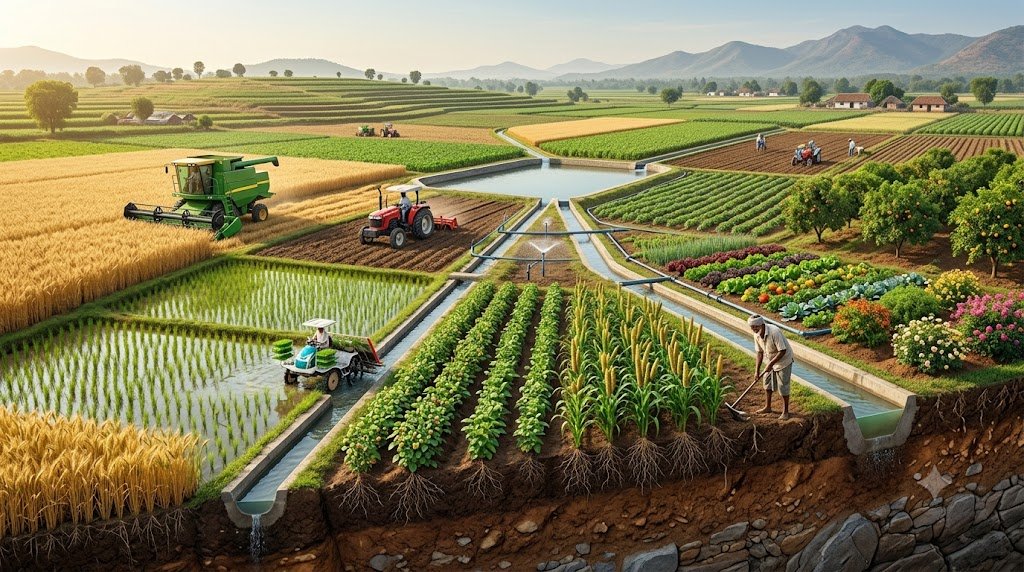
Indian Agriculture: Major Structural Features
Indian agriculture is characterised by significant diversity.
Different regions vary in:
- Climate
- Soil
- Rainfall
- Irrigation availability
- Farm size
- Cropping patterns
- Technology adoption
- Market access
A major structural feature is the predominance of small and marginal farmers.
Small operational holdings can make it difficult to achieve economies of scale in:
Mechanisation
Storage
Processing
Marketing
Technology adoption
This is why institutional solutions such as Farmer Producer Organisations (FPOs), cooperatives, custom hiring centres and digital platforms can be important.
Major Problems Facing Indian Agriculture
Low and Uneven Productivity
Agricultural productivity differs substantially across crops and regions.
Reasons include:
- Low irrigation coverage in some areas
- Poor-quality inputs
- Limited mechanisation
- Fragmented holdings
- Weak extension services
- Soil degradation
- Climate variability
- Inadequate post-harvest infrastructure
Improving productivity does not simply mean using more fertiliser.
The focus should increasingly shift towards:
Better seeds + Precision irrigation + Soil health + Technology + Extension + Market access
Fragmentation of Land Holdings
Small and fragmented farms can increase production costs.
Fragmentation may make it difficult to:
- Use large machinery
- Install irrigation infrastructure efficiently
- Adopt precision farming
- Build storage infrastructure
- Negotiate better market prices
Possible solutions include:
- Land leasing reforms
- FPOs
- Cooperative farming models where appropriate
- Custom hiring centres
- Aggregation of farm output
Cropping Pattern in India
Cropping patterns are influenced by:
Climate
Soil
Water availability
Market demand
Government policies
Prices
Technology
Food-security requirements
A major challenge is the concentration of certain crops in regions where their cultivation may not always be ecologically optimal.
For example, intensive cultivation of water-intensive crops in groundwater-stressed areas can create long-term sustainability problems.
Crop diversification is therefore an important theme within Agriculture UPSC Mains GS 3, particularly when linked with water security, farmer income and climate resilience.
Need for Crop Diversification
Crop diversification means shifting from excessive dependence on a limited number of crops towards a broader agricultural portfolio.
This can include:
- Pulses
- Oilseeds
- Millets
- Horticulture
- Dairy
- Fisheries
- Livestock
- Agroforestry
Diversification can improve:
Farm income
Nutritional security
Climate resilience
Water sustainability
Market opportunities
Irrigation and Water Management
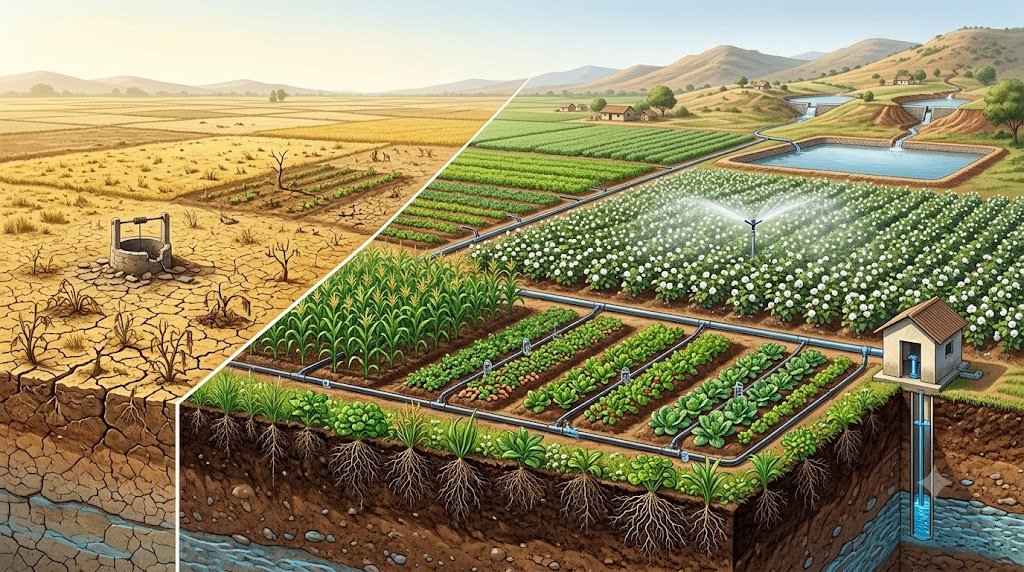
Irrigation is one of the most important dimensions of Indian agriculture.
Rainfall remains highly variable geographically and seasonally. Therefore, irrigation is crucial for reducing agricultural risk.
Major irrigation methods include:
Canal irrigation
Groundwater irrigation
Drip irrigation
Sprinkler irrigation
Rainwater harvesting
Problems
Indian irrigation faces:
- Groundwater depletion
- Inefficient water use
- Over-irrigation
- Unequal access
- Energy subsidies encouraging excessive groundwater extraction
- Poor maintenance of irrigation systems
Way Forward
India needs to move from:
More water use → More crop output
towards:
More crop per drop
This requires:
- Micro-irrigation
- Crop diversification
- Water budgeting
- Aquifer management
- Efficient pricing and incentives
- Community participation
- Watershed development
Agricultural Productivity
Agricultural productivity should be understood as output generated from a given quantity of land, water, labour or other inputs.
Productivity can be improved through:
Better seeds
Mechanisation
Irrigation
Soil-health management
Extension services
Digital agriculture
Research and development
Post-harvest infrastructure
However, productivity should not be pursued at the cost of sustainability.
A better policy goal is:
Higher productivity with lower resource intensity.
Minimum Support Price and Agricultural Procurement
MSP is among the most important topics in Agriculture UPSC Mains GS 3.
The government fixes MSP for 22 mandated agricultural crops, based on the recommendations of the Commission for Agricultural Costs and Prices (CACP), after considering views of State Governments and relevant Central Ministries.
The concept of MSP seeks to provide farmers some degree of price assurance.
Importance of MSP
MSP can:
- Protect farmers against sharp price falls
- Provide income support indirectly through price assurance
- Encourage production of certain crops
- Support food-security objectives
- Influence cropping decisions
Limitations
However, MSP does not mean that the government purchases the entire production of all crops.
Government procurement is linked to marketable surplus and procurement arrangements, particularly where prices fall below MSP.
Challenges include:
- Concentration of procurement
- Regional imbalance
- Crop imbalance
- Storage costs
- Fiscal burden
- Environmental consequences of incentives
Way Forward
A balanced policy may combine:
MSP + Better markets + Crop diversification + Price-deficiency mechanisms + Storage + Processing + Farmer collectives
MSP remains one of the most frequently discussed policy dimensions of Agriculture UPSC Mains GS 3 because it connects farm income, procurement, food security and market intervention.
Agricultural Subsidies
Subsidies remain a major part of Indian agricultural policy.
They may support:
- Fertilisers
- Electricity
- Irrigation
- Seeds
- Credit
- Crop insurance
- Farm machinery
The objective is often to reduce input costs and protect farmers from excessive volatility.
For 2026–27, the Department of Fertilizers reported an estimated allocation of ₹1.71 lakh crore to help maintain affordable fertilisers and support farmers.
Problems With Poorly Designed Subsidies
Subsidies can sometimes create:
Overuse of groundwater
Excessive chemical input use
Fiscal pressure
Distorted cropping patterns
Inefficient resource allocation
Better Approach
Move gradually towards:
Targeted + transparent + technology-enabled subsidies
while improving public investment in:
- Irrigation
- Agricultural R&D
- Storage
- Rural roads
- Cold chains
- Extension services
Agricultural Credit
Access to affordable institutional credit is critical for farmers.
Formal credit can reduce dependence on informal lenders and help farmers invest in:
- Seeds
- Fertilisers
- Machinery
- Irrigation
- Livestock
- Post-harvest facilities
Major Challenges
- Unequal access
- Regional disparities
- Tenant farmers’ exclusion
- Small farmers’ limited collateral
- Credit diversion
- Dependence on informal lenders
Way Forward
India needs:
Better tenant-farmer identification
Digital credit systems
FPO-based lending
Weather and crop-risk linked financial products
Financial literacy
Expansion of formal banking in underserved regions
Crop Insurance
Agriculture is exposed to:
- Drought
- Floods
- Cyclones
- Hailstorms
- Pest attacks
- Diseases
- Extreme temperatures
Crop insurance can reduce the financial impact of such shocks.
However, insurance effectiveness can be limited by:
- Delayed claim settlement
- Assessment difficulties
- Low awareness
- Tenant-farmer exclusion
- Basis-risk issues in some products
Way Forward
Technology can improve insurance through:
Satellite imagery
Drones
Remote sensing
Weather stations
Digital land records
Automated crop assessment
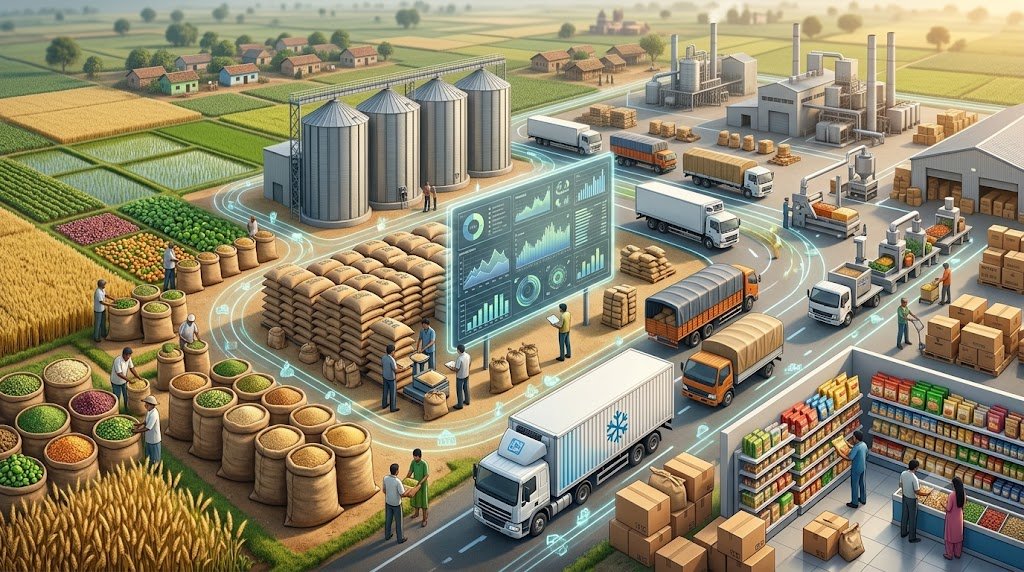
Agricultural Marketing
The farmer’s income does not depend only on production.
It also depends on:
Price discovery
Transportation
Storage
Processing
Market access
Bargaining power
Major Problems
- Too many intermediaries
- Limited storage
- Weak cold chains
- Poor market information
- Small volumes
- Unequal bargaining power
Solutions
FPOs
e-NAM
Direct marketing
Contractual arrangements with safeguards
Warehouse receipt systems
Digital marketplaces
Better rural logistics
The objective should be:
From farm-gate production to efficient value-chain participation.
Agricultural marketing should be studied as an integrated component of Agriculture UPSC Mains GS 3, linking production with storage, price discovery, processing and value addition.
Farmer Producer Organisations
FPOs aggregate farmers for economic benefits.
They can help with:
- Bulk purchase of inputs
- Collective marketing
- Better bargaining power
- Processing
- Branding
- Storage
- Access to credit
- Technology
FPOs can address one of the biggest limitations of small farms:
The lack of scale.
However, FPOs also require:
- Professional management
- Working capital
- Market linkages
- Governance capacity
- Digital infrastructure
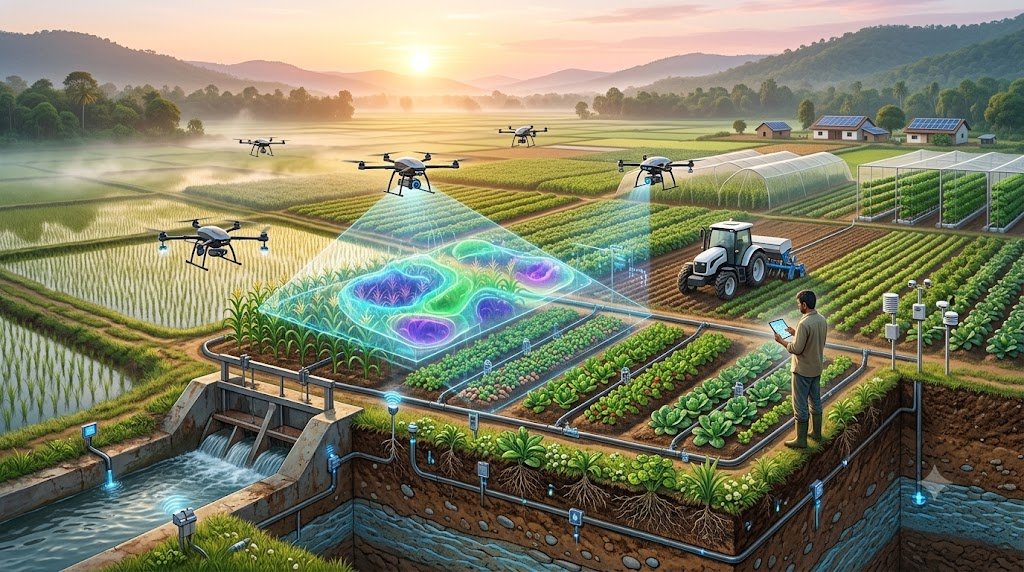
Digital Agriculture and E-Technology
Technology is transforming agriculture.
Important applications include:
Satellite imaging
GIS
Drones
Artificial Intelligence
Machine learning
IoT sensors
Weather forecasting
Digital marketplaces
Mobile advisory services
Applications
Technology can help with:
- Crop monitoring
- Pest detection
- Soil analysis
- Weather advisories
- Irrigation management
- Yield estimation
- Insurance claims
- Market intelligence
The real challenge is making technology accessible to smallholders.
Therefore:
Digital agriculture + extension services + local-language access + affordable technology
is more useful than technology alone.
Artificial Intelligence in Agriculture
AI can transform decision-making in agriculture through:
- Crop-health monitoring
- Pest and disease detection
- Yield prediction
- Weather-risk analysis
- Input optimisation
- Market forecasting
- Personalised farm advisories
The Union Budget 2026–27 included Bharat-VISTAAR, described by PIB as a multilingual AI tool intended to improve agricultural productivity, support farmers’ decision-making and provide customised advisory support.
Challenges
- Data quality
- Digital divide
- Local-language support
- Farmer trust
- Data ownership
- Privacy
- Connectivity
Food Processing
Food processing is a major bridge between agriculture and industry.
It can help:
Reduce post-harvest losses
Increase shelf life
Create rural employment
Improve farmer realisation
Increase exports
Promote value addition
The agriculture sector is increasingly moving towards food processing, cooperatives, livestock, dairy and fisheries to strengthen value addition and diversify rural incomes.
Example
Consider a farmer producing tomatoes.
Selling raw tomatoes gives one level of income.
Processing them into:
Puree → Sauce → Ready-to-eat products
creates additional value.
This is why agri-value chains are important for raising farm incomes.
Post-Harvest Losses
A considerable proportion of agricultural value can be lost after harvesting because of:
- Poor storage
- Lack of refrigeration
- Transportation delays
- Inadequate packaging
- Weak processing infrastructure
Solution
India needs:
Modern warehouses
Cold chains
Refrigerated transport
Food processing units
Scientific packaging
Warehouse receipt financing
Digital logistics
Livestock and Dairy
Diversification beyond crops can reduce farmers’ vulnerability.
Livestock provides:
- Income diversification
- Nutrition
- Employment
- Organic manure
- Regular cash flow
Dairy is particularly significant because milk production can provide recurring income compared with seasonal crop production.
Challenges
- Low productivity
- Disease
- Feed costs
- Fodder availability
- Veterinary services
- Fragmented value chains
Way Forward
Breed improvement + Veterinary infrastructure + Fodder development + Cold chains + Dairy cooperatives + Value addition
Fisheries
Fisheries contribute to:
Food security
Employment
Exports
Rural livelihoods
Blue economy
Growth opportunities exist in:
- Inland fisheries
- Aquaculture
- Mariculture
- Fish processing
- Cold chains
However, sustainable fisheries require attention to:
- Overfishing
- Habitat degradation
- Pollution
- Climate change
- Sustainable aquaculture
Climate Change and Agriculture
Climate change represents one of the biggest long-term agricultural risks.
Potential impacts include:
- Higher temperatures
- Changing rainfall patterns
- Drought
- Floods
- Heat stress
- Pest outbreaks
- Crop-yield instability
Climate change can therefore threaten:
Farm incomes + Food security + Nutrition + Rural livelihoods
Climate-Resilient Agriculture
Important measures include:
Drought-resistant varieties
Heat-tolerant crops
Micro-irrigation
Crop diversification
Agroforestry
Weather advisories
Soil conservation
Water harvesting
Climate-resilient infrastructure
Climate-resilient farming has become an increasingly important dimension of Agriculture UPSC Mains GS 3 preparation.
Natural and Sustainable Farming
Sustainable agriculture aims to maintain productivity without exhausting natural resources.
Key concerns include:
- Soil degradation
- Chemical overuse
- Water depletion
- Biodiversity loss
Useful approaches include:
Integrated Pest Management
Integrated Nutrient Management
Crop rotation
Organic inputs
Agroforestry
Conservation agriculture
Micro-irrigation
The objective is not simply “less chemical use”.
The broader objective is:
Long-term productivity with ecological sustainability.
Soil Health
Healthy soil is the foundation of agricultural productivity.
Major problems include:
- Nutrient imbalance
- Loss of organic matter
- Erosion
- Salinity
- Waterlogging
Way Forward
Farmers should adopt:
- Soil testing
- Balanced fertilisation
- Organic matter management
- Crop rotation
- Crop residue management
- Bio-inputs where appropriate
The long-term focus should shift from input-intensive agriculture to knowledge-intensive agriculture.
Agricultural Exports
Agriculture can contribute significantly to India’s export diversification.
High-value areas include:
- Processed foods
- Fruits and vegetables
- Dairy products
- Marine products
- Spices
- Specialty agricultural products
But export growth can face:
- Quality standards
- Sanitary and phytosanitary requirements
- Logistics costs
- Price volatility
- Supply inconsistencies
Therefore, improving exports requires:
Quality + Processing + Certification + Cold chains + Branding + Stable supply chains
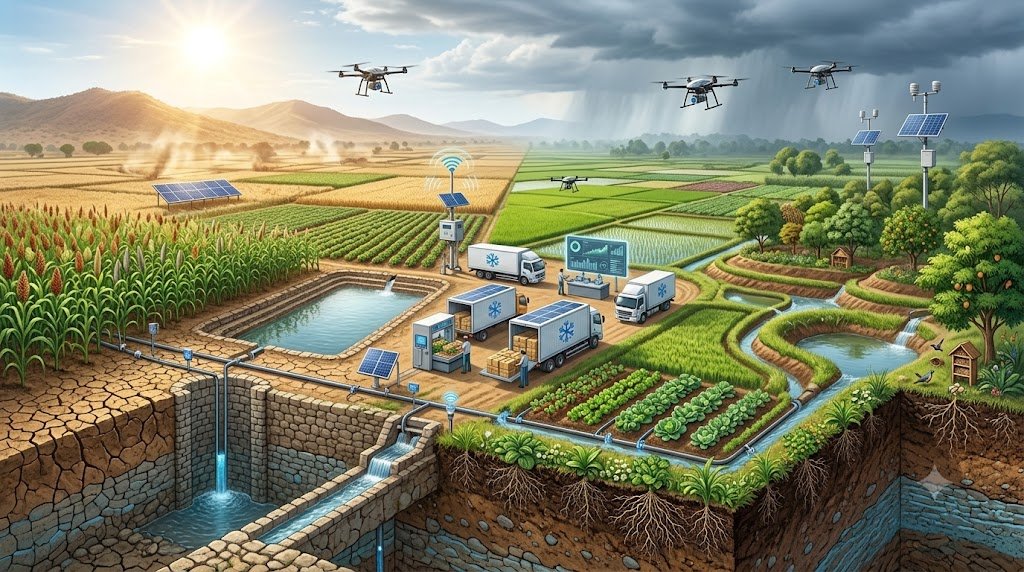
Agricultural Value Addition
One of the biggest opportunities for agriculture is moving from:
Raw commodity → Processed product
Value addition can occur through:
Cleaning
Grading
Packaging
Processing
Branding
Certification
Export
Recent government discussions around crops such as makhana also illustrate the importance of processing, branding and export-oriented agricultural value chains.
Food Security
Agricultural policy ultimately supports food security.
Food security has several dimensions:
Availability
Food must be physically available.
Accessibility
People must be able to access it.
Affordability
Food must be economically accessible.
Nutritional adequacy
The food system must support proper nutrition.
Thus, food security is broader than merely producing enough grain.
It also requires:
Diversified diets + Efficient distribution + Social protection + Nutrition-sensitive agriculture
The Ministry of Food Processing Industries provides official information on food-processing schemes, cold-chain infrastructure, value addition and support for FPOs and other stakeholders.
Public Distribution System
The Public Distribution System helps provide essential food commodities to eligible populations.
Its importance includes:
- Food security
- Price stability
- Support for vulnerable households
- Social protection
Challenges
- Leakage
- Inclusion/exclusion errors
- Storage losses
- Fiscal burden
- Nutritional limitations
Way Forward
Technology can improve:
Beneficiary identification
Portability
Supply-chain tracking
Leakage prevention
But reforms should preserve accessibility for people with limited digital capacity.
Agriculture and Rural Employment
Agriculture supports direct and indirect employment.
The rural economy increasingly depends on agriculture + allied activities + food processing + logistics + services.
This is why agricultural development should not be viewed simply as increasing crop output.
A stronger rural economy requires:
Farm productivity
Non-farm employment
Food processing
Rural infrastructure
Skill development
Agriculture Is a State Subject
Agriculture falls under the State List, while the Union Government supports States through policy measures, financial support and various schemes. PIB has explicitly reiterated this institutional arrangement.
This has important implications for UPSC answers.
Agricultural reforms often require:
Centre-State coordination
because implementation frequently takes place at the State level.
This is a good point to bring into questions involving:
- Irrigation
- Agricultural markets
- Extension services
- Land-related reforms
- Procurement
- Agricultural infrastructure
Union Budget 2026–27 and Agriculture
Agriculture received significant attention in the Union Budget 2026–27.
The Ministry of Agriculture and Farmers Welfare highlighted an agriculture budget allocation of around ₹1.32 lakh crore, alongside substantial support for fertilisers.
The Budget also announced or supported initiatives involving:
- Coconut
- Cashew
- Cocoa
- Sandalwood
- Walnuts
- Almonds
- Pine nuts
- Agricultural productivity
- Farmer income
For Mains, the important point is not merely remembering budget numbers.
Ask:
Does policy support move Indian agriculture from production-centric development towards productivity, diversification, value addition and resilience?
That is the analytical dimension UPSC rewards.
PM-KISAN and Direct Income Support
The Union Cabinet approved continuation of PM-KISAN from 2026–27 to 2030–31 with a total financial outlay of ₹3.15 lakh crore. The scheme provides ₹6,000 annually to eligible landholding farmer families through Direct Benefit Transfer in three equal instalments.
Significance
PM-KISAN represents:
- Direct income support
- DBT
- Technology-enabled welfare
- Reduction in transaction costs
- Support for farm investment
Limitation
Income support alone cannot solve:
- Low productivity
- Price volatility
- Small landholdings
- Irrigation problems
- Market access
Therefore, income support needs to be combined with structural agricultural reforms.
The Future of Indian Agriculture
The future of Indian agriculture should be based on six major transitions.
From Production to Productivity
Higher output from limited resources.
From Subsidy Dependence to Productive Public Investment
More focus on:
R&D + Irrigation + Infrastructure + Extension
From Commodity to Value Chain
Farmers should participate in:
Processing + Branding + Logistics + Export
From Water-Intensive to Water-Efficient Agriculture
Promote:
Micro-irrigation + Crop diversification + Water management
From Traditional Agriculture to Digital Agriculture
Use:
AI + Satellites + Drones + Sensors + Digital markets
From Climate-Sensitive to Climate-Resilient Agriculture
Build resilience through:
Diversification + Resilient varieties + Insurance + Water management
For the latest scheme guidelines, farmer eligibility information and official updates, candidates should refer to the PM-KISAN Official Portal.
Agriculture UPSC Mains GS 3: Major Challenges at a Glance
| Challenge | Main Consequence | Possible Solution |
|---|---|---|
| Small holdings | Low economies of scale | FPOs, aggregation |
| Water stress | Unsustainable production | Micro-irrigation, diversification |
| Price volatility | Income uncertainty | Markets, storage, risk management |
| Post-harvest losses | Lower farmer realisation | Cold chains, processing |
| Climate change | Yield instability | Climate-resilient farming |
| Soil degradation | Falling productivity | Soil-health management |
| Weak market access | Low bargaining power | FPOs, digital markets |
| Limited technology access | Low productivity | Extension + digital inclusion |
| Crop concentration | Ecological stress | Diversification |
| Poor value addition | Limited income growth | Food processing |
| Credit constraints | Underinvestment | Institutional finance |
| Fragmented supply chains | High transaction costs | Infrastructure + aggregation |
How to Write a 10-Marker on Agriculture
For a 10-marker, avoid writing everything you know.
Use:
Introduction
2–3 lines defining the issue.
Body
3–4 key dimensions.
Way Forward
3–4 practical points.
Conclusion
1–2 balanced lines.
Example
Question:
“Discuss the importance of crop diversification for sustainable agricultural development in India.”
Introduction: Explain crop diversification.
Body:
- Reduces water pressure
- Improves farmer income
- Reduces climate risk
- Supports nutrition
- Creates value-chain opportunities
Challenges:
- Market demand
- Procurement incentives
- Processing infrastructure
- Farmer awareness
Way Forward:
- Strengthen value chains
- Promote millets, pulses, oilseeds and horticulture
- Improve irrigation efficiency
- Expand FPOs and processing
Conclusion: Link diversification with resilient and sustainable agriculture.
How to Write a 15-Marker on Agriculture
A 15-marker demands greater depth.
Use:
Introduction
Context/Data
Multiple Dimensions
Government Initiatives
Challenges
Way Forward
Conclusion
For example, in a question on agricultural subsidies, you can discuss:
Economic dimension
Input-cost reduction
Social dimension
Farmer protection
Environmental dimension
Resource-use distortion
Fiscal dimension
Government expenditure
Reform dimension
Targeting and efficiency
This creates a multidimensional answer instead of a descriptive one.
For Agriculture UPSC Mains GS 3 questions, candidates should use multiple dimensions instead of presenting only factual information.
How to Enrich Agriculture Answers
Use a combination of:
Current data
Government schemes
Committee recommendations
Examples
Case studies
Maps/flowcharts
Relevant terminology
Useful Keywords
Climate-resilient agriculture
Precision agriculture
Crop diversification
Farmer Producer Organisations
Value-chain integration
Post-harvest management
Water-use efficiency
Digital agriculture
Circular economy
Agri-logistics
Food processing
Sustainable intensification
Using these terms appropriately can make answers more precise.
Agriculture Answer-Writing Framework
A versatile framework for many agriculture questions is:
Problem
↓
Causes
↓
Impacts
↓
Existing Government Measures
↓
Implementation Gaps
↓
Reforms
↓
Way Forward
↓
Sustainable & Inclusive Agriculture
This framework works particularly well for questions on:
MSP
Subsidies
Irrigation
Agricultural marketing
Climate change
Food processing
Farm income
15 Important Agriculture Themes for UPSC Mains GS 3
For serious preparation, revise these themes repeatedly:
1. Agricultural productivity
2. Crop diversification
3. MSP and procurement
4. Agricultural subsidies
5. Irrigation and groundwater
6. Agricultural credit
7. Crop insurance
8. Agricultural marketing
9. FPOs
10. Digital agriculture and AI
11. Food processing
12. Climate-resilient agriculture
13. Livestock and dairy
14. Fisheries
15. Food security
Agriculture UPSC Mains GS 3: One-Page Revision Framework
Remember agriculture through the following chain:
Input
Seeds + Fertiliser + Water + Credit + Technology
↓
Production
Productivity + Crop choice + Resilience
↓
Post-Harvest
Storage + Processing + Packaging
↓
Market
Price Discovery + FPO + Digital Market + Logistics
↓
Value Addition
Branding + Processing + Exports
↓
Outcomes
Farmer Income + Food Security + Employment + Sustainability
https://knowledgechroniclesplus.com/economic-growth-vs-development-upsc-mains-2027/This framework can be applied to a large number of Agriculture UPSC Mains GS 3 questions.
Regular revision of Agriculture UPSC Mains GS 3 topics becomes more effective when static concepts are combined with current examples, government initiatives and practical solutions.
Recommended posts
Economic Growth vs Development: Key Differences for UPSC Mains 2027
UPSC Mains GS 3 Indian Economy Notes 2027: Essential Topics, Data & Success Strategy
UPSC Mains GS Paper 3 2027: Complete Syllabus, Important Topics, Notes & Current Affairs
PM KISAN Scheme UPSC Mains 2026: Complete Guide, Benefits, Challenges & Analysis
Conclusion
Agriculture in UPSC Mains GS Paper 3 should not be prepared as a collection of government schemes, crop names and isolated statistics.
The real focus should be on the transformation of Indian agriculture from a production-oriented and resource-intensive system into a productive, diversified, technology-enabled, market-linked and climate-resilient system.
India’s recent policy direction also reflects this wider transition. Current government material highlights productivity, farmer support, diversification, food processing, livestock, fisheries, digital technologies and agricultural value addition as interconnected parts of agricultural transformation.
For Mains answers, remember the central chain:
Productivity → Diversification → Markets → Value Addition → Farmer Income → Food Security → Sustainability
The strongest Agriculture answers will therefore combine static concepts with current examples, government policies, data, implementation challenges and practical reforms.
For authentic information on agricultural policies, schemes and farmer-oriented initiatives, candidates should also refer to the Official Ministry of Agriculture and Farmers Welfare Resources.