Introduction
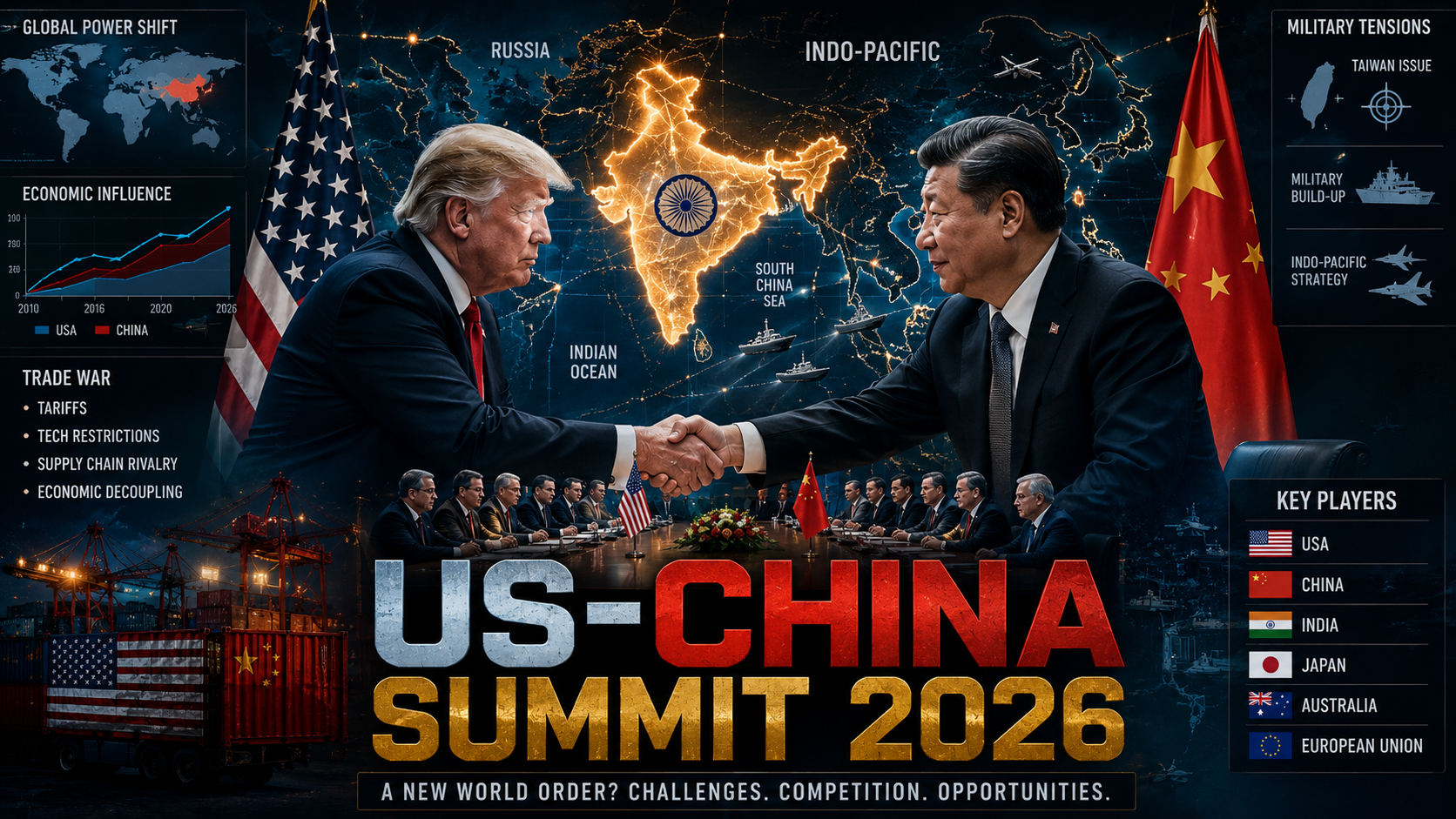
The US-China Summit 2026 has become one of the most significant geopolitical events shaping the future of global power politics, economic relations and strategic alliances. As tensions between the United States and China continue over trade, technology, Taiwan and Indo-Pacific dominance, the summit carries major implications not only for the two superpowers but also for emerging nations like India.
In this detailed analysis of the US-China Summit 2026, we explore its impact on international relations, global economy, India’s strategic future, military balance, technological competition and the evolving world order. This topic is highly important for UPSC aspirants, geopolitical analysts and readers interested in global affairs.
If you are preparing for UPSC Mains, don’t miss our detailed guide on How to Score 120+ in GS Paper 1: Powerful UPSC Mains Strategy, Books & Study Plan 2026, which covers books, answer writing, and a 90-day preparation roadmap.
🚨 Why the US–China Summit 2026 Matters More Than Most People Think
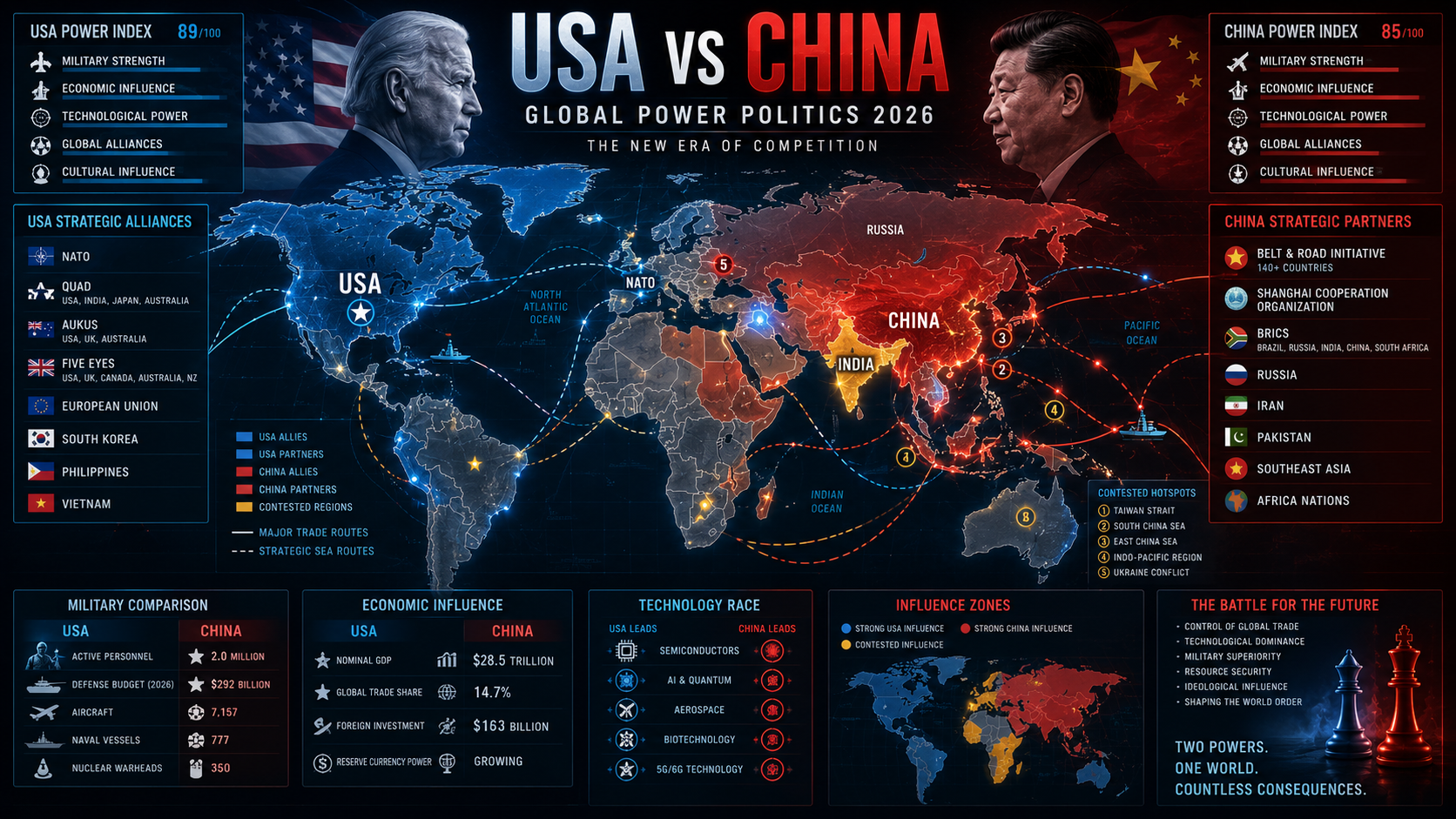
The US-China Summit 2026 is expected to become one of the most influential geopolitical events of the decade. Experts believe the US-China Summit 2026 could reshape global trade, military alliances, technology competition and Indo-Pacific security dynamics. For India, the outcomes of the US-China Summit 2026 are strategically important because changing relations between the United States and China directly impact India’s foreign policy, economic interests and regional security calculations.
As tensions over Taiwan, semiconductor technology, artificial intelligence and global supply chains continue to rise, the US-China Summit 2026 will likely determine the future direction of international diplomacy and global power politics. Understanding the implications of the US-China Summit 2026 is therefore essential for UPSC aspirants, geopolitical analysts and readers interested in international relations and strategic affairs.
This summit happened at a time when:
- AI competition is intensifying
- Taiwan tensions are rising
- Semiconductor wars are reshaping supply chains
- Global trade is fragmenting
- The Indo-Pacific is becoming the center of geopolitical rivalry
The summit was less about cooperation and more about: controlling escalation while continuing competition.
Experts noted that the summit stabilized tensions temporarily but did not solve the deeper structural conflict between the US and China.
🎯 The Biggest Takeaway of US-China Summit 2026: Taiwan Has Become the Core Flashpoint
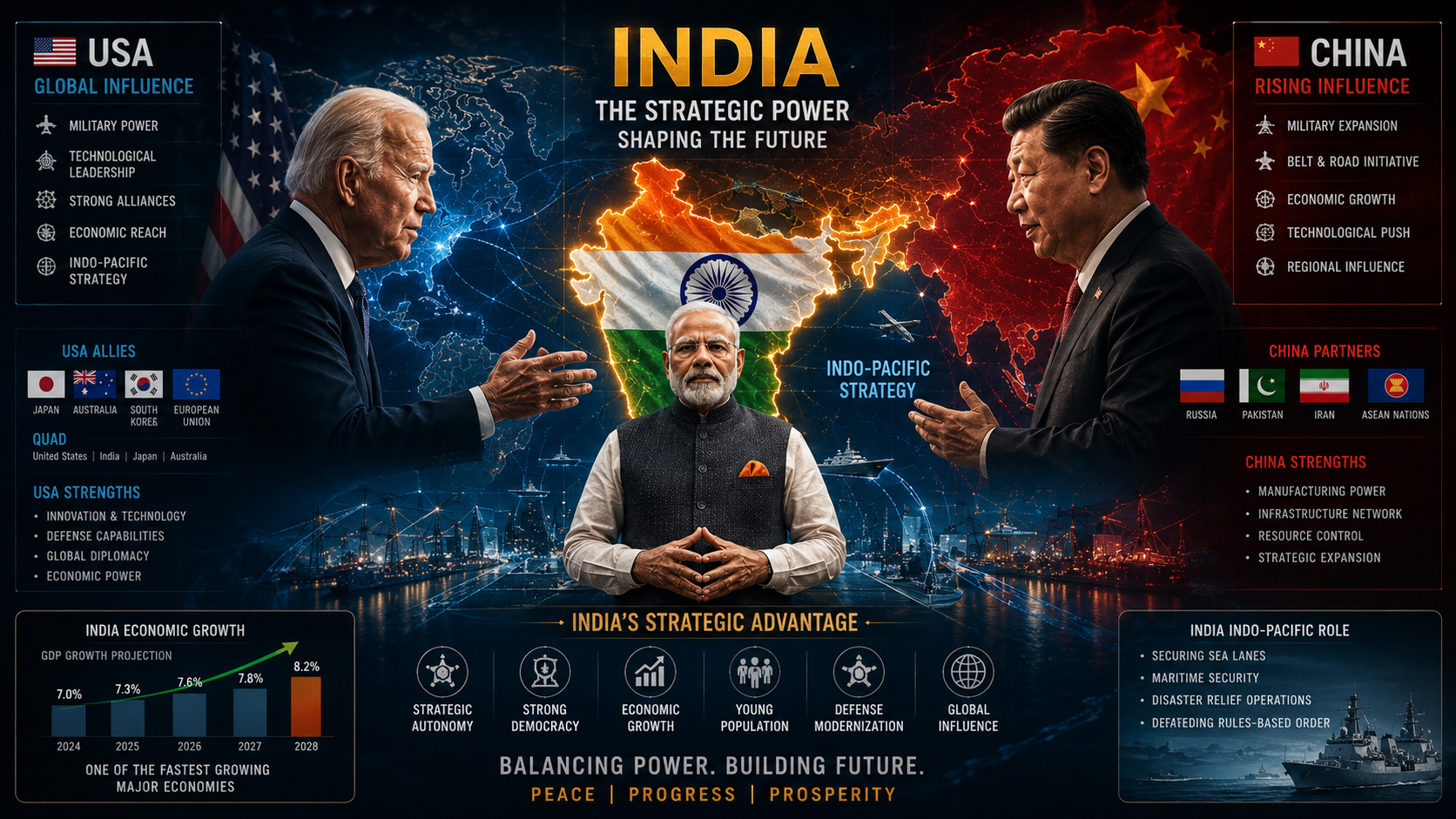
The single most sensitive issue during the summit was: Taiwan.
Chinese President Xi Jinping reportedly warned that mishandling Taiwan could lead to “clashes and even conflicts.”
Meanwhile:
- The US delayed a massive Taiwan arms package
- Trump described the Taiwan arms deal as a “negotiating chip”
- Beijing intensified pressure on Taipei
- Taiwan grew increasingly uncertain about long-term US commitments
This is extremely significant because Taiwan is not just a territorial issue anymore.
It is: the center of the global semiconductor economy.
Taiwan’s strategic importance comes largely from companies like TSMC, which dominate advanced chip manufacturing. ⚡ AI & Semiconductor Rivalry: The Real Battlefield Behind the Summit
Many headlines focused on diplomacy. But the real war is happening in:
Artificial Intelligence + Semiconductor Technology: US-China Summit 2026
Reports suggest both countries discussed:
- AI guardrails
- Semiconductor exports
- Advanced chip access
- Technology restrictions
However, the rivalry remains extremely intense. (Council on Foreign Relations)
China continues pushing for:
✔ indigenous chip manufacturing
✔ AI self-reliance
✔ reduced dependence on US technology
The US meanwhile is trying to:
✔ restrict China’s access to advanced chips
✔ maintain AI leadership
✔ control semiconductor supply chains
This means: the US–China competition is shifting from trade wars to technology wars.
🌍 Why India Cannot Remain a Passive Spectator
For India, the summit creates both: opportunities AND risks.
🚀 Opportunity 1: China+1 Manufacturing Shift
As Western companies diversify away from China:
- India can attract electronics manufacturing
- Semiconductor investments may increase
- Supply chain relocation could accelerate
India’s growing role in:
- semiconductor policy
- AI governance
- digital infrastructure
has become strategically important.
🚨 Risk 1: Strategic Pressure on India from US-China Summit 2026
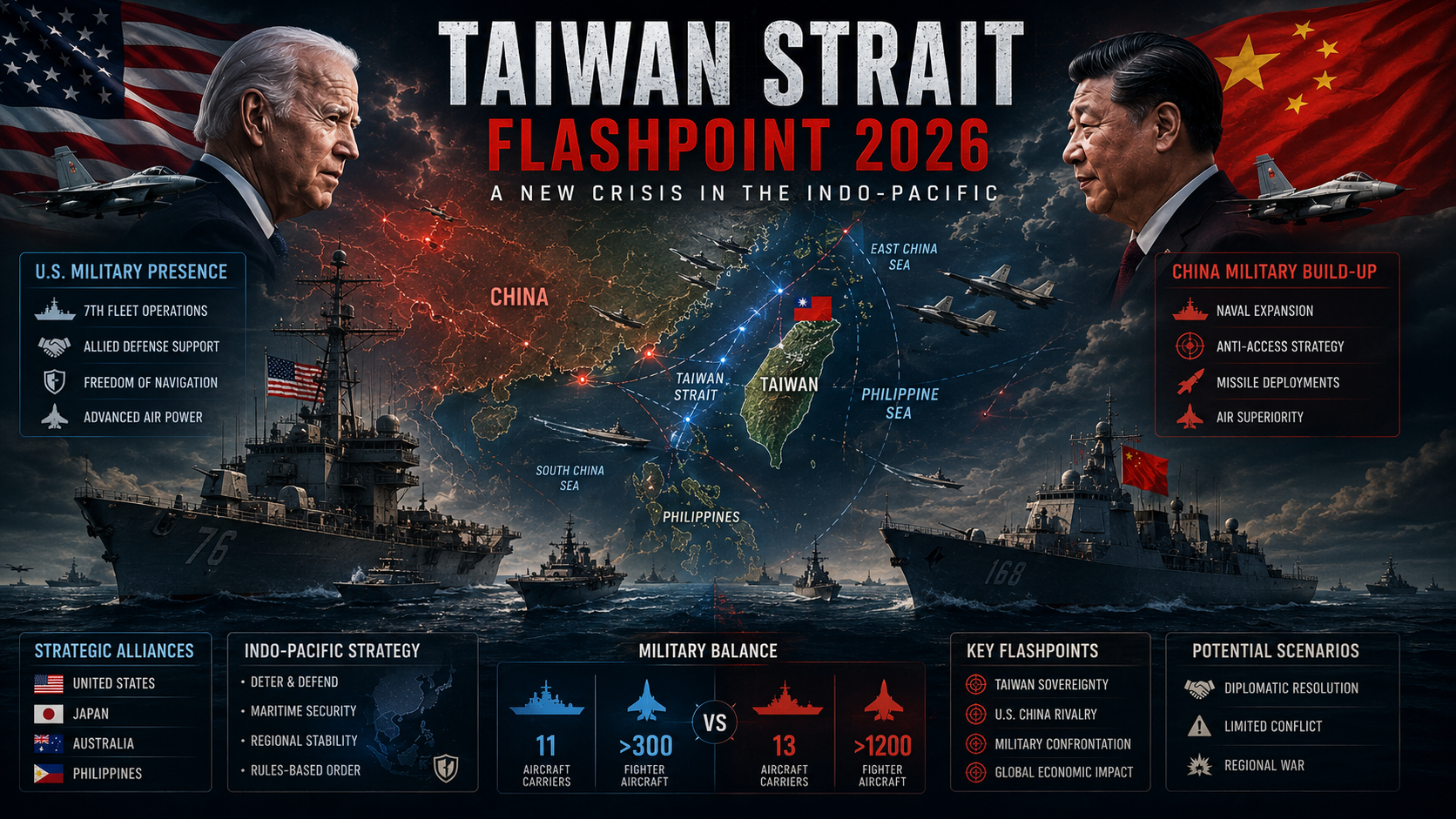
If US–China tensions deepen:
- India may face pressure to align more closely with one bloc
- Indo-Pacific competition could intensify
- Border tensions with China may increase indirectly
India’s biggest challenge is maintaining: strategic autonomy without strategic isolation.
⚙️ The Summit Revealed a New Type of Cold War
Unlike the US–USSR Cold War:
- today’s rivals are economically interconnected
- supply chains are deeply linked
- technology ecosystems overlap
This creates a: “Competitive Coexistence Model.”
The US and China are:
✔ competing militarily
✔ competing technologically
✔ competing economically
—but simultaneously trying to avoid direct conflict.
📉 Why the US-China Summit 2026 Produced Few Major Agreements
Despite positive media optics:
- no major trade breakthrough happened
- semiconductor restrictions remain
- Taiwan tensions remain unresolved
- export control disputes continue
Several analysts described the summit as: 🌐 The Indo-Pacific Will Become Even More Important after US-China Summit 2026
The summit reinforced one reality: the Indo-Pacific is now the center of global geopolitics.
Key regions gaining strategic importance:
- South China Sea
- Taiwan Strait
- Indian Ocean
- Strait of Hormuz
- Semiconductor corridors
For India:
- QUAD becomes more important
- Maritime security becomes critical
- Naval modernization becomes urgent
🧠 UPSC Perspective: Important Themes to Prepare
This topic is highly important for: GS Paper 2 + International Relations + Essay + Interview
📚 Key UPSC Themes
| Topic | Importance |
|---|---|
| US–China Relations | Global geopolitics |
| Taiwan Issue | Indo-Pacific security |
| Semiconductor Diplomacy | Technology geopolitics |
| AI Competition | Emerging tech governance |
| Strategic Autonomy | India’s foreign policy |
| QUAD | Regional balancing |
🔥 Most Important Analytical Point for UPSC Related to US-China Summit 2026
The summit proves that: future geopolitics will be shaped less by ideology and more by technology dominance.
Countries controlling:
- AI
- semiconductors
- data infrastructure
- rare earth supply chains
will dominate the next global order.
🇮🇳 India’s Best Possible Strategy
India’s long-term strategy should focus on:
✔ semiconductor self-reliance
✔ AI ecosystem development
✔ defence modernization
✔ diversified supply chains
✔ balanced diplomacy
India must avoid becoming:
❌ overdependent on either bloc. Instead, India should pursue: “Strategic Autonomy 2.0”
🌟Conclusion: US-China Summit 2026
The US–China Summit 2026 may look like a diplomatic cooling exercise on the surface.
But underneath:
- AI rivalry is intensifying
- semiconductor wars are expanding
- Taiwan tensions are deepening
- the Indo-Pacific is becoming militarized
This summit did not end competition.
It simply: managed competition temporarily.
And for India, the coming decade may become one of the most strategically important periods since the Cold War.
Modern History forms the backbone of GS Paper 1 and contributes significantly to the final score. For topic-wise preparation, books, PYQs, and answer-writing guidance, read our detailed Modern History Strategy for UPSC Mains GS Paper 1 Guide.
Read More
100 Important World Current Affairs MCQs for UPSC Prelims 2027 with Answers
❓ FAQs: US-China Summit 2026
Q1. Why is the US–China Summit 2026 important?
The summit impacts global trade, AI competition, semiconductor supply chains, Taiwan security, and Indo-Pacific geopolitics.
Q2. Why is Taiwan important in US–China relations?
Taiwan is strategically important because it is central to advanced semiconductor manufacturing and Indo-Pacific security.
Q3. How does the summit affect India?
The summit creates opportunities for manufacturing and strategic partnerships, but also increases geopolitical pressure on India.
1 thought on “US-China Summit 2026: Shocking Global Power Shift & India’s Powerful Strategic Future”