Introduction
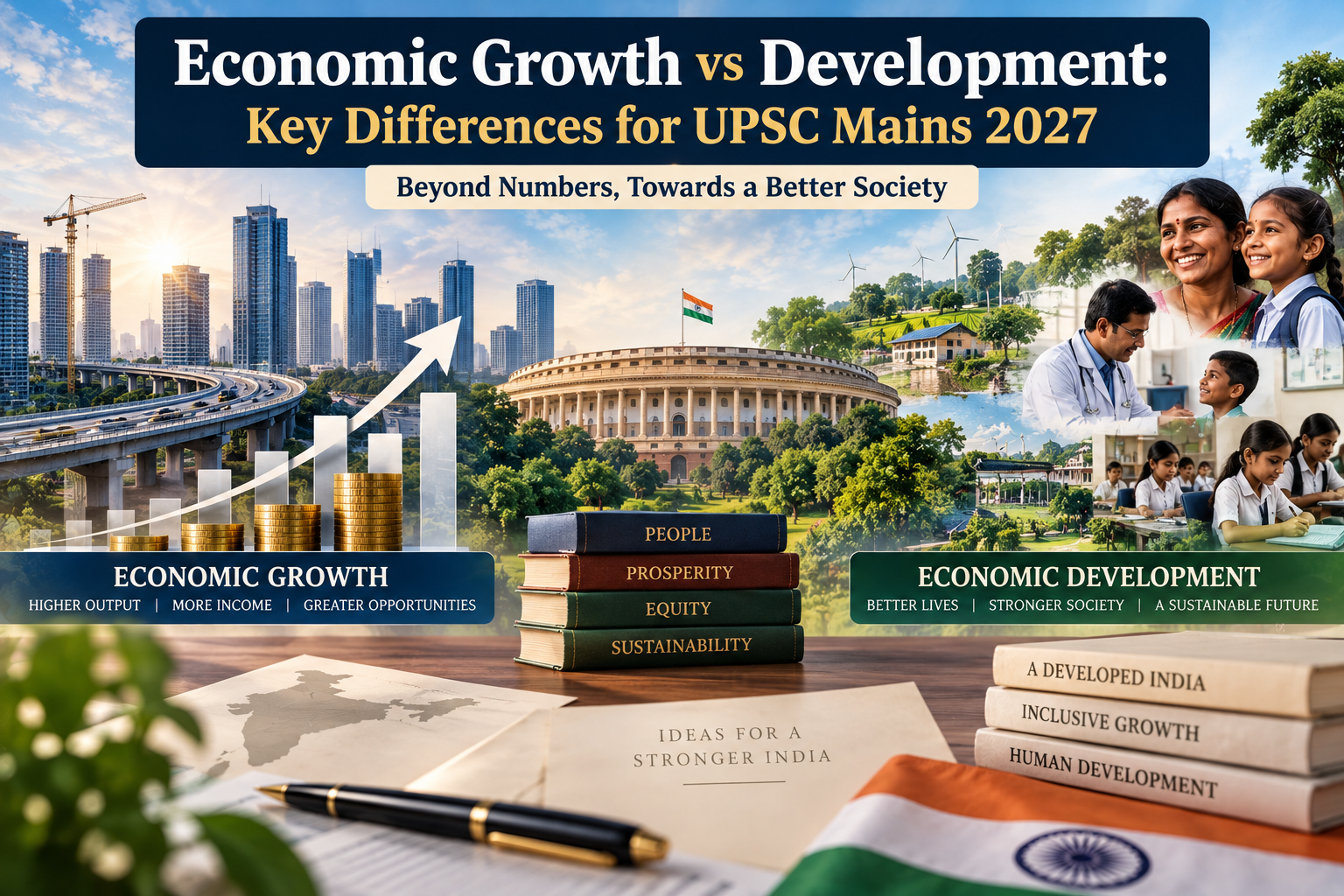
Economic growth and economic development are closely related concepts, but they are not identical. A country may experience rapid growth in its national income without achieving proportional improvements in health, education, employment opportunities, equality or quality of life.
For UPSC Mains, understanding Economic Growth vs Development is important because the distinction allows candidates to move beyond GDP-based analysis and examine whether economic progress is actually improving people’s lives.
The Human Development approach developed by UNDP explicitly distinguishes human well-being from the mere expansion of an economy. It treats income as a means to development rather than an end in itself and focuses on people’s capabilities, opportunities and choices.
After comparing growth and development, candidates should strengthen their conceptual foundation with our detailed Indian Economy for UPSC Mains preparation resources.
What is Economic Growth?
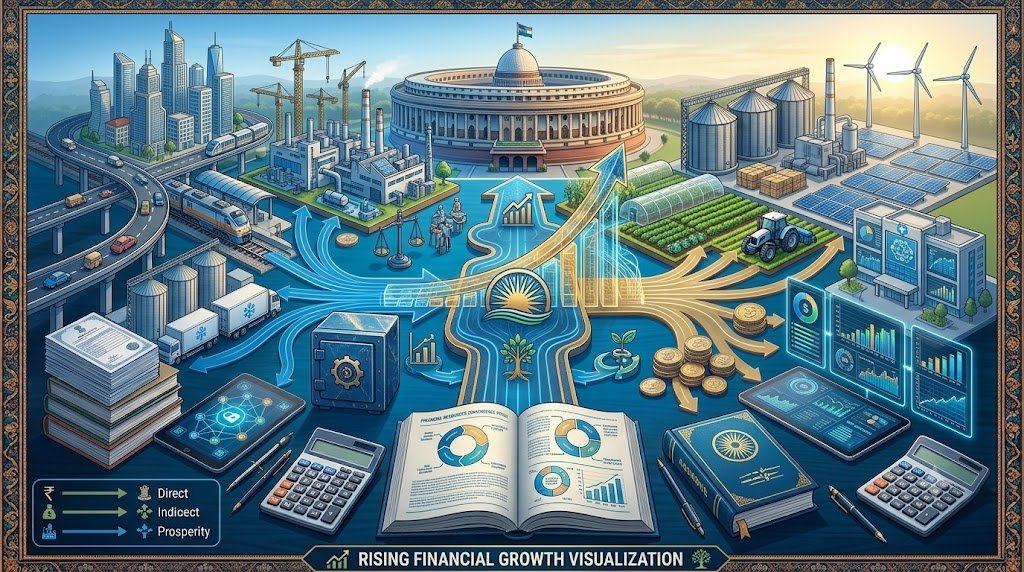
Economic growth refers to an increase in the production of goods and services in an economy over a period of time.
It is primarily a quantitative concept and is generally assessed through changes in indicators such as:
- Real GDP
- Real GDP per capita
- National income
- Output and productivity
- Investment and capital formation
For example, if a country’s real GDP increases substantially over several years, it indicates that the economy has experienced economic growth.
To understand how GDP, national income, investment and productivity are connected within the Indian economy, also study our comprehensive Indian Economy UPSC resources.
Key Features of Economic Growth
Economic growth generally involves:
- Increase in aggregate output
- Rise in national income
- Expansion of productive capacity
- Higher investment
- Improvement in productivity
- Growth in employment opportunities, when growth is sufficiently employment-intensive
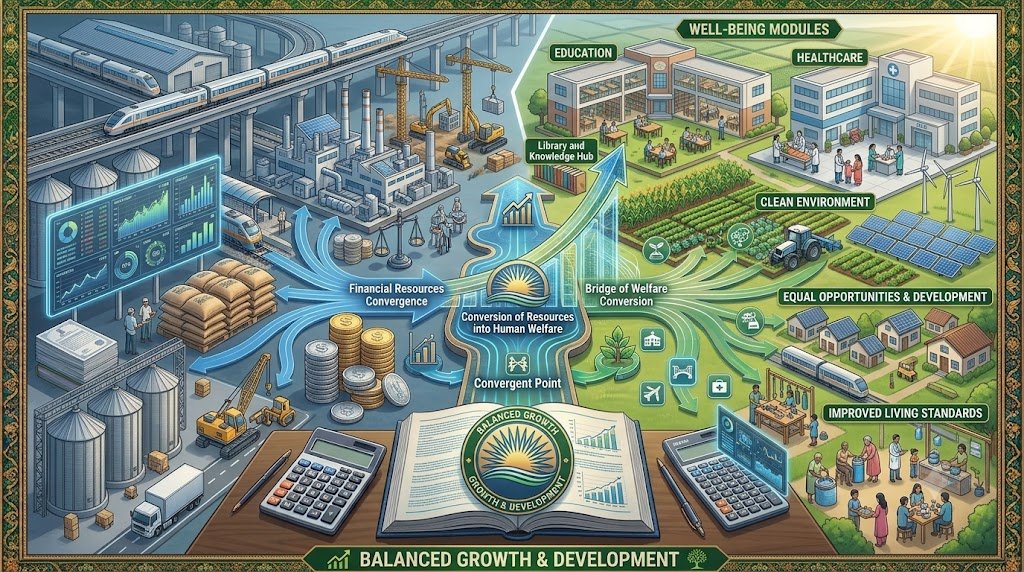
Growth can therefore provide the economic resources required for development, but growth by itself does not guarantee that these resources will be distributed equitably or converted into better living conditions.
What is Economic Development?
Economic development is a broader process involving improvements in people’s economic, social and overall well-being.
It includes economic growth but goes beyond an increase in national income.
Economic development may involve improvements in:
- Health
- Education
- Nutrition
- Standard of living
- Employment quality
- Poverty reduction
- Gender equality
- Social security
- Access to basic services
- Economic opportunities
- Equality and inclusion
- Environmental sustainability
Thus, development is fundamentally concerned with the quality and distribution of economic and social progress.
UNDP’s human development framework similarly focuses on expanding people’s opportunities and capabilities rather than assuming that economic growth automatically produces improved well-being for everyone.
Economic Growth vs Development: Key Differences
| Basis | Economic Growth | Economic Development |
|---|---|---|
| Nature | Mainly quantitative | Quantitative as well as qualitative |
| Main focus | Increase in output and income | Improvement in overall human well-being |
| Measurement | GDP, GNP/GNI, per capita income, productivity | HDI, poverty, health, education, living standards and other social indicators |
| Distribution | May not address income distribution | Gives greater importance to distribution and inclusion |
| Poverty | Growth may or may not reduce poverty | Poverty reduction is a major development objective |
| Employment | Focuses on expansion of economic activity | Focuses increasingly on productive and decent employment |
| Health and education | Not necessarily central | Major components |
| Inequality | Can increase or decrease | Greater emphasis on reducing exclusion and deprivation |
| Environment | Growth can occur with environmental costs | Modern development emphasizes sustainability |
| Time horizon | Often measured over a particular period | Usually viewed as a long-term transformation |
| Objective | Expansion of economic output | Improvement in quality of life and human capabilities |
Growth Does Not Automatically Mean Development
One of the most important arguments in Economic Growth vs Development is that a rise in GDP does not automatically translate into better human outcomes.
Consider a hypothetical economy where:
- GDP increases rapidly,
- but most gains go to a small section of society,
- quality employment does not increase sufficiently,
- public health remains weak,
- educational outcomes remain poor,
- and environmental degradation accelerates.
Such an economy may record strong economic growth, but its development outcomes may remain unsatisfactory.
Therefore:
Economic Growth ≠ Economic Development
A better conceptual relationship is:
Growth → Resources → Public Policy & Institutions → Human Development
The conversion of income into development depends on institutions, public spending, distribution, access to services and social opportunities.
Major Indicators of Economic Growth
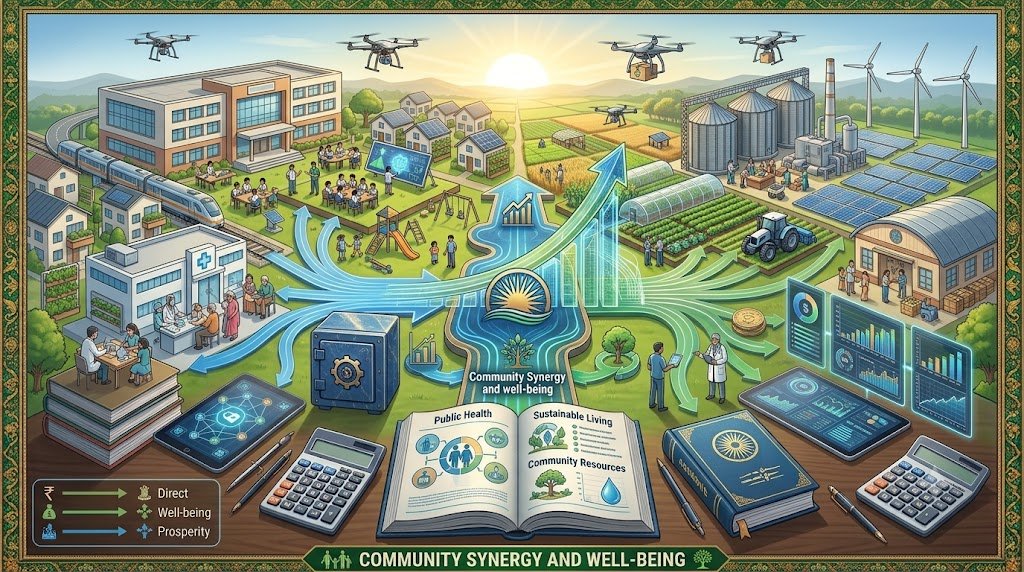
Economic growth is generally evaluated through macroeconomic indicators.
1. Real GDP
Real GDP measures the value of final goods and services produced in an economy after adjusting for price changes.
It is more useful than nominal GDP for assessing changes in actual output over time.
2. Per Capita Income
Per capita income is calculated broadly as national income divided by population.
It helps assess average income but does not reveal:
- Income distribution
- Poverty
- Quality of public services
- Health outcomes
- Environmental quality
3. Productivity
Higher productivity means producing more output with the same or fewer resources.
Productivity improvements can contribute to long-term economic growth and competitiveness.
4. Capital Formation
Investment in infrastructure, machinery, technology and productive assets can increase an economy’s productive capacity.
Major Indicators of Economic Development
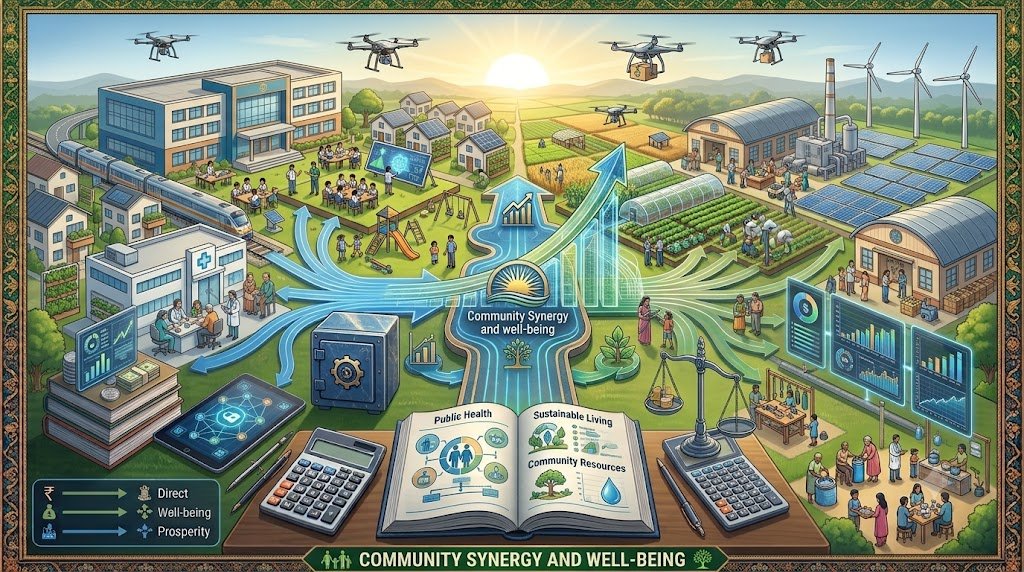
Development requires a broader set of indicators.
Human Development Index
The Human Development Index (HDI) is an important composite measure associated with the human development approach.
It focuses on three broad dimensions:
- A long and healthy life
- Knowledge
- A decent standard of living
Multidimensional Poverty
Poverty is not merely a shortage of income. People may experience deprivation in several dimensions, including health, education and living conditions.
India’s multidimensional poverty framework therefore provides a broader perspective on deprivation than income poverty alone. NITI Aayog‘s multidimensional poverty work notes that monetary poverty measures can overlook the effects of public interventions and non-monetary dimensions of deprivation.
Health Indicators
Development can be assessed through indicators such as:
- Life expectancy
- Infant and maternal health
- Nutrition
- Access to healthcare
Education Indicators
Important indicators include:
- Literacy
- School participation
- Educational attainment
- Learning outcomes
- Access to quality education
Relationship Between Economic Growth and Economic Development
Growth and development should not be treated as completely separate processes.
Economic growth can create the resources required for development.
Higher incomes can potentially provide:
- More tax revenue
- Greater public investment
- Higher household consumption
- Increased investment in health and education
- Greater employment opportunities
- Better infrastructure
However, the benefits of growth depend on how the additional income is generated, distributed and utilized.
Therefore, growth can be regarded as an important means, while development represents a broader end centred on human welfare.
Can There Be Growth Without Development?
Yes.
This can occur when economic expansion is accompanied by:
- High inequality
- Jobless or low-employment growth
- Regional disparities
- Persistent poverty
- Poor access to health and education
- Environmental degradation
- Weak social protection
A country may have impressive aggregate economic statistics while large sections of its population continue to face deprivation.
This is why UPSC answers should avoid treating GDP growth as the sole indicator of national progress.
Can Development Occur Without High Economic Growth?
Sustained improvements in human welfare require economic resources, so completely separating development from economic growth is difficult.
However, the quality of public policy and resource allocation matters greatly.
A country with moderate income growth may achieve significant improvements in:
- Primary healthcare
- School education
- Nutrition
- Sanitation
- Social security
- Basic infrastructure
through effective institutions and public policy.
Thus, the objective should not be to reject growth but to ensure that growth is inclusive, sustainable and translated into broader human development.
Economic Growth and Inclusive Development
Inclusive growth attempts to ensure that the benefits of economic expansion reach different sections and regions of society.
Important dimensions include:
Employment
Growth should generate adequate productive employment rather than being concentrated in sectors with limited job creation.
Rural Development
Agriculture, rural infrastructure, non-farm employment and rural services remain important for reducing regional and social disparities.
Gender Inclusion
Women’s participation in education, employment, entrepreneurship and decision-making can broaden the development process.
Regional Balance
Large regional disparities can weaken the inclusiveness of national growth.
Access to Basic Services
Healthcare, education, sanitation, housing, electricity and digital connectivity help convert economic resources into human capabilities.
Sustainable Development: The Next Dimension
Modern development cannot be evaluated without considering environmental sustainability.
Rapid economic expansion can create:
- Pollution
- Resource depletion
- Biodiversity loss
- Climate-related risks
- Ecological stress
Therefore, development must balance:
Economic efficiency + Social inclusion + Environmental sustainability
This is particularly important for India because development needs to create jobs and infrastructure while also addressing climate risks, resource constraints and intergenerational equity.
This relationship between growth, environment and long-term development is also important for UPSC GS Paper 3, particularly in questions involving climate change, resource management and sustainable development.
Structural Transformation and Development
Economic development is also associated with structural transformation.
As economies develop, employment and output patterns can change across:
Agriculture → Industry → Services
However, the process is not necessarily identical across countries.
For India, important development challenges include:
- Raising agricultural productivity
- Expanding manufacturing
- Creating productive non-farm employment
- Improving human capital
- Increasing labour productivity
- Reducing regional disparities
- Strengthening infrastructure
- Promoting skill development
Thus, development involves not only producing more but also changing the structure and quality of economic activity.
Economic Growth vs Development: An Indian Context
India’s development experience provides several useful dimensions for UPSC answers.
Economic growth has helped expand:
- Fiscal resources
- Infrastructure
- Consumption possibilities
- Investment
- Technology adoption
- Productive capacity
At the same time, development requires attention to:
- Employment quality
- Human capital
- Poverty and deprivation
- Social and regional inequalities
- Public health
- Education
- Nutrition
- Environmental sustainability
The important policy question is therefore not merely:
“How fast is the economy growing?”
It is also:
“How effectively is economic growth being converted into broad-based improvements in people’s lives?”
This distinction makes the concept particularly useful for analytical answers in the UPSC Mains examination.
Important Concepts Related to Economic Development
1. Human Development
Focuses on people’s capabilities, opportunities and quality of life rather than income alone.
2. Inclusive Growth
Growth whose benefits are distributed more broadly across sections and regions of society.
3. Sustainable Development
Development that seeks to balance present economic and social needs with long-term environmental sustainability.
4. Equitable Development
Emphasizes fairness in access to opportunities and resources.
5. Social Development
Focuses on improvements in education, healthcare, nutrition, social security and social inclusion.
6. Multidimensional Poverty
Recognizes that deprivation can exist across several dimensions beyond income. NITI Aayog’s work on multidimensional poverty highlights this broader understanding of deprivation.
How to Write an Answer on Economic Growth vs Development in UPSC Mains
A good UPSC Mains answer should not simply reproduce a difference table.
Use a logical structure.
Introduction
Start with the basic distinction:
Economic growth refers primarily to an increase in economic output and income, whereas economic development represents a broader improvement in human well-being, capabilities, inclusion and quality of life.
Body
Discuss:
- Meaning of growth
- Meaning of development
- Key differences
- Relationship between them
- Growth without development
- Inclusive and sustainable growth
- Indian context
Conclusion
End with a balanced argument:
Economic growth provides the resources necessary for development, but the true measure of progress lies in how effectively those resources are converted into human capabilities, employment, social inclusion and sustainable improvements in quality of life.
Sample UPSC Mains Question
Q. Economic growth is necessary but not sufficient for economic development. Discuss with reference to India’s development challenges.
Model Answer
Economic growth refers mainly to an increase in the production of goods and services and national income, whereas economic development encompasses broader improvements in human well-being, capabilities, equality and quality of life.
Economic growth is important because it expands the resources available to households, firms and governments. Higher output can increase employment, investment, tax revenues and the capacity of the state to finance infrastructure and social services.
However, growth does not automatically produce development. High GDP growth may coexist with income inequality, inadequate employment, regional disparities, poor health and education outcomes, and environmental degradation. Average income indicators also fail to capture the distribution of economic gains.
For India, therefore, the challenge is to transform growth into inclusive and sustainable development through investment in human capital, productive employment, healthcare, education, social protection, infrastructure and environmental sustainability.
Thus, economic growth should be viewed as an important means of development, while the ultimate objective should be the expansion of people’s capabilities and improvement in their quality of life.
Economic Growth vs Development: UPSC Mains Value Addition
For a stronger answer, candidates can use the following conceptual chain:
Economic Growth
↓
Higher Income & Productive Capacity
↓
Greater Fiscal & Investment Capacity
↓
Public Services + Employment + Infrastructure
↓
Human Capabilities & Social Inclusion
↓
Sustainable Economic Development
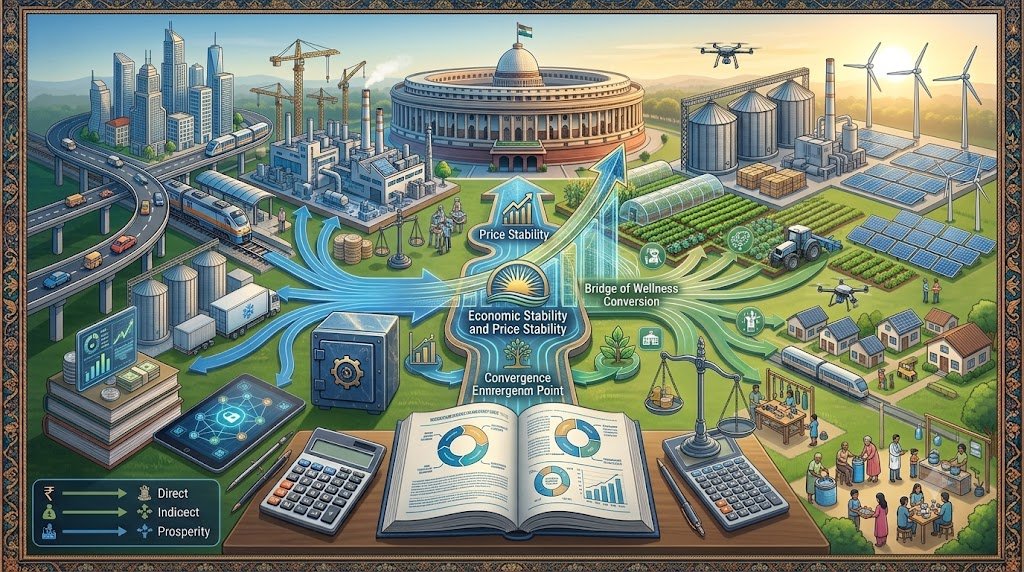
This framework helps demonstrate that growth becomes meaningful when it is effectively converted into development outcomes.
Common Mistakes to Avoid
Mistake 1: Treating GDP as a complete measure of development
GDP measures economic activity but does not by itself capture all aspects of human welfare.
Mistake 2: Saying growth and development are completely unrelated
Growth can provide resources that support development.
Mistake 3: Ignoring distribution
An increase in average income does not necessarily mean that all groups benefit equally.
Mistake 4: Ignoring sustainability
Long-term development cannot be separated from environmental considerations.
Mistake 5: Writing only definitions
UPSC Mains rewards analytical treatment. Add the relationship between growth and development, India’s challenges and the way forward.
Quick Revision Table
| Economic Growth | Economic Development |
|---|---|
| Increase in economic output | Broader improvement in human welfare |
| Primarily quantitative | Quantitative + qualitative |
| GDP and income focused | Human capabilities and living standards focused |
| May not address inequality | Greater focus on inclusion |
| Can occur with environmental damage | Modern development emphasizes sustainability |
| Important means | Broader objective |
| Narrower concept | Wider concept |
Most Important Resources for UPSC Prelims 2027
- Current Affairs For UPSC Prelims 2027
- Polity for UPSC Prelims 2027
- Economy for UPSC Prelims 2027
- History for UPSC Prelims 2027
- Science and Technology for UPSC Prelims 2027
- Geography for UPSC Prelims 2027
Conclusion
The debate over Economic Growth vs Development is ultimately a debate over how economic progress should be evaluated.
Economic growth increases the size and productive capacity of an economy. Economic development asks a broader question: Has this economic progress improved people’s capabilities, opportunities and quality of life?
For India, the policy objective should therefore be to combine high and sustainable economic growth with productive employment, human capital formation, social inclusion, poverty reduction and environmental sustainability.
A strong UPSC Mains answer should present growth not as an alternative to development but as an important instrument that must be inclusive, equitable and sustainable enough to produce meaningful development outcomes.
Useful Official & Reference Resources
For understanding the broader UPSC examination framework and practicing answer-oriented preparation, candidates should regularly consult the UPSC Previous Year Question Papers, which include the General Studies papers for Civil Services Mains.
For conceptual understanding of human development, candidates can also refer to the UNDP Human Development Reports, particularly its explanation of human development, capabilities and opportunities.
1 thought on “Economic Growth vs Development: Key Differences for UPSC Mains 2027”