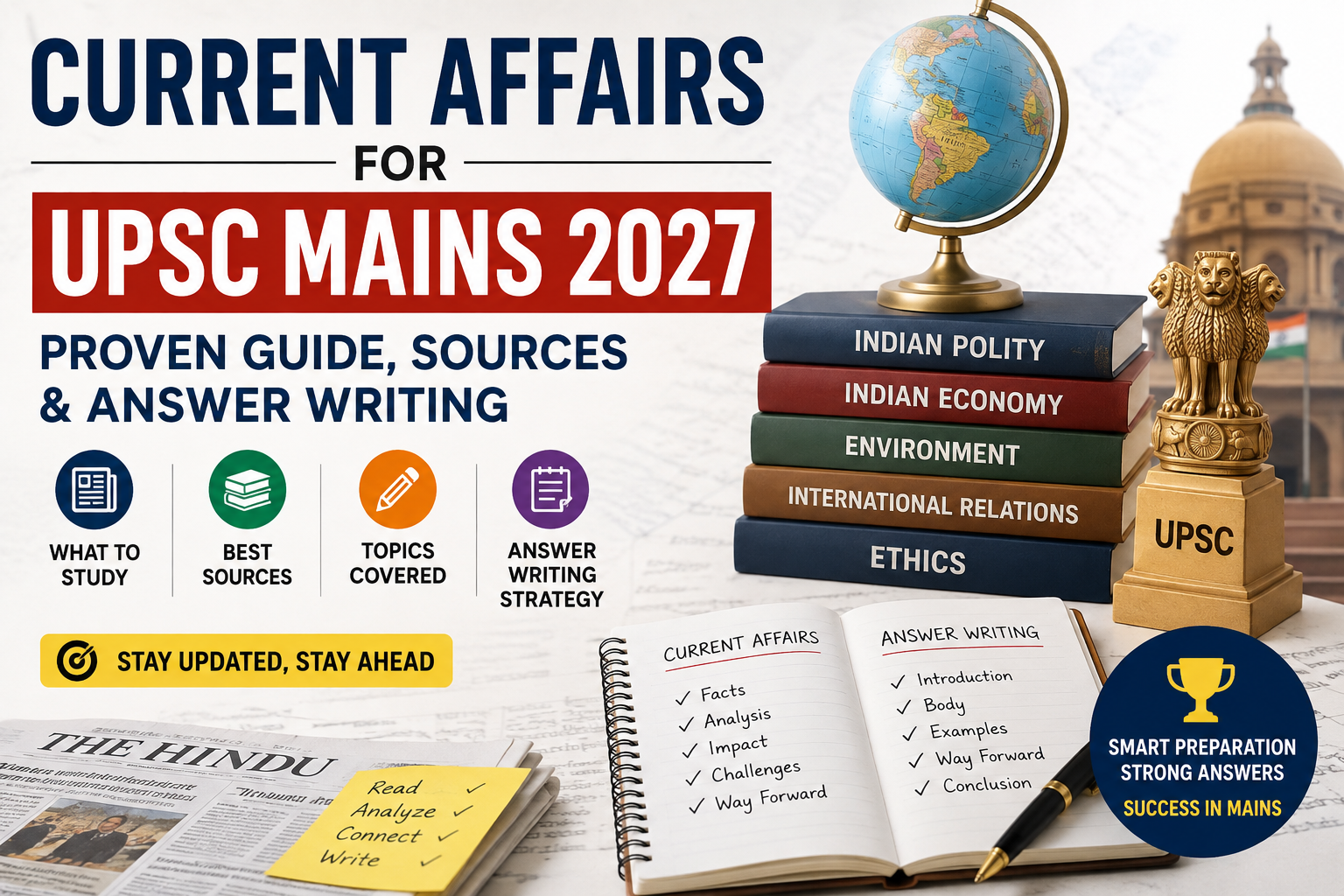
Current Affairs for UPSC Mains 2027 is not about memorising hundreds of newspaper headlines. The real objective is to understand important developments, connect them with the UPSC syllabus, and use them effectively in analytical answers. The UPSC itself states that the Main Examination is designed to assess intellectual traits and depth of understanding, including the ability to analyse relevant issues and take a view on conflicting socio-economic goals and demands.
This guide explains what to study, how to study current affairs, which sources to follow, how to connect current events with GS Papers 1–4, and how to convert current affairs into high-quality Mains answers.
A structured approach to Current Affairs for UPSC Mains can help aspirants connect contemporary developments with the static syllabus.
Important: The UPSC Annual Calendar 2027 has been released. However, candidates should always check the latest official examination notification and syllabus when the 2027 Civil Services Examination notification is issued.

Why Current Affairs Matter for UPSC Mains 2027
Current affairs are not a separate subject in the UPSC Mains syllabus. Instead, they provide examples, evidence, contemporary context and case studies for the static syllabus.
For example:
- A question on federalism can be supported with a recent Centre–State issue.
- A question on agriculture can use recent agricultural reforms or technology.
- An environment answer can include a recent climate initiative.
- An international relations answer can use a recent bilateral or multilateral development.
- An ethics answer can use a recent administrative or public-policy example.
Therefore, the correct approach is:
Static Syllabus + Current Affairs + Analysis + Examples = Better Mains Answers
Current Affairs for UPSC Mains: What Should You Study?
Do not treat every news story as important.
Prioritise developments that have a connection with:
- Constitutional issues
- Governance and public policy
- Indian economy
- Agriculture
- Social justice
- International relations
- Environment and climate change
- Science and technology
- Defence and internal security
- Infrastructure
- Energy
- Disaster management
- Ethics and governance
- Important social trends
- Major international developments
- Government schemes and policy reforms
A Simple Test for Selecting News
Before making notes, ask:
“Can this information help me answer a UPSC Mains question?”
If the answer is yes, keep it.
If the information is only a headline, celebrity update, political statement or isolated event with no syllabus connection, it usually does not deserve detailed notes.
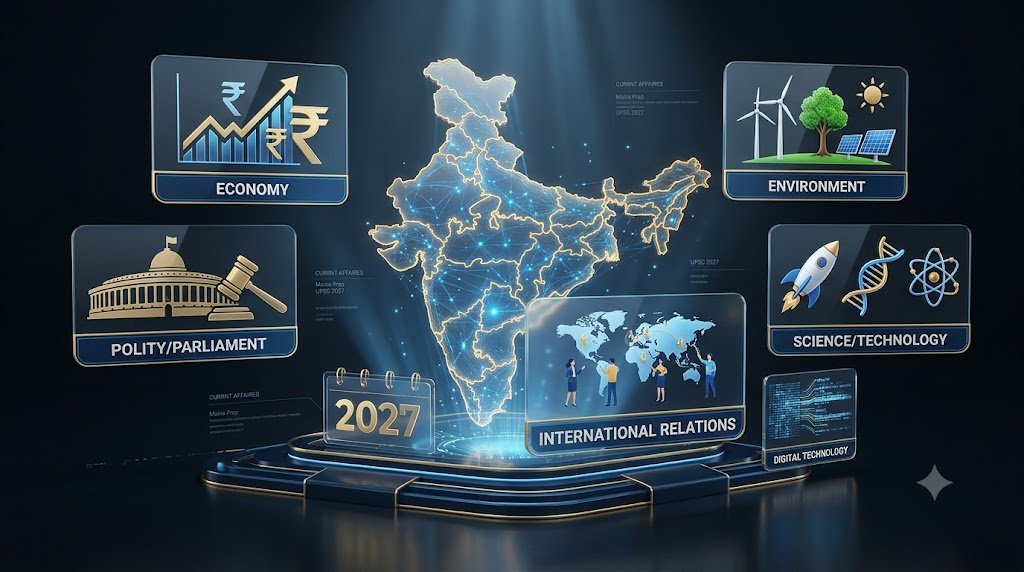
GS Paper-Wise Current Affairs Strategy
Current Affairs for UPSC Mains 2027 GS Paper 1 : Important Areas
GS Paper 1 broadly covers Indian Heritage & Culture, History, Geography and Society.
History & Culture
- Archaeological discoveries
- Heritage conservation
- UNESCO-related developments
- Important monuments
- Cultural traditions
- Museums and heritage projects
- Historical personalities and events
Geography
- Rivers
- Mountains
- Natural resources
- Climate events
- Geographical phenomena
- Mapping-based developments
- Natural disasters
- Urbanisation
Indian Society
- Population trends
- Migration
- Urbanisation
- Women-related issues
- Social inequality
- Education
- Demographic changes
- Social empowerment
How to Use Current Affairs in GS1
Do not simply write:
“According to a recent report, X happened.”
Instead, connect the development with the static concept.
Example structure:
Current Event → Background → Causes → Impact → Challenges → Way Forward
This converts a news item into a Mains-ready answer.
Current Affairs for UPSC Mains 2027: GS Paper 2
Current Affairs for UPSC Mains are particularly important for GS Paper 2 because many questions involve contemporary governance and international developments.
GS Paper 2 is one of the most current-affairs-intensive papers.
It covers:
- Indian Constitution
- Parliament
- Judiciary
- Executive
- Federalism
- Governance
- Constitutional bodies
- Statutory bodies
- Social justice
- Welfare schemes
- International relations
Important GS2 Current Affairs Topics
Polity
Focus on:
- Constitutional amendments
- Supreme Court judgments
- Parliamentary developments
- Election reforms
- Federal issues
- Centre–State relations
- Local governance
- Constitutional and statutory institutions
Governance
Focus on:
- Digital governance
- Transparency
- Accountability
- Citizen-centric administration
- Public service delivery
- E-governance
- Administrative reforms
Social Justice
Focus on:
- Health
- Education
- Poverty
- Nutrition
- Women and children
- Elderly population
- Persons with disabilities
- Vulnerable communities
- Social-sector schemes
International Relations
Focus on:
- India–neighbourhood relations
- India–US relations
- India–China relations
- India–Russia relations
- India–EU relations
- India and Central Asia
- Indo-Pacific
- Global institutions
- Multilateral organisations
- International groupings
- Emerging geopolitical issues
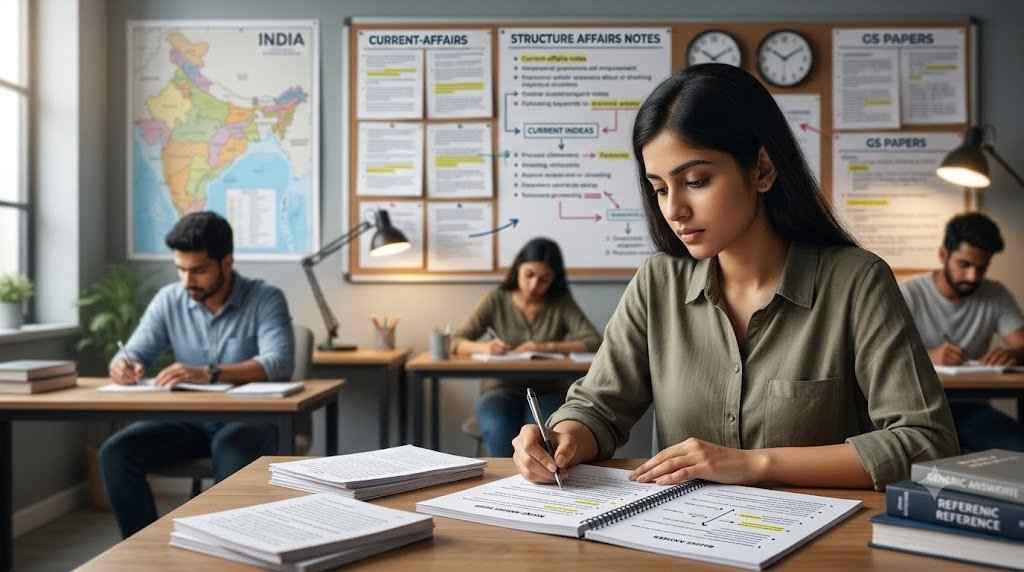
Current Affairs for UPSC Mains 2027: GS Paper 3
GS Paper 3 is another area where Current Affairs for UPSC Mains can provide valuable examples, data and contemporary context.
GS Paper 3 has an especially strong connection with current affairs.
It covers:
- Indian economy
- Agriculture
- Science and technology
- Environment
- Disaster management
- Internal security
- Infrastructure
Indian Economy
Important areas include:
- GDP and economic growth
- Inflation
- Monetary policy
- Fiscal policy
- Employment
- Banking
- Financial markets
- Digital economy
- Manufacturing
- Infrastructure
- Investment
- External sector
- Inclusive growth
A structured approach to Current Affairs for UPSC Mains can help aspirants connect contemporary developments with the static syllabus.
To strengthen the static foundation behind these economic developments, see our UPSC Mains GS 3 Indian Economy Notes (2027): Complete Guide.
How to Prepare Economy Current Affairs
Do not memorise economic figures without understanding their meaning.
For every major economic development, try to understand:
What happened? → Why did it happen? → Who is affected? → What are the benefits? → What are the challenges? → What can be done?
This approach is much more useful for Mains than simply collecting statistics.
For a more structured understanding of the GS Paper 3 syllabus, aspirants can also explore our UPSC Mains GS Paper 3 2027: Complete Syllabus, Important Topics, Notes & Current Affairs guide.
Agriculture Current Affairs for UPSC Mains
Agriculture frequently overlaps with both current affairs and static concepts.
Focus on:
- Agricultural reforms
- MSP
- Food security
- Crop diversification
- Irrigation
- Agricultural technology
- Digital agriculture
- Farmer producer organisations
- Agricultural exports
- Food processing
- Supply chains
- Climate-resilient agriculture
- Natural farming
- Soil health
- Water management
Answer-Writing Tip
Whenever possible, connect agricultural current affairs with:
Productivity + Sustainability + Farmer Income + Markets + Technology
Environment Current Affairs for UPSC Mains
Environment is another major current-affairs area.
Focus on:
- Climate change
- Biodiversity
- Protected areas
- Wildlife conservation
- Pollution
- Renewable energy
- Carbon markets
- Climate finance
- International environmental agreements
- Wetlands
- Forest conservation
- Land degradation
- Water security
- Sustainable development
For environment answers, current affairs can provide excellent examples and case studies.
Science & Technology Current Affairs
You do not need to become a scientist.
The focus should be on understanding:
- What the technology is
- How it works at a basic level
- Its applications
- Benefits
- Limitations
- Risks
- Ethical concerns
- India’s position
- Way forward
Important areas include:
- Artificial Intelligence
- Biotechnology
- Space technology
- Quantum technology
- Semiconductors
- Defence technology
- Cybersecurity
- Biotechnology
- Green technology
- Nuclear technology
Defence & Internal Security
Important areas include:
- Defence technology
- Indigenous defence production
- Cybersecurity
- Border management
- Terrorism
- Organised crime
- Maritime security
- Drone technology
- Critical infrastructure security
- Hybrid warfare
- Emerging security challenges
For Mains, focus more on causes, implications, challenges and solutions than on memorising specifications.
Current Affairs for UPSC Mains 2027: GS Paper 4 Ethics
Current affairs can make your Ethics answers much more effective.
Use contemporary examples related to:
- Integrity
- Accountability
- Transparency
- Compassion
- Leadership
- Emotional intelligence
- Public service
- Conflict of interest
- Probity
- Corporate ethics
- Administrative dilemmas
Using Current Affairs for UPSC Mains effectively in Ethics requires converting real-world events into examples of values, dilemmas and administrative challenges.
Ethics Example Bank
Maintain a separate list of:
Person/Event → Ethical Issue → Value Demonstrated → Lesson
For example:
Administrative initiative → Citizen-centric governance → Compassion + accountability → Public administration should prioritise accessibility and dignity.
This makes examples easier to reproduce during the examination.

Current Affairs for UPSC Mains 2027 for UPSC Essay
Current affairs are extremely useful for Essay preparation.
Create themes around:
- Democracy
- Technology
- Artificial Intelligence
- Education
- Women
- Environment
- Development
- Poverty
- Globalisation
- Human values
- Ethics
- Social justice
- Youth
- Governance
- Peace and security
Do not write an essay as a collection of current affairs.
Instead, use current affairs as evidence to support your arguments.
Ideal Essay Flow
Idea → Explanation → Historical Perspective → Contemporary Example → Social Dimension → Economic Dimension → Ethical Dimension → Challenges → Way Forward → Balanced Conclusion
Best Sources for Current Affairs for UPSC Mains
The quality of your sources matters more than the number of sources.
1. The Hindu / Indian Express
Use newspapers primarily for:
- Editorial analysis
- Important national issues
- International relations
- Government policies
- Supreme Court developments
- Social issues
- Economic developments
Do not make notes from every article.
2. PIB
PIB is particularly useful for:
- Government schemes
- Policy announcements
- Cabinet decisions
- Government initiatives
- Ministries and departments
- Official statistics and explanations
3. Government Ministry Websites
For important topics, go to the concerned ministry’s official website whenever deeper factual verification is needed.
This is particularly useful for:
- Economy
- Agriculture
- Environment
- Defence
- External affairs
- Health
- Education
- Science and technology
4. RBI
For economy preparation, RBI material is valuable for:
- Monetary policy
- Inflation
- Banking
- Financial stability
- Digital payments
- Financial inclusion
- Economic indicators
5. Official UPSC Website
The UPSC website should remain your final reference for:
- Examination notifications
- Syllabus
- Previous-year question papers
- Examination calendar
- Official examination updates
The UPSC currently provides previous Civil Services question papers, including the 2026 General Studies papers, on its official website.
How to Make Current Affairs Notes
One of the biggest mistakes aspirants make is creating extremely long notes.
Your notes should be short, structured and answer-oriented.
Use this format:
Topic
Why in News?
One or two lines.
Background
Basic static information.
Key Facts
Important facts, data or developments.
Why Important?
Significance of the issue.
Challenges
Major concerns.
Government Measures
Relevant policies or schemes.
Way Forward
2–4 practical points.
Mains Value Addition
- Example
- Data
- Committee/report
- Constitutional provision
- Supreme Court judgment
- International comparison
- Relevant quote
The 5-Point Current Affairs Note-Making Method
For every important topic, try to record only five things:
1. What?
What exactly happened?
2. Why?
Why is it important?
3. Impact?
What are its social, economic, political or environmental implications?
4. Challenges?
What prevents the desired outcome?
5. Way Forward?
What solutions can be suggested?
This method converts ordinary current affairs into Mains answer material.
How to Connect Current Affairs with the UPSC Syllabus
Create a syllabus map.
For example:
| Current Affair | Static Topic | GS Paper |
|---|---|---|
| Federal dispute | Federalism | GS2 |
| Supreme Court judgment | Judiciary/Constitution | GS2 |
| Agricultural reform | Agriculture | GS3 |
| Climate initiative | Environment | GS3 |
| AI development | Science & Technology | GS3 |
| Social trend | Indian Society | GS1 |
| International summit | International Relations | GS2 |
| Administrative controversy | Ethics/Governance | GS4 |
This approach prevents random current-affairs preparation.
How to Use Current Affairs in a UPSC Mains Answer
Current affairs should not dominate the entire answer.
A strong answer generally combines:
Static Knowledge + Current Example + Analysis + Way Forward
Example
Suppose the question concerns AI and employment.
Instead of writing only about a recent AI development, structure the answer around:
Introduction
Define the issue.
Body
- Opportunities
- Employment impact
- Skill requirements
- Risks
- Social implications
- Recent example
Way Forward
- Reskilling
- Digital literacy
- Responsible AI
- Regulatory framework
- Industry–education collaboration
Conclusion
Balanced and forward-looking.
That is how current affairs become useful in Mains.
Current Affairs Answer-Writing Framework
Use the PEEL method wherever appropriate:
P — Point
Make the argument.
E — Explain
Explain what you mean.
E — Example
Support it with a current example, data or case study.
L — Link
Connect it back to the question.
For a longer analytical answer, use:
Introduction → Arguments → Examples/Data → Challenges → Solutions → Conclusion
The ultimate purpose of Current Affairs for UPSC Mains preparation is to improve the quality of your analytical answers.
How Much Current Affairs Should You Study?
There is no fixed number of hours that works for every aspirant.
A practical approach is:
Daily
- Read one reliable newspaper/source.
- Identify only syllabus-relevant developments.
- Make very short notes.
Weekly
- Revise the week’s important issues.
- Add useful examples and data.
- Link them with the GS syllabus.
Monthly
- Consolidate your notes.
- Remove repetition.
- Organise topics GS-wise.
Before Mains
- Revise issue-based notes.
- Practise answer writing.
- Memorise only high-value data, examples, committees, judgments and case studies.
Common Current Affairs Mistakes
1. Reading Too Many Sources
More sources do not automatically mean better preparation.
Solution: Choose a limited number of reliable sources.
2. Making Newspaper Notes
Aspirants often copy entire articles.
Solution: Extract only the information useful for the syllabus.
3. Memorising Facts Without Context
A fact without application has limited value.
Solution: Ask how you can use it in an answer.
4. Ignoring Static Subjects
Current affairs cannot replace basic concepts.
Solution: Study static topics first and attach current developments to them.
5. Not Revising
Even excellent notes become useless if never revised.
Solution: Use weekly and monthly revision cycles.
6. Using Current Affairs Everywhere
Not every answer requires a recent example.
Solution: Use current affairs where they strengthen your argument.
Current Affairs Revision Strategy for UPSC Mains 2027
Aspirants can follow a simple 3-layer revision system.
Layer 1 — Daily Collection
Collect only important developments.
Layer 2 — Weekly Consolidation
Group them under:
- GS1
- GS2
- GS3
- GS4
- Essay
Layer 3 — Monthly Revision
Convert the week’s information into:
- Issues
- Examples
- Data
- Government measures
- Challenges
- Solutions
By the end of the preparation cycle, you should have a compact issue-based revision file, not thousands of disconnected headlines.
For objective-style practice based on recent developments, you can also revise our August 2026 Sports Current Affairs MCQs for UPSC, PCS, SSC & Other Competitive Exams.
Current Affairs for UPSC Mains: One-Year Preparation Strategy
If you are targeting UPSC Mains 2027, do not wait until the examination is near to start current affairs.
Phase 1: Build the Base
Understand the static GS syllabus.
Phase 2: Build the Current Affairs Bank
Start collecting important issues and examples.
Phase 3: Connect Current Affairs with Static Topics
For every major issue, identify its GS paper and syllabus topic.
Phase 4: Start Answer Writing
Use current affairs in 10-marker and 15-marker answers.
Phase 5: Consolidate
Convert large notes into short revision sheets.
Phase 6: Final Revision
Focus on:
- Major issues
- Government initiatives
- Important judgments
- Reports
- Data
- Examples
- Case studies
- International developments
- Solutions and best practices
Current Affairs Checklist for UPSC Mains 2027
Before considering a topic complete, ask:
- Is it connected to the UPSC syllabus?
- Do I understand the background?
- Can I explain why it is important?
- Do I know its major challenges?
- Do I know relevant government measures?
- Do I have at least one example?
- Can I suggest practical solutions?
- Can I use it in a Mains answer?
- Can I connect it with a GS paper?
- Have I revised it?
If you can answer yes to most of these questions, the current affair is genuinely useful for Mains preparation.
Quick Revision: Current Affairs → GS Paper Mapping
GS1 → History + Culture + Geography + Society
GS2 → Polity + Governance + Social Justice + International Relations
GS3 → Economy + Agriculture + Environment + Science & Technology + Security
GS4 → Ethics + Integrity + Governance + Case Studies
Essay → Contemporary issues + examples + data + multiple dimensions
This mapping should become a habit.
Final Strategy for Current Affairs for UPSC Mains 2027
The goal is not to read everything that happens in the world.
The goal is to identify issues that matter, understand them from multiple perspectives and convert them into usable material for the examination.
Remember this simple formula:
Read → Select → Understand → Connect → Analyse → Write → Revise
The UPSC’s examination framework emphasises understanding and analysis rather than merely the range of information or memory. Therefore, current affairs preparation should ultimately improve your ability to produce relevant, meaningful and succinct answers.
For the latest official examination information, syllabus and previous papers, aspirants should always verify details directly through the UPSC website. The Commission’s 2027 Annual Calendar is already available, while examination-specific details should be checked against the relevant notification when published.
Conclusion
Current Affairs for UPSC Mains 2027 should be treated as a continuous process of connecting contemporary developments with the static UPSC syllabus. A disciplined approach—limited sources, issue-based notes, GS-wise organisation, regular revision and answer-writing practice—can make current affairs significantly more useful.
A disciplined approach to Current Affairs for UPSC Mains can turn daily news into useful Mains-ready material.
The best current-affairs notes are not the longest ones. They are the ones you can actually remember and use in a Mains answer.
2 thoughts on “Current Affairs for UPSC Mains 2027: Proven Guide, Sources & Answer Writing”