Introduction
The Middle East Crisis UPSC Prelims 2026 is one of the most important topics for UPSC Prelims 2026, given its direct relevance to international relations and global geopolitics. The region has once again emerged as a centre of tension due to the escalating conflict involving Israel, Iran, and the United States.
In recent years, relations between Israel and Iran have deteriorated significantly, leading to proxy conflicts, military strikes, and diplomatic confrontations. The involvement of major global powers, particularly the United States, has further increased the strategic importance of this crisis.
For UPSC aspirants, understanding the geographical locations, key waterways, alliances, and strategic implications of this conflict is essential, as questions are often factual and map-based in nature.
For a complete preparation roadmap for UPSC Prelims 2026, you should also read our detailed guide on
UPSC Prelims 2026 Strategy & Study Plan.
📝 Why in News
The Middle East region has witnessed a sharp rise in tensions due to ongoing conflicts involving Israel, Iran, and allied groups.
Recent attacks in the Red Sea and threats to global shipping routes have disrupted international trade.
The increasing involvement of the United States has further intensified geopolitical tensions in West Asia.
👉 “The growing involvement of the United States has intensified regional instability and strategic competition.”
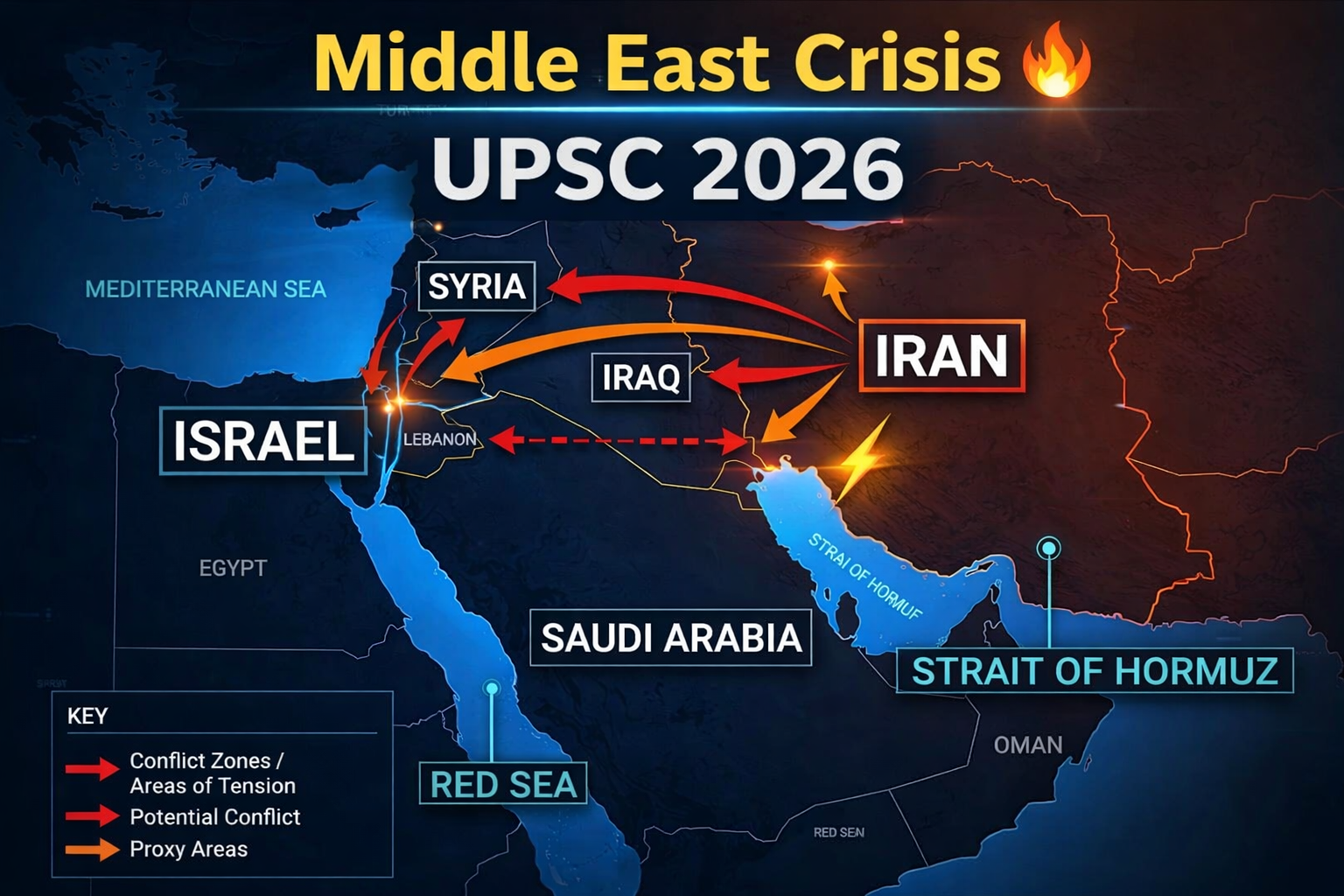
🗺️ Map-Based Understanding (VERY IMPORTANT 🔥)
For UPSC Prelims, map-based questions are very common. Aspirants must focus on the location of important regions and waterways associated with the Middle East crisis.
👉 Key locations to remember:
Strait of Hormuz
Bab-el-Mandeb Strait
Red Sea
Persian Gulf
Suez Canal
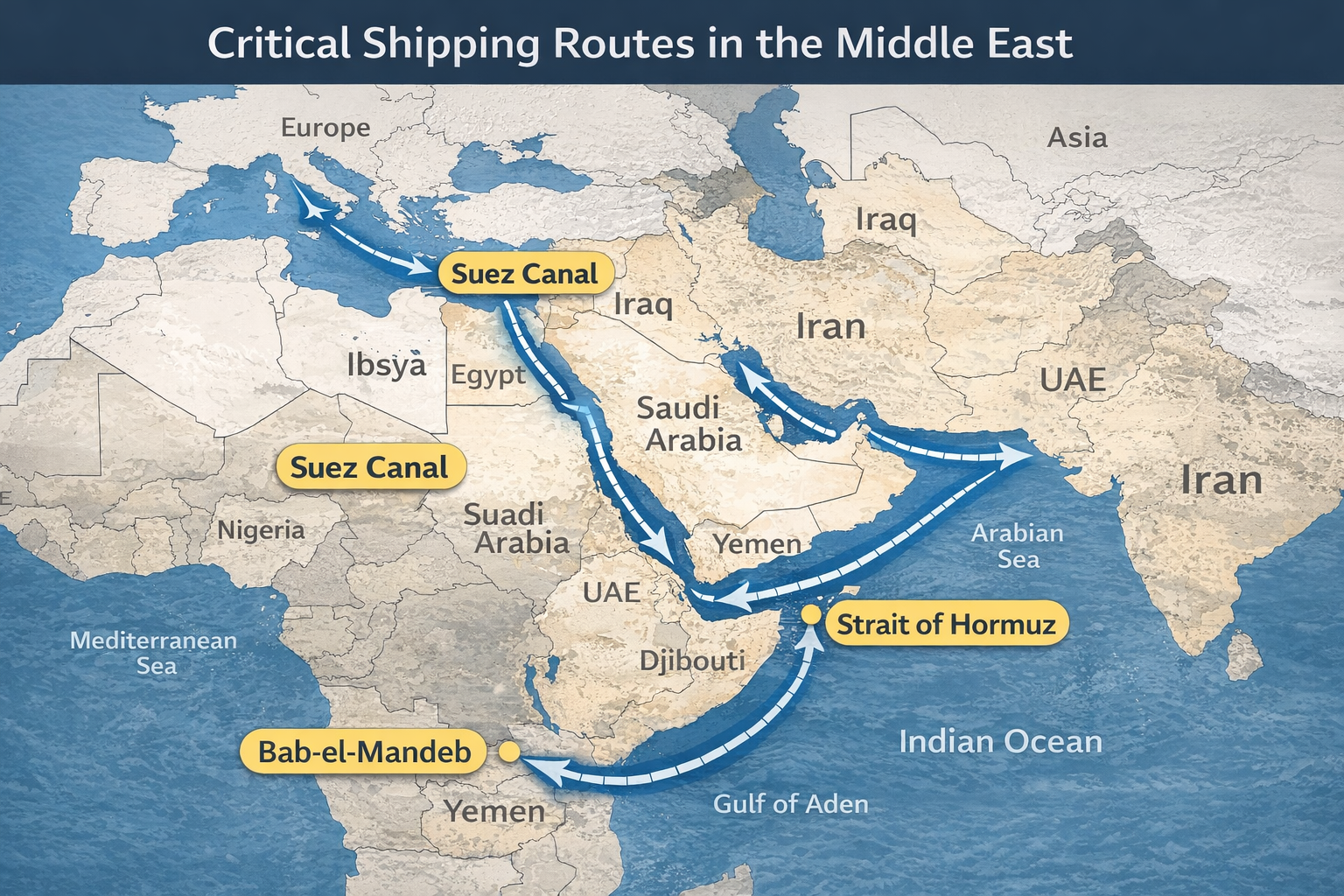
👉 These routes are crucial for global oil trade and international shipping.
📌 Key Facts for UPSC Prelims
The Middle East is also known as West Asia in geographical terms.
Strait of Hormuz connects the Persian Gulf with the Arabian Sea.
Bab-el-Mandeb connects the Red Sea with the Gulf of Aden.
A large portion of the world’s oil supply passes through these chokepoints.
Any disruption in these routes affects global energy prices and trade.
Why the Middle East Crisis UPSC Prelims 2026 is Important
For students preparing for the UPSC Civil Services Examination, particularly the Preliminary Examination, such global developments are extremely important. UPSC frequently frames questions from current geopolitical conflicts, but these questions are usually factual and geography-oriented rather than analytical. Therefore, aspirants must focus on locations, important waterways, organizations, alliances, treaties, and map-based facts related to the conflict.
This article explains the current Middle East scenario in a structured way so that aspirants can use the information effectively in the UPSC Prelims examination.
Understanding the Background of the Israel–Iran Conflict
Friends, to understand the present tensions in the Middle East, it is necessary to examine the historical background of the rivalry between Israel and Iran.
Understanding the Middle East Crisis UPSC Prelims 2026 requires knowledge of the geography of West Asia.
Iran and Israel were not always enemies. Before the 1979 Iranian Revolution, Iran under Shah Mohammad Reza Pahlavi maintained relatively cordial relations with Israel. However, after the Islamic Revolution led by Ayatollah Ruhollah Khomeini, Iran adopted a strong anti-Israel policy.
The Iranian government began supporting several groups opposed to Israel, particularly in Lebanon and Palestine. Israel, on the other hand, views Iran’s growing military capabilities and nuclear ambitions as a direct threat to its national security.
In recent years, the conflict has evolved into a proxy confrontation, where both sides support opposing groups in different parts of the Middle East rather than engaging directly in full-scale war.
For all the UPSC aspirants, the term “proxy war” is important. It refers to a situation where two rival powers indirectly fight each other by supporting opposing sides in a regional conflict.
Major Countries Involved in the Current Middle East Crisis
We can say, without any doubt , that several countries are involved either directly or indirectly in the ongoing tensions. Understanding their geographical locations is very important for UPSC Prelims.
Israel
Israel is located on the eastern coast of the Mediterranean Sea in West Asia. It shares borders with Lebanon in the north, Syria in the northeast, Jordan in the east, and Egypt in the southwest.
Israel is one of the most technologically advanced military powers in the region and is known to possess nuclear weapons, although it follows a policy of nuclear ambiguity.
Iran
Iran lies on the eastern side of the Persian Gulf and is one of the largest countries in the Middle East. It shares borders with Iraq, Turkey, Armenia, Azerbaijan, Turkmenistan, Afghanistan, and Pakistan.
Iran is a major regional power with significant influence across West Asia through its alliances and ideological networks.
United States
The United States has maintained strong strategic relations with Israel for decades. It provides Israel with military assistance, intelligence cooperation, and diplomatic support.
The U.S. also maintains several military bases across the Middle East, including in Qatar, Bahrain, Kuwait, and the United Arab Emirates.
Lebanon
Lebanon is a small country located north of Israel along the Mediterranean Sea. It is important in the current conflict because it hosts Hezbollah, a powerful militant and political organization supported by Iran.
Syria
Syria lies to the northeast of Israel and has been involved in a prolonged civil war since 2011. Iran has supported the Syrian government, while Israel has conducted multiple air strikes inside Syria targeting Iranian-linked installations.
Iraq
Iraq lies between Iran and Syria and has become a strategic region where several Iran-aligned militia groups operate.
Strategic Importance of Middle East Geography
Understanding the geography related to the Middle East Crisis UPSC Prelims 2026 is essential because UPSC often asks map-based questions.
For UPSC Prelims, geography often plays a crucial role in questions related to international conflicts. The Middle East is strategically significant because it connects Asia, Europe, and Africa and contains some of the world’s most important energy routes.
Several straits, canals, seas, and gulfs in the region control global trade and energy supply.
Important Strategic Waterways for UPSC Prelims
Strait of Hormuz
The Middle East Crisis UPSC Prelims 2026 highlights the strategic importance of the Strait of Hormuz.
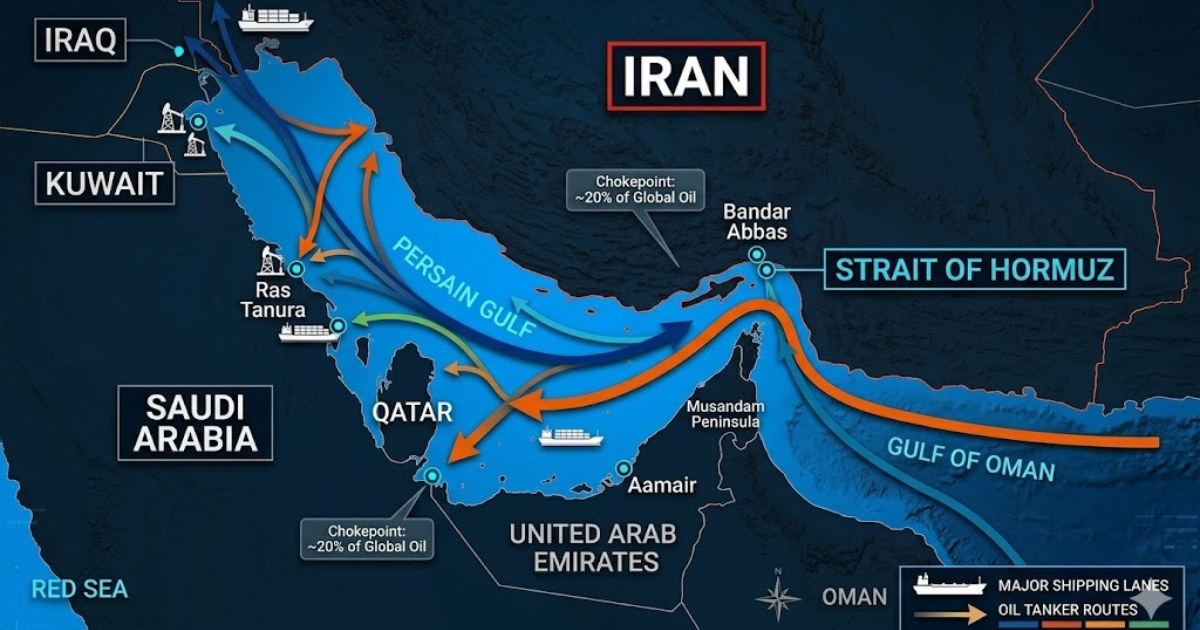
The Strait of Hormuz is one of the most important maritime chokepoints in the world.
(You can read a detailed UPSC-focused explanation here: Strait of Hormuz UPSC Prelims 2026.)
It connects the Persian Gulf with the Gulf of Oman and the Arabian Sea. A significant portion of the world’s oil exports passes through this narrow strait every day.
Iran lies on the northern side of the strait, while Oman and the United Arab Emirates lie on the southern side.
Any conflict in this area could disrupt global oil supplies and increase international energy prices.
UPSC has repeatedly asked questions related to the Strait of Hormuz in previous examinations.
In this way, the strategic importance of the Strait of Hormuz for global oil trade makesThe Middle East Crisis UPSC Prelims 2026 even more important.
Another extremely important geopolitical chokepoint in the Middle East is the Strait of Hormuz, through which a large portion of global oil trade passes.
Bab-el-Mandeb Strait
The Bab-el-Mandeb Strait connects the Red Sea with the Gulf of Aden.
It lies between Yemen on the Arabian Peninsula and Djibouti and Eritrea in Africa.
This strait is extremely important for international shipping because it serves as the gateway between the Indian Ocean and the Mediterranean Sea through the Suez Canal.
Recently, attacks by the Houthi movement in Yemen on shipping vessels have increased the global importance of this waterway.
For UPSC aspirants, the Middle East Crisis UPSC Prelims 2026 can generate map-based questions.
Suez Canal
The Suez Canal is an artificial canal located in Egypt that connects the Mediterranean Sea to the Red Sea.
It is one of the most important trade routes in the world because it allows ships to travel between Europe and Asia without circumnavigating Africa.
UPSC frequently asks questions about the Suez Canal due to its economic and strategic significance.
The Middle East Crisis UPSC Prelims 2026 highlights the strategic importance of the Suez Canal
Important Seas and Gulfs in the Middle East
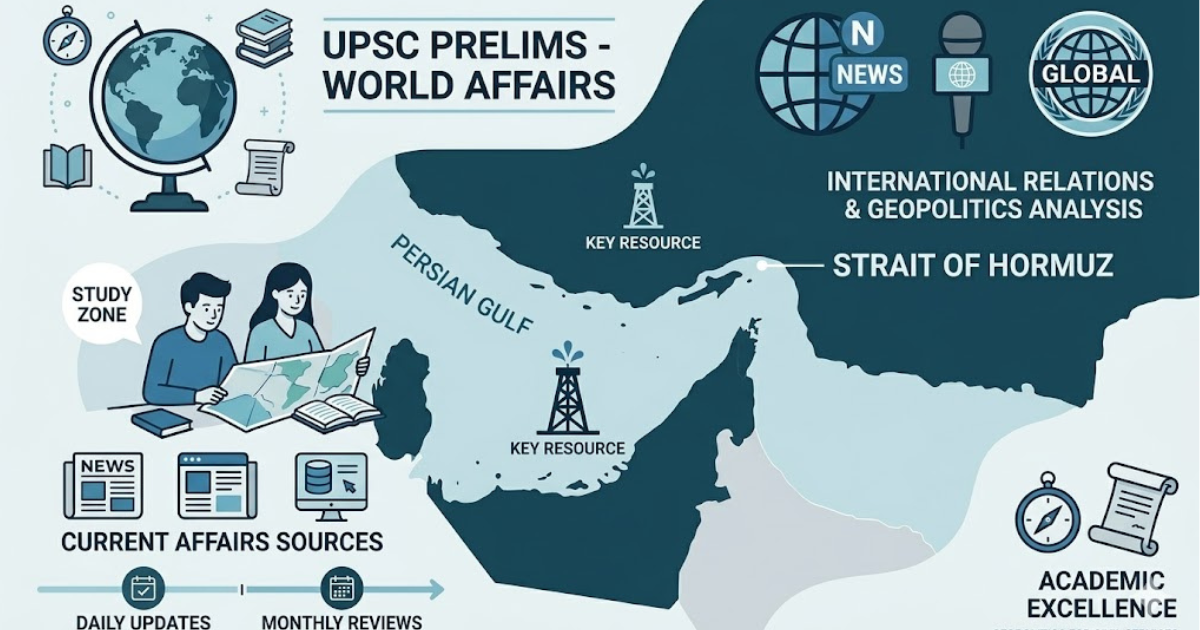
Students preparing for UPSC must remember the following seas and gulfs because they often appear in map-based questions.
Mediterranean Sea
Located west of Israel and Lebanon. Many important ports lie along this sea.
Red Sea
Situated between Africa and the Arabian Peninsula. It connects to the Mediterranean Sea through the Suez Canal.
Persian Gulf
Located between Iran and the Arabian Peninsula. It is one of the most important oil-producing regions in the world.
Gulf of Oman
This gulf connects the Persian Gulf with the Arabian Sea through the Strait of Hormuz.
Arabian Sea
Part of the northern Indian Ocean. It lies between India and the Arabian Peninsula.
Map-based questions from the above Seas can be generated For UPSC aspirants from this topic -the Middle East Crisis UPSC Prelims 2026
Key Non-State Actors in the Conflict
Modern conflicts in the Middle East often involve non-state actors, which are organizations that are not official governments but possess military capabilities.
Understanding these organizations is important for UPSC Prelims.
Several non-state actors involved in the Middle East Crisis UPSC Prelims 2026 have significant geopolitical influence in West Asia.
Hezbollah
Hezbollah is a political and militant organization based in Lebanon.
It was formed in the 1980s with support from Iran and is considered one of the most powerful non-state military groups in the world.
Hezbollah has frequently been involved in conflicts with Israel.
Hamas
Hamas is a Palestinian organization that controls the Gaza Strip.
It is both a political party and a militant group and has fought several wars with Israel.
The conflict between Israel and Hamas often attracts global attention and influences broader regional tensions.
Houthis
The Houthi movement, also known as Ansar Allah, is based in Yemen.
The Houthis have been involved in the Yemeni civil war and have conducted attacks on shipping vessels in the Red Sea region.
They are believed to receive support from Iran.
Iran’s Nuclear Program
Another major factor behind the Middle East Crisis UPSC Prelims 2026 is Iran’s controversial nuclear program.
One of the most significant factors driving tensions between Iran and Israel is Iran’s nuclear program.
Iran insists that its nuclear program is intended for peaceful energy purposes, but several countries suspect that Iran may be attempting to develop nuclear weapons.
To address these concerns, an international agreement known as the Joint Comprehensive Plan of Action (JCPOA) was signed in 2015.
Joint Comprehensive Plan of Action (JCPOA)
The JCPOA was an agreement between Iran and six world powers.
Participants included:
- United States
- United Kingdom
- France
- Germany
- Russia
- China
Under the agreement, Iran agreed to limit its nuclear program in exchange for relief from economic sanctions.
However, the United States later withdrew from the agreement in 2018, leading to renewed tensions.
Why the Middle East Crisis Matters for India
For India, the Middle East Crisis UPSC Prelims 2026 is important due to energy security and trade routes.
India has strong strategic and economic interests in the Middle East.
Energy Security
India imports a large portion of its crude oil from countries in the Persian Gulf region, including Saudi Arabia, Iraq, and the United Arab Emirates.
Any disruption in the Strait of Hormuz or other regional shipping routes could affect India’s energy supply.
Indian Diaspora
Millions of Indian citizens live and work in Gulf countries such as the United Arab Emirates, Saudi Arabia, Kuwait, and Qatar.
Political instability in the region could affect the safety and economic well-being of these communities.
Trade Routes
The Middle East lies along major global trade routes that connect Asia, Europe, and Africa. Stability in the region is therefore important for global trade and economic growth.
How UPSC May Ask Questions from This Topic
UPSC also focuses on factual information and geography-based questions in Prelims.
Possible question areas include:
- Important straits and waterways
- Countries surrounding a particular sea or gulf
- Locations of militant organizations
- International agreements
- Map-based identification questions
Many questions related to the Middle East Crisis UPSC Prelims 2026 may appear in the UPSC Preliminary Examination.
UPSC often asks questions from recent global political developments. You can also check our analysis of major global events in 7 Significant Political Developments of Feb 2026.
Sample UPSC Prelims Practice Questions
Question 1
Which of the following straits connects the Persian Gulf with the Gulf of Oman?
A. Bosporus
B. Bab-el-Mandeb
C. Strait of Hormuz
D. Malacca Strait
Answer: Strait of Hormuz
Question 2
Hezbollah is primarily active in which of the following countries?
A. Syria
B. Lebanon
C. Iraq
D. Jordan
Answer: Lebanon
Question 3
Bab-el-Mandeb Strait connects which two water bodies?
A. Mediterranean Sea and Red Sea
B. Red Sea and Gulf of Aden
C. Persian Gulf and Arabian Sea
D. Black Sea and Mediterranean Sea
Answer: Red Sea and Gulf of Aden
Question 4
The Suez Canal connects which two seas?
A. Red Sea and Arabian Sea
B. Mediterranean Sea and Red Sea
C. Black Sea and Mediterranean Sea
D. Persian Gulf and Red Sea
Answer: Mediterranean Sea and Red Sea
For more practice questions for the exam, you can attempt our detailed collection of 50 Important Polity Questions for UPSC Prelims.
Aspirants can also solve 100 Essential Current Affairs MCQs UPSC Prelims 2026 (Top Questions with Answers) which include important global developments relevant for the examination.
UPSC Prelims Practice MCQs
Q1. Consider the following statements regarding the Strait of Hormuz:
It connects the Persian Gulf with the Arabian Sea.
It lies between Iran and Oman.
It is a major route for global oil trade.
Which of the statements given above are correct?
A. 1 and 2 only
B. 2 and 3 only
C. 1, 2 and 3
D. 1 and 3 only
✅ Answer: C
Q2. Consider the following pairs:
| Organization | Region |
|---|---|
| Hezbollah | Lebanon |
| Hamas | Palestine |
| Houthis | Yemen |
Which of the pairs given above are correctly matched?
A. 1 and 2 only
B. 2 and 3 only
C. 1, 2 and 3
D. 1 and 3 only
✅ Answer: C
Q3. Which of the following waterways connects the Red Sea with the Mediterranean Sea?
A. Panama Canal
B. Suez Canal
C. Strait of Hormuz
D. Bosphorus Strait
✅ Answer: B
Q4. Consider the following countries:
Israel
Iran
Saudi Arabia
Turkey
Which of the above are part of the Middle East region?
A. 1, 2 and 3 only
B. 2, 3 and 4 only
C. 1, 2, 3 and 4
D. 1 and 4 only
✅ Answer: C
Q5. With reference to “proxy war”, consider the following statements:
It involves direct military confrontation between two countries.
It involves supporting opposing groups in a conflict indirectly.
Which of the statements given above is/are correct?
A. 1 only
B. 2 only
C. Both 1 and 2
D. Neither 1 nor 2
✅ Answer: B
🧠 UPSC Mains Answer (150 Words)
Q. Discuss the geopolitical significance of the Middle East crisis and its impact on global and Indian interests.
Answer:
The Middle East crisis holds immense geopolitical significance due to its strategic location and control over major energy resources and global trade routes. The region includes key maritime chokepoints such as the Strait of Hormuz and Bab-el-Mandeb, through which a substantial portion of the world’s oil supply passes. Ongoing tensions between countries like Israel and Iran, along with the involvement of global powers such as the United States, have increased instability in the region.
This crisis has significant global implications, including disruptions in oil supply, rising energy prices, and threats to international shipping routes like the Red Sea and Suez Canal. For India, the impact is particularly crucial as it depends heavily on Middle Eastern oil imports and maintains strong economic and diaspora links with the region.
Therefore, maintaining stability in the Middle East is essential for global energy security and India’s economic interests.
📌 How to Structure Your Answer (UPSC Mains)
Introduction: Briefly define the Middle East crisis and its relevance
Body:
Geopolitical importance (location, oil, chokepoints)
Global impact (trade, energy, conflicts)
Impact on India (energy, diaspora, economy)
Conclusion: Emphasize the need for stability and diplomacy
You can also practice important questions from our Middle East Crisis MCQs 2026 for better exam preparation.
Conclusion
Understanding the Middle East Crisis UPSC Prelims 2026 can help aspirants answer geography and international relations questions effectively.
The current Middle East tensions involving Israel, Iran, and the United States represent one of the most complex geopolitical issues in the world today. However, for UPSC Prelims aspirants, the key focus should be on extracting factual and geographical information from these developments.
Important topics include strategic waterways such as the Strait of Hormuz, Bab-el-Mandeb, and the Suez Canal, as well as the locations of countries and organizations involved in the conflict.
By studying these elements carefully, aspirants can effectively convert current international events into valuable preparation material for the UPSC Civil Services Preliminary Examination.
Therefore, the Middle East Crisis UPSC Prelims 2026 becomes an important topic for geography-based questions.
Apart from current affairs, aspirants should also focus on static subjects like History, Read our Indus Valley Civilization Notes UPSC 2026: Complete & Important Guide
Also Read-
https://knowledgechroniclesplus.com/upsc-prelims-2026-strategy/
Sources and Further Reading
Recent developments in the region indicate that the conflict between Israel and Iran is expanding beyond direct military confrontation and affecting several neighbouring countries in West Asia. Detailed updates about these developments can be followed on BBC Middle East News.
International Atomic Energy Agency – https://www.iaea.org
7 thoughts on “Middle East Crisis UPSC Prelims 2026: Key Facts, Map Analysis & Important Concepts”